Your Cart (0)
Your cart is empty
Free express shipping

Drawer menu
Free express shipping

Most homeowners believe marble care is straightforward, assuming regular cleaning keeps surfaces pristine indefinitely. This misconception leads to costly damage when acidic cleaners etch surfaces or improper techniques wear down finishes. Marble is a calcium-based natural stone, susceptible to etching from acidic substances, requiring specialized knowledge beyond basic housekeeping. This guide equips you with essential maintenance techniques to protect your luxury marble and travertine investments, covering proper cleaning methods, polishing processes, sealing strategies, and damage prevention tactics that preserve beauty and extend lifespan.
| Point | Details |
|---|---|
| Acid sensitivity | Marble reacts chemically with acidic substances, causing permanent etching that routine cleaning cannot reverse. |
| Polishing limitations | Mechanical polishing restores surface gloss and removes minor scratches but cannot fix deep structural damage. |
| Sealing requirements | Protective sealants prevent staining but must be non-yellowing and matched to your stone’s finish type. |
| Travertine vulnerability | Softer than marble, travertine degrades faster under improper maintenance and environmental salt exposure. |
| Professional expertise | Complex restoration tasks require specialized equipment and knowledge for optimal results. |
Marble’s elegance comes with inherent vulnerabilities that generic cleaning products cannot address. The stone’s calcium carbonate composition makes it reactive to acids, meaning everyday substances like lemon juice, vinegar, or wine cause chemical reactions that dull and pit the surface. This etching damage appears as dull spots or rough patches that no amount of scrubbing will remove.
You might assume wiping spills quickly prevents problems, but routine cleaning with pH-neutral cleaners removes dirt and debris but cannot fix etching, scratches, or worn finishes. Surface cleaning addresses visible grime while leaving underlying damage untouched. Understanding this distinction helps you recognize when professional intervention becomes necessary rather than continuing ineffective DIY attempts.
Marble’s softness compared to granite or quartz makes it prone to scratching from grit tracked across floors or abrasive cleaning tools. Its porous nature allows liquids to penetrate and stain unless properly sealed. These characteristics demand maintenance approaches tailored specifically to calcium-based stones rather than one-size-fits-all solutions marketed for all countertop materials.
Consider these critical factors when caring for marble surfaces:
Comparing marble to granite illustrates why specialized care matters. Granite’s silica-based composition resists acids and scratches better, tolerating harsher cleaners and rougher treatment. Marble requires the gentle approach you’d use with fine furniture rather than durable engineered materials. Recognizing your stone’s specific needs prevents the frustration of applying granite care techniques to marble and wondering why results disappoint. For guidance on best marble types for interiors, explore options suited to different maintenance capabilities and aesthetic preferences.
Proper cleaning forms the foundation of marble maintenance, yet many homeowners unknowingly damage surfaces by using inappropriate products. pH-neutral cleaners specifically formulated for natural stone preserve the calcium carbonate structure while removing dirt and oils. These specialized solutions cost more than multipurpose cleaners but prevent the cumulative damage that necessitates expensive restoration.
Daily cleaning involves simple steps that protect your investment. Mix a few drops of pH-neutral stone cleaner in warm water, dampen a microfiber cloth, and wipe surfaces gently. Rinse with clean water to remove cleaner residue, then dry thoroughly with a soft towel to prevent water spots. This routine maintains cleanliness without introducing chemicals that compromise the stone’s integrity.

When dullness appears despite regular cleaning, marble polishing uses diamond abrasives to refine the stone and restore its gloss, removing micro-scratches, dull spots, and etch marks. Professional polishing involves progressively finer diamond pads that mechanically smooth the surface at a microscopic level. This process differs fundamentally from applying topical polishing compounds, which provide temporary shine without addressing underlying surface irregularities.
The polishing sequence typically follows these steps:
For surfaces with deeper damage, honing removes a thin layer of marble using lower-grit diamond abrasives, creating a matte finish and eliminating deeper damage. This process addresses issues beyond polishing’s capabilities, such as deep scratches, significant etching, or uneven wear patterns. Honing essentially resets the surface, providing a fresh canvas that you can then polish to your desired finish level or leave matte for a contemporary aesthetic.
Pro Tip: Test polishing techniques on an inconspicuous area first, such as inside a cabinet or behind furniture, to ensure you achieve desired results before treating visible surfaces. This practice prevents the disappointment of discovering incompatible products or techniques after treating prominent areas.
While DIY polishing kits exist for minor touch-ups, professional services deliver superior results for significant restoration. Professionals possess calibrated equipment, extensive material knowledge, and experience recognizing when additional treatments like crack repair or lippage removal become necessary. For ongoing marble care techniques, establish relationships with qualified stone restoration specialists who can assess your surfaces periodically and recommend preventive measures.
Sealing creates an invisible barrier that prevents staining substances from penetrating porous stone, yet improper sealant selection causes problems worse than staining itself. Marble’s porosity makes it vulnerable to staining, requiring specialized non-staining sealants formulated specifically for calcium-based stones. Generic sealants designed for granite or concrete often contain resins that yellow over time, particularly problematic for white marble varieties where discoloration becomes glaringly obvious.
The critical distinction lies in sealant chemistry. Standard sealants can cause yellowing or discoloration in marble, transforming pristine white surfaces into dingy yellow-tinged disappointments. Non-staining formulations use different carrier solvents and penetrating agents that protect without altering appearance. Always verify product labels explicitly state suitability for marble and guarantee no yellowing or color change.
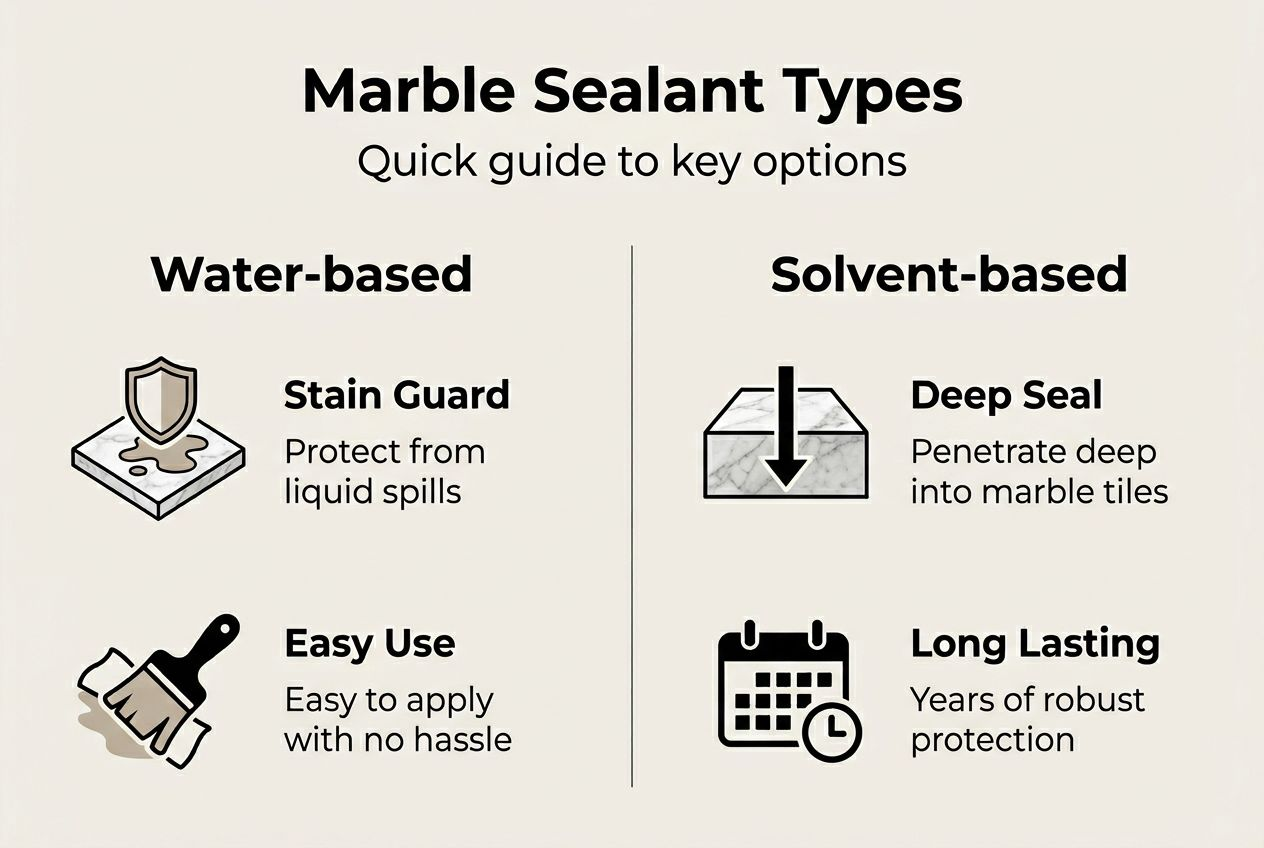
Finish type dramatically affects sealing requirements and product selection. Polished marble has a sealed surface from polishing, reducing absorbency somewhat, while honed finishes remain more porous and require more frequent sealing applications. Polished surfaces benefit from lighter sealant applications that enhance existing protection without creating buildup. Honed finishes need more robust coverage to compensate for their open pore structure.
Travertine presents unique sealing challenges due to its naturally pitted texture and higher porosity compared to marble. Its characteristic holes and channels allow deeper liquid penetration, necessitating sealants with excellent penetrating properties rather than surface film formers. Some installers fill travertine pores before sealing, creating smoother surfaces, while others preserve the natural texture and apply penetrating sealants that protect without altering character.
| Sealant Type | Best For | Advantages | Limitations | | — | — | — | | Water-based penetrating | Honed marble, travertine | No yellowing, easy application, low odor | Requires more frequent reapplication | | Solvent-based penetrating | Polished marble, high-traffic areas | Deep penetration, longer lasting, superior stain resistance | Strong odor during application, requires ventilation | | Impregnating sealer | All marble types | Breathable, maintains natural appearance | May darken some lighter stones slightly | | Color-enhancing | Travertine, weathered marble | Enriches natural tones, hides minor imperfections | Permanent color change, difficult to reverse |
Application technique matters as much as product selection. Clean surfaces thoroughly and allow complete drying before sealing, as moisture trapped beneath sealant causes clouding and reduces effectiveness. Apply thin, even coats using lint-free applicators, allowing proper penetration time specified by manufacturers before buffing excess. Multiple thin coats outperform single heavy applications that leave sticky residue.
Pro Tip: Perform water drop tests annually to assess sealant effectiveness. Place water droplets on sealed surfaces and observe for 10 minutes. If water beads and doesn’t darken the stone, sealing remains effective. Darkening or absorption indicates resealing time has arrived.
For comprehensive marble sealing best practices tailored to specific stone types and applications, consult resources that address your particular installation conditions. Variables like humidity levels, traffic patterns, and exposure to staining substances influence optimal sealing schedules and product choices.
Travertine’s distinctive beauty comes with maintenance requirements that differ significantly from marble despite their chemical similarities. The stone’s naturally porous, pitted structure and softer composition make it more vulnerable to scratching, staining, and environmental degradation. Improper routine maintenance is the single greatest cause of travertine degradation, emphasizing the critical importance of correct daily care practices.
Many homeowners damage travertine floors unknowingly by wet mopping with string mops that deposit dirty water into pores and drag grit across surfaces. This common practice creates scratches and embeds soil deep within the stone’s structure where it becomes nearly impossible to extract. Instead, use microfiber mops slightly dampened with pH-neutral cleaner, changing mop heads frequently to avoid redistributing dirt.
Environmental factors pose serious threats to travertine, particularly in climates with salt exposure or high mineral content water. Salt crystallization tests showed EST and KLT travertines had pronounced deterioration under saline conditions, demonstrating how sodium and magnesium salts penetrate pores, crystallize, and create internal pressure that fractures the stone from within. This process, called salt weathering, causes surface spalling, powdering, and structural weakness that progresses invisibly until dramatic failure occurs.
| Travertine Type | Porosity Level | Salt Damage After 15 Cycles | Visual Deterioration |
|---|---|---|---|
| EST (Yellow) | High | Severe surface loss | Pronounced flaking and powdering |
| KLT (Beige) | High | Severe cracking | Visible fracture networks |
| INC (Cream) | Medium | Moderate surface roughening | Minor texture changes |
| BAT (White) | Medium-Low | Minimal damage | Slight surface dulling |
This data reveals how travertine varieties respond differently to environmental stressors based on their porosity and mineral composition. If you live in coastal areas or regions where road salt is common, choose denser travertine types and implement aggressive sealing schedules to minimize salt penetration. Interior applications face fewer environmental challenges but still require diligent maintenance to prevent degradation.
Implement these daily care practices to extend travertine lifespan:
Pro Tip: Schedule professional travertine inspections every 18-24 months to identify early signs of salt damage, sealant failure, or structural issues before they require extensive restoration. Professionals can detect subsurface problems invisible to untrained eyes and recommend preventive treatments that cost far less than emergency repairs.
The softer nature of travertine compared to marble means scratches occur more easily from everyday activities. High-heeled shoes, pet claws, and furniture with metal glides all create damage that accumulates over time. Establishing household rules about footwear in travertine areas and using protective pads consistently prevents most mechanical damage. For detailed travertine maintenance guidance, explore resources addressing your specific installation type and usage patterns.
Maintaining marble and travertine’s timeless beauty requires knowledge, proper products, and sometimes professional expertise beyond DIY capabilities. Whether you need specialized cleaning solutions, restoration services, or guidance selecting stone types suited to your maintenance preferences, expert marble care solutions connect you with resources that preserve your investment’s value and appearance. Professional polishing, sealing, and restoration services deliver results that DIY methods cannot match, using calibrated equipment and refined techniques developed through years of experience.
Consulting specialists helps you make informed decisions about stone selection, installation methods, and maintenance schedules tailored to your specific environment and usage patterns. For homeowners planning new installations, interior marble selection tips guide you toward varieties that balance aesthetic preferences with practical maintenance requirements. Interior designers benefit from understanding how different marble and travertine types perform in various applications, enabling recommendations that satisfy both beauty and durability requirements. Explore modern marble maintenance approaches that integrate traditional stone care wisdom with contemporary products and techniques, ensuring your surfaces remain stunning for decades.
Etching results from acidic substances chemically reacting with marble’s calcium carbonate composition, creating dull spots or rough patches. Prevent etching by immediately blotting any spills of wine, coffee, citrus juice, or vinegar before they contact the surface for more than a few seconds. Use only pH-neutral cleaners and avoid placing acidic foods directly on marble countertops without protective barriers.
DIY polishing can address minor dullness using fine polishing powders and buffing pads, but significant etching or deep scratches require professional equipment. Attempting aggressive polishing without proper training risks creating uneven surfaces, removing too much material, or damaging surrounding areas. Professional services use calibrated machinery and progressive diamond abrasives that deliver uniform results across entire surfaces rather than creating noticeable patches.
Seal marble every 6-12 months depending on traffic levels, usage patterns, and finish type. Honed finishes and travertine typically need sealing every 6-9 months due to higher porosity, while polished marble in low-traffic areas may extend to 12-18 months. Perform water drop tests annually to assess actual sealant effectiveness rather than following arbitrary schedules, as environmental conditions significantly influence longevity.
Use exclusively pH-neutral cleaners labeled specifically for natural stone, avoiding any products containing acids, ammonia, or bleach. Microfiber mops and soft cloths prevent scratching travertine’s softer surface compared to abrasive scrubbing pads or stiff-bristled brushes. Never use vinegar, lemon juice, or multipurpose cleaners marketed for tile and grout, as these contain acids that damage travertine’s calcium-based composition and accelerate deterioration.


