Your Cart (0)
Your cart is empty
Free express shipping

Drawer menu
Free express shipping

TL;DR:
- Natural stone adds warmth and texture to interiors, with each type suited for specific applications and finishes.
- Strategic placement of accent walls, fireplaces, and countertops maximizes impact while minimizing costs and maintenance.
Natural stone has a way of stopping people mid-room. No manufactured material replicates the depth of marble veining, the roughness of slate, or the warm ivory of travertine. Yet for most homeowners, this decorating with natural stone guide is exactly what’s missing when they start a project: concrete advice on which stone to choose, where to place it, how to light it, and what to realistically budget. The good news is that you don’t need a full renovation to feel the impact. You just need a plan.
| Point | Details |
|---|---|
| Match stone to function | Choose granite for high-traffic surfaces and marble for decorative accents to get the best performance and longevity. |
| Accent first, expand later | A single stone feature wall or fireplace delivers high visual impact at a fraction of the cost of full installation. |
| Finish choice affects safety | Use honed or leathered finishes on floors for slip resistance; save polished surfaces for countertops and low-traffic accents. |
| Lighting shapes stone appearance | Angled and grazing light reveals stone texture and depth; overhead glare flattens the same surface dramatically. |
| Seal on schedule | Granite and slate need sealing every few years; softer stones like marble and limestone benefit from annual sealing. |
Before you buy a single tile or slab, you need to understand what you’re working with. Every stone type has a personality, and choosing the wrong one for a given space creates both aesthetic and practical problems down the road.
Granite stands as the workhorse of natural stone. It’s the top choice for durability in high-traffic areas like kitchen countertops, resisting heat and daily scratches without much fuss. Marble sits at the other end of the spectrum: softer, more porous, and genuinely breathtaking in decorative applications like bathroom vanities, fireplace surrounds, and statement sculptures. Travertine offers a warm, pitted texture with natural color variation from ivory to walnut. It works brilliantly in bathrooms and entryways. Slate is dense, dark, and slip resistant, making it a practical choice for mudrooms and outdoor-to-indoor transitions.
Then there are the specialty stones. Onyx is translucent and dramatic, often backlit in bars and powder rooms for a glowing effect. It requires professional installation and annual sealing to maintain its appearance and is best reserved for statement moments. Quartzite looks like marble but performs closer to granite, making it a smart middle ground. Limestone delivers soft, muted tones with a chalky texture that suits traditional and coastal interiors.
The finish on a stone changes how it looks, how it feels underfoot, and whether it’s safe for certain rooms. Here’s a quick breakdown:
Color choice is rarely just aesthetic. Lighter stones brighten smaller rooms but are more porous and require more frequent resealing, while darker stones resist staining better but show dust and light scratches more visibly. A creamy travertine opens up a compact hallway; a deep charcoal slate in the same space feels cave-like. Choose based on both the light conditions of the room and your willingness to maintain it.
You don’t need to clad an entire home in stone to feel its impact. Smart placement creates the same effect with far less investment.
A single stone feature wall transforms a living room from ordinary to architectural without touching any other surface. The fireplace surround is the most cost-effective starting point in most homes. A rough-cut limestone or stacked slate surround adds weight and presence to a room that no paint color can match.
The kitchen is where stone earns its keep daily. A marble backsplash behind an open range is one of the most photographed design choices in contemporary homes right now, and for good reason. Pairing it with a stone vent hood in the same material creates a seamless visual column that draws the eye upward. For those wanting the look without the full cost, a stone backsplash alone costs a fraction of a full countertop installation.
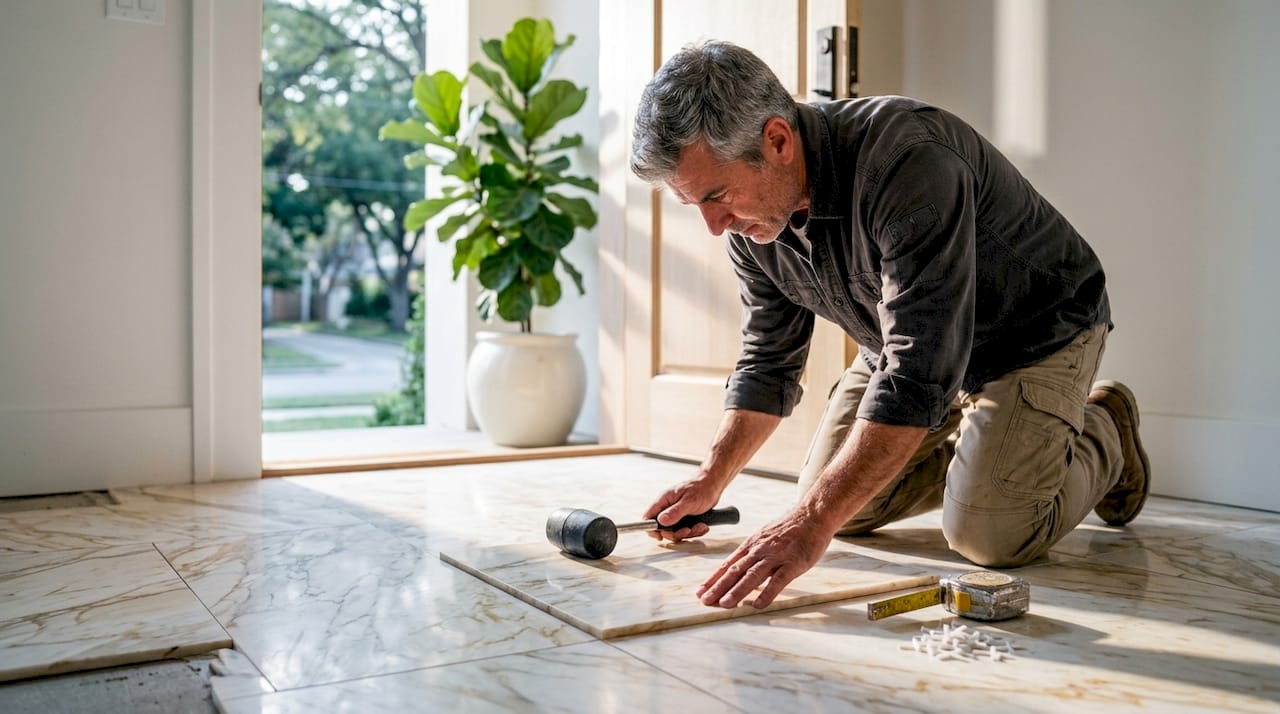
Not every room needs the same stone or the same finish. A polished marble entry creates a grand first impression but requires diligent maintenance. A honed travertine in a bathroom feels warm and spa-like. Leathered slate in a mudroom hides dirt and stands up to heavy use. The mistake most homeowners make is choosing flooring based on appearance alone without factoring in daily wear patterns.
Layering stone with smooth materials like glass or brushed metal creates grounded, intentional spaces rather than raw or rustic ones. A marble countertop paired with matte black fixtures reads modern. Travertine tiles alongside warm white oak floors feel organic and inviting. Using multiple stone types with coordinated undertones but contrasting textures adds sophistication without visual chaos.
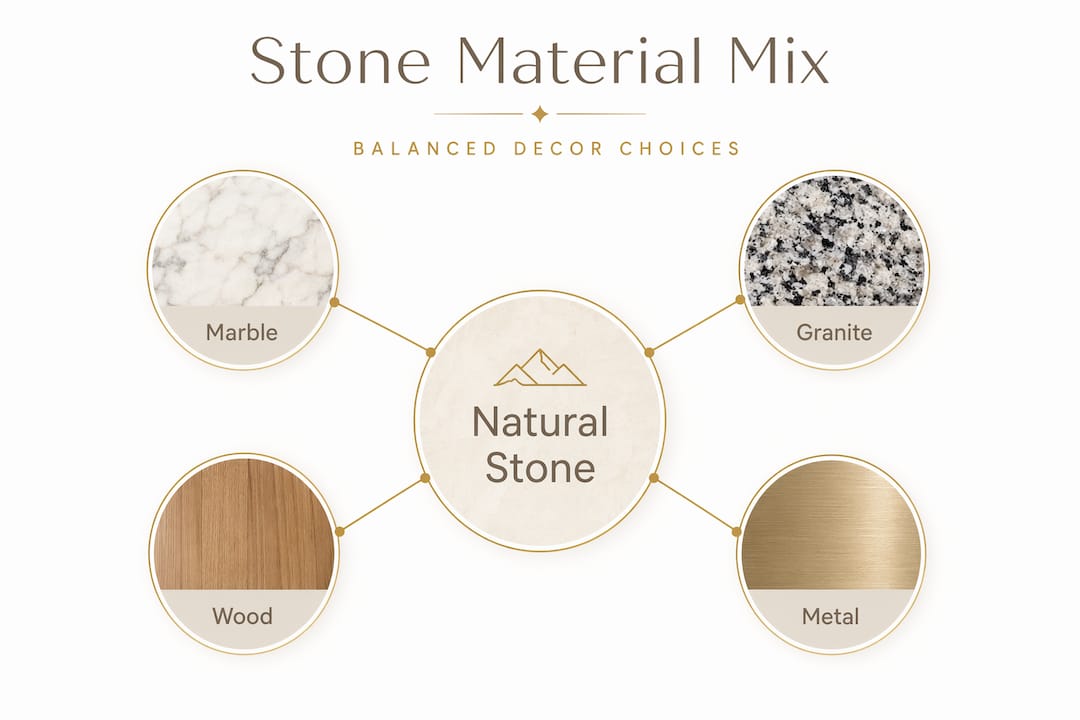
Pro Tip: When mixing stone with wood, match the undertones rather than the colors. A gray-veined marble pairs best with a cool ash wood, while a warm honey travertine works with oak or walnut.
Knowing which stone you love is step one. Getting it installed correctly and within budget is another story entirely.
Assess your space first. Measure carefully and take note of foot traffic, moisture levels, and how much natural light the room receives. A polished white marble in a north-facing bathroom will feel cool and flat; the same marble beside a sun-facing window glows.
Decide on scope. Full installation versus accent pieces versus decorative objects are three very different commitments. A stone lamp, sculpture, or soap dish adds material richness with zero installation complexity. A full stone floor is a months-long project.
Consider professional help honestly. Self-installation of heavy natural stone is genuinely discouraged for most homeowners. Cutting stone requires specialized tools, full-bed stone installations require structural assessment, and a single misaligned tile can ripple across an entire wall. If you want the DIY route, lightweight faux stone panels are a legitimate and increasingly sophisticated option.
Budget with the full picture in mind. The cost of stone itself is only part of the equation. Add in substrate preparation, mortar or adhesive, grout, sealer, and labor. A stone accent wall in a mid-sized room typically runs between $800 and $3,000 depending on the material and complexity.
Build a maintenance schedule before you commit. This is the step most people skip. Granite and slate need sealing only every few years, while softer stones like limestone and marble benefit from yearly sealing. All natural stone requires regular sealing to prevent staining and moisture damage. Know what you’re signing up for.
Pro Tip: Before sealing, test with a few drops of water on the stone surface. If it absorbs within a few minutes, it’s time to seal. If it beads up, you’re still protected.
For the latest ideas on how these materials are being used right now, the 2026 stone decor trends at Marmorique offer a useful reference point.
Stone is one of the most light-sensitive materials in any interior. The same slab can look flat and cold under fluorescent overhead light, then dramatic and warm under a single directed LED. Grazing light reveals texture and depth in stone, while strong overhead lights cause glare and flatten the surface. This is the most overlooked factor in most home installations.
Lighting placement near windows or under accent lights is the primary variable influencing stone’s visual impact indoors. For a stone accent wall, position LED strip lighting at the top or bottom to cast light across the surface at an angle. For a kitchen backsplash, under-cabinet lighting does the same job and is both functional and atmospheric.
The 2026 trend favors warm neutral colors like taupe and cream to create welcoming stone interiors. These tones add livability that stark high-contrast palettes don’t.
| Stone type | Best color pairings | Lighting recommendation |
|---|---|---|
| White marble | Soft white, warm gray, navy | Warm white LED, directional spots |
| Travertine | Cream, terracotta, olive green | Warm incandescent or 2700K LED |
| Slate | Charcoal, forest green, rust | Cool white or natural daylight |
| Limestone | Sand, taupe, dusty blue | Warm diffused lighting |
| Onyx | Black, gold, deep jewel tones | Backlit LED for translucency |
Grout and mortar color also matters more than most people expect. A tight, color-matched grout line makes stone look seamless. A contrasting grout highlights individual tile shapes and creates pattern. Neither is wrong, but the choice should be intentional.
I’ve watched homeowners make the same mistake repeatedly. They fall in love with a stone at a showroom under bright track lighting, buy it for a north-facing room with minimal windows, then wonder why it looks lifeless on the wall. Natural stone brings warmth and grounded texture that no manufactured material replicates, but that quality only appears under the right conditions.
My strong view is that most people should start smaller than they think. A single piece, a travertine lamp, a carved marble sculpture, or a solid stone soap dish, teaches you how stone behaves in your actual light conditions before you commit to a wall or a floor. It’s the equivalent of sampling a paint color before rolling an entire room.
I also think the obsession with matching stones in a single space is limiting. Natural stone’s timelessness and sustainable appeal make it a long-term investment, and the homes that wear stone best tend to layer it. Travertine floors with a marble fireplace surround and a slate backsplash in the kitchen creates a collected, lived-in sophistication. It feels more authentic than the “same stone everywhere” approach, which can veer into showroom territory.
The one thing I’d push back on: the idea that stone decor is always high maintenance. Yes, marble needs care. But granite barely does. Slate almost never does. Understand which stone you’re choosing before you accept the maintenance burden that comes with it.
— Nick
If you’re drawn to the idea of bringing natural stone into your home but aren’t ready to commit to an installation, starting with a curated decorative piece is the smartest first move.

Marmorique specializes in artisan-crafted stone decor, from solid marble sculptures to travertine bathroom accessories, each piece made from authentic natural stone and designed to work in real interiors. The marble grape cluster ornament is a perfect example: a 1.2kg solid stone decorative accent that adds immediate material richness to a shelf, table, or sideboard with zero installation required. For those looking to deepen their eye for stone selection and placement, the Marmorique blog offers detailed guidance on stone in contemporary design that translates directly to residential projects. Quality stone decor doesn’t have to start with a renovation. Sometimes it starts with a single well-chosen object.
Granite is the most durable choice for functional surfaces, while marble is preferred for decorative elegance in areas like bathroom vanities and fireplace surrounds. The best stone depends on your room’s function, light levels, and maintenance expectations.
Using stone as an accent rather than a full installation is the most cost-effective approach. A single feature wall, fireplace surround, or decorative stone object delivers high visual impact without the cost of full-room cladding.
Granite and slate need sealing every few years, while softer stones like marble and limestone benefit from sealing once a year. All natural stone should be tested periodically by placing a few drops of water on the surface to check absorption.
Angled or grazing light reveals stone’s texture and depth far better than direct overhead lighting. LED strip lights positioned at the top or base of a stone wall, or under-cabinet lights for backsplashes, are the most effective options.
Yes, and doing it well adds sophistication. Choose stones with coordinated undertones but contrasting textures, such as a honed travertine floor with a polished marble accent wall, to create depth without visual conflict.


