Your Cart (0)
Your cart is empty
Free express shipping

Drawer menu
Free express shipping

TL;DR:
- Genuine stone accessories are durable, unique, and suitable for daily use in various home settings.
- Proper sealing and gentle cleaning are essential for maintaining their beauty over time.
- They add timeless elegance, narrative depth, and personalized character to luxury interiors.
Stone accessories have a reputation problem. Most people picture them as fragile showpieces that sit untouched in a corner, or as investments reserved for luxury estates with professional housekeepers. Neither picture is accurate. Marble soap dishes handle daily use. Travertine trays organize your entryway beautifully while surviving everyday contact. This guide walks you through the materials, the product types, the real design considerations, and the care routines that make stone accessories both a smart choice and a lasting one. By the end, you’ll know exactly how to choose and maintain pieces that genuinely elevate your home.
| Point | Details |
|---|---|
| Stone adds timeless value | Natural stone accessories offer both luxury and longevity in home decor. |
| Choose stone for functionality | Marble and travertine pieces are durable and practical for kitchens, bathrooms, and living spaces. |
| Maintenance preserves beauty | Simple care keeps stone accessories looking pristine and extends their lifespan. |
| Uniqueness in every piece | Each stone accessory features distinct colors and veining, giving a bespoke touch to interiors. |
Now that we’ve reframed how stone accessories are viewed, let’s clarify what qualifies as a true stone accessory.
A stone accessory is any decorative or functional object carved, shaped, or formed from natural rock. We’re not talking about stone-effect resin or ceramic that mimics the look. True stone accessories come directly from quarried material, and that distinction matters for both performance and aesthetics. The tactile experience of holding a solid marble tray, with its weight and cool surface, is fundamentally different from touching a ceramic replica.
The most sought-after materials in high-end interiors are:
Common product forms include soap dishes, trinket trays, bookends, vases, candle holders, sculptural ornaments, and small side tables. These pieces provide both aesthetic and practical enhancements to living spaces, which is exactly why they’ve maintained a presence in high-end interiors for centuries.
What separates stone from synthetic lookalikes is natural variation. No two pieces are identical. A marble soap dish from the same quarry batch as your neighbor’s will have different veining, different micro-patterns, and a slightly different surface texture. That built-in individuality is something ceramic and resin simply cannot replicate, no matter how sophisticated the printing technology becomes.
Having established the materials and their qualities, let’s explore the variety of stone accessories and how they are used in high-end spaces.
The range of stone accessories available today goes far beyond the classic soap dish. Designers and homeowners are applying marble and travertine in creative ways that serve real purposes while looking extraordinary. Here are the top five applications in luxury home settings:
Each category blends function with design impact. A marble vase isn’t just beautiful; it’s heavy enough to stay stable with tall, top-heavy florals. A travertine tray doesn’t just look curated; its natural texture prevents items from sliding around.
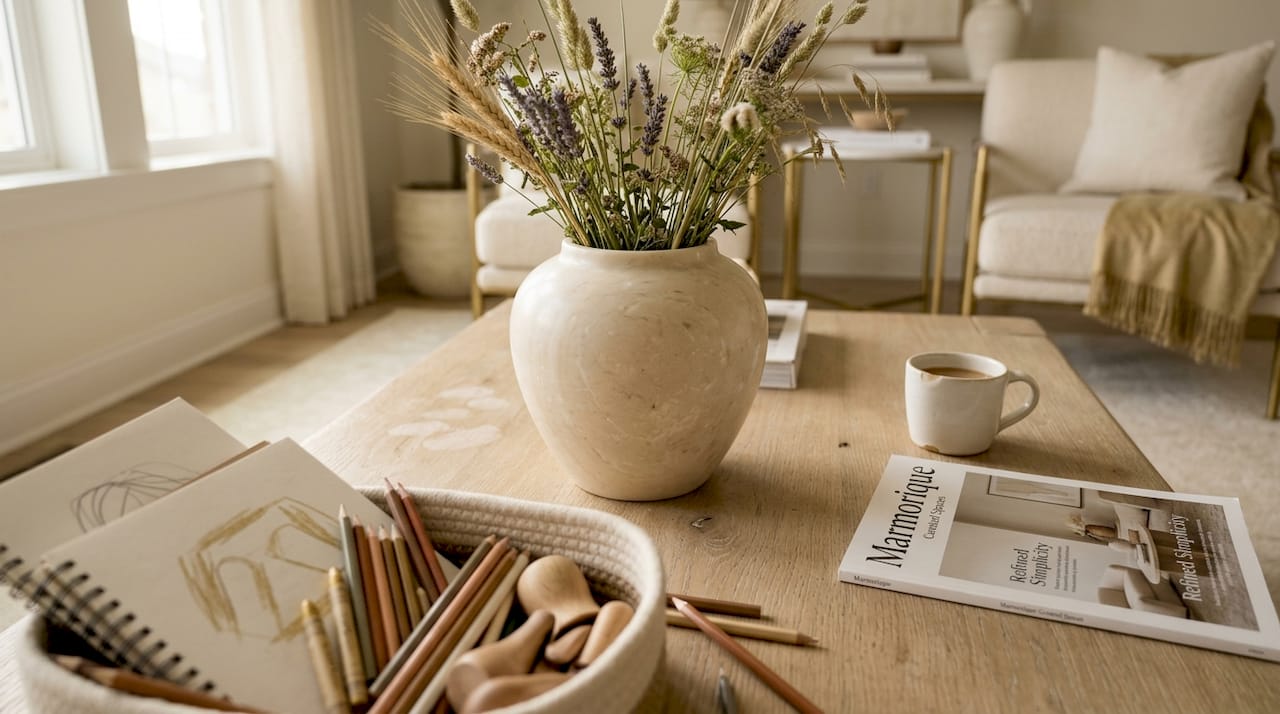
Pro Tip: If you’re choosing between marble and travertine for a specific room, consider the finish environment. Marble’s smooth, polished surface suits sleek, contemporary settings and wipes clean easily in wet zones. Travertine’s textured, matte surface fits warmer, earthier palettes and feels at home in rustic or Mediterranean-inspired spaces. For outdoor-adjacent areas like covered patios or sun rooms, travertine’s naturally slip-resistant texture is the stronger choice.
Understanding what’s available in stone, it’s essential to see how these pieces compare to other accessory materials in luxury homes.
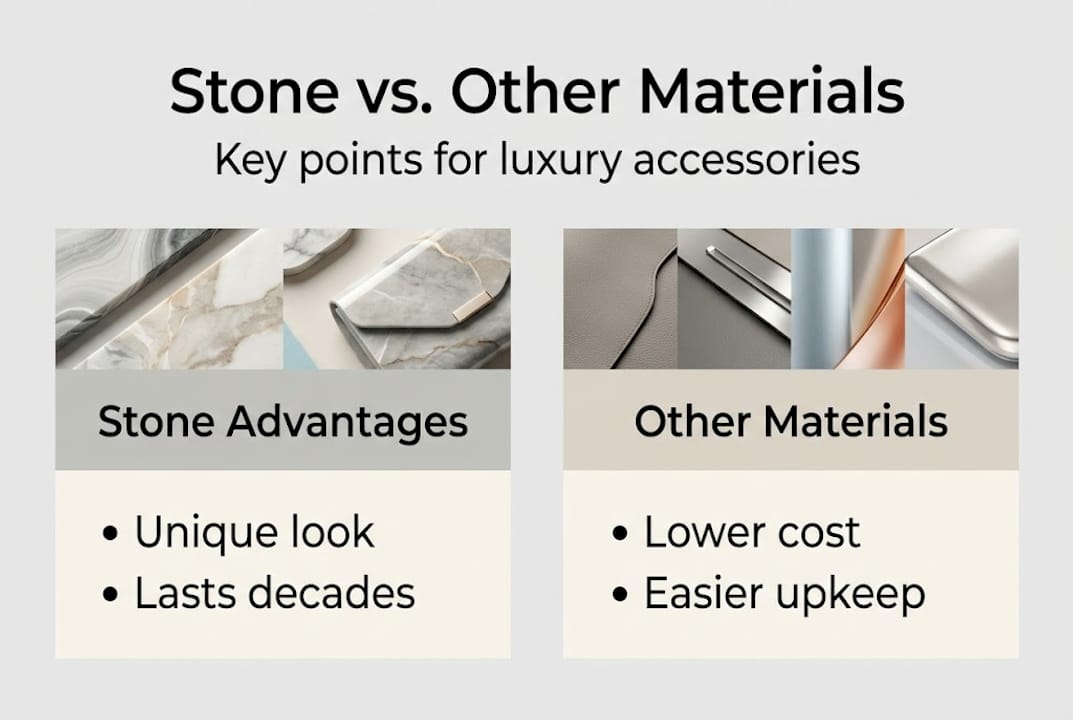
When you’re investing in high-end accessories, every material choice involves trade-offs. Here’s a direct comparison across the most common alternatives:
| Material | Visual appeal | Price point | Maintenance | Durability |
|---|---|---|---|---|
| Marble | Dramatic veining, high-gloss or matte | Premium | Moderate (sealing required) | Very high |
| Travertine | Warm, textured, organic | Mid to premium | Moderate (filling pores optional) | High |
| Ceramic | Consistent, predictable | Low to mid | Low | Moderate |
| Glass | Clear or colored, sleek | Mid | Low (shows fingerprints) | Fragile |
| Metal | Industrial or elegant depending on finish | Mid to premium | Low to moderate | Very high |
| Resin | Imitates stone but lacks depth | Low | Very low | Moderate |
Stone wins on two fronts that matter most in luxury interiors: individuality and tactile satisfaction. Every stone piece is genuinely one of a kind. As the principle behind enhancing interiors with stone makes clear, natural stone brings unmatched texture and individuality to interior spaces. You cannot manufacture that quality into resin or glass.
“When you hold a marble object, you’re holding something formed over millions of years. No factory process creates that depth of character.”
Sustainability is another real consideration. Natural stone, when properly cared for, lasts generations. A well-maintained marble tray won’t end up in a landfill in five years the way a resin piece might. That longevity makes the higher upfront price a genuinely sound investment over time. Ceramic, while durable, chips at edges with regular use. Metal can corrode or tarnish depending on finish. Glass remains a liability in high-traffic areas with children or pets. In scenarios where longevity, beauty, and daily handling converge, stone consistently outperforms.
Now that you know the pros and cons, let’s get practical about how to pick the ideal stone pieces for each setting.
Choosing stone accessories isn’t simply about picking what looks beautiful in isolation. The pieces that work best are selected with the full room in mind. Designers look for accessories that complement both the color palette and the tactile experience of a space. That means thinking about scale, finish, veining direction, and how stone interacts with surrounding materials like wood, linen, or brass.
Here are key buying guidelines to keep in mind:
Pro Tip: One of the most common mistakes is choosing polished marble accessories for wet zones or high-traffic surfaces. Polished stone is more porous once the surface seal wears, making it susceptible to staining from soap, toothpaste, or acidic products. In bathrooms and kitchens, look for honed marble or filled travertine, which handles moisture more gracefully and still delivers that luxurious stone presence.
Care is part of the selection process too. If you’re not prepared to seal a piece once or twice a year, granite or a denser travertine will reward you with easier upkeep than a soft, open-veined marble.
With your ideal accessories selected, proper care will ensure they remain a luxurious focal point for years.
Proper maintenance is key to ensuring stone accessories retain their beauty for years. The good news is that care routines are simpler than most people assume. Here’s a breakdown by stone type:
| Stone type | Best cleaning method | Sealing frequency | What to avoid |
|---|---|---|---|
| Marble | pH-neutral soap and warm water, soft cloth | Every 6 to 12 months | Vinegar, lemon juice, bleach |
| Travertine | Mild dish soap and damp cloth | Every 12 months | Acidic cleaners, abrasive pads |
| Granite | Stone-specific cleaner or neutral soap | Every 12 to 24 months | Harsh degreasers, oil-based soaps |
A basic maintenance routine for any stone accessory looks like this:
What to absolutely avoid: abrasive scrubbers, steel wool, bleach-based cleaners, and placing stone directly against rough surfaces that can scratch the underside. Felt pads on the base of stone accessories protect both the piece and the surface it rests on.
The practical tips above cover the “how,” but here’s what truly sets stone accessories apart in a designer’s eyes.
Most articles focus on aesthetics and maintenance schedules. What they miss is that stone accessories carry narrative weight. When you place a marble piece in a room, you’re not just adding texture or color. You’re introducing an object with genuine geological history, something formed under immense pressure over millions of years and shaped by a craftsperson’s hands. That story is invisible but felt. Guests pick up a stone dish and immediately notice the temperature, the weight, the solidity. Plastic and resin don’t do that.
There’s also the question of permanence in a world of fast decor cycles. Trends rotate every two to three years, but stone’s enduring appeal sits outside the trend cycle entirely. A travertine ornament you buy today will look equally at home in a future redesign, whether the palette shifts to deep jewel tones or soft neutrals. That adaptability is underrated.
Buy stone accessories because they move you, because you appreciate what they are. The emotional satisfaction of owning objects with genuine material integrity outlasts the satisfaction of anything you buy purely for how it photographs. That distinction separates interiors that feel curated from those that merely look styled.
Ready to enrich your space with standout stone pieces? Discover options crafted for lasting impact.
At Marmorique, every piece is selected with craftsmanship and longevity in mind. Whether you’re starting with a single accent or building out a full bathroom set, the collection offers marble and travertine accessories made from genuine natural stone, not composites or imitations. Each item ships with the variation and character that only real stone delivers.
Start with something tactile and functional, like an artisan marble soap dish that transforms a bathroom counter instantly, or add sculptural interest to a shelf or coffee table with a marble grape ornament that becomes an immediate conversation piece. Browse the full collection at Marmorique and find the stone accent your home has been waiting for.
With proper care, stone accessories are easy to maintain and remain beautiful for years. Proper maintenance keeps stone accessories in excellent condition with nothing more than regular wiping and annual sealing.
Choose marble for a classic, luxe look and travertine for a more textured, rustic feel. Selecting the right stone depends on the desired visual and tactile effect you want to achieve in the space.
Yes, marble and travertine accessories are popular for bathrooms when properly sealed and maintained. Marble and travertine are excellent for high-end bathroom accessories that handle daily moisture without degrading.
Absolutely, natural stone’s unique patterns add sophistication to both modern and minimalist schemes. Stone accessories enhance diverse interior design styles precisely because no two pieces carry the same visual pattern.
Weight varies by size and stone type. Smaller accessories like soap dishes and coasters are often very manageable and safe for everyday use on standard shelving and countertops.


