Your Cart (0)
Your cart is empty
Free express shipping

Drawer menu
Free express shipping

TL;DR:
- Travertine and marble differ significantly in formation, appearance, and surface texture.
- Proper sealing and maintenance are essential for longevity, with travertine being more porous.
- Each stone suits different spaces, with travertine ideal for outdoor and wet areas, marble for luxury interiors.
Travertine and marble are often treated as interchangeable by homeowners and even some designers, but that assumption can lead to costly mistakes. These two stones share a limestone ancestry, yet their formation processes, surface characteristics, and ideal applications diverge in ways that matter enormously in high-end interiors. Marble’s crystalline density and glossy finish tell a completely different design story than travertine’s warm, porous texture and earthy tones. If you’re investing in natural stone for a luxury project, understanding these differences isn’t just helpful, it’s essential. This guide walks you through everything you need to make a confident, informed choice.
| Point | Details |
|---|---|
| Material differences | Travertine and marble vary in porosity, appearance, and suitability for different environments. |
| Maintenance needs | Both stones require sealing, but travertine needs more frequent care due to its porous nature. |
| Best-use scenarios | Travertine excels in wet or high-traffic areas, while marble is ideal for luxurious, low-traffic interiors. |
| Investment and value | Understanding each stone’s maintenance and installation costs ensures a wise investment for home or design projects. |
Both stones start as limestone, but what happens next separates them entirely. Travertine forms in hot spring and river deposits, where minerals precipitate out of water over thousands of years. The result is a layered, porous stone filled with natural voids and a warm color palette ranging from ivory and beige to walnut and russet. Marble, on the other hand, forms when limestone is subjected to intense heat and pressure deep within the earth, a metamorphic process that recrystallizes the calcium carbonate into a denser, harder material with those iconic veining patterns.
Visually, the contrast is immediate. Marble carries a refined, almost luminous quality when polished, with bold or subtle veining that runs through the stone like brushstrokes. Travertine has a more organic, matte character. Its surface texture feels grounded and tactile, and its natural voids, often filled with grout or resin in finished products, give it a distinctive cross-cut or vein-cut pattern. For travertine decor ideas, that raw warmth is precisely what makes it so compelling in contemporary interiors.
Touch them side by side and the difference is physical. Marble feels cool and slick, almost glassy under a polished finish. Travertine feels warmer and slightly more absorptive, which also means it responds differently to spills and moisture. Because travertine is more porous and often needs more frequent sealing than marble, understanding this from the start saves you from surprises later.
Design note: When choosing between these stones, consider how much natural light your space receives. Marble amplifies light with its reflective surface, while travertine absorbs it, creating a softer, cozier atmosphere.
| Property | Travertine | Marble |
|---|---|---|
| Formation | Hot spring deposits | Metamorphic limestone |
| Porosity | High | Low to moderate |
| Surface finish | Matte, textured | Glossy, smooth |
| Color range | Warm neutrals, beige, walnut | White, gray, black, veined |
| Typical hardness | Softer (3-4 Mohs) | Harder (3-5 Mohs) |
| Sealing frequency | More frequent | Less frequent |
With the composition and feel in mind, how do these stones perform over time, especially in the kind of luxury environments home designers demand?
Marble is famously durable against physical wear but has a well-known vulnerability: acids. Citrus juice, wine, and even some cleaning products can etch the surface, leaving dull marks that disrupt that polished finish. Travertine wears more gradually and is less prone to dramatic surface etching, but its porosity means it absorbs stains faster if left unsealed or improperly maintained. In busy households, that’s a critical distinction.
Here’s a practical maintenance breakdown for each stone:
Pro Tip: Place stone-safe mats at entry points and in kitchen areas. This single habit reduces surface wear on both marble and travertine by a significant margin and extends the time between professional restoration visits.
| Factor | Travertine | Marble |
|---|---|---|
| Scratch resistance | Moderate | Moderate to high |
| Acid sensitivity | Low to moderate | High |
| Sealing frequency | Every 6-12 months | Every 12-18 months |
| Restoration options | Honing, void filling | Re-polishing, honing |
| Stain absorption risk | Higher | Lower |
Longevity in luxury settings comes down to care consistency. Both stones have survived centuries in palaces and public buildings, so with proper attention, either choice will outlast the trends.
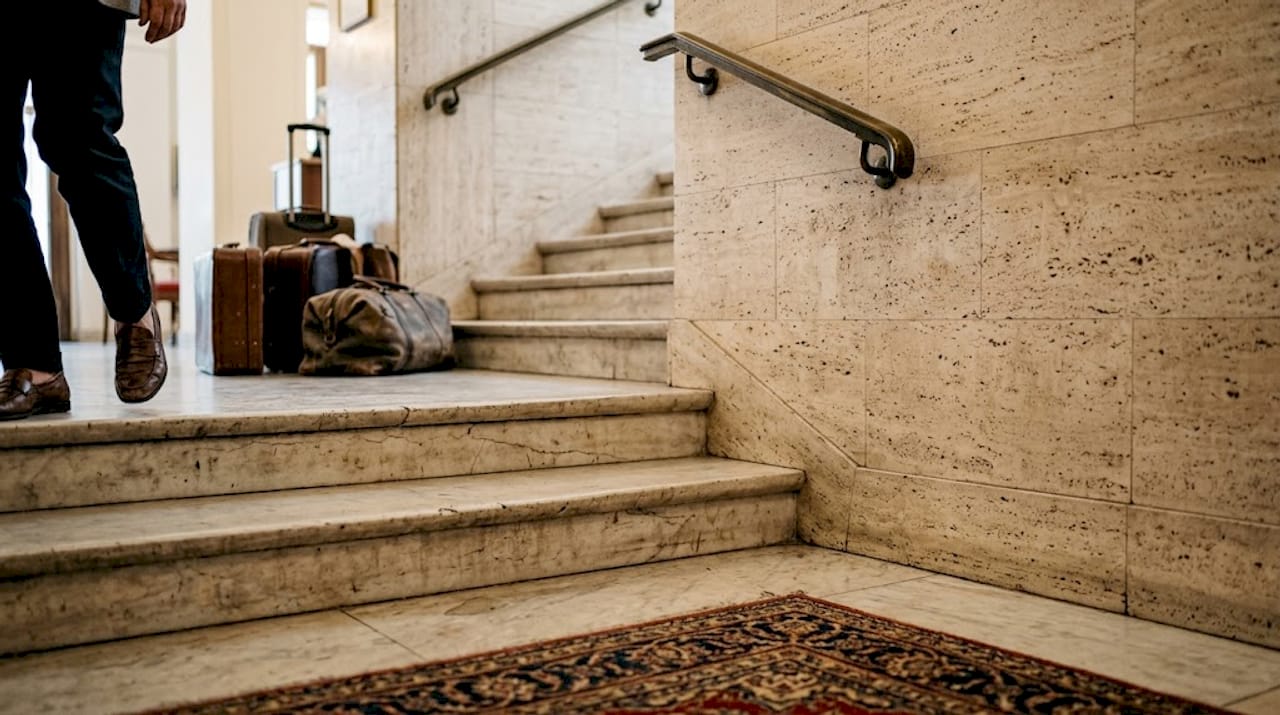
Once durability and maintenance are factored in, it’s time to choose the best stone for your project’s style and function.
Travertine and marble each have environments where they genuinely excel. Travertine’s slip resistance and textured surface make it a natural fit for wet areas and outdoor spaces, while marble’s refined finish and dramatic veining suit statement interiors where visual impact is the priority. Travertine suits wet areas like bathrooms and patios due to its slip resistance, while marble excels in luxury indoor applications such as vanities and sculptural furniture pieces.
Room-by-room recommendations:
Surface finish matters as much as the stone itself. A polished marble floor in a high-traffic hallway is beautiful but unforgiving. A honed travertine in the same space is more practical and still visually rich. Explore ways to use travertine beyond the obvious to see how versatile this material can be in modern luxury interiors.
Pro Tip: When mixing stones in one project, keep the finish consistent rather than the material. A honed marble and honed travertine can coexist beautifully in the same space without visual conflict.
Beyond beauty and performance, both homeowners and professionals want to understand the total investment for each stone.
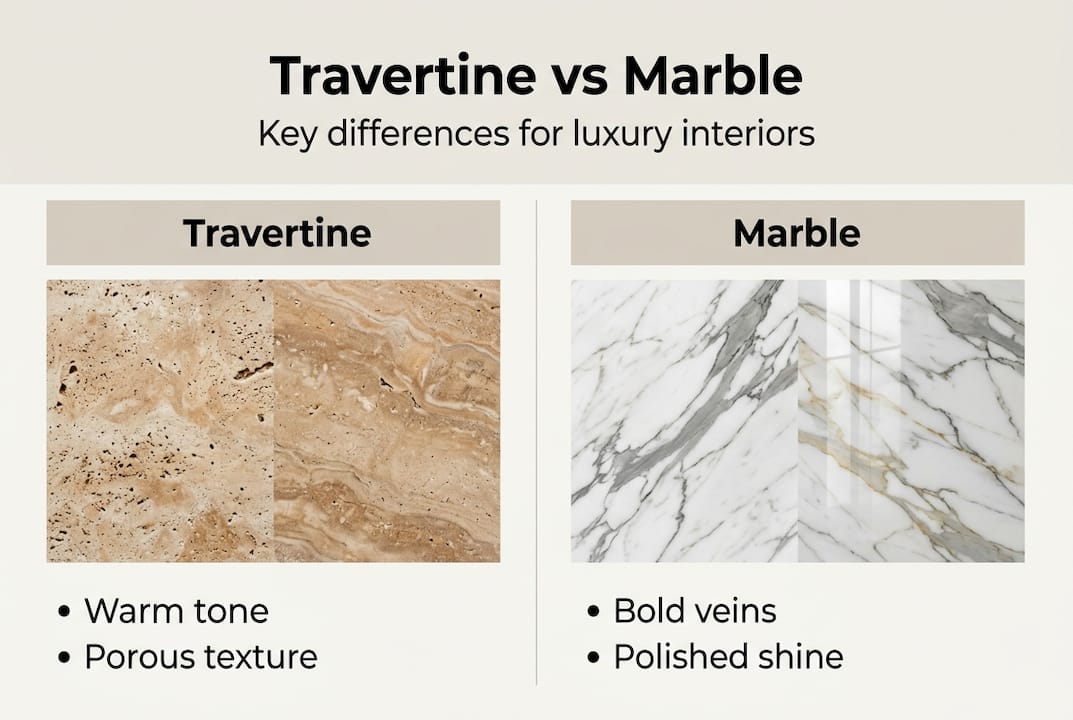
Travertine is generally more affordable than marble at the material level. Entry-level travertine tiles can start around $3 to $7 per square foot, while mid-range marble typically runs $10 to $20 per square foot or more, depending on origin and rarity. Premium grades of both materials can exceed these ranges significantly, especially for book-matched slabs or rare color variants.
But material cost is only part of the picture. Stone selection impacts not only aesthetics but also ongoing costs due to differences in maintenance frequency. Travertine’s more frequent sealing schedule and occasional void repairs add up over years. Marble may cost more upfront but can require less frequent sealing, though professional polishing after etching isn’t cheap.
Key decision points for buyers:
The smartest investment isn’t always the most expensive stone. It’s the one that fits your lifestyle, maintenance capacity, and design vision without compromise.
Here’s something most showrooms won’t tell you: the prestige of marble can actually work against a design when it’s chosen for status rather than suitability. We’ve seen stunning spaces where travertine was the braver, more interesting choice, and the result felt more genuinely luxurious than a predictable white marble installation.
Travertine carries a warmth and geological honesty that marble, for all its glamour, sometimes lacks. In spaces designed for living rather than impressing, that distinction matters. A travertine bathroom floor that feels warm underfoot on a winter morning is a daily luxury that a cold marble surface simply doesn’t deliver.
The regrets we hear most often from homeowners aren’t about choosing travertine over marble. They’re about choosing marble for a high-traffic area without thinking through the maintenance reality, or picking a stone purely for its Instagram appeal. Real luxury is a material that ages well, suits your life, and still looks intentional a decade later.
If you’re drawn to the organic and earthy direction that’s defining so much of 2026’s high-end interior design, creative travertine ideas might surprise you with how elevated this stone can feel when used thoughtfully.
Choosing between travertine and marble is a decision that shapes how a space feels for years. At Marmorique, we’ve built our collection around exactly this kind of considered choice, pairing artisanal craftsmanship with stones that are selected for both beauty and real-world performance.
Whether you’re drawn to the warm, organic character of travertine or the bold drama of marble, our curated range of stone lamps, tables, bathroom sets, and decorative accessories gives you a tangible way to experience both materials before committing to a larger project. Explore curated stone options and find the pieces that speak to your design vision, with expert context to guide every decision.
Travertine is often the preferred choice for bathrooms because its textured surface offers better slip resistance in wet areas, though both stones need consistent sealing to perform well over time.
Yes, both require sealing. Travertine needs sealing more often due to its higher porosity, typically every 6 to 12 months compared to marble’s 12 to 18 month schedule.
Marble is best reserved for indoor, low-traffic applications. Travertine handles exterior use much better, including patios and pool surrounds, thanks to its natural slip resistance and tolerance for temperature changes.
Travertine is generally more budget-friendly at the material level, but total cost depends on maintenance, grade, finish, and installation complexity for both stones.


