Your Cart (0)
Your cart is empty
Free express shipping

Drawer menu
Free express shipping

Many believe travertine requires constant maintenance, but modern sealants have transformed travertine into a highly durable investment with sealing intervals of just 1-2 years. This natural stone offers timeless beauty, exceptional durability, and sustainability for luxury spaces at a fraction of marble’s cost. This guide explains travertine’s unique features, maintenance protocols, comparisons with other premium stones, and design versatility to help you make confident material decisions for your high-end interior projects.
| Point | Details |
|---|---|
| Unique aesthetic | Travertine offers warm, rustic elegance with versatile finishes from polished to tumbled. |
| Maintenance | Proper sealing every 1-2 years ensures decades of durability in luxury applications. |
| Cost advantage | Costs approximately 50% less than marble while delivering comparable luxury appeal. |
| Sustainability | Natural formation requires minimal manufacturing energy, supporting green building goals. |
| Design flexibility | Complements Mediterranean, rustic, modern, and contemporary luxury interiors seamlessly. |
Travertine is a porous limestone formed from mineral spring waters, featuring unique pore patterns that create a distinctly rustic yet luxurious aesthetic. This geological formation process occurs when mineral-rich waters precipitate calcium carbonate, building up layers over thousands of years. The result is a natural stone with characteristic holes and pores that can be filled for a smoother surface or left exposed for added texture.
The stone’s surface displays distinctive natural variations that prevent the monotonous patterns common in synthetic materials. Each tile tells its own geological story through unique pore arrangements and subtle color shifts. Common travertine natural characteristics include warm color palettes spanning beige, ivory, cream, walnut, and soft earth tones that bring organic warmth to luxury interiors.
Key characteristics that distinguish travertine include:
This porosity differentiates travertine from marble and granite, contributing to its warm, inviting appearance while requiring specific care protocols. Understanding these travertine natural formation characteristics helps designers and homeowners appreciate why this stone commands attention in premium interior projects.
Travertine’s adaptability across design styles stems from its range of available finishes and natural color variations. The stone can be processed into honed (matte), polished (glossy), tumbled (textured), or brushed (soft patina) finishes, each offering distinct visual and functional properties. Travertine’s warm earthy tones and finishes complement Mediterranean, rustic, and modern luxury interiors by providing a neutral yet sophisticated foundation.
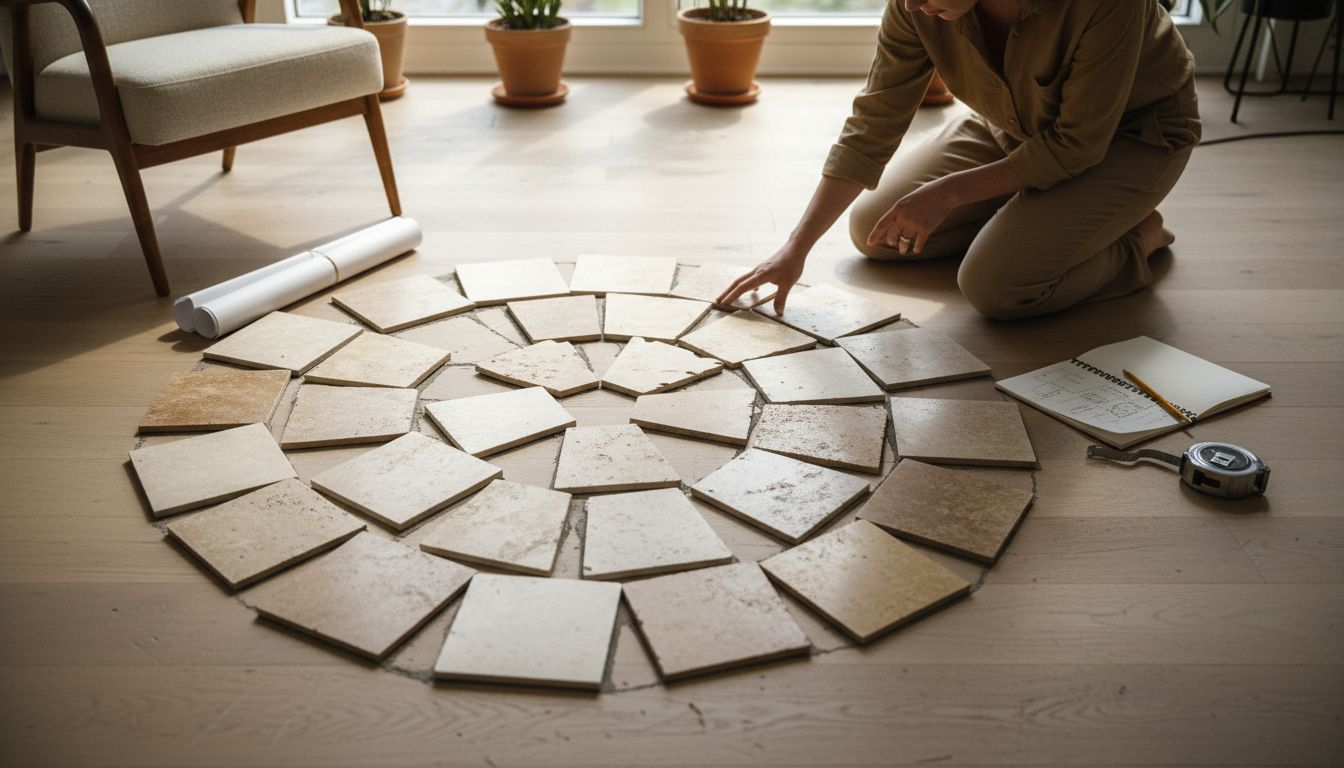
Finish selection directly impacts both aesthetics and practical performance. Polished finishes deliver high gloss suitable for formal spaces but may become slippery when wet. Tumbled and honed finishes provide better traction for bathrooms and outdoor applications while maintaining luxury appeal. The natural tile variation inherent in travertine prevents the artificial uniformity of manufactured alternatives, enhancing the sense of exclusivity in high-end projects.
Travertine design versatility enables seamless integration across multiple design movements:
Pro Tip: Select finish based on room function rather than aesthetics alone. Polished travertine suits formal living areas where slip resistance is less critical, while honed or tumbled finishes excel in wet areas like luxury bathrooms and outdoor entertainment spaces.
The color palette ranges from subtle cream and ivory for understated elegance to rich walnut and gold for dramatic focal points. This spectrum allows designers to layer travertine with other premium materials without visual competition. Natural variations ensure each installation becomes a unique art piece rather than a standardized surface, directly addressing the luxury market’s demand for travertine finishes and colors that express individual style.
Travertine’s porous nature requires proactive sealing to achieve the longevity expected in luxury installations. Professional sealing creates a protective barrier that blocks moisture absorption and prevents staining, preserving both appearance and structural integrity. With modern sealing technology, properly sealed travertine can last decades, making it a sound long-term investment for luxury floors and outdoor applications.
Maintenance protocols for travertine in high-end settings include:
The sealing interval varies based on application. High-traffic entryways may require annual resealing, while formal dining rooms with minimal use can extend to every two years. Kitchen installations demand vigilant maintenance due to potential acid exposure from food and beverages. Bathroom applications benefit from more frequent sealing to combat constant moisture exposure.
Pro Tip: Educate household staff and family members about proper cleaning products before installation. Acidic cleaners like vinegar or lemon-based solutions can etch travertine surfaces, requiring costly professional restoration to repair damage.
Travertine’s thermal properties provide additional functional benefits in luxury applications. The stone remains cool underfoot even in warm climates, making it ideal for poolside installations and outdoor entertainment areas. This natural temperature regulation enhances comfort while maintaining the sophisticated appearance expected in premium projects. Professional travertine maintenance and durability practices preserve these benefits throughout the material’s multi-decade lifespan.
Color consistency across a single installation requires sourcing tiles from the same quarry lot to minimize natural variation. Working with reputable suppliers ensures quality control and reduces the risk of visible mismatches. Professional installers understand these nuances and can blend tiles strategically to create cohesive luxury surfaces that age gracefully with proper travertine durability and sealing protocols.
Several persistent myths about travertine discourage potential buyers despite contrary evidence from properly maintained luxury installations. The most common misconception centers on porosity, with many believing it makes the stone impractical for kitchens and bathrooms. In reality, modern sealing technology and proper maintenance reduce sealing needs to intervals of 1-2 years, making travertine highly manageable and durable in these applications.
Another widespread belief holds that travertine requires constant attention and specialized care beyond typical homeowner capabilities. Contemporary sealants have dramatically simplified maintenance compared to products available even a decade ago. The gap between travertine and supposedly low-maintenance alternatives has narrowed considerably, especially when comparing total lifecycle costs and replacement frequencies.
Key truths that counter common misconceptions include:
Some buyers confuse travertine with basic limestone, failing to recognize the distinct formation process and resulting characteristics. Travertine misconceptions often stem from outdated information or experiences with poorly maintained installations. The stone’s geological origin creates unique pore structures and mineral compositions that differentiate it from standard limestone products.
Modern sealing technology has fundamentally changed travertine’s maintenance requirements. What once demanded monthly attention now thrives with simple annual or biannual professional sealing, making it entirely practical for luxury homes where beauty must coexist with livability.
The perception that travertine lacks durability compared to granite or marble stems from improper installation rather than inherent material weakness. When sourced from reputable quarries and installed by skilled professionals, travertine withstands decades of use in high-traffic luxury environments. Understanding these travertine myths and truths empowers informed decisions based on facts rather than outdated assumptions.
The decision between travertine and marble often hinges on balancing aesthetics, budget, and maintenance requirements. Travertine typically costs about 50% less than high-grade marble for similar finishes while offering better slip resistance, making it particularly attractive for budget-conscious luxury projects. Both stones deliver exceptional longevity when properly maintained, though their care protocols differ in specific ways.
| Feature | Travertine | Marble |
|---|---|---|
| Cost per sq ft | $4-$8 installed | $8-$16 installed |
| Sealing frequency | Every 1-2 years | Every 1-2 years |
| Slip resistance | Higher (textured finishes) | Lower (polished finishes) |
| Acid sensitivity | Moderate | High |
| Visual uniformity | Natural variation | More consistent veining |
| Longevity | 20+ years maintained | 25+ years maintained |
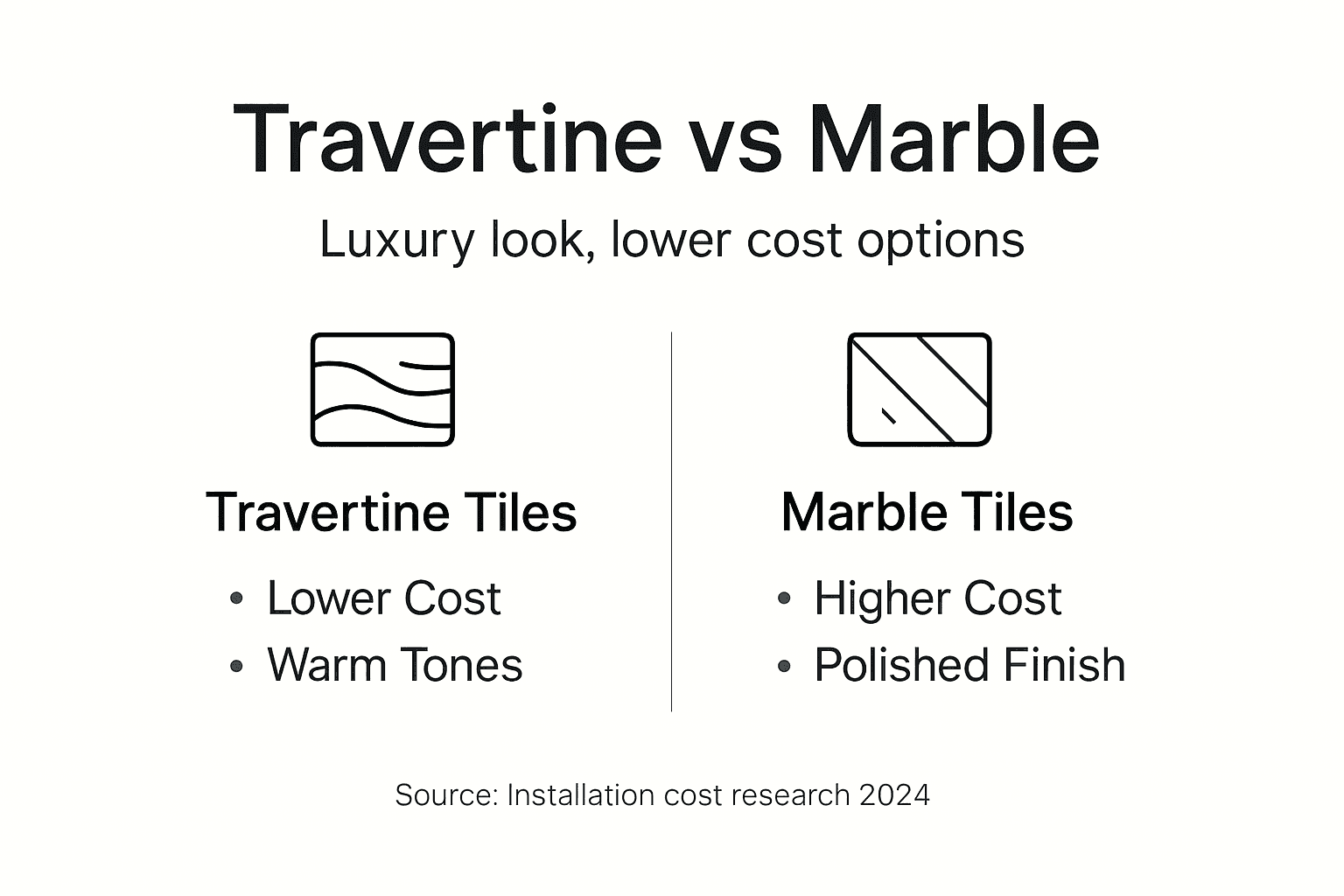
Marble provides superior polish retention and a more uniform appearance prized in formal luxury settings. The stone’s dense composition allows for mirror-like finishes that resist wear longer than travertine’s softer structure. However, this same density makes marble more slippery when wet, creating safety concerns in bathrooms and poolside applications where travertine vs marble comparisons often favor the textured alternative.
Maintenance considerations differ between these premium stones:
The choice ultimately depends on project priorities and design intent. Formal entryways and powder rooms may justify marble’s higher cost and maintenance intensity for maximum visual impact. Family-oriented luxury homes often prefer travertine’s practicality and warmth in kitchens and bathrooms. Many designers combine both stones strategically, using marble for statement pieces and travertine for larger functional surfaces to balance budget and aesthetics.
Granite presents another alternative with even greater density and stain resistance than either travertine or marble. However, granite’s cooler color palette and more industrial appearance suit contemporary aesthetics better than traditional or Mediterranean luxury styles. Understanding these travertine vs marble comparison nuances enables material selections that align with both design vision and practical requirements.
Travertine’s natural formation process and minimal manufacturing requirements position it as an environmentally responsible choice for sustainability-focused luxury projects. Unlike engineered flooring alternatives that require significant energy inputs for production, travertine emerges from geological processes requiring only quarrying and cutting. Travertine requires less manufacturing energy compared to synthetic tiles, supporting sustainability goals in luxury projects without compromising aesthetics or performance.
The stone’s exceptional longevity further enhances its environmental profile by reducing replacement frequency over building lifespans. A properly maintained travertine installation can serve multiple generations, avoiding the waste associated with shorter-lived alternatives. At end of life, natural stone can be reclaimed and repurposed rather than contributing to landfills, supporting circular economy principles increasingly valued in luxury markets.
Environmental benefits of travertine include:
Pro Tip: Request quarry certifications and transportation documentation from suppliers to verify environmental claims. Travertine sourced from nearby regions with responsible extraction practices minimizes carbon footprint while ensuring quality and ethical standards align with luxury project values.
Responsible sourcing amplifies travertine’s inherent sustainability advantages. Quarries implementing land reclamation programs and water recycling systems further reduce environmental impact. Some operations power cutting and processing equipment with renewable energy, creating truly low-impact luxury materials. Designers and homeowners can prioritize sustainable travertine suppliers who document these practices transparently.
The thermal mass properties of natural stone contribute to energy efficiency in luxury homes by moderating indoor temperatures naturally. Travertine floors absorb heat during warm periods and release it gradually, reducing HVAC loads compared to materials with lower thermal mass. This passive climate control aligns with high-performance building strategies while delivering the aesthetic refinement expected in premium interiors. Understanding travertine sustainability factors enables material choices that satisfy both environmental values and luxury standards.
Successful travertine specification begins with matching finish selection to functional requirements and design aesthetics. High-traffic areas benefit from honed or tumbled finishes that hide minor scratches while providing slip resistance. Formal spaces with lower traffic can showcase polished finishes for maximum visual impact. Understanding these relationships ensures travertine installation and maintenance protocols align with actual use patterns.
Sourceing considerations for luxury projects:
Professional installation proves critical for achieving luxury results that justify travertine’s investment. Experienced installers understand substrate preparation requirements, including moisture barriers and proper underlayment selection. They recognize how tile orientation and pattern layout affect visual flow and can minimize waste while maximizing aesthetic impact. Attempting DIY installation in luxury contexts risks costly mistakes that compromise both appearance and longevity.
Maintenance program establishment should occur before installation completion:
Geographic origin influences subtle characteristics that matter in luxury specifications. Turkish travertine tends toward warmer beige and gold tones with consistent pore structure. Italian varieties often display cooler ivory shades with more dramatic veining. Persian travertine offers unique red and rust undertones rarely found elsewhere. These regional variations enable designers to fine-tune material selection for specific aesthetic goals while ensuring authentic luxury provenance.
Pro Tip: Source 10-15% extra material beyond calculated square footage requirements. Natural stone variation means future repairs or additions may not match perfectly if sourced years later from different quarry lots. Storing extra tiles ensures seamless repairs maintain luxury installation integrity.
Regular professional sealing every 1-2 years preserves travertine’s look and durability in luxury settings, making this ongoing investment essential rather than optional. Budget planning should incorporate these recurring costs alongside initial material and installation expenses. The total lifecycle cost remains competitive with alternatives when accounting for travertine’s extended service life and timeless appeal that avoids style-driven replacement.
Quality control during installation includes verifying proper sealer application, checking grout line consistency, and ensuring tile lippage stays within acceptable tolerances. Luxury projects merit the extra attention to detail that separates adequate installations from truly exceptional results. Understanding travertine care best practices from project inception ensures all stakeholders share realistic expectations and maintenance commitments.
Selecting travertine for luxury projects requires balancing multiple factors through a structured decision framework. Geographic origin establishes baseline quality and color characteristics that anchor design direction. Finish type determines functional performance and aesthetic impact across different room applications. Maintenance commitment level must align realistically with household resources and lifestyle priorities. Environmental considerations increasingly influence material choices in premium markets where sustainability complements rather than compromises luxury.
The decision matrix below synthesizes key considerations:
| Decision Factor | Key Questions | Optimization Strategy |
|---|---|---|
| Origin authenticity | Does quarry region match desired color palette? | Prioritize Turkish travertine for warm tones, Italian for cool neutrals |
| Finish suitability | Will traffic and moisture exposure suit chosen finish? | Match polished to formal areas, tumbled to wet or outdoor spaces |
| Maintenance capacity | Can household commit to 1-2 year resealing intervals? | Honest assessment prevents future neglect and appearance degradation |
| Budget alignment | Does 50% savings vs marble justify textural differences? | Calculate total lifecycle cost including maintenance and longevity |
| Sustainability goals | Do project values prioritize natural materials and longevity? | Select responsibly sourced travertine supporting green building credentials |
Balancing natural elegance with practical maintenance optimizes both immediate satisfaction and long-term value. The unique character of each travertine installation creates irreplaceable luxury that synthetic alternatives cannot replicate. Cost advantages compared to marble enable larger coverage areas or budget reallocation toward other premium finishes and fixtures.
Use this travertine selection framework to weigh competing priorities systematically. Projects emphasizing outdoor entertainment spaces may prioritize slip-resistant tumbled finishes despite higher maintenance from weather exposure. Formal interior renovations might justify polished travertine’s visual drama and accept more frequent cleaning protocols. Understanding these tradeoffs produces confident material selections aligned with both aesthetic vision and practical realities of luxury home ownership.
Marmorique curates exclusive travertine collections at Marmorique designed specifically for luxury aesthetics and long-term durability. Our selection spans finishes from museum-quality polished surfaces to richly textured tumbled tiles sourced from premier quarries worldwide. Access expert guidance to match your project requirements with optimal stone characteristics, ensuring every specification decision supports your design vision.
Combine travertine flooring with our luxury stone furnishings including hand-carved tables, lamps, and bathroom accessories for cohesive luxury interiors. Our team provides personalized service addressing sourcing questions, maintenance protocols, and design integration strategies. Discover premium natural stone tiles backed by quality guarantees and professional support that transforms travertine knowledge into stunning reality.
Honed finish provides ideal slip resistance for indoor wet areas like luxury bathrooms while maintaining a sophisticated matte appearance. Tumbled finish suits outdoor pool decks and spa surrounds with enhanced texture that prevents slipping even when constantly wet.
Professional sealing every 1-2 years depending on traffic and moisture exposure preserves appearance and prevents staining in luxury installations. High-traffic kitchens may require annual resealing while formal living areas can extend to biannual schedules with proper daily maintenance.
Travertine’s natural formation requires significantly less manufacturing energy than ceramic or porcelain tiles, creating a smaller carbon footprint. Its exceptional longevity and potential for reclamation at end of life support circular economy principles increasingly valued in sustainable luxury design.


