Your Cart (0)
Your cart is empty
Free express shipping

Drawer menu
Free express shipping

TL;DR:
- Marble tables are central to luxury interiors, with material quality and design details crucial for impact.
- Expert tips emphasize choosing the right shape, thickness, finishing, and sourcing, as well as matching the base to the room.
- Unique shapes like hexagonal and sculptural designs are highly valued, but proper sizing and maintenance are essential.
A marble table is never just a table. In a luxury interior, it is the gravitational center of a room, the piece everything else orbits. Yet selecting the right one is genuinely difficult. The wrong stone pattern, an awkward shape, or a base that fights the room’s proportions can undermine thousands of dollars of surrounding design work. With so many styles, stone types, and custom options available in 2026, knowing how to evaluate and choose the design that truly elevates your space requires more than a catalog browse. This guide walks you through expert criteria, a curated list of the best marble table designs, a side-by-side comparison, and real designer insight to help you decide with confidence.
| Point | Details |
|---|---|
| Evaluate design criteria | Assess quality, style, and function to ensure harmonious selection with luxury interiors. |
| Explore top styles | Five specific marble table designs capture elegance for upscale spaces. |
| Compare side by side | Use direct comparisons to match design strengths to your room’s needs. |
| Follow expert tips | Leverage insider advice to avoid common mistakes and enhance your space. |
| Prioritize personal context | Select tables that complement your architecture, lighting, and lifestyle for lasting impact. |
Once you understand why your table choice matters, here’s how experts break down what makes one design stand out from the rest.
The foundation of any great marble table is the stone itself. Material quality separates a forgettable piece from an heirloom. Classic marbles like Italian statuary and books-matched slabs offer dramatic, graphic veining. marble table examples show just how vastly two slabs from the same quarry can differ in character. If you prefer warmer, more organic textures, travertine is an increasingly sophisticated choice, offering earthy ivory and walnut tones that feel natural and grounded.
Beyond the stone, consider these design elements before purchasing:
Sourcing matters more than most buyers realize. Ask about stone provenance, quarry certifications, and how the slab was finished. A table from a responsibly sourced Italian quarry with artisan hand-finishing is a categorically different product from an overseas slab that is machine-polished and mass cut.
Finally, think about function before aesthetics. A dining table must handle daily use, moisture, and heat proximity. A console or accent table lives a lighter life and gives you freedom to choose more delicate or fragile finishes.
Pro tip: For genuinely rare impact, explore stone patterns from small-batch quarry runs. Limited stone means no two tables will ever look identical, and that exclusivity is something money alone cannot replicate.
Armed with a discerning eye, let’s explore the marble table designs that set the bar for luxury living.
These five styles represent the breadth of what marble tables can achieve when form and stone align.
The midcentury chunky hexagonal dining table. This is the boldest choice on this list. A thick hexagonal top in dark emperador or creamy bianco marble commands the room completely. This is the style that refined marble table inspirations consistently return to for maximum design impact. Best for: Large formal dining rooms. Stone: Dark veined marble or ivory travertine. Style tip: Keep surrounding chairs low-profile in natural linen.
The modern slab console table. A single-slab top, often 2 meters long, in polished calacatta with a matte black steel base. It works as an entry statement, a bar, or a hallway anchor. Best for: Open-plan entrances and hallways. Stone: Books-matched calacatta. Style tip: Add unlacquered brass accents to warm up the cool stone.
The classic oval travertine dining table. The oval format is approachable and elegant without demanding too much from the room. Roman travertine, with its characteristic fossil inclusions and warm cream color, gives this table a sense of history. Best for: Mid-size dining rooms. Stone: Roman travertine. Style tip: Layer with rattan chairs for a relaxed luxury feel.
The sculptural pedestal table. Here, the base becomes the art. A single tulip-style or split-column pedestal in solid marble, often carved from a contrasting stone, turns the whole table into a sculptural object. Best for: Study or living room as a side table or accent. Stone: Verde alpi or nero marquina. Style tip: Style with a single oversized vase to avoid visual clutter.
The minimalist round marble side table. Small, precise, and endlessly versatile. A 50-centimeter round top in honed cararra on a thin geometric base works in virtually any luxury interior. The impact of marble tables as accent pieces is often underestimated until a room has one.
“Non-traditional table shapes, including chunky hexagonal marble dining tables, are among the most compelling choices for luxury dining spaces.” A perspective echoed by unique shapes in luxury dining featured by top design publications.
With the leading designs introduced, making your final selection becomes easier with a direct comparison.
Midcentury-inspired chunky marble designs are among the fastest-growing trends in luxury residential interiors, with interior design publications increasingly featuring bold stone forms as focal points over conventional furniture. Here’s how each style stacks up:
| Design style | Best setting | Stone choice | Surface upkeep | Investment range | Visual weight |
|---|---|---|---|---|---|
| HexagonaI chunky dining | Large formal dining | Dark veined or ivory marble | Medium, seal every 1-2 years | High | Very bold |
| Modern slab console | Entry, hallway, bar | Books-matched calacatta | Low, polish as needed | High | Bold |
| Classic oval travertine | Mid-size dining | Roman travertine | Medium, grout filling helps | Mid to high | Medium |
| SculpturaI pedestal | Study, living room | Verde alpi or nero marquina | Low, minimal surface area | High to bespoke | Bold |
| MinImaIist round side | Any room | CarraraI honed | Very low | Mid | Light |
The hexagonal and pedestal designs deliver the most visual drama, which makes them ideal when the table is the declared focal point. The oval travertine and round side table designs offer stronger versatility for rooms where the table supports rather than dominates.
Contemporary marble table options increasingly lean toward mixing stone types within a single piece, pairing a marble top with a travertine base, for instance, creating genuine tension and originality.
Across all five designs, the single biggest driver of perceived quality is top thickness combined with edge finishing. A well-profiled edge on a 4-centimeter top tells a guest more about your design sensibility than any brand name ever could.
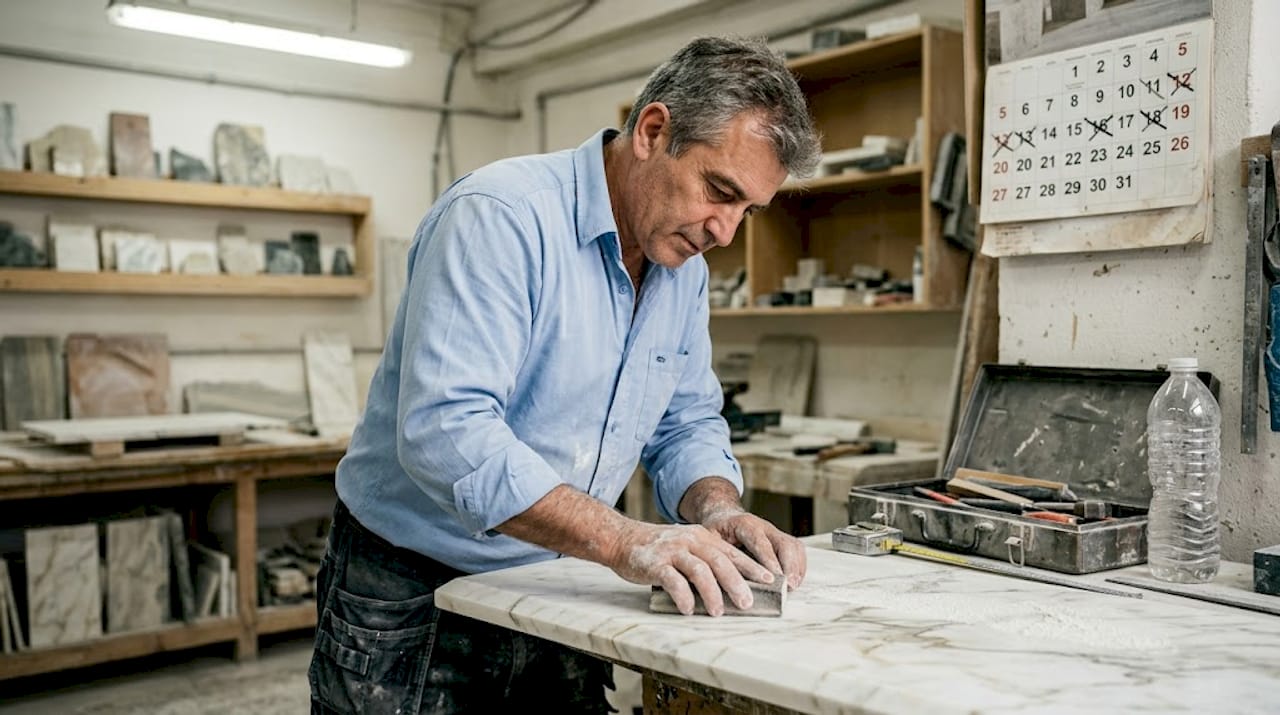
After weighing the options, implement these expert tips and avoid common designer pitfalls when commissioning or buying your marble table.
Even experienced decorators make avoidable errors when selecting marble tables. The most common ones cluster around scale, finish, and maintenance.
Designer dos:
Designer don’ts:
For guidance on how other homeowners have styled their spaces, examples of marble tables in real interiors reveal details that studio photography misses entirely.
Leading designers, including those cited in luxury dining features, consistently return to the hexagonal format for its ability to anchor a room without requiring additional statement pieces.
Pro tip: Commission custom seating before finalizing your table choice. Chair scale, seat height, and arm geometry should be resolved together with the table dimensions, not after delivery.
Here is a hard-earned truth from inside the luxury design community: most buyers spend 90% of their focus on the stone and almost none on the relationship between the table, the room’s natural light, and the surrounding scale.
A calacatta slab that looks extraordinary in a sun-flooded Italian showroom can feel cold and flat in a north-facing dining room with artificial lighting. The stone does not change. The context does everything.
The second thing consistently undervalued is the base. A spectacular top on a mediocre, poorly proportioned base is a wasted investment. The base is where personality lives. It is where craftsmanship is most visible, because guests look from the side before they ever look down.
Finally, there is a tendency in luxury design to chase brand credibility over bespoke quality. A custom marble table commissioned from a skilled stone atelier, built to your room’s exact dimensions and finished by hand, will always outperform a famous-label piece that simply happens to be in marble. Design inspiration for marble tables shows how the most memorable rooms are built around pieces crafted for them, not sourced for them. That distinction is the real edge in luxury interior design.
Ready to bring your favorite design to life? Here’s where you can find, customize, or commission your next marble centerpiece.
At marmorique.shop, every marble and travertine table is chosen for the quality of its stone, the integrity of its craftsmanship, and its ability to anchor a luxury interior the way nothing else can. Whether you are drawn to a bold hexagonal dining piece, a sculptural travertine console, or a quietly confident round accent table, the collection spans the full range of high-end stone design. You can browse the curated catalog directly, or reach out for guidance on bespoke commissions tailored to your exact space, stone preference, and aesthetic vision. This is where design inspiration becomes a tangible piece you can live with every day.
Carrara and calacatta are among the most resilient options, offering strong density and timeless elegance that holds up well under regular use.
Apply a penetrating sealant annually and wipe spills immediately. A honed or leathered finish provides better everyday scratch resistance than a polished surface.
Yes, strongly. Non-traditional shapes in luxury dining, such as chunky hexagonal marble tables, are consistently endorsed by leading design publications as focal points in upscale spaces.
Marble offers dense, dramatic veining and a refined polished surface, while travertine brings earthier, warmer tones and an organic texture that feels grounded and natural.


