Your Cart (0)
Your cart is empty
Free express shipping

Drawer menu
Free express shipping

TL;DR:
- Proper marble lamp care involves gentle cleaning with pH-neutral soap and distilled water.
- Avoid acids, abrasives, or harsh chemicals to prevent irreversible damage to the marble surface.
- Regular, careful maintenance preserves both the aesthetic and value of marble lamps over time.
A marble lamp is one of the few decor pieces that can anchor an entire room’s aesthetic. But marble is also one of the most unforgiving materials when it comes to neglect. A single splash of lemon juice, an abrasive wipe, or a forgotten spill can dull a surface that took thousands of years to form. Luxury homeowners and interior designers know that every piece in a curated space carries weight, and a damaged marble lamp is not just an eyesore but a financial loss. This guide walks you through every step of proper marble lamp care, from gathering the right tools to handling stubborn stains and protecting rare or antique pieces.
| Point | Details |
|---|---|
| Avoid harsh chemicals | Only use gentle, pH-neutral cleaners and soft cloths to prevent marble damage. |
| Respond quickly to spills | Immediate attention to spills keeps marble free of stains and etches. |
| Embrace gentle, regular care | Consistent, light cleaning maintains your lamp’s pristine look and value. |
| Consult experts for rare pieces | Historic or unsealed marble may need professional assessment to avoid irreparable harm. |
Now that you understand the value of proper care, gather the right materials to ensure the process is both safe and effective. Working with the wrong supplies is where most damage happens, and the fix is rarely simple.
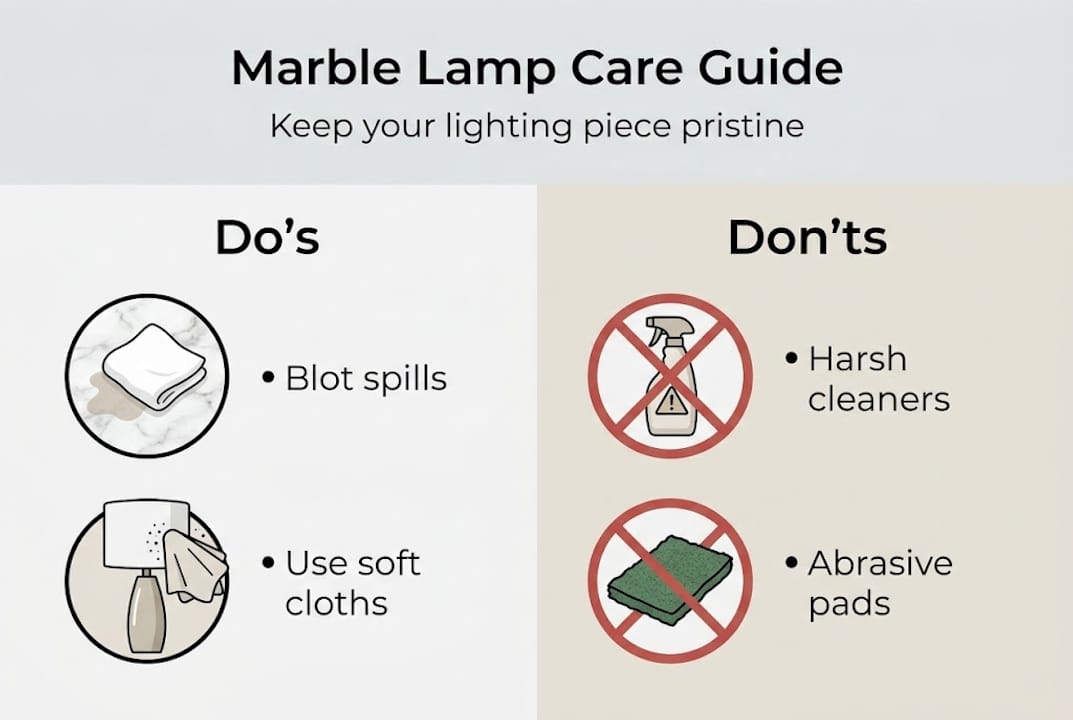
As a natural stone, marble is porous and soft, making it prone to etching from acids and staining from oils or spills. This is not a material that forgives harsh treatment. Knowing which products to keep away from your lamp is just as important as knowing what to use.
What to avoid entirely:
These substances etch or damage marble on contact, often within seconds. The damage is often irreversible without professional polishing.
Your marble lamp care kit:
| Supply | Purpose | Notes |
|---|---|---|
| Soft microfiber cloths | Wiping and drying | Use separate cloths for cleaning and drying |
| Distilled water | Diluting soap, rinsing | Avoids mineral deposits from tap water |
| Mild pH-neutral soap | Light cleaning | A single drop goes a long way |
| Soft-bristle brush | Crevice cleaning | Natural bristles preferred |
| #0000 superfine steel wool | Buffing minor etches | Use only when needed, with extreme care |
| Nitrile gloves | Hand protection | Prevents transferring oils from skin |
| Soft towel or mat | Workspace padding | Protects the base during cleaning |
Before you start, unplug the lamp completely. Lay it on a padded surface to prevent scratching the base. Clear the area of any cleaning products you will not be using, and keep liquids away from any electrical components. If you want to understand broader marble maintenance basics before diving in, that context helps set the right mindset.
Pro Tip: Always use distilled water instead of tap water. Tap water contains minerals that leave white, chalky deposits on marble surfaces after drying, especially on polished finishes. Distilled water eliminates that risk entirely.
With your tools ready, follow this process to reliably care for your marble lamp’s surface. Consistency here is what separates lamps that age beautifully from those that degrade quickly.
Mild soap and water used daily or weekly maintain a premium aesthetic far better than periodic aggressive cleaning. Professionals should handle any deep polishing or restoration work. Stick to this gentle rhythm and your marble will reward you.
Step-by-step cleaning routine:
For everyday care, a light weekly dusting is usually sufficient. Reserve the full wipe-down for visible smudges, after guests, or when the lamp has been near cooking or candles. Learning how to clean marble accessories across different formats will also keep your broader collection in excellent condition.
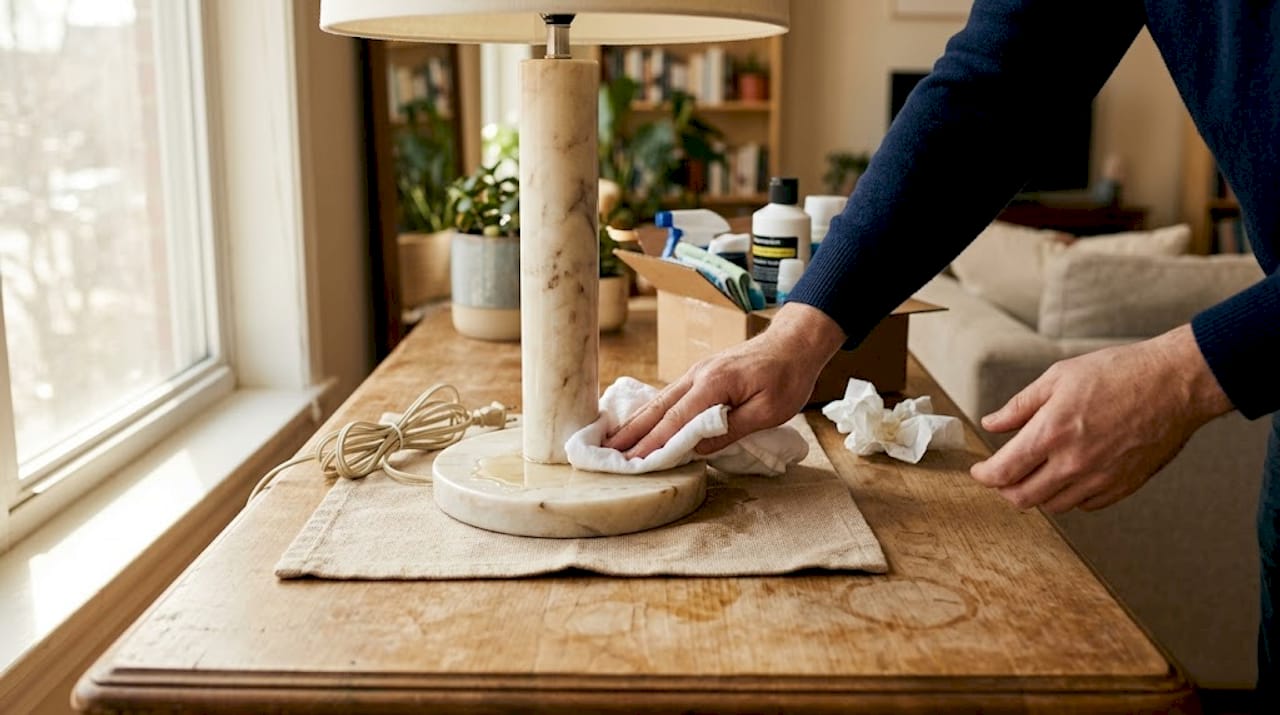
Pro Tip: If anything spills on your marble lamp, blot it immediately with a dry cloth. Do not wipe, as that spreads the substance. Blotting lifts it before it penetrates the stone. Speed is everything with marble.
Even with careful maintenance, issues may arise. Here is how to address the most common marble lamp problems without making things worse.
The first step is identifying what you are actually dealing with. Stains and etching look similar but require different treatments. A stain is a discoloration from a substance that has been absorbed into the stone. Etching is physical damage to the surface, caused by acid reacting with the calcium carbonate in marble. Etched areas look dull, slightly sunken, or hazy compared to the surrounding finish.
| Problem | Appearance | Likely Cause | Treatment |
|---|---|---|---|
| Oil stain | Darkened, slightly greasy area | Skin contact, cooking oils | Baking soda poultice |
| Water stain | White or light ring | Hard water residue | Gentle buffing with damp cloth |
| Organic stain | Pink, brown, or green tint | Food, plant matter, mold | Baking soda poultice |
| Etching | Dull, hazy, rough patch | Acid contact | #0000 steel wool or professional polish |
| Deep scratch | Visible groove | Physical impact | Professional restoration |
How to make a baking soda poultice for stains:
For minor etching, superfine #0000 steel wool can buff the area very gently. Work in small circles with almost no pressure. Baking soda applied the same way works on most organic stains when left for 24 hours. A natural patina developing over time is normal and even desirable in many marble types.
“Marble develops character with age. Not every mark needs to be erased. Knowing when to intervene and when to leave well enough alone is part of caring for a truly premium material.”
Pro Tip: Always test any treatment in a hidden spot first, such as the underside of the base, before applying it to a visible area. Even gentle treatments can react unexpectedly with certain marble varieties or finishes.
For marble stone preservation on more complex issues, consulting a professional stone restorer is always the safer investment compared to risking further damage with DIY attempts.
While most marble lamps follow standard care routines, special or antique pieces come with unique requirements that cannot be overlooked.
The first question to answer before cleaning any high-value piece is whether the marble is sealed. Sealed marble has a protective coating that repels liquids, while unsealed marble absorbs them almost immediately. To test, place a few drops of water on an inconspicuous area and watch what happens. If the water beads up, the marble is likely sealed. If it darkens or absorbs within a minute, it is unsealed and requires extra caution.
Key precautions for special marble lamps:
“Historic or unsealed marble requires test panels and professional contractors before any cleaning; moisture near electrical components must be strictly avoided.”
For pieces with significant monetary or sentimental value, the calculus changes entirely. A conservator who specializes in historic stone will identify the marble type, its porosity, and the safest cleaning approach before touching anything. This is especially true for lamps sourced from estate sales, auctions, or international galleries.
If you are unsure about the sealing status or origin of your lamp, the safest action is a dry dust only until you can get a professional assessment. Protecting your investment sometimes means doing less, not more. Understanding how to preserve marble stone at a deeper level will prepare you to make those calls with confidence.
With practical care covered, it is worth reflecting on what truly preserves a marble lamp’s luxury for years.
The most common mistake we see from luxury homeowners is not neglect, it is over-intervention. Someone notices a faint water ring and reaches for a scrub pad. They see a dull patch and try a glass cleaner. These instincts are understandable, but they compound the problem rather than solve it. Marble responds far better to repeated gentle care than to occasional aggressive correction.
There is also a tendency to fear the patina. Over centuries, some of the world’s most celebrated marble surfaces have developed a warm, lived-in glow that no factory finish can replicate. That gradual change is not damage. It is character, and it signals authenticity in ways that a factory-fresh surface simply cannot.
Our honest perspective: the homeowners and designers who maintain the most beautiful marble lamps over time are not the ones with the most elaborate cleaning regimens. They are the ones who wipe gently and often, respond to spills immediately, and call a professional marble care specialist the moment something is beyond their expertise. Restraint is the real luxury skill here.
Ready to elevate your lighting or need deeper advice? Here is where to get more help.
At Marmorique, we source and curate marble lamps that are built to last and designed to anchor a room. Every piece in our collection reflects our belief that natural stone deserves to be treated as the living material it is. We pair each product with guidance so you never have to guess about care.

Whether you are selecting your first marble lamp or expanding a curated interior, our team can point you toward pieces that suit your space and your maintenance comfort level. For ongoing reference, our blog covers more marble care tips with detailed guidance on everything from sealing to seasonal maintenance. Premium marble deserves a care plan as thoughtful as the design itself.
No. Most household cleaners contain acids, alcohol, or abrasives that etch or damage marble on contact. Stick to a drop of mild pH-neutral soap in distilled water only.
For light stains, apply a baking soda poultice and leave it covered for 24 hours. For minor etching, #0000 steel wool buffs the area gently, but contact a marble specialist for anything more significant.
Not daily, but a quick dust or wipe weekly keeps the surface in great shape. Immediate cleaning after any spill is essential, as daily quick wipes and immediate spill response are what prevent permanent staining.
Yes. Always test in a hidden area first and consult a professional before cleaning. Historic or unsealed marble requires test panels and expert contractors, and moisture near electrical parts must be strictly avoided.


