Your Cart (0)
Your cart is empty
Free express shipping

Drawer menu
Free express shipping

TL;DR:
- Genuine luxury stone is characterized by rarity, unique patterns, and origins like Italian Calacatta marble.
- Physical properties such as low porosity and high Mohs hardness indicate durability and premium quality.
- Artisanal craftsmanship and sensory qualities, including texture and emotional resonance, define true luxury in stone.
Luxury in stone is widely misunderstood. Most people assume a high price tag or a prestigious brand is enough to call something truly luxurious, but that thinking barely scratches the surface. Real stone luxury is born from the earth itself, shaped over millions of years, and refined by the hands of skilled artisans. When you walk into a space lined with the right stone, you feel it before you can name it. This guide breaks down exactly what separates genuinely luxurious stone from ordinary alternatives, so you can make informed choices for your home or design project.
| Point | Details |
|---|---|
| Rarity is key | Luxury stone is defined by unique origins and patterns found only in select geological regions. |
| Superior physical traits | Hardness, density, and low porosity distinguish premium stone from ordinary materials. |
| Craftsmanship elevates | Artisan techniques like book-matching and precision finishing turn raw slabs into luxury pieces. |
| Emotional resonance | Authenticity and tactile sensations make stone decor feel truly luxurious in any space. |
| Balanced selection | Choosing the right stone requires blending aesthetic, functional, and emotional considerations. |
Rarity is the root of all luxury, and stone is no exception. What makes a slab of Italian Calacatta marble worth more than a synthetic alternative isn’t just aesthetics. It’s the fact that Calacatta forms only in a specific region of the Apuan Alps in Tuscany, under precise geological conditions that cannot be replicated anywhere else. That rarity carries meaning, prestige, and permanence.
Geological processes spanning millions of years create the unique veining, color variations, and crystalline patterns found in premium stone. Heat, pressure, and mineral composition combine differently in each quarry, which is why no two slabs are ever identical. Luxury stone interiors notes that luxury stone is defined by rarity, unique natural patterns, and premium origins such as Italian Calacatta marble or Brazilian quartzites.
“Rarity in natural stone isn’t a marketing claim. It’s a geological fact — one that connects the owner to something irreplaceable.”
Beyond Italian marble, there are other standout origins that the luxury design world prizes. Brazilian quartzite, particularly varieties like Super White and Azul Imperial, offers extraordinary durability alongside breathtaking color. African Black Marquina from Morocco delivers a dramatic depth and contrast that synthetic stone simply cannot match. These origins aren’t interchangeable, and defining luxury stone starts with understanding why geography matters so much.
Natural stone and synthetic stone differ fundamentally in how they are created. Natural stone is quarried directly from the earth, carrying geological history in every vein. Synthetic alternatives like engineered quartz are manufactured from crushed stone and resin, which creates consistency but eliminates the irreplaceable character of natural origin. For luxury homeowners and designers, origin documentation and quarry traceability are essential checkpoints.
Top origins and stone types prized for luxury:
| Stone type | Origin | Key luxury trait |
|---|---|---|
| Calacatta marble | Italy | Bold veining, extreme rarity |
| Brazilian quartzite | Brazil | Hardness, vivid color depth |
| Nero Marquina | Morocco/Spain | Dramatic contrast, elegance |
| Statuario marble | Italy | Fine grey veining, prestige |
Once you understand origins, next comes the concrete side of things. Measurable physical traits determine whether a stone will hold up beautifully in a luxury interior for decades or begin to disappoint within a few years.
The Mohs hardness scale rates a mineral’s scratch resistance from 1 (softest) to 10 (hardest). Quartzite sits at a 7, making it highly resistant to daily wear. Granite ranges between 6 and 7. Marble falls at roughly 3 to 4, which means it etches more easily from acidic substances but rewards with unmatched visual beauty. Understanding this scale helps you match stone to function, not just aesthetics.
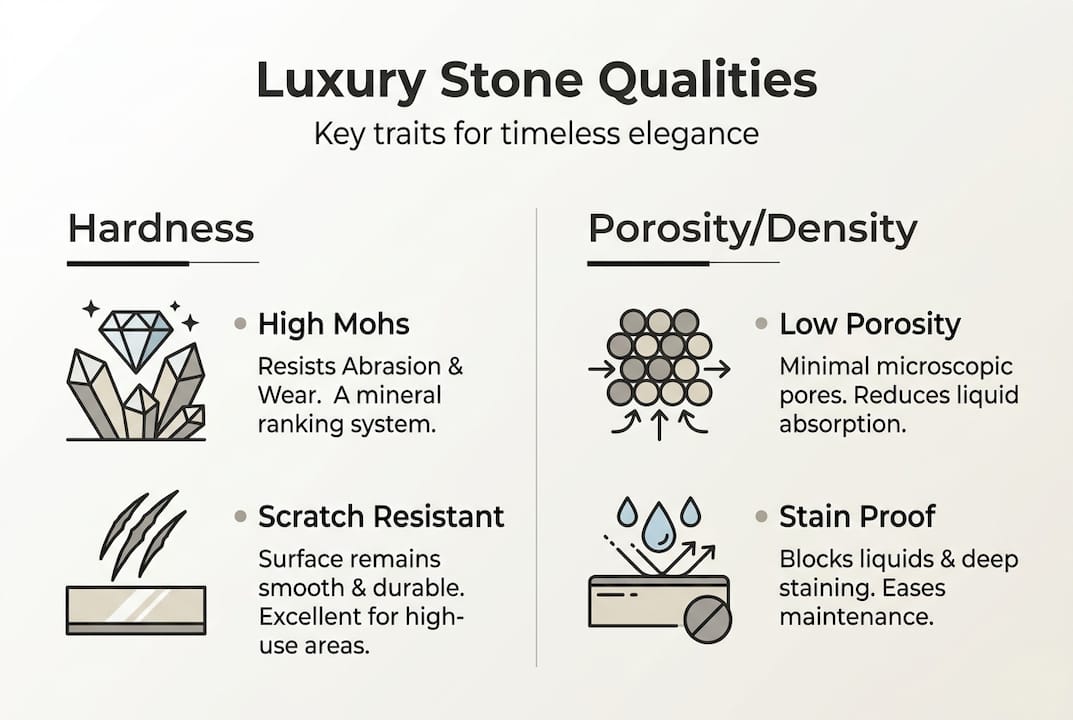
Porosity is equally important. Low porosity means less liquid absorption, which reduces staining risk and bacterial growth. Stone durability benchmarks confirm that quartzite absorbs as little as 0.2 to 0.5% water per ASTM C97 standards, with density between 2.6 and 2.8 g/cm³ and Mohs hardness of 6 to 7. These aren’t just numbers on paper. They directly predict how a stone performs in a real luxury kitchen or bathroom.
The global natural stone market reflects this demand. The industry was valued at USD 39.64 billion and continues to grow, with marble showing a compound annual growth rate of 5.78%. Luxury interiors are driving this expansion as more designers and homeowners prioritize authentic, high-performing stone.
Pro Tip: If you love marble’s appearance but need it in a high-traffic area like a kitchen countertop, consider quartzite as a functional alternative. It mimics marble’s visual softness while offering superior scratch and stain resistance.
| Stone | Mohs hardness | Porosity | Best application |
|---|---|---|---|
| Quartzite | 7 | 0.2 to 0.5% | Countertops, floors |
| Granite | 6 to 7 | 0.5 to 1.5% | Countertops, outdoor |
| Marble | 3 to 4 | 0.5 to 2% | Feature walls, bathrooms |
| Travertine | 3 to 4 | 1 to 3% | Floors, decorative pieces |
What to check in stone certifications for premium quality:
These luxury stone properties aren’t just for contractors. Knowing what to ask for puts you in control when sourcing premium materials.
Measurable properties matter, but artistry is what turns raw material into true luxury. A quarried slab of Calacatta marble is extraordinary on its own, but it takes a skilled fabricator to unlock its full potential.
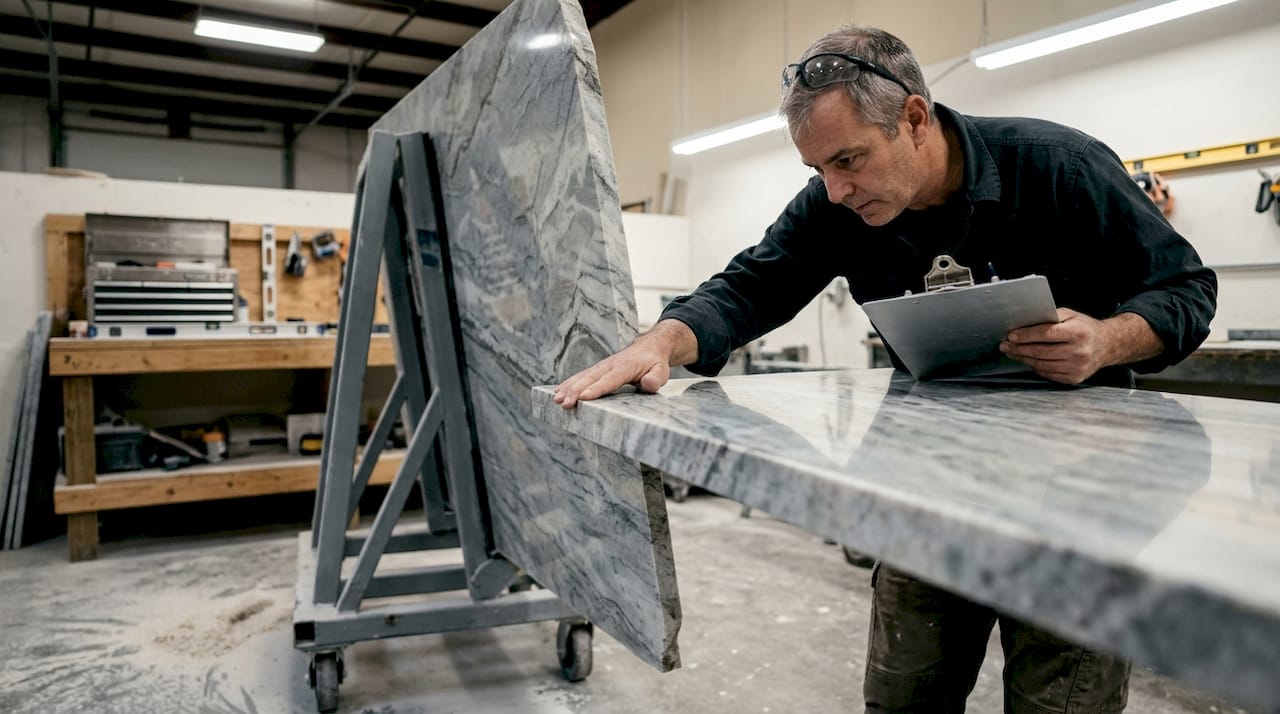
Artisanal fabrication involves a layered process that demands precision and patience. Book-matching techniques show that book-matching slabs creates symmetrical, mirrored veining effects that transform a surface into a visual centerpiece. When executed well, two slabs opened like a book produce a stunning, butterfly pattern that no digital print can reproduce.
“The difference between a premium slab and a luxury installation lies entirely in the hands that shape it.”
Steps artisans take to transform raw slabs into luxury pieces:
Edge finishes alone communicate enormous amounts about a piece’s quality. A bullnose edge softens and rounds the profile, while an ogee edge adds classical detail. A raw chiseled edge signals a more organic, contemporary aesthetic. Each choice reflects the designer’s intent and the artisan’s skill.
Pro Tip: Never make a final stone selection from a small sample. Always view the full slab in natural lighting at the stone yard or showroom. Veining patterns change dramatically from one section to another, and what looks perfect as a 12-inch sample may not match your vision at full scale.
For artisan stone fabrication, the relationship between designer and fabricator is everything. The best results come from open collaboration, detailed drawings, and a shared commitment to getting every joint and edge exactly right.
Physical and artistic factors matter, but luxury also resonates on a deeper level. Natural stone has a way of making people feel something that synthetic materials simply cannot replicate.
Authenticity plays a central role. When you touch a marble countertop, you are touching something formed over 25 to 50 million years. That permanence is emotionally grounding in a way that a manufactured surface isn’t. Studies on emotional luxury confirm that authenticity and tactile qualities like cool temperature, natural texture, and weight drive psychological luxury perception far beyond what synthetic alternatives can offer.
How luxury stone changes the mood of a space:
“People don’t just buy natural stone. They buy the feeling of permanence, of owning something that outlasts trends and even lifetimes.”
Sensory experience goes beyond sight. The weight of a stone table, the cool touch of a marble bathroom set, the subtle variation in texture across a polished surface: these details signal quality before your mind fully processes them. This is why stone decor trends increasingly feature travertine and marble accessories, bringing that sensory richness into every room.
Pro Tip: Match stone type to the emotional function of each room. Use warmer-toned travertine in social spaces to encourage comfort. Reserve the coolness of white marble for spa-like bathrooms where serenity is the goal.
Most articles on luxury stone stop at surface-level advice: buy Italian marble, choose low porosity, invest in quality. That’s useful, but it misses the most important truth we’ve learned from working alongside designers and homeowners across real projects.
Price and brand prestige are the least reliable indicators of whether a stone will feel luxurious in your specific space. We’ve seen expensive Calacatta marble feel cold and clinical in the wrong room, and we’ve seen modest travertine elevate a bathroom to something deeply sophisticated. Luxury is always relational. It depends on proportion, lighting, the stones around it, and most importantly, the person living with it every day.
The most overlooked lesson is this: always view full slabs, never just samples. Combine stone textures thoughtfully rather than defaulting to one material throughout. And never separate maintenance reality from aesthetic ambition. The right stone is the one that holds its beauty and function together over time. True luxury selection wisdom lives at the intersection of emotional resonance and practical durability.
Understanding what makes stone truly luxurious changes how you shop for it. You stop chasing labels and start asking the right questions about origin, fabrication, and sensory fit.
At Marmorique, every piece in our collection is selected with exactly these standards in mind. From hand-finished marble lamps to travertine bathroom sets and sculptural stone tables, our luxury stone selection brings together artisanal craftsmanship and genuine natural beauty. Whether you are designing a private residence or a high-end commercial interior, we’re here to help you find stone that feels as exceptional as it looks. Browse our curated collection and let the material speak for itself.
Italian Calacatta marble and rare Brazilian quartzite are broadly considered the most luxurious stones because of their rarity, striking patterns, and premium origins that cannot be replicated artificially.
Premium stones exhibit low porosity, high density, Mohs hardness 6 to 7, and rare, natural veining that is specific to a particular quarry or region.
Yes, luxury stones add lasting value, emotional appeal, and durability, all of which make them ideal for commercial interiors where a timeless first impression matters. Their permanence and tactile qualities also reduce the need for frequent replacement.
Book-matching is an artisan process where two slabs are opened and joined to create a mirrored, symmetrical effect, dramatically increasing the visual luxury of any installation.


