Your Cart (0)
Your cart is empty
Free express shipping

Drawer menu
Free express shipping

TL;DR:
- Artisanal home decor features handmade, small-batch products crafted using traditional techniques and natural materials.
- Stone decor adds permanence, natural beauty, and emotional connection, enhancing room character and value.
- Choosing genuine artisanal pieces involves recognizing maker storytelling, natural variations, and sustainable craftsmanship.
Most people assume luxury home decor falls into one of two categories: expensive, cold, machine-made pieces from designer brands, or rough, rustic crafts that feel out of place in a polished interior. Neither assumption is true. Artisanal home decor refers to handmade, small-batch products crafted by skilled artisans using traditional techniques, natural materials, and an emphasis on quality, uniqueness, and authenticity over mass-produced uniformity. This guide breaks down what that really means for your home, why stone sits at the top of this category, and how you can bring these one-of-a-kind pieces into your space without compromise.
| Point | Details |
|---|---|
| Handcrafted uniqueness | Artisanal home decor celebrates unique character, imperfection, and tradition in every piece. |
| Stone decor advantages | Premium stone items provide tactile luxury, durability, and distinctive beauty that mass-produced goods can’t match. |
| Authenticity matters | True artistry lies in the story and skilled craftsmanship behind each artisanal item, not just surface perfection. |
| Informed selection | Choosing and caring for artisanal decor ensures it remains a long-lasting, valuable part of your home. |
Now that we’ve framed the opportunity artisanal decor presents, let’s define exactly what sets these pieces apart from everything else on the market.
The word “artisanal” traces back to skilled trade workers in pre-industrial Europe, where craftspeople dedicated years to mastering a single material or technique. Potters, stonecutters, weavers, and woodworkers all operated under a philosophy centered on the process, not just the product. That philosophy never disappeared. Today, it defines an entire category of home goods that prioritizes the maker’s hand, the material’s story, and the buyer’s experience.
What makes a piece genuinely artisanal? A few key qualities separate these items from anything you’d find lining the shelves of a big-box store:
“Artisanal home decor refers to handmade, small-batch products crafted by skilled artisans using traditional techniques, natural materials, and emphasizing quality, uniqueness, authenticity, and imperfections over mass-produced uniformity.” — Wordzaura
This philosophy directly challenges the dominant model of interior design retail, where consistency, scalability, and low cost drive every decision. When you invest in an artisanal piece, you are stepping outside that system entirely and choosing something that carries actual weight, history, and meaning.
With the foundational definition clear, let’s see how artisanal home decor, especially in stone, can upgrade your own rooms in tangible, lasting ways.
Stone is not just one of the oldest building materials on earth. It is one of the most emotionally resonant. Running your hand across a polished travertine surface or picking up a marble lamp feels fundamentally different from touching plastic or painted MDF. That tactile quality is not a luxury add-on. It is the entire point. The weight, temperature, and texture of natural stone communicate quality before you even look closely at the craftsmanship.
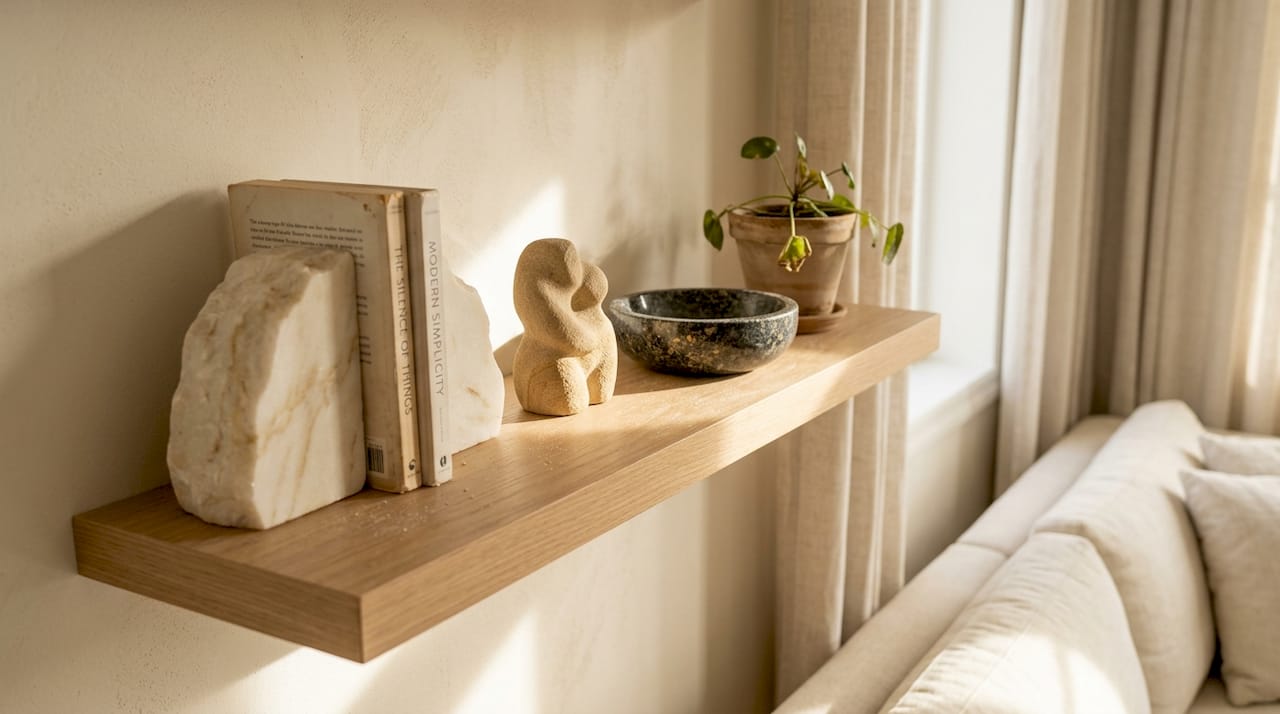
Every piece of natural stone carries a geological story that can span millions of years. The swirling veins in marble formed under intense pressure and heat deep beneath the earth. The porous, honeycomb structure of travertine developed as mineral-rich water moved through limestone over thousands of years. When an artisan shapes that material into a lamp, a soap dish, or a decorative object for your home, they are translating a natural archive into something you live with every day.
Modern Arts and Crafts movement principles confirm that artisanal decor enhances living spaces with character, tactile textures, and emotional connection, making stone items especially powerful for telling geological and cultural stories while supporting sustainability and local artisans.
Here is how stone decor specifically changes a room:
Pro Tip: When selecting a stone decor piece, ask yourself whether you would still love it in ten years. If the answer is yes, that is a strong signal you are looking at genuine artisanal quality rather than a trend-driven product. You can also review expert stone decor tips for more guidance on choosing pieces that hold their appeal.
Stone does not just perform well in design terms. It also supports sustainable buying decisions. Natural stone requires no synthetic coatings, plastic components, or chemical treatments to look beautiful. When sourced responsibly and shaped by skilled hands, a stone decor piece represents one of the most environmentally sound luxury choices available.
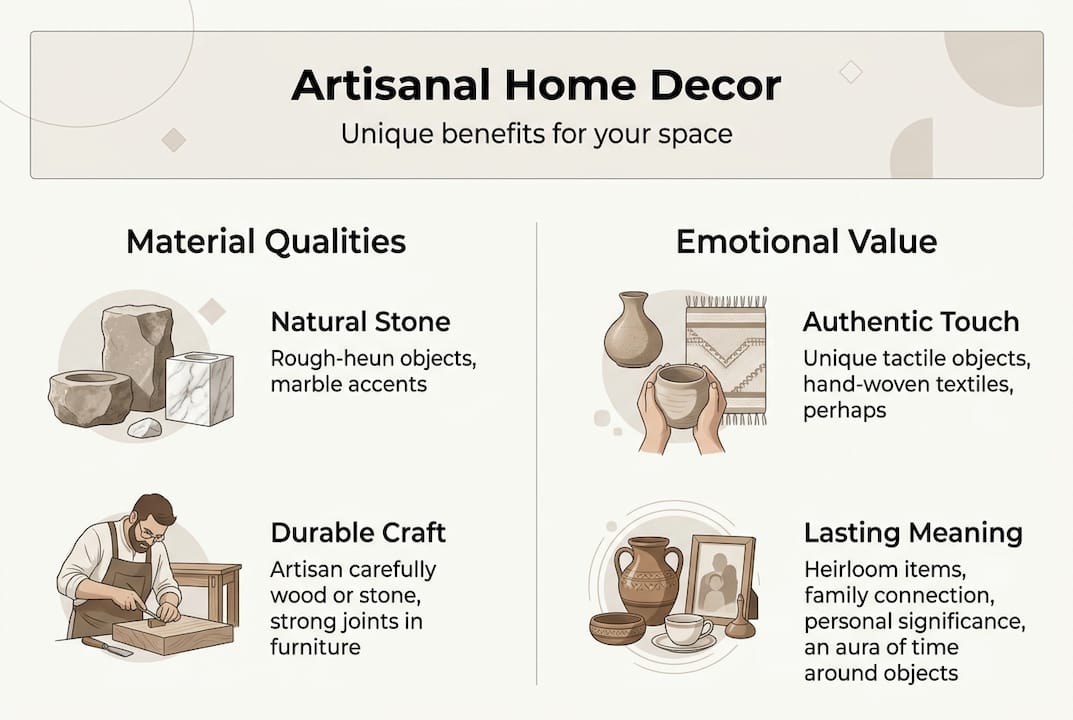
One area that often causes confusion is the meaning of “handmade” compared to “artisanal.” These terms are often used interchangeably, but they carry meaningful differences that matter when you are making a purchasing decision.
At one end of the spectrum, a strictly handmade item involves no machines whatsoever. Every cut, shape, and finish is done entirely by hand. At the other end, an artisanal or handcrafted piece may involve tools and machinery to assist with precision, but the maker’s skill, judgment, and tradition drive every step of the process. Viewpoints differ on tool use, with strict handmade advocates rejecting machines entirely, while the artisanal and handcrafted camp sees tools as aids to precision, both approaches being far superior to mass production, with artisanal work emphasizing tradition and skill above all else.
The distinction matters less than you might think. What actually determines quality in artisanal stone decor is not whether a machine touched the material, but whether a skilled human being made intentional decisions at every stage of production. Here is a practical breakdown to help you navigate these terms:
| Method | Description | Tool use | Uniqueness | Quality indicator |
|---|---|---|---|---|
| Strictly handmade | No machines involved at any stage | None | Very high | Artisan’s unassisted skill |
| Artisanal/handcrafted | Tradition-led, skill-driven, tools allowed | Limited | High | Maker’s judgment and technique |
| Hand-finished | Machine-made base, human final touches | Heavy machine use | Low to moderate | Finish quality only |
| Mass-produced | Fully automated from start to finish | Complete | None | Consistency, not character |
When evaluating a purchase, here is a numbered approach to help you assess where a piece genuinely falls:
The natural stone decor guide covers these evaluation criteria in more detail if you want to go deeper before committing to a purchase.
Understanding these distinctions protects you as a buyer and helps you invest confidently in pieces that will truly reward your attention over time.
Armed with a sense of authenticity, you’re ready to select and nurture artisanal decor in your own home. Knowing what to buy is only half the equation. Knowing how to live with it and maintain it is what separates a lasting investment from a short-lived purchase.
Start by thinking about where in your home a stone piece would have the most impact. Artisanal stone small-batch products work beautifully in high-visibility areas: a bathroom counter, a living room side table, a dining room centerpiece, or even an entryway shelf where guests form their first impression of your space.
Follow these steps when selecting and placing your first pieces:
Once your pieces are placed, care becomes the priority. Natural stone is durable, but it is not maintenance-free.
Pro Tip: Place a soft felt pad underneath stone decor pieces that sit on wooden or lacquered surfaces. This prevents scratching both the stone’s base and the furniture beneath it, keeping both in excellent condition long-term.
You can find additional placement and care guidance at the luxury stone decor tips resource, which covers stone-specific scenarios for a range of interior styles.
Here is a perspective that tends to surprise people: the pursuit of perfection in home decor is one of the least interesting things you can do with your space.
Perfect uniformity, flawless finishes, and matching sets from a single catalog create rooms that feel curated by an algorithm rather than lived in by a person. There is a visual comfort to consistency, yes. But comfort without character is just a waiting room.
What genuinely luxurious interiors share is not perfection. It is presence. A room feels elevated when its objects have weight, story, and a certain resistance to being immediately understood. A hand-carved marble lamp that shows faint tool marks from the artisan who made it, a travertine bowl whose natural pitting creates micro-shadow at certain times of day, these are not flaws. They are evidence that something real happened in the making of that object.
The natural beauty of stone decor goes far beyond aesthetics. Each geological formation, each artisan choice in how to orient a cut, and each conscious decision to leave a surface slightly raw rather than over-polished adds a layer of meaning that mass-produced goods simply cannot carry.
We also believe that artisanal decor is not a trend. Trends move in cycles of roughly five to seven years before the market pivots toward something new. But the human preference for natural materials, handcrafted objects, and visible maker skill predates modern design entirely. It is not going anywhere. If anything, as digitally generated design floods the market, the tactile authenticity of a genuine stone piece will only become more valued, more distinctive, and more personally significant.
Choosing artisanal is not about rejecting modernity. It is about insisting that your home reflects something true about you, and that the objects sharing your space have earned their place through more than a low price tag and fast shipping.
Inspired to bring artisanal artistry into your own home? The next step is discovering authentic options built to last.
At Marmorique, every piece in our collection is selected for its craftsmanship, material quality, and the unmistakable character that only natural stone can offer. Our marble soap dish is a perfect starting point for introducing artisanal stone into your bathroom, bringing tactile luxury to a surface you interact with every single day. For those who want a statement piece, our marble grape ornament offers a sculptural, conversation-starting addition to any living room shelf or dining table. Both pieces embody the values this article has explored: skilled hands, real stone, and an enduring character that mass production cannot touch. Browse the full collection at Marmorique to find artisanal stone decor that genuinely fits your space and your standards.
Look for items made in small batches by skilled artisans using traditional methods and natural materials, with each piece showing authentic variation and visible human craftsmanship rather than uniform machine output.
Stone offers unmatched durability, tactile beauty, and a direct connection to nature, and as artisanal decor studies show, each piece tells a geological and cultural story that makes it distinctive and timeless in any interior.
Artisanal products can cost more due to skilled craftsmanship and quality natural materials, but their longevity and unique character typically represent better long-term value than mass-produced alternatives that degrade quickly.
Not always. As tool use viewpoints confirm, some artisanal makers use tools to achieve precision while still prioritizing traditional skill and maker judgment over machine-driven uniformity.


