Your Cart (0)
Your cart is empty
Free express shipping

Drawer menu
Free express shipping

Selecting marble furnishings for luxury spaces presents a unique challenge: balancing timeless beauty with practical durability and maintenance demands. Marble adds unmatched elegance to interiors, but quality varies dramatically across types, finishes, and sources. Without expert guidance, you risk investing in pieces that etch easily, require constant upkeep, or fail to suit your lifestyle. This guide walks you through assessing marble quality, choosing the right type for your needs, evaluating slabs and finishes, and setting realistic maintenance expectations so you can confidently select premium marble furnishings that enhance your space for years.
| Point | Details |
|---|---|
| Porosity targets | The porosity should fall between 0.2 percent and 0.5 percent to resist everyday use with minimal maintenance. |
| Type by use | Different marble types suit different spaces, with Calacatta and Statuario dramatic but acid sensitive, Carrara elegant and affordable for lower traffic, and Makrana and Danby highly durable for high use. |
| Onsite verification | Inspect slabs under natural and artificial light, check for hidden cracks, measure thickness (20mm standard, 30mm heavy use), perform a water absorption test, and compare multiple slabs for consistent veining. |
| Finish choices | Honed finishes hide minor scratches and are suited for kitchens and high use, while polished finishes enhance display surfaces but show scratches more easily. |
| Dolomitic marble | Prefer dolomitic marble for better acid resistance, reducing visible etching compared with calcitic varieties. |
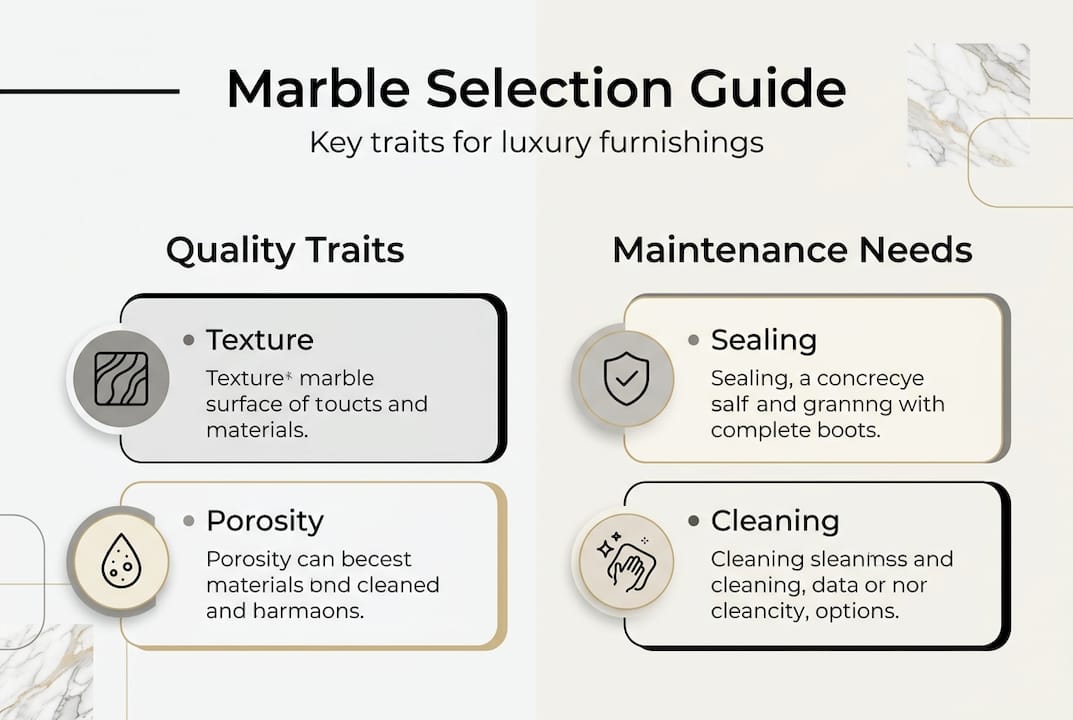
Marble quality hinges on four critical characteristics you can assess before purchase. Texture, luster, and density determine durability, with porosity serving as the ultimate benchmark. Fine, uniform grain indicates superior texture, while high luster reflects tight crystalline structure. Density matters because tightly packed crystals resist scratching and etching better than porous varieties. Target porosity between 0.2% and 0.5% for furnishings that withstand daily use without constant intervention.
Different marble types serve distinct purposes in luxury interiors. Calacatta and Statuario excel in statement pieces, offering dramatic veining and prestige but requiring careful placement away from acidic substances. Carrara provides classic elegance at moderate cost, suitable for lower-traffic areas like bedroom vanities. Makrana and Danby deliver exceptional durability for high-use applications like dining tables and kitchen islands. Understanding these distinctions prevents mismatched expectations and premature wear.
| Marble Type | Price Range | Best Use Case | Key Characteristic |
|---|---|---|---|
| Carrara | $40-75/sq ft | Bathroom vanities, low-traffic surfaces | Soft gray veining, moderate durability |
| Calacatta | $180-300/sq ft | Statement walls, display tables | Bold gold veining, luxury aesthetic |
| Statuario | $200-400/sq ft | Feature pieces, low-use furnishings | Dramatic contrast, premium status |
| Makrana | $60-120/sq ft | High-traffic tables, commercial spaces | Dense structure, chemical resistance |
| Danby | $80-150/sq ft | Kitchen islands, outdoor applications | Low porosity, weather tolerance |
When inspecting marble quality, focus on these measurable indicators:
Pro Tip: Prioritize dolomitic marble over calcitic varieties for better acid resistance. Dolomitic marble contains magnesium carbonate, which reacts less aggressively with acidic substances like wine and citrus. This single choice dramatically reduces visible etching in kitchens and dining areas, preserving your investment’s appearance with less intervention.
The benefits of marble furniture extend beyond aesthetics when you select the right type for your specific application. Dense, low-porosity varieties maintain their beauty with minimal maintenance, while softer marbles require dedicated care routines. Match your lifestyle to marble characteristics rather than forcing high-maintenance varieties into incompatible settings.
Onsite slab inspection separates quality marble from problematic purchases. Follow these steps to verify authenticity and structural integrity:
Finish selection dramatically affects both appearance and maintenance requirements. Honed finishes create a matte surface that hides minor scratches and embraces the natural patina marble develops over time. This finish suits kitchens and high-use areas where acidic substances contact the surface regularly. Polished finishes deliver mirror-like shine and showcase veining dramatically, but they reveal every etch mark and scratch. Reserve polished marble for display pieces and low-contact surfaces like coffee table tops in formal living rooms.
“Verify marble slabs onsite before purchase to avoid structural defects that photographs cannot reveal. Lighting conditions, thickness measurements, and hands-on inspection prevent costly mistakes that become apparent only after installation.”
Sealant application frequency directly impacts marble longevity and appearance. Seal marble every 6 to 12 months depending on usage intensity and porosity levels. High-traffic furnishings require biannual sealing, while display pieces maintain protection with annual applications. Test sealant effectiveness by placing water drops on the surface: if absorption occurs within 10 minutes, resealing is overdue. Quality sealants penetrate the stone rather than coating the surface, preserving natural texture while blocking moisture and stains.
Pro Tip: Avoid polished finishes in areas exposed to acidic substances like wine, citrus, or vinegar. The mirror shine amplifies every etch mark, creating visible damage that honed finishes would mask naturally. If you prefer polished aesthetics, restrict these pieces to bedrooms, formal dining rooms, or display areas where contact with acids is unlikely.
Understanding marble maintenance basics before purchase sets realistic expectations for ongoing care. Honed finishes require less intervention because they hide minor imperfections, while polished surfaces demand immediate attention to spills and careful cleaning routines. Factor this time commitment into your selection process rather than discovering maintenance demands after installation.

Material comparison clarifies marble’s position among countertop and furnishing options. Understanding trade-offs helps you choose confidently:
| Material | Mohs Hardness | Porosity | Maintenance Level | Aesthetic Appeal |
|---|---|---|---|---|
| Marble | 3-4 | 0.2-0.5% | High (regular sealing, careful cleaning) | Timeless luxury, unique veining |
| Quartz | 7 | Non-porous | Low (soap and water sufficient) | Consistent patterns, modern look |
| Granite | 6-7 | 0.4-1.5% | Medium (annual sealing recommended) | Natural variation, durable |
Marble’s susceptibility to etching and scratches stems from its calcium carbonate composition. Acids react chemically with this compound, creating dull spots that no amount of polishing can reverse. Scratches occur more easily than with harder materials because marble ranks only 3 to 4 on the Mohs hardness scale. These characteristics don’t disqualify marble, they simply require informed placement decisions and realistic maintenance commitments.
Key factors for final marble selection include:
Pro Tip: Choose dense, low-porosity marble types like Makrana or Danby for commercial spaces or high-traffic residential areas. These varieties withstand repeated contact, cleaning, and environmental stress without degrading quickly. Their superior density justifies slightly higher upfront costs through extended lifespan and reduced replacement frequency.
Embracing marble’s natural patina versus pursuing perfect polish reflects lifestyle compatibility. Patina develops as marble interacts with its environment, creating subtle texture changes and slight dulling that many designers consider desirable character. This approach suits families with children, active households, and those who value lived-in elegance over showroom perfection. Conversely, maintaining pristine polish requires immediate spill response, weekly sealing checks, and professional restoration every few years.
Explore marble maintenance tips to understand the difference between routine care and intensive restoration. Routine maintenance preserves marble’s baseline condition, while restoration addresses accumulated damage from years of use. Factor both into your long-term ownership costs when comparing marble to lower-maintenance alternatives.
For broader context on stone durability in various applications, consult this natural stone durability guide covering outdoor and high-stress environments. While focused on pavers, the principles of porosity, density, and weather resistance apply equally to indoor furnishings.
Maintenance essentials determine whether your marble investment thrives or deteriorates prematurely. Implement these practices consistently:
Durability verification checklist confirms your marble selection matches intended use:
Pro Tip: Schedule professional inspections and maintenance every 18 to 24 months for high-value marble furnishings. Experts identify early signs of degradation, reseal surfaces properly, and address minor damage before it becomes visible. This preventive approach costs less than restoration and extends marble’s functional lifespan significantly.
Realistic maintenance expectations prevent disappointment and premature replacement. Marble requires more attention than engineered alternatives, but proper care maintains its beauty for decades. Seal marble biannually, clean with appropriate products, and accept that minor patina development is normal rather than failure. This mindset shift transforms maintenance from burden to preservation practice.
Long-term marble preservation methods extend beyond routine cleaning to include environmental controls. Maintain stable humidity levels between 40% and 60% to prevent moisture-related damage. Protect marble from direct sunlight in areas where UV exposure might cause subtle color shifts over years. These environmental considerations matter most for heirloom-quality pieces you intend to pass down through generations.
Now that you understand marble selection fundamentals, explore how expert craftsmanship transforms raw stone into functional art. Marmorique curates premium marble furnishings that balance aesthetic excellence with practical durability, offering pieces crafted from carefully selected marble types suited to their intended applications. Each item undergoes rigorous quality inspection to ensure the texture, luster, and density standards discussed throughout this guide.
Our collection showcases the marble furniture benefits you’ve learned about: timeless elegance, natural variation, and lasting value when properly maintained. Whether you need a statement dining table in durable Makrana marble or a polished Calacatta side table for your formal living room, our specialists help match marble characteristics to your specific lifestyle and design vision. We provide detailed maintenance guidance with every purchase, ensuring your investment retains its beauty for years.
Pro Tip: Explore our comprehensive marble maintenance guide and design inspiration gallery before finalizing your selection. Understanding care requirements and seeing marble in various interior contexts helps you choose pieces that integrate seamlessly into your space while meeting your maintenance capacity honestly.
Makrana and Danby marbles offer superior durability for high-traffic applications due to their exceptional density and porosity below 0.4%. These varieties withstand repeated contact, cleaning, and environmental stress without degrading quickly. Their tight crystalline structure resists scratching and etching better than softer marbles like Carrara or Calacatta, making them ideal for dining tables, kitchen islands, and commercial spaces where daily use is intensive.
Seal marble every 6 to 12 months depending on usage intensity and porosity levels. High-traffic furnishings require biannual sealing, while display pieces maintain protection with annual applications. Clean daily with pH-neutral products designed for natural stone, never acidic or abrasive cleaners that accelerate etching. Test sealant effectiveness by placing water drops on the surface: absorption within 10 minutes indicates resealing is overdue. Consistent maintenance preserves marble’s appearance and extends functional lifespan significantly. Review marble maintenance basics for detailed care protocols.
Honed finish is preferred in kitchens because it embraces natural patina and reduces visible acid etching. The matte surface hides minor scratches and imperfections that polished marble amplifies dramatically. Kitchens expose marble to acidic substances like wine, citrus, and vinegar that etch calcium carbonate chemically. Honed finishes make these inevitable marks less noticeable, maintaining aesthetic appeal without constant intervention. Reserve polished finishes for display areas and low-contact surfaces where dramatic shine enhances visual impact without practical drawbacks.
Outdoor marble use requires dense, low-porosity varieties like Danby with porosity below 0.4% and proper sealing every 6 months. Weather exposure, freeze-thaw cycles, and UV radiation stress marble beyond indoor conditions, demanding superior structural integrity. Even durable types need covered placement or seasonal protection in harsh climates to prevent cracking and color shifts. Regular maintenance becomes critical for outdoor longevity: seal biannually, clean monthly to remove organic growth, and inspect for damage after severe weather. Consider this natural stone outdoor durability resource for comprehensive guidance on exterior applications.


