Your Cart (0)
Your cart is empty
Free express shipping

Drawer menu
Free express shipping

Marble furniture often surprises homeowners with its ability to transform spaces through natural veining that no two pieces share identically. Each slab tells a geological story millions of years in the making, offering luxury that manufactured materials simply cannot replicate. For discerning homeowners and interior designers, marble furniture provides timeless aesthetic appeal with unique natural veining and colors, enhancing luxury interiors. Understanding both the visual magnetism and practical considerations of marble helps you make informed decisions that balance beauty with longevity, ensuring your investment delivers lasting elegance and character to your residential or commercial spaces.
| Point | Details |
|---|---|
| Unique veining | Each marble piece features one-of-a-kind patterns from natural geological formation, impossible to replicate. |
| Desirable patina | Marble develops character over time through use, adding authenticity valued in luxury design. |
| Professional installation | Substantial weight and cost require expert handling to protect your investment. |
| Lower hardness rating | Softer than granite or quartz but offers superior tactile elegance for protected indoor spaces. |
| Ideal placement | Best suited for low-traffic residential areas where controlled conditions preserve beauty. |
Marble’s visual distinction stems from its quarry origins, with Italian Carrara and Calacatta varieties leading global preferences for luxury furniture. Carrara presents soft gray veining on white backgrounds, while Calacatta displays bolder, more dramatic patterns with warmer gold or gray tones. Spanish and Greek marbles offer additional color palettes, from creamy beiges to rich greens. Each quarry produces stone with signature characteristics shaped by mineral composition and geological pressure over millennia.
The natural veining creates visual movement that draws the eye across surfaces, making marble furniture focal points in any room. Light reflection off polished marble surfaces amplifies natural and artificial lighting, brightening interiors while adding depth. This interplay between light and stone creates dynamic visual experiences that shift throughout the day. Designers leverage this quality to enhance spatial perception and create sophisticated atmospheres.
Tactile luxury distinguishes marble from alternatives like engineered quartz or laminate. The cool, smooth surface invites touch and provides sensory feedback that synthetic materials lack. This physical connection to natural stone resonates with homeowners seeking authentic materials. The substantial weight of marble furniture communicates permanence and quality, qualities that align with benefits of marble decor luxury interiors for discerning clients.
Craftsmanship plays an equally vital role in marble furniture’s appeal. Artisans select slabs for optimal veining patterns, then cut and polish them to reveal the stone’s full beauty. This human element adds value beyond the raw material, creating pieces that showcase both nature’s artistry and skilled workmanship. Each furniture piece becomes a collaboration between geological forces and human expertise.
Popular applications for marble furniture include:
Marble complements other luxury materials seamlessly. Paired with brass or gold fixtures, it creates warm, opulent spaces. Combined with matte black metal, it achieves modern sophistication. Wood elements soften marble’s coolness, balancing contemporary and traditional aesthetics. This versatility makes marble furniture adaptable across design styles from classical to minimalist.
“The beauty of marble lies not in perfection but in its imperfections. Each vein, each variation tells a story that mass-produced materials can never match.”
Having explored marble’s visual allure, let’s consider how it evolves with use and time.
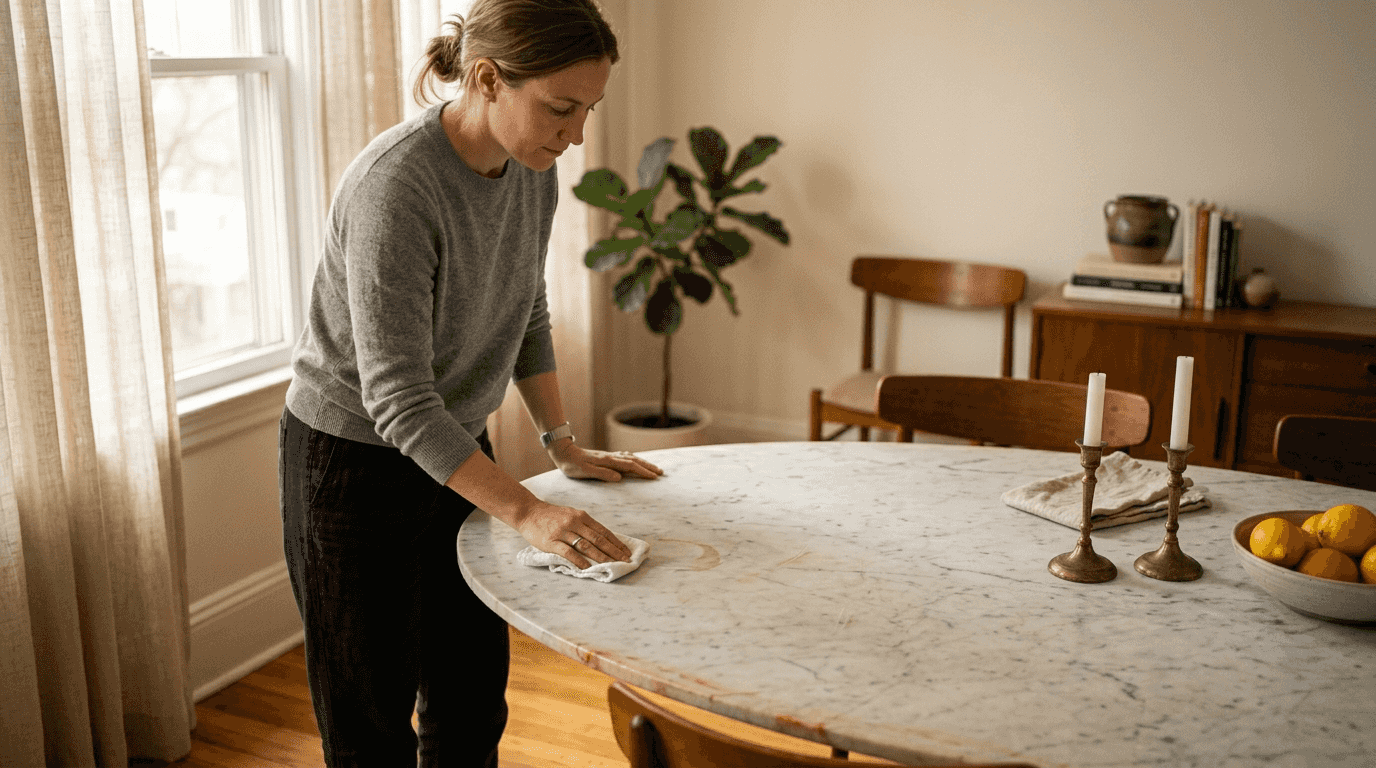
Unlike synthetic surfaces that degrade uniformly, marble develops a desirable patina over time, adding character through natural aging. This patina results from microscopic surface changes caused by daily use, creating a lived-in quality that luxury homeowners increasingly value. Rather than viewing these changes as damage, high-end designers embrace them as markers of authenticity and history.
The cool surface temperature of marble, typically 10 to 15 degrees below room temperature, provides practical benefits beyond aesthetics. This thermal property makes marble furniture ideal for serving cheese, charcuterie, or desserts, maintaining food freshness longer than wood or metal surfaces. The cool surface ideal for serving transforms dining tables into functional luxury pieces that enhance culinary presentations.
Patina development varies based on usage patterns and environmental factors. High-touch areas like table edges develop subtle smoothing and slight color deepening first. These changes occur gradually, typically becoming noticeable after several years of regular use. The process creates visual depth that new marble lacks, similar to how leather develops character or wood gains warmth with age.
Light interaction with aged marble differs from new installations. Microscopic surface texture changes scatter light differently, creating softer reflections and reducing glare. This evolution enhances comfort in living spaces while maintaining the stone’s inherent elegance. The interplay between original polish and developing patina adds visual complexity that designers appreciate.
Proper maintenance preserves patina while preventing unwanted damage:
Pro Tip: Place felt pads under decorative objects and use coasters consistently. This protects against scratches while allowing controlled patina development in high-use areas, creating intentional aging patterns that enhance rather than detract from beauty.
Authentic patina distinguishes genuine marble furniture from imitations. Synthetic materials cannot replicate the subtle color shifts and texture changes that occur in natural stone. This aging process becomes a selling point for luxury properties, where prospective buyers recognize the value of well-maintained marble that has developed character. Following marble maintenance basics preserve stone 2026 guidelines ensures optimal aging.
While marble ages beautifully, understanding its durability is crucial for making smart design decisions.
Marble’s Mohs hardness rating of 3 to 4 places it significantly softer than granite, which rates 6 to 7 on the same scale. This difference translates to practical implications for furniture longevity and placement. Softer stone scratches more easily from everyday items like keys, ceramic dishes, or grit tracked indoors. Understanding this vulnerability helps homeowners set realistic expectations and implement protective measures.
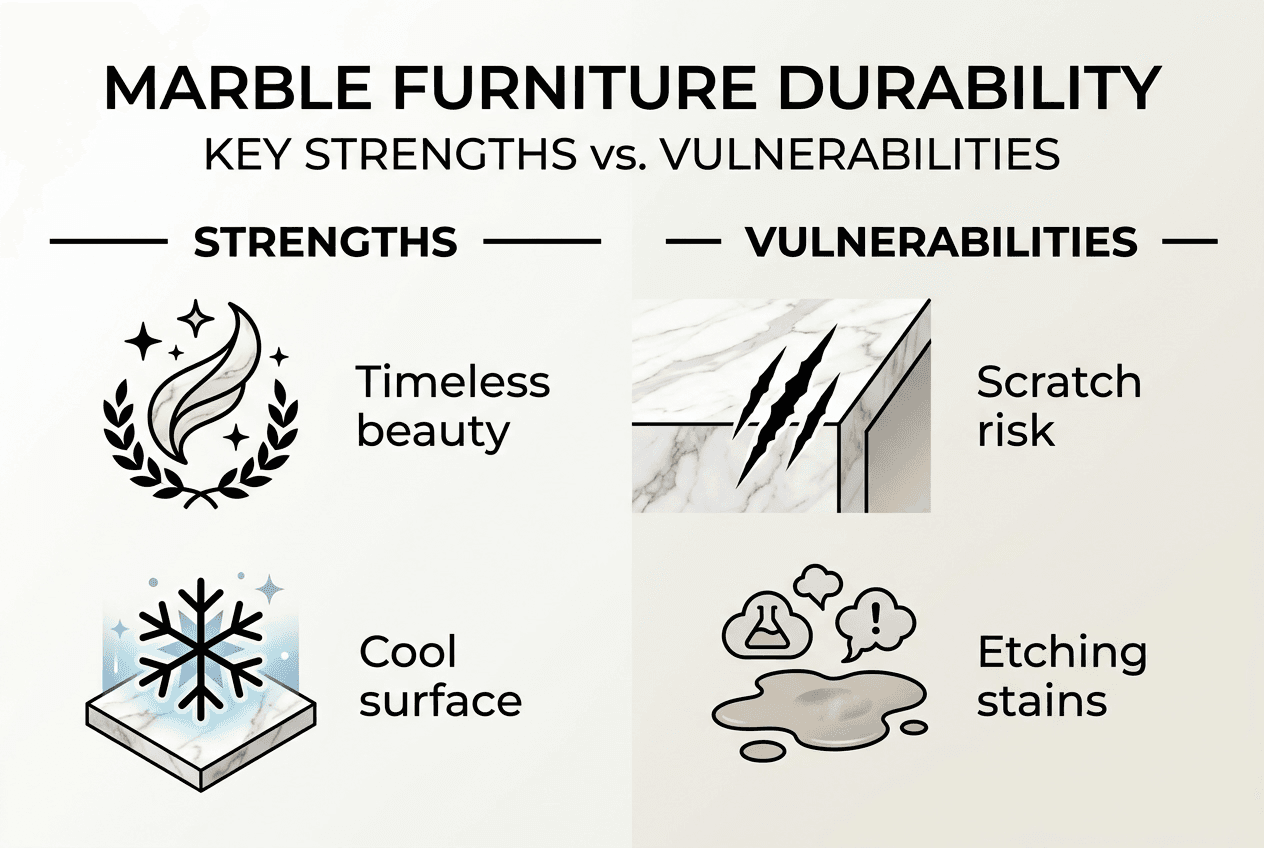
Compared to engineered alternatives, marble proves less durable than granite or quartz in resisting scratches and heat. Quartz composites rate 7 on the Mohs scale and resist staining better due to non-porous engineered surfaces. However, these materials lack marble’s natural beauty and tactile warmth. The trade-off between durability and aesthetics becomes a personal decision based on priorities and usage patterns.
| Property | Marble | Granite | Quartz | | — | — | — | | Mohs Hardness | 3-4 | 6-7 | 7 | | Scratch Resistance | Moderate | High | Very High | | Heat Tolerance | Low to Moderate | High | Moderate | | Stain Resistance | Low (porous) | Moderate | High (non-porous) | | Natural Variation | Very High | High | Low to Moderate |
Acidic substances pose particular threats to marble furniture. Citrus juices, wine, vinegar, and tomato-based foods etch marble surfaces by dissolving calcium carbonate. This chemical reaction creates dull spots that require professional restoration. Even mildly acidic cleaners damage marble over time, making pH-neutral products essential for maintenance. Immediate cleanup of spills prevents permanent etching.
Thermal cycling, the repeated heating and cooling of stone, gradually reduces marble’s structural integrity through microscopic fracturing. While single heat exposure rarely causes visible damage, years of temperature fluctuations weaken bonds between calcite crystals. This phenomenon particularly affects marble furniture near windows with direct sunlight or heating vents. Controlled indoor environments minimize thermal stress.
Penetrating sealers reduce marble’s natural porosity by filling microscopic pores with protective compounds. Quality sealers prevent liquid absorption for 6 to 12 months before requiring reapplication. This protection significantly reduces staining risk from common household substances. However, sealers cannot prevent scratching or etching, addressing only porosity-related vulnerabilities.
Pro Tip: Test sealer effectiveness by placing water drops on the surface. If water beads rather than absorbing within 10 minutes, your sealer remains effective. When water darkens the stone, schedule resealing to maintain protection against stains and moisture damage.
Optimal placement maximizes marble furniture longevity. Protected indoor locations away from high-traffic zones suit marble best. Dining rooms used for formal occasions rather than daily meals, living room coffee tables in adult households, and bedroom furniture all represent ideal applications. Kitchens with heavy cooking activity or homes with young children present challenging environments where more durable alternatives might serve better. Detailed guidance on protection appears in marble maintenance basics preserve stone 2026 resources.
Next, we examine practical factors such as handling, cost, and the impact on property value.
Marble’s substantial density, typically 170 pounds per cubic foot, creates significant weight in furniture pieces. A standard coffee table measuring 48 by 24 inches with a 1.5-inch thick top weighs approximately 150 pounds before adding base materials. This heavyweight requires professional handling during delivery and installation to prevent injury and protect both the furniture and surrounding spaces.
Professional installation services provide specialized equipment and expertise that DIY approaches cannot match. Installers use suction lifters, padded dollies, and strategic lifting techniques to maneuver heavy pieces safely. They assess floor load capacity, especially important for upper-story installations where structural considerations matter. Professional handling also includes proper leveling and stabilization, ensuring furniture sits securely and evenly.
Cost considerations extend beyond initial purchase price. Marble furniture typically averages $60 per square foot for quality stone, though premium varieties like Calacatta or rare colored marbles command significantly higher prices. This figure reflects raw material costs, fabrication labor, and finishing processes. Additional expenses include delivery, installation, and initial sealing treatments that prepare the stone for use.
Luxury property value increases measurably with high-quality marble installations. Real estate professionals recognize marble furniture and fixtures as premium features that attract affluent buyers. Well-maintained marble pieces signal attention to quality and willingness to invest in lasting materials. This perception translates to faster sales and higher offers in competitive markets where buyers seek turnkey luxury.
Budgeting for marble furniture requires accounting for multiple cost factors:
The investment perspective shifts when considering marble furniture’s longevity. Unlike trendy materials that date quickly, marble remains stylistically relevant across decades. A quality marble dining table purchased today serves multiple generations with proper care. This durability amortizes the initial cost over extended periods, often proving more economical than replacing cheaper alternatives every 10 to 15 years.
Designers working with clients on marble furniture projects emphasize transparent communication about costs and care requirements. Setting realistic expectations prevents buyer’s remorse and ensures clients appreciate their investment fully. This approach builds trust and often leads to additional projects as clients experience marble’s benefits firsthand. Resources like benefits of marble decor luxury interiors help educate clients on value propositions.
Insurance considerations also merit attention for valuable marble furniture. Specialized coverage protects against accidental damage, theft, or loss during moves. Documenting purchases with receipts, photographs, and appraisals facilitates claims processing if needed. Some homeowners policies include riders for high-value furnishings, while others require separate fine arts or valuable articles policies.
Now that you understand both benefits and challenges, let’s consider practical maintenance and care to maximize marble furniture’s lifespan.
With an understanding of marble’s benefits and care, explore artisan options to elevate your luxury interiors. Marmorique offers carefully curated collections of high-quality marble furniture and accessories crafted by skilled artisans who understand natural stone’s unique properties. Each piece showcases premium material quality and meticulous attention to detail that discerning homeowners and designers appreciate.
Discover functional luxury through pieces like the artisan marble soap dish solid stone luxury collection, where everyday objects become elegant design statements. These handcrafted accessories demonstrate how marble enhances spaces beyond traditional furniture applications. The artisan marble grape cluster ornament exemplifies decorative possibilities that add sophisticated touches to mantels, shelves, or tablescapes. Browse the complete Marmorique luxury marble collection to find pieces that align with your aesthetic vision and functional needs, all crafted to the exacting standards that luxury interiors demand.
Carrara and Calacatta remain the most prized marble varieties for furniture due to their distinctive veining patterns and historical significance in luxury design. Carrara offers subtle gray veining on white backgrounds, creating understated elegance suitable for various interior styles. Calacatta features bolder, more dramatic veining with warmer tones, making statement pieces that command attention. Both varieties provide timeless appeal that transcends design trends while offering the color and pattern variety that makes each piece unique.
Marble rates 3 to 4 on the Mohs hardness scale, making it softer than granite’s 6 to 7 rating and significantly more vulnerable to scratching from everyday items. This lower hardness means marble requires more careful use and protective measures in daily life. However, quality sealers mitigate staining risks, and proper placement in low-impact areas extends longevity considerably. The trade-off for reduced durability is superior aesthetic appeal and tactile warmth that harder stones cannot match.
Regular sealing every 6 to 12 months prevents staining by filling marble’s natural pores with protective compounds. Use only pH-neutral cleaners specifically formulated for natural stone, as acidic or alkaline products etch calcium carbonate surfaces. Clean spills immediately, especially acidic substances like wine or citrus juice that cause permanent damage if left unattended. Place coasters under drinks and felt pads under decorative objects to prevent scratches and rings. Detailed maintenance protocols appear in marble maintenance basics preserve stone 2026 guides.
Marble furniture strongly associates with luxury and superior craftsmanship in real estate markets, measurably increasing property resale value. Upscale homeowners and interior designers recognize quality marble installations as premium features worth paying for. The timeless elegance appeals to discerning buyers seeking turnkey luxury without renovation needs. Well-maintained marble pieces signal attention to quality and investment in lasting materials, creating positive first impressions during property showings. This value addition extends beyond monetary considerations to include aesthetic and lifestyle benefits that enhance daily living experiences, as detailed in benefits of marble decor luxury interiors resources.


