
Ihr Warenkorb (0)
Your cart is empty
Kostenloser Expressversand
Menü Schublade
Kostenloser Expressversand

Kurzfassung:
- Travertin und Marmor unterscheiden sich deutlich in Entstehung, Aussehen und Oberflächenstruktur.
- Eine ordnungsgemäße Versiegelung und Pflege sind für die Langlebigkeit unerlässlich, wobei Travertin poröser ist.
- Jeder Stein eignet sich für unterschiedliche Räume, wobei Travertin ideal für Außen- und Feuchtbereiche ist, Marmor für luxuriöse Innenräume.
Travertin und Marmor werden von Hausbesitzern und sogar einigen Designern oft als austauschbar betrachtet, aber diese Annahme kann zu kostspieligen Fehlern führen. Diese beiden Steine teilen eine kalksteinige Herkunft, doch ihre Entstehungsprozesse, Oberflächeneigenschaften und idealen Anwendungen unterscheiden sich in einer Weise, die in hochwertigen Innenräumen enorm wichtig ist. Die kristalline Dichte und der glänzende Finish von Marmor erzählen eine völlig andere Designgeschichte als die warme, poröse Textur und die erdigen Töne von Travertin. Wenn Sie in Naturstein für ein Luxusprojekt investieren, ist das Verständnis dieser Unterschiede nicht nur hilfreich, sondern unerlässlich. Dieser Leitfaden führt Sie durch alles, was Sie wissen müssen, um eine sichere und informierte Entscheidung zu treffen.
| Punkt | Details |
|---|---|
| Materialunterschiede | Travertin und Marmor unterscheiden sich in Porosität, Aussehen und Eignung für verschiedene Umgebungen. |
| Pflegebedarf | Beide Steine müssen versiegelt werden, aber Travertin benötigt aufgrund seiner porösen Natur häufigere Pflege. |
| Beste Einsatzszenarien | Travertin eignet sich hervorragend für feuchte oder stark frequentierte Bereiche, während Marmor ideal für luxuriöse, wenig genutzte Innenräume ist. |
| Investition und Wert | Das Verständnis der Pflege- und Installationskosten jedes Steins sorgt für eine kluge Investition bei Wohn- oder Designprojekten. |
Beide Steine beginnen als Kalkstein, aber was danach passiert, trennt sie vollständig. Travertin bildet sich in heißen Quellen und Flussablagerungen, wo Mineralien über Tausende von Jahren aus dem Wasser ausfallen. Das Ergebnis ist ein geschichteter, poröser Stein mit natürlichen Hohlräumen und einer warmen Farbpalette von Elfenbein und Beige bis zu Walnuss und Rostbraun. Marmor hingegen entsteht, wenn Kalkstein tief in der Erde intensiver Hitze und Druck ausgesetzt wird, ein metamorphen Prozess, der das Calciumcarbonat in ein dichteres, härteres Material mit den charakteristischen Aderungen umkristallisiert.
Optisch ist der Kontrast sofort erkennbar. Marmor besitzt eine raffinierte, fast leuchtende Qualität, wenn er poliert ist, mit kräftigen oder dezenten Adern, die wie Pinselstriche durch den Stein verlaufen. Travertin hat einen organischeren, matten Charakter. Seine Oberflächenstruktur wirkt bodenständig und fühlbar, und seine natürlichen Hohlräume, die in fertigen Produkten oft mit Fugenmörtel oder Harz gefüllt sind, verleihen ihm ein markantes Querschnitts- oder Adermuster. Für Travertin-Dekorideen ist genau diese rohe Wärme das, was ihn in zeitgenössischen Innenräumen so ansprechend macht.
Fühlen Sie sie nebeneinander an, ist der Unterschied spürbar. Marmorique fühlt sich kühl und glatt an, fast glasartig unter einer polierten Oberfläche. Travertin wirkt wärmer und etwas aufnahmefähiger, was auch bedeutet, dass er anders auf Verschüttetes und Feuchtigkeit reagiert. Da Travertin poröser ist und oft häufiger versiegelt werden muss als Marmorique, erspart Ihnen dieses Verständnis von Anfang an spätere Überraschungen.
Designhinweis: Berücksichtigen Sie bei der Wahl zwischen diesen Steinen, wie viel natürliches Licht Ihr Raum erhält. Marmorique verstärkt das Licht durch seine reflektierende Oberfläche, während Travertin es absorbiert und so eine weichere, gemütlichere Atmosphäre schafft.
| Eigenschaft | Travertin | Marmor |
|---|---|---|
| Entstehung | Thermalquellablagerungen | Metamorpher Kalkstein |
| Porosität | Hoch | Niedrig bis mittel |
| Oberflächenfinish | Matt, strukturiert | Glänzend, glatt |
| Farbpalette | Warme Neutraltöne, Beige, Walnuss | Weiß, grau, schwarz, mit Adern |
| Typische Härte | Weicher (3-4 Mohs) | Härter (3-5 Mohs) |
| Versiegelungshäufigkeit | Häufiger | Weniger häufig |
Mit Blick auf Zusammensetzung und Haptik: Wie verhalten sich diese Steine im Laufe der Zeit, besonders in den luxuriösen Umgebungen, die Wohnraumgestalter verlangen?
Marmorique ist bekannt für seine Widerstandsfähigkeit gegen physischen Verschleiß, hat aber eine bekannte Schwachstelle: Säuren. Zitrussaft, Wein und sogar einige Reinigungsmittel können die Oberfläche ätzen und matte Flecken hinterlassen, die das polierte Finish stören. Travertin nutzt sich langsamer ab und ist weniger anfällig für dramatische Oberflächenätzungen, aber seine Porosität bedeutet, dass er Flecken schneller aufnimmt, wenn er nicht versiegelt oder falsch gepflegt wird. In viel genutzten Haushalten ist das ein entscheidender Unterschied.
Hier ist eine praktische Wartungsübersicht für jeden Stein:
Profi-Tipp: Legen Sie steinsichere Matten an Eingängen und in Küchenbereichen aus. Diese einfache Gewohnheit reduziert den Oberflächenverschleiß von sowohl Marmorique als auch Travertin deutlich und verlängert die Zeit zwischen professionellen Restaurationsbesuchen.
| Faktor | Travertin | Marmor |
|---|---|---|
| Kratzerbeständigkeit | Mittel | Mittel bis hoch |
| Säureempfindlichkeit | Niedrig bis mittel | Hoch |
| Versiegelungshäufigkeit | Alle 6-12 Monate | Alle 12-18 Monate |
| Restaurationsmöglichkeiten | Schleifen, Füllen von Hohlräumen | Nachpolieren, Schleifen |
| Risiko der Fleckenaufnahme | Höher | Niedriger |
Langlebigkeit in luxuriösen Umgebungen hängt von konsequenter Pflege ab. Beide Steine haben Jahrhunderte in Palästen und öffentlichen Gebäuden überdauert, sodass bei richtiger Aufmerksamkeit jede Wahl Trends überdauern wird.
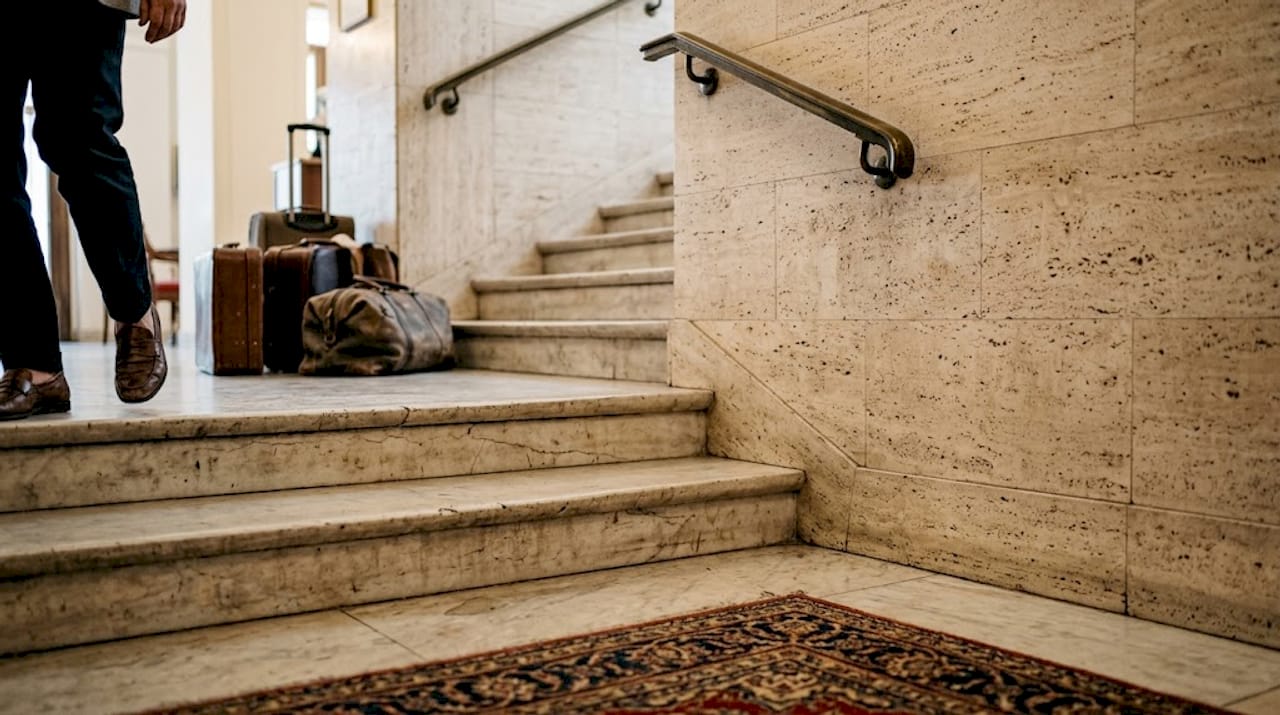
Sobald Haltbarkeit und Pflege berücksichtigt sind, ist es Zeit, den besten Stein für Stil und Funktion Ihres Projekts zu wählen.
Travertin und Marmor haben jeweils Umgebungen, in denen sie wirklich glänzen. Die Rutschfestigkeit und die strukturierte Oberfläche von Travertin machen ihn zur natürlichen Wahl für Nassbereiche und Außenräume, während die veredelte Oberfläche und dramatische Maserung von Marmor sich für markante Innenräume eignen, bei denen die visuelle Wirkung im Vordergrund steht. Travertin eignet sich aufgrund seiner Rutschfestigkeit für Nassbereiche wie Badezimmer und Patios, während Marmor in luxuriösen Innenanwendungen wie Waschtischen und skulpturalen Möbelstücken überzeugt.
Raum-für-Raum-Empfehlungen:
Die Oberflächenveredelung ist genauso wichtig wie der Stein selbst. Ein polierter Marmorboden in einem stark frequentierten Flur ist schön, aber unnachgiebig. Ein geschliffener Travertin im selben Raum ist praktischer und dennoch optisch reichhaltig. Entdecken Sie Möglichkeiten, Travertin über das Offensichtliche hinaus zu verwenden, um zu sehen, wie vielseitig dieses Material in modernen Luxusinterieurs sein kann.
Profi-Tipp: Wenn Sie Steine in einem Projekt mischen, halten Sie die Oberfläche einheitlich statt das Material. Ein geschliffener Marmor und geschliffener Travertin können im selben Raum wunderbar nebeneinander existieren, ohne visuelle Konflikte.
Über Schönheit und Leistung hinaus wollen sowohl Hausbesitzer als auch Profis die Gesamtinvestition für jeden Stein verstehen.
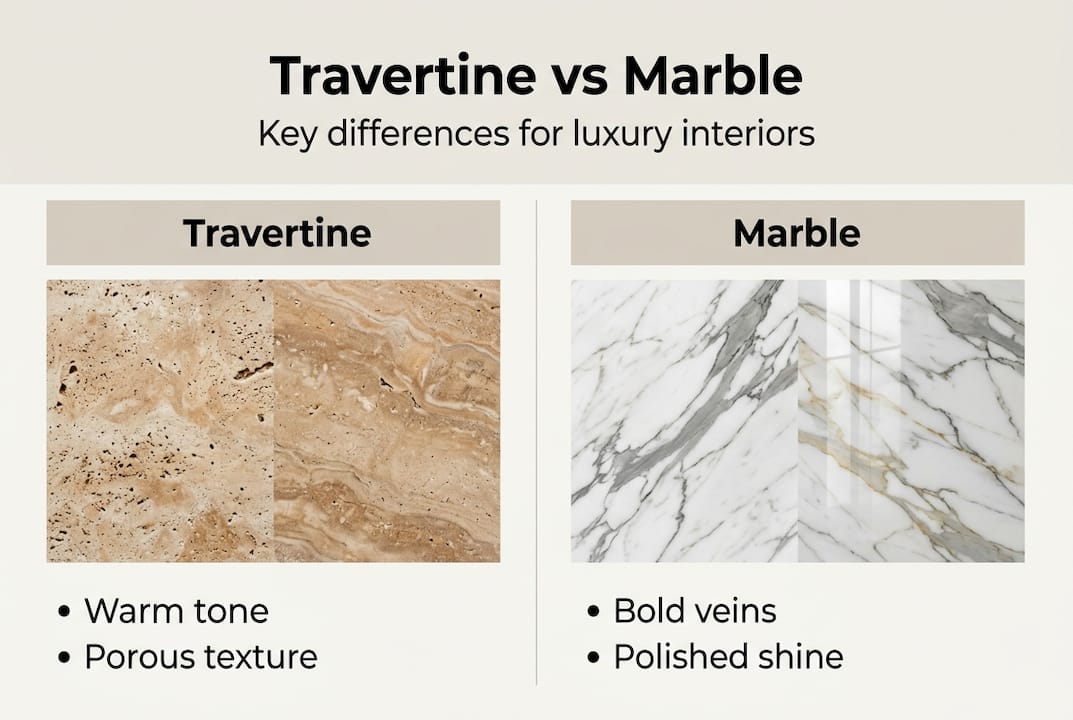
Travertin ist auf Materialebene im Allgemeinen günstiger als Marmor. Einstiegs-Travertinfliesen beginnen bei etwa 3 bis 7 US-Dollar pro Quadratfuß, während Marmor der mittleren Preisklasse typischerweise 10 bis 20 US-Dollar pro Quadratfuß oder mehr kostet, abhängig von Herkunft und Seltenheit. Premiumqualitäten beider Materialien können diese Spannen deutlich überschreiten, besonders bei buchgematchten Platten oder seltenen Farbvarianten.
Aber die Materialkosten sind nur ein Teil des Bildes. Die Steinwahl beeinflusst nicht nur die Ästhetik, sondern auch die laufenden Kosten aufgrund unterschiedlicher Wartungshäufigkeit. Travertins häufigere Versiegelung und gelegentliche Reparaturen von Hohlräumen summieren sich über die Jahre. Marmor kann anfangs teurer sein, benötigt aber möglicherweise selteneres Versiegeln, obwohl professionelles Polieren nach Ätzen nicht günstig ist.
Wichtige Entscheidungspunkte für Käufer:
Die klügste Investition ist nicht immer der teuerste Stein. Es ist derjenige, der zu Ihrem Lebensstil, Ihrer Pflegekapazität und Ihrer Designvision passt – ohne Kompromisse.
Hier ist etwas, das die meisten Ausstellungsräume Ihnen nicht verraten: Das Prestige von Marmor kann einem Design tatsächlich schaden, wenn es aus Statusgründen statt aus Passgenauigkeit gewählt wird. Wir haben beeindruckende Räume gesehen, in denen Travertin die mutigere, interessantere Wahl war, und das Ergebnis fühlte sich authentisch luxuriöser an als eine vorhersehbare weiße Marmorinstallation.
Travertin strahlt eine Wärme und geologische Ehrlichkeit aus, die Marmor trotz seines Glamours manchmal fehlt. In Räumen, die zum Leben und nicht zum Beeindrucken gestaltet sind, ist dieser Unterschied wichtig. Ein Travertin-Badezimmerboden, der sich an einem Wintermorgen warm unter den Füßen anfühlt, ist ein täglicher Luxus, den eine kalte Marmoroberfläche einfach nicht bietet.
Die häufigsten Bedauern von Hausbesitzern betreffen nicht die Wahl von Travertin statt Marmor. Sie betreffen die Wahl von Marmor für stark frequentierte Bereiche, ohne die Wartungsrealität zu bedenken, oder die Entscheidung für einen Stein nur wegen seiner Instagram-Tauglichkeit. Echter Luxus ist ein Material, das gut altert, zu Ihrem Leben passt und auch nach einem Jahrzehnt noch bewusst gewählt wirkt.
Wenn Sie sich von der organischen und erdigen Richtung angezogen fühlen, die 2026 das High-End-Innendesign prägt, könnten kreative Travertin-Ideen Sie überraschen, wie edel dieser Stein wirken kann, wenn er durchdacht eingesetzt wird.
Die Wahl zwischen Travertin und Marmor prägt das Raumgefühl für viele Jahre. Bei Marmorique haben wir unsere Kollektion genau um diese bewusste Entscheidung herum aufgebaut und verbinden handwerkliche Kunstfertigkeit mit Steinen, die sowohl durch Schönheit als auch durch praktische Leistung überzeugen.
Ob Sie sich von der warmen, organischen Ausstrahlung des Travertins oder dem markanten Drama des Marmors angezogen fühlen, unsere sorgfältig ausgewählte Kollektion aus Steinkleuchten, Tischen, Badezimmersets und dekorativen Accessoires bietet Ihnen eine greifbare Möglichkeit, beide Materialien vor einem größeren Projekt zu erleben. Entdecken Sie kuratierte Steinoptionen und finden Sie die Stücke, die Ihre Designvision widerspiegeln, mit fachkundiger Begleitung für jede Entscheidung.
Travertin ist oft die bevorzugte Wahl für Badezimmer, da seine strukturierte Oberfläche in nassen Bereichen besseren Halt bietet, obwohl beide Steine eine regelmäßige Versiegelung benötigen, um langfristig gut zu funktionieren.
Ja, beide müssen versiegelt werden. Travertin muss aufgrund seiner höheren Porosität häufiger versiegelt werden, typischerweise alle 6 bis 12 Monate, im Vergleich zu Marmors 12 bis 18 Monaten.
Marmor eignet sich am besten für den Innenbereich mit wenig Verkehr. Travertin ist für den Außenbereich, einschließlich Terrassen und Poolumrandungen, dank seiner natürlichen Rutschfestigkeit und Temperaturbeständigkeit deutlich besser geeignet.
Travertin ist auf Materialebene in der Regel kostengünstiger, aber die Gesamtkosten hängen von Wartung, Qualität, Oberfläche und Installationsaufwand bei beiden Steinen ab.


