Your Cart (0)
Your cart is empty
Free express shipping

Drawer menu
Free express shipping

Tumbled travertine often confuses homeowners and designers who wonder what sets it apart from other stone finishes and why it commands attention in luxury spaces. This guide clarifies exactly what tumbled travertine is, how its unique texture and finish create visual warmth, and why it excels in both aesthetic appeal and practical durability. You’ll discover how to choose, use, and maintain this sought-after material to elevate your interior design with confidence and sophistication.
| Point | Details |
|---|---|
| Definition and texture | Tumbled travertine is rough travertine tumbled in a drum with water and abrasive media to create a warm matte surface with soft edges. |
| Edge rounding | The tumbling process results in soft rounded edges, visible pores, and a textured matte finish that reads as aged. |
| Design applications | Its warm texture and natural variation suit rustic luxury spaces as well as spa and Mediterranean inspired interiors. |
| Maintenance basics | Regular sealing and careful cleaning help preserve color, texture, and slip resistance. |
| Finish comparisons | Compared with polished or honed travertine, tumbled travertine offers less shine, more texture, and a weathered authentic look. |
Tumbled travertine is created by tumbling rough travertine stone to soften edges and enhance natural textures, producing a distinctive aged appearance that sets it apart from other finishes. The tumbling process involves placing travertine pieces in a large rotating drum with water, sand, and sometimes small pebbles. As the drum rotates for hours or days, the abrasive action rounds off sharp corners, smooths surfaces irregularly, and exposes the stone’s natural pores and character marks.
This mechanical treatment transforms raw travertine into a material with soft, rounded edges and a matte surface that feels slightly rough to the touch. Unlike polished travertine, which showcases a glossy, mirror-like finish through grinding and buffing, tumbled travertine embraces imperfection and organic variation. Where honed travertine offers a smooth, flat surface without shine, tumbled travertine goes further by adding dimensional texture and visible weathering.
The resulting aesthetic mimics centuries of natural wear, creating an instant sense of history and warmth that appeals to designers seeking authenticity. Each tile or piece displays unique surface variations, from subtle dimples to pronounced texture patterns, ensuring no two installations look identical. This natural inconsistency becomes a design asset rather than a flaw, particularly in spaces aiming for rustic luxury or Old World elegance.
Pro Tip: Request sample tiles before committing to a large order, as tumbled travertine’s texture and color can vary significantly between batches and suppliers, affecting your final design cohesion.
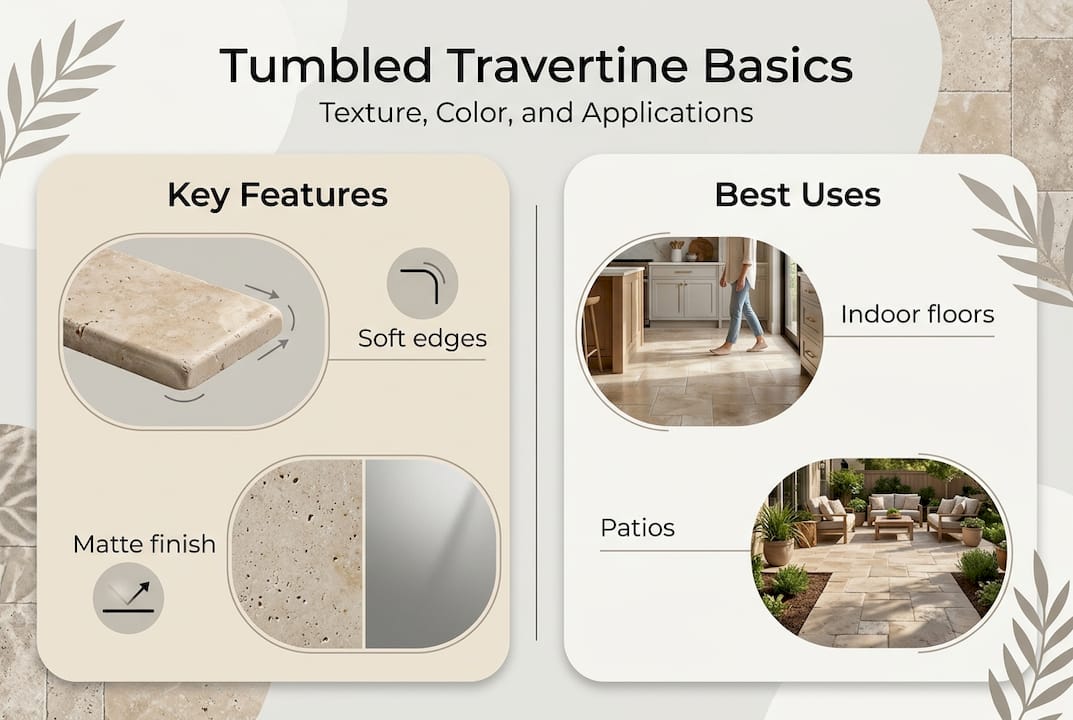
The tumbling intensity can be adjusted to create lighter or heavier distressing, giving you control over how pronounced the aged effect appears. Lighter tumbling preserves more of the stone’s original surface while still softening edges, ideal for contemporary spaces that want subtle texture. Heavier tumbling produces a more dramatic weathered look that suits traditional Mediterranean or Tuscan-inspired interiors. Understanding these options helps you specify exactly the character level your project demands, whether you’re designing a serene spa bathroom or a dramatic entryway.
Now that we know the basics, let’s explore the unique textures and visual qualities that make tumbled travertine stand out.
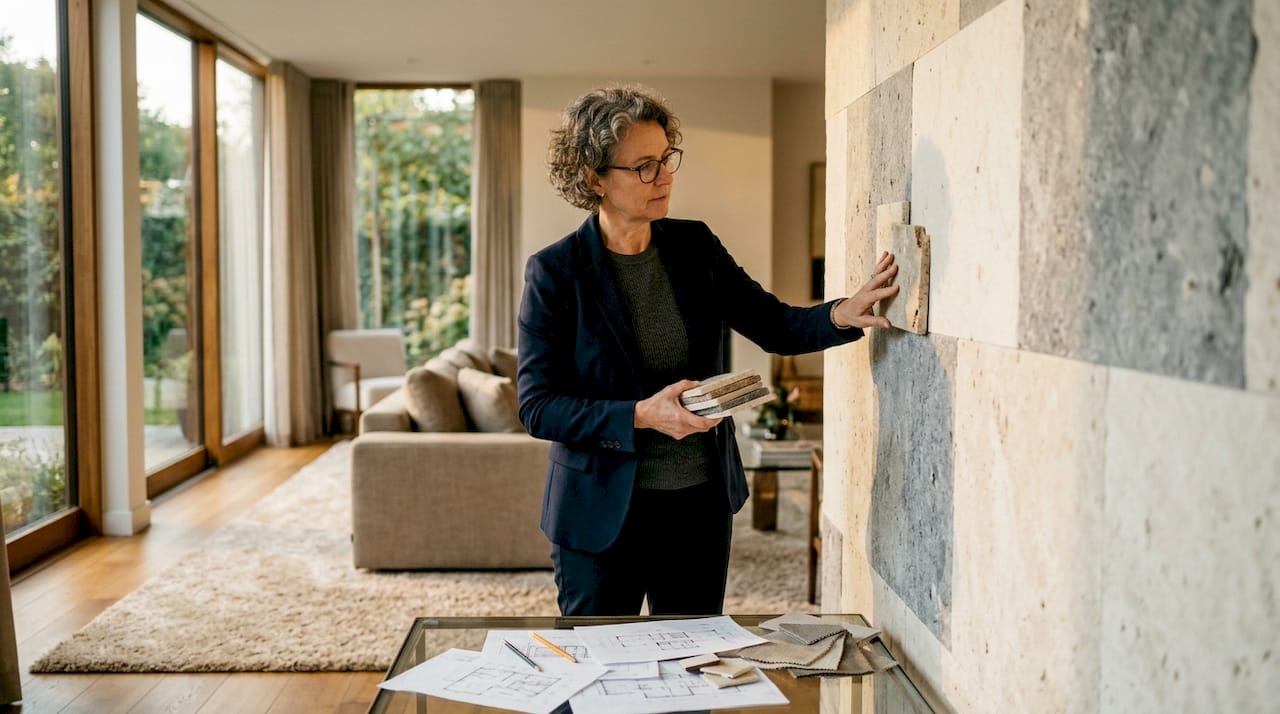
The natural texture and muted color palette of tumbled travertine create a warm, inviting atmosphere ideal for luxury spaces, transforming cold stone into a material that feels organic and welcoming. The textured surface diffuses light rather than reflecting it harshly, producing a soft glow that enhances ambient lighting and creates depth in any room. This quality makes tumbled travertine particularly effective in spaces where you want to avoid the clinical feel of highly polished surfaces.
Beyond aesthetics, the textured finish delivers exceptional slip resistance, a critical safety feature for wet areas like bathrooms, pool decks, and outdoor patios. The irregular surface provides natural traction underfoot, reducing accident risks without requiring additional treatments or coatings. This practical advantage means you don’t sacrifice safety for beauty, a rare combination in luxury materials.
Tumbled travertine’s durability surprises many who assume its softer appearance indicates fragility. The tumbling process actually reveals the stone’s dense inner structure, and the textured surface cleverly disguises minor scratches and wear that would show prominently on polished finishes. High-traffic areas benefit from this forgiving nature, as the stone maintains its beauty even with daily use and occasional impacts.
The material’s versatility spans design styles from rustic farmhouse to modern minimalist, adapting to your vision rather than dictating it. In rustic settings, tumbled travertine amplifies warmth and authenticity with its aged character. In contemporary spaces, it provides organic contrast against sleek fixtures and clean lines, preventing sterility while maintaining sophistication. This chameleon quality makes it a smart investment for homeowners who may evolve their design preferences over time.
Pro Tip: Pair tumbled travertine floors with radiant heating systems to enhance the material’s natural warmth, creating a sensory experience that combines visual and physical comfort in bathrooms and living spaces.
The stone’s neutral color palette, ranging from creamy ivory to warm beige and soft gray, serves as an ideal backdrop for bold accent colors or allows for serene monochromatic schemes. Unlike materials with strong color personalities that date quickly, tumbled travertine’s subtle earthiness remains timeless across decades. This longevity protects your investment, as you won’t feel pressure to renovate simply because the material looks trendy rather than classic.
With an understanding of its qualities, let’s see how tumbled travertine compares to other natural stone finishes to clarify when to choose it.
Each travertine finish offers distinct textures and uses, with tumbling producing a rustic, aged look compared to the sleek polish of other finishes, helping you match material characteristics to your specific design goals. Understanding these differences prevents costly mistakes where the wrong finish undermines your intended aesthetic or fails to meet practical requirements.
| Finish Type | Surface Texture | Visual Effect | Best Applications | Maintenance Level |
|---|---|---|---|---|
| Tumbled | Rough, rounded edges | Rustic, aged warmth | Floors, patios, pool decks, accent walls | Moderate, hides wear |
| Polished | Smooth, glossy | Formal, reflective elegance | Feature walls, low-traffic floors, countertops | High, shows scratches |
| Honed | Smooth, matte | Contemporary, subtle sophistication | Floors, walls, showers, countertops | Moderate, shows stains |
| Brushed | Lightly textured | Casual, natural | Floors, outdoor areas, casual spaces | Low, very forgiving |
Polished travertine delivers maximum elegance through its mirror-like surface that reflects light dramatically, making spaces feel larger and more formal. However, this high-gloss finish shows every scratch, scuff, and water spot, requiring diligent maintenance and making it impractical for high-traffic areas or homes with children and pets. The slippery surface also poses safety concerns in wet areas, limiting its bathroom and outdoor applications.
Honed travertine occupies a middle ground with its smooth, matte finish that offers sophistication without the maintenance intensity of polished stone. The flat surface works beautifully in contemporary designs and shows less wear than polished versions, though it remains more susceptible to staining than tumbled finishes. Honed travertine suits homeowners who want clean lines and modern aesthetics but need more durability than polished stone provides.
Brushed travertine undergoes wire brushing to create subtle texture without the pronounced aging of tumbled finishes. This option appeals to those seeking texture and slip resistance with a less rustic appearance, bridging the gap between honed and tumbled aesthetics. The lightly textured surface hides wear effectively while maintaining a more uniform look than heavily tumbled stone.
Pro Tip: Consider mixing finishes strategically within one project, using tumbled travertine for floors where texture and durability matter, and honed or polished travertine for walls where visual smoothness enhances the design without practical concerns.
Your choice should weigh aesthetic preferences against practical realities like foot traffic, moisture exposure, and maintenance commitment. Tumbled travertine excels where you need character, safety, and forgiveness, while polished finishes shine in carefully controlled environments prioritizing formal beauty. Honed travertine serves projects wanting contemporary sophistication with reasonable maintenance, and brushed finishes suit casual elegance. Matching finish to function ensures your investment delivers both beauty and performance.
Understanding these distinctions helps inform the best choice for your design needs. Next, let’s discuss practical applications and maintenance tips.
Proper maintenance workflows help preserve tumbled travertine’s natural beauty and longevity in home settings, ensuring your investment maintains its luxury appeal for decades with straightforward care practices. Strategic placement and consistent maintenance transform this durable material into a lifetime asset rather than a renovation cycle liability.
Tumbled travertine thrives in numerous home environments, from kitchen floors that endure constant activity to bathroom walls that face moisture and temperature fluctuations. The material’s texture and warmth elevate entryways, creating impressive first impressions that set the tone for your entire home. Outdoor applications like patios and pool surrounds benefit from the stone’s slip resistance and ability to stay relatively cool underfoot even in direct sunlight.
Installation quality determines long-term performance as much as the stone itself. Professional installation ensures proper substrate preparation, appropriate adhesive selection, and correct grouting techniques that prevent cracking and movement. Sealing should occur after installation and grout curing, creating a protective barrier against stains and moisture penetration without altering the stone’s natural appearance.
Common maintenance mistakes damage tumbled travertine unnecessarily and create repair costs that simple prevention would avoid. Acidic cleaners like vinegar or lemon-based products etch the calcium-based stone, dulling its surface and creating permanent damage. Harsh alkaline cleaners strip sealers prematurely, leaving the stone vulnerable to staining. Using excessive water during cleaning can penetrate deeply into the porous stone, potentially causing efflorescence or weakening adhesive bonds.
Pro Tip: Place quality doormats at entrances to trap dirt and grit before it reaches your travertine floors, potentially extending the time between deep cleanings and reducing surface wear significantly.
With proper care, tumbled travertine can last 50 years or more while maintaining its beauty, making it one of the most cost-effective luxury materials over its lifetime. The initial investment pays dividends through durability and timeless appeal that never requires replacement due to dated appearance. Unlike synthetic materials that degrade or trend-driven choices that feel stale after a decade, tumbled travertine actually improves with age as its patina deepens and character develops.
Armed with practical insights, now consider how selecting tumbled travertine will elevate your space’s luxury and feel.
Once you’ve established tumbled travertine as your foundation material, complementary stone accents complete your luxury aesthetic with cohesive natural beauty. Marmorique specializes in artisan marble and travertine decor pieces that echo the organic elegance of tumbled stone while adding sculptural interest and functional luxury to your spaces.
Consider how an artisan marble grape ornament adds sculptural dimension to console tables or shelving against your travertine backdrop, creating visual dialogue between surfaces and accents. The solid stone construction ensures these pieces carry the same authenticity and permanence as your architectural materials. For bathrooms featuring tumbled travertine, an artisan marble soap dish provides practical luxury that harmonizes perfectly with the textured stone surfaces.
Each piece in the Marmorique collection celebrates natural stone’s inherent beauty through thoughtful craftsmanship that respects the material’s character. Browse the full range at Marmorique to discover how curated stone accents transform good design into exceptional spaces that feel intentionally composed rather than simply decorated. These finishing touches demonstrate your commitment to quality and natural materials throughout your home.
Tumbled travertine features a textured, matte surface with rounded edges created through mechanical tumbling, while polished travertine has a smooth, glossy finish achieved through grinding and buffing. The tumbled version offers superior slip resistance and hides wear better, making it more practical for high-traffic areas. Polished travertine delivers formal elegance but requires more maintenance and shows scratches prominently.
Tumbled travertine excels in outdoor applications like patios, pool decks, and walkways due to its natural slip resistance and durability. The textured surface provides excellent traction even when wet, reducing safety concerns around water features. Proper sealing protects against weather exposure and freeze-thaw cycles, ensuring the stone maintains its beauty through seasonal changes and years of outdoor exposure.
Regular maintenance involves sweeping to remove grit, mopping with pH-neutral stone cleaners, and blotting spills immediately to prevent staining. Reseal the surface every 12 to 24 months depending on traffic and moisture exposure to maintain stain resistance. Avoid acidic cleaners like vinegar and harsh alkaline products that can damage the calcium-based stone, and never use abrasive scrubbing tools that scratch the surface.
The soft, aged texture creates warm, inviting spaces that feel organic and welcoming rather than cold or clinical. Light diffuses across the irregular surface rather than reflecting harshly, producing a gentle glow that enhances ambient lighting and adds depth. This versatile material adapts to both rustic and contemporary luxury designs, providing authentic character that remains timeless across decades rather than dating quickly like trend-driven materials.
With proper installation and maintenance, tumbled travertine can last 50 years or more while maintaining its beauty and structural integrity. The durable stone actually improves with age as its patina deepens and character develops naturally. This longevity makes it one of the most cost-effective luxury materials over its lifetime, as it never requires replacement due to wear or dated appearance, unlike synthetic alternatives that degrade or look stale after a decade.


