Your Cart (0)
Your cart is empty
Free express shipping

Drawer menu
Free express shipping

Many homeowners assume natural stone flooring demands constant upkeep or suits only grand estates. That misconception overlooks travertine, a material that delivers timeless elegance without sacrificing everyday practicality. This guide reveals how travertine balances aesthetic appeal, resilience, and financial return. You’ll discover its durability in high-traffic spaces, environmental advantages, and proven impact on property value. Whether renovating a family home or designing a commercial interior, understanding travertine’s strengths helps you make confident flooring decisions that enhance both beauty and investment.
| Point | Details |
|---|---|
| Timeless luxury appearance | Travertine’s natural textures and tones offer elegance and blend with many high-end styles. |
| Durable with proper care | Sealed travertine stands up to busy spaces and delivers lasting performance. |
| Eco-friendly and healthy | Low VOCs and longevity make travertine floors ideal for sustainable interiors. |
| Strong return on investment | Travertine floors can yield a high ROI and remain attractive to future buyers. |
| Best for classic interiors | Travertine excels in Mediterranean, rustic, or traditionally luxurious spaces. |
Before considering travertine’s technical performance, it’s important to understand its distinctive visual characteristics and style flexibility. Travertine forms through mineral deposits in hot springs and limestone caves, creating organic veining and earthy tones that range from cream to tan to warm brown. Each tile carries unique patterns, ensuring no two installations look identical.
This natural variation offers practical benefits beyond aesthetics. The textured surface and subtle patterning help mask minor dirt and everyday wear, reducing visible maintenance needs between cleanings. Travertine pairs beautifully with Mediterranean, rustic, and contemporary luxury styles, adapting to diverse design visions while maintaining a cohesive warmth.
Travertine vs. other flooring materials:
| Material | Surface Texture | Color Range | Maintenance Level |
|---|---|---|---|
| Travertine | Naturally porous, textured | Cream, tan, brown | Moderate (sealing required) |
| Marble | Smooth, polished | White, gray, black | High (prone to etching) |
| Granite | Dense, uniform | Varied, speckled | Low to moderate |
| Porcelain | Manufactured, consistent | Any color | Low |
Unlike marble’s high-gloss finish that shows every scratch, travertine’s matte texture conceals minor imperfections. Granite offers superior hardness but lacks travertine’s organic character. Porcelain mimics natural stone yet misses the authentic depth and thermal properties that make travertine comfortable underfoot year-round.
The stone’s inherent warmth creates inviting spaces. Walk barefoot across travertine in winter, and you’ll notice it feels less cold than ceramic or porcelain. This thermal quality stems from its porous structure, which retains ambient temperature better than denser materials.
Pro Tip: Select honed or tumbled finishes for high-traffic areas. Polished travertine looks stunning but becomes slippery when wet, making it better suited for walls or low-traffic zones.
For designers seeking travertine in luxury design, the material’s versatility extends from grand entryways to intimate powder rooms. Its neutral palette serves as either a subtle backdrop or a statement feature, depending on tile size and layout pattern.
With a sense of travertine’s beauty, let’s address if it can genuinely hold up in active environments. Travertine delivers compressive strength around 8,000 psi, handling everyday pressure from furniture, foot traffic, and household activities without cracking or crumbling. While its Mohs hardness of 2.5 to 3.5 places it softer than granite, proper sealing transforms this natural stone into a resilient flooring option.
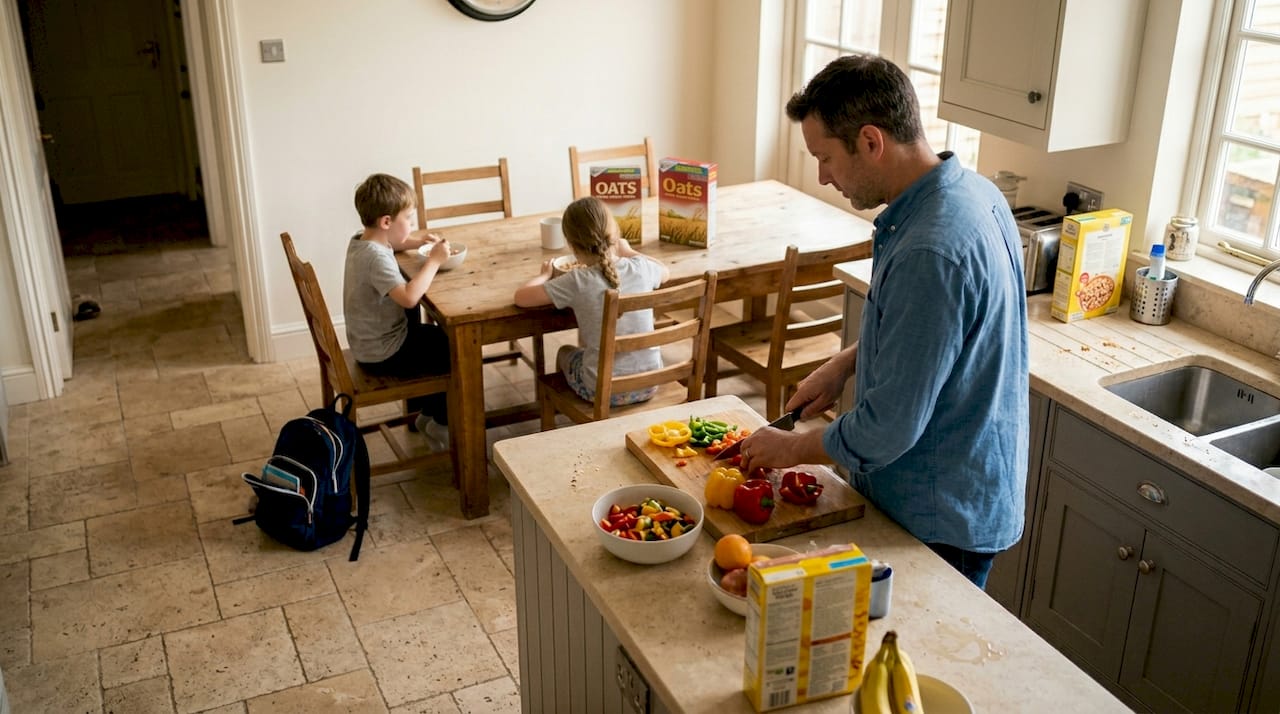
Historical evidence supports travertine’s longevity. The Colosseum in Rome, built nearly 2,000 years ago, still stands with much of its original travertine intact. Modern homes won’t face gladiatorial combat, but they do endure dropped keys, pet claws, and rolling furniture. Sealed travertine withstands these challenges when maintained correctly.
Performance factors in busy spaces:
Kitchens and living rooms present the toughest tests. Acidic spills like wine or citrus juice can etch unsealed travertine, creating dull spots. Sealing every 12 to 18 months creates a protective barrier that gives you time to wipe up spills before they penetrate. High-quality sealers also resist oil-based stains from cooking or cosmetics.
Maintenance routine for lasting performance:
Pro Tip: Test your seal by dropping water on the floor. If it beads up, the seal remains effective. If water darkens the stone within five minutes, schedule resealing.
For those considering travertine for premium spaces, understanding these maintenance requirements ensures the investment pays off through decades of beauty. Commercial installations in hotel lobbies and retail spaces prove travertine handles heavy foot traffic when properly specified and maintained.
Beyond performance, today’s buyers and designers are also weighing the sustainability and health impact of their flooring choices. Travertine stands out as an environmentally responsible option that supports healthier indoor environments while reducing long-term waste.
The stone’s natural composition means low VOC emissions compared to vinyl, laminate, or engineered products that rely on adhesives and synthetic binders. Families with asthma, allergies, or chemical sensitivities benefit from travertine’s inert properties. It doesn’t off-gas formaldehyde or other compounds that degrade indoor air quality.
Environmental advantages:
Sustainability extends beyond the material itself. Travertine’s thermal mass helps regulate indoor temperatures, reducing heating and cooling demands. In summer, the stone stays cool underfoot. In winter, it absorbs and radiates warmth from sunlight or heating systems. This passive temperature moderation can lower energy bills over the floor’s lifetime.
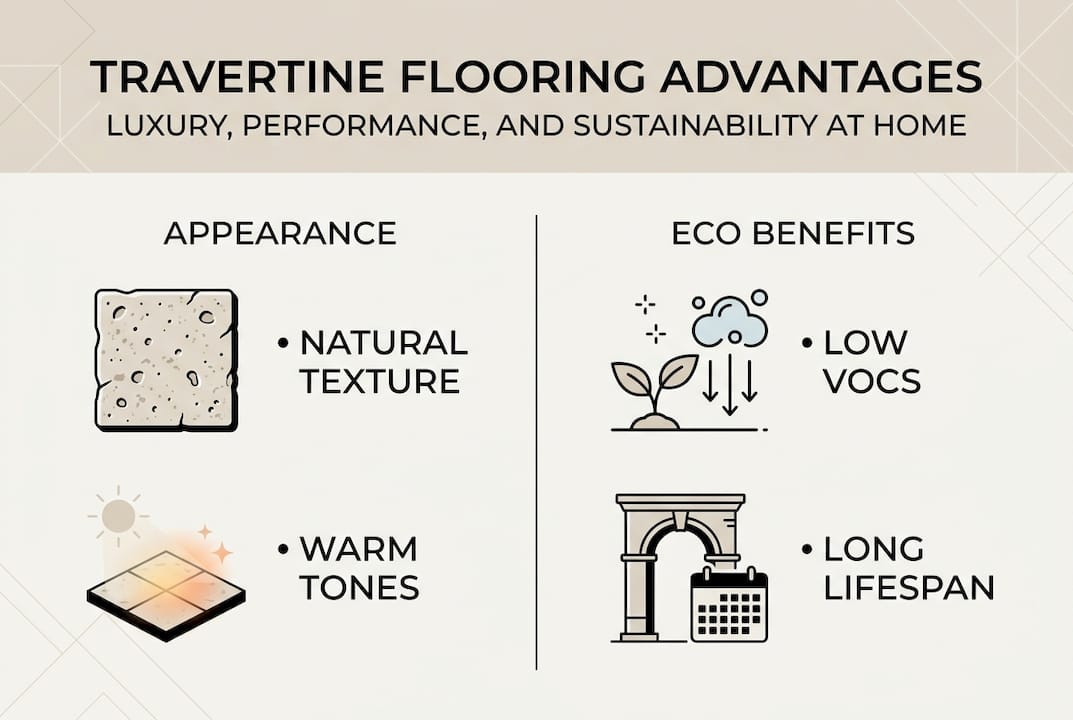
Natural quarrying does involve environmental impact, but responsible suppliers implement reclamation practices that restore quarry sites. The industry has moved toward water recycling systems and dust control measures that minimize ecological disruption. Choosing travertine from certified quarries ensures your flooring supports sustainable extraction practices.
Compare this to carpet, which typically requires replacement every 10 to 15 years and ends up in landfills. Vinyl and laminate also have limited lifespans and contain materials that don’t biodegrade. Travertine’s durability means fewer resources consumed over your home’s lifetime, making it a genuinely sustainable choice for environmentally conscious projects.
Practicality and looks matter, but what about the financial impact of choosing travertine? Real estate data reveals stone flooring delivers measurable returns when selling your home. The National Association of Realtors reports approximately 75% ROI on stone flooring installations, positioning travertine among the top features luxury buyers seek.
This return stems from multiple factors. Stone flooring signals quality construction and premium finishes, elevating perceived home value beyond the material cost. Buyers recognize travertine’s longevity means they won’t face immediate replacement expenses. The timeless aesthetic also appeals across demographic groups, from young professionals to retirees.
Value comparison across flooring types:
| Flooring Type | Average ROI | Buyer Appeal | Lifespan |
|---|---|---|---|
| Travertine | ~75% | High (luxury market) | 50+ years |
| Marble | ~70% | Very high (ultra-luxury) | 50+ years |
| Porcelain | ~60% | Moderate to high | 20-30 years |
| Hardwood | ~70% | High (traditional market) | 30-50 years |
Travertine particularly shines in warm-climate markets where Mediterranean and Spanish Colonial architecture dominates. Homes in California, Arizona, Florida, and Texas see strong buyer response to travertine installations. The material’s heat resistance and cooling properties align with regional preferences.
Factors that maximize travertine’s value contribution:
Pro Tip: When staging your home for sale, professional cleaning and fresh sealing make travertine floors photograph beautifully. Listings featuring well-maintained stone flooring generate more showing requests and often sell faster than comparable homes with worn carpet or dated tile.
The investment extends beyond direct ROI. Travertine floors reduce time on market by appealing to buyers seeking move-in-ready luxury. Homes with stone flooring spend an average of 15 to 20 days less on the market than those requiring flooring updates, according to regional real estate analyses.
Now that you see travertine’s value, let’s address fit: where this stone truly shines and where you might want to consider alternatives. Understanding these distinctions helps you invest wisely and avoid disappointment.
Travertine excels in homes emphasizing warm, timeless, or Mediterranean luxury. The material’s organic character complements traditional architecture, rustic farmhouse styles, and transitional designs that blend classic and contemporary elements. Open-concept living spaces benefit from travertine’s ability to unify areas while maintaining visual interest through natural variation.
Ideal applications:
However, travertine may not suit every design vision or lifestyle. Ultra-modern minimalist interiors often favor concrete, polished cement, or large-format porcelain that delivers stark uniformity. Travertine’s natural variation can feel busy in spaces pursuing severe simplicity.
Real estate experts note that travertine may seem dated in modern minimalist homes where industrial aesthetics dominate. The material’s warmth and texture contrast with the cool, sleek surfaces that define contemporary minimalism. If your design leans toward Scandinavian simplicity or Japanese-inspired restraint, consider whether travertine aligns with your vision.
Situations where alternatives may work better:
Decision checklist:
If you answered yes to most questions, travertine likely fits your project. If several answers were no, explore porcelain that mimics travertine’s look with lower maintenance, or consider granite for superior hardness in demanding environments.
Ready to put these insights into practice? Partner with specialists to bring travertine’s luxury and lasting value into your spaces. The right travertine selection transforms ordinary rooms into sophisticated environments that balance beauty with everyday functionality.
At Marmorique, we curate premium travertine specifically for discerning homeowners and designers who refuse to compromise on quality. Our collection spans the spectrum from subtle cream tones to rich walnut hues, each piece selected for consistent quality and striking natural character. Whether you’re renovating a single room or designing an entire home, our travertine options deliver the aesthetic impact and durability your project demands.
Working with experienced stone specialists ensures your investment achieves maximum impact. We provide design consultation that considers your space’s lighting, existing finishes, and traffic patterns to recommend the ideal travertine grade and finish. This guidance helps you avoid costly mistakes and creates installations that exceed expectations.
Browse travertine flooring options that elevate your interiors from ordinary to extraordinary. Our team connects you with the perfect stone for your vision, backed by installation guidance and maintenance recommendations that protect your investment for decades. Transform your space with travertine that delivers both immediate beauty and lasting value.
Travertine is softer than granite but resists wear well when properly sealed, making it suitable for most home flooring applications. Regular sealing prevents stains from penetrating the surface.
Travertine is eco-friendly due to natural composition and low VOCs, with a long lifespan that reduces environmental impact versus synthetic flooring. Its durability minimizes replacement waste over decades.
Travertine can return around 75% of cost in resale value, making it a top feature for luxury buyers per NAR data. Homes with stone flooring typically sell faster than those requiring updates.
Travertine remains popular for classic and Mediterranean styles but may not suit ultra-modern or minimalistic interiors. Its timeless appeal continues strong in traditional and transitional design markets.
Travertine needs pH-neutral cleaning, prompt spill cleanup, and resealing every 12 to 18 months in high-traffic areas. This routine preserves its beauty and protective barrier against stains and etching.


