Your Cart (0)
Your cart is empty
Free express shipping

Drawer menu
Free express shipping

Many perceive natural stone furniture as fragile or impractical for everyday living, especially when it comes to statement pieces like dining or coffee tables. This misconception often steers interior designers and luxury homeowners toward more conventional materials, missing out on the unique blend of durability, beauty, and functionality that travertine offers. Travertine tables have emerged as a smart choice for upscale interiors, combining timeless aesthetics with surprising resilience. This guide explores why travertine stands out, covering its aesthetic appeal, long-term value, versatility across design styles, and practical care requirements to help you make informed decisions for your next luxury interior project.
| Point | Details |
|---|---|
| Natural beauty | Travertine offers warm neutral tones and unique veining that elevate any luxury space |
| Practical durability | When properly sealed, travertine resists heat and scratches better than many alternatives |
| Design versatility | Works seamlessly across modern minimalist, classic, and eclectic interior styles |
| Long-term value | Timeless appeal and robust construction make travertine tables a lasting investment |
| Maintenance simplicity | Routine sealing and gentle cleaning preserve travertine’s appearance for decades |
Travertine is a porous natural stone formed by mineral springs, prized for its unique texture and warm neutral tones. Unlike igneous stones like granite, travertine develops through sedimentary processes where calcium carbonate deposits accumulate over thousands of years near hot springs and limestone caves. This geological origin creates the distinctive pitted surface and layered appearance that designers value.
The physical characteristics of travertine set it apart from other natural stones. Its porous texture creates subtle depth and visual interest, while the warm palette ranges from creamy ivory to rich walnut tones. Natural veining patterns ensure no two pieces look identical, giving each table a signature character. These qualities make travertine particularly appealing for spaces where you want organic warmth without overwhelming color.
Travertine differs significantly from marble and granite in both appearance and composition. Marble forms under intense heat and pressure, resulting in dramatic veining and a denser structure. Granite, an igneous rock, offers extreme hardness but lacks travertine’s soft, inviting aesthetic. Travertine occupies a middle ground, providing adequate durability with a gentler, more approachable look that suits residential interiors.
Common finishes for travertine furniture include honed, polished, and tumbled surfaces. Honed finishes offer a matte appearance with smooth texture, ideal for contemporary spaces. Polished travertine delivers a glossy sheen that amplifies light reflection. Tumbled finishes create a rustic, aged look with rounded edges and enhanced texture. Each finish impacts both aesthetics and maintenance requirements.
These material properties directly influence interior design outcomes. The neutral color palette allows travertine to anchor a room without competing with other design elements. Natural variations in tone and texture add organic interest that synthetic materials cannot replicate. The stone’s ability to absorb and reflect light creates dynamic visual effects throughout the day.
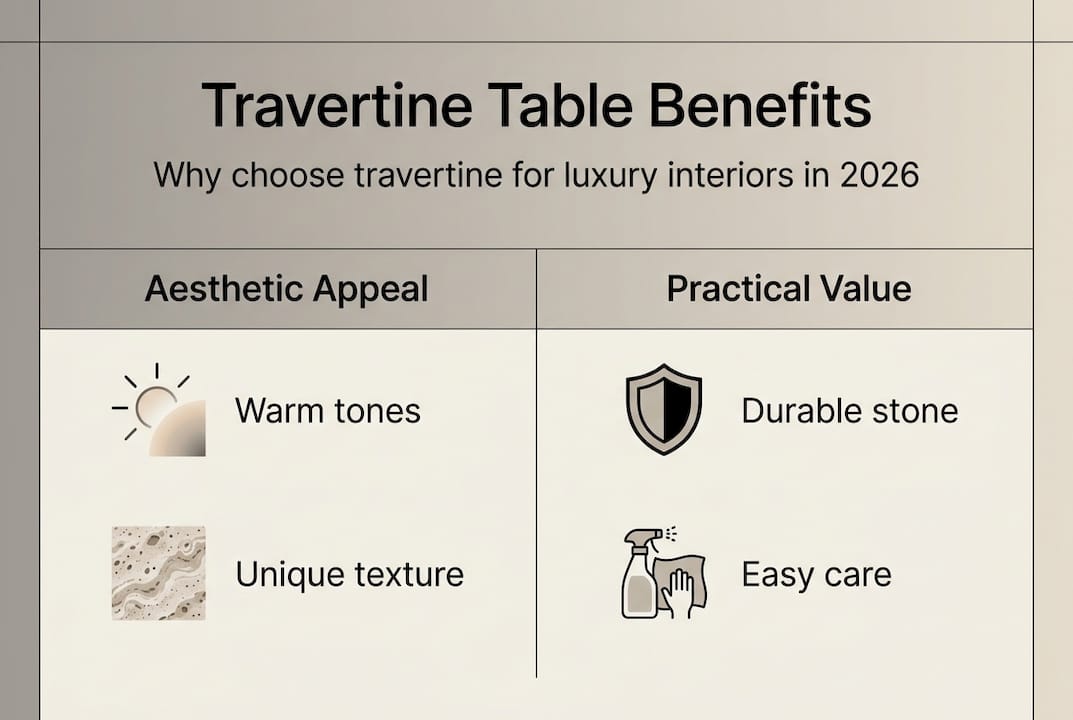
Pro Tip: Applying a quality penetrating sealer to travertine tables every 12 to 18 months dramatically improves stain resistance and simplifies daily cleaning, protecting your investment while maintaining the stone’s natural appearance.
For inspiration on incorporating travertine decor ideas into your projects, explore how texture and finish choices transform different interior styles.
Travertine’s natural beauty and neutral tones fit various luxury interior styles, from modern minimalist to classic elegance. The stone’s inherent warmth softens contemporary spaces that might otherwise feel cold or sterile, while its organic patterns add sophistication to traditional settings. This versatility makes travertine tables valuable anchor pieces that adapt as design trends evolve.

The texture of travertine creates tactile and visual depth that elevates any room. Light plays across the stone’s natural pits and veining, producing subtle shadows and highlights that change with the time of day. This dynamic quality keeps spaces feeling alive and interesting, unlike flat synthetic surfaces that remain static. The warmth radiates from the stone itself, creating an inviting atmosphere that encourages gathering and conversation.
When compared to wood, metal, or glass alternatives, travertine offers distinct visual advantages. Wood brings warmth but can feel casual or rustic in formal settings. Metal tables often read as industrial or stark, requiring careful styling to feel welcoming. Glass provides transparency but lacks the grounding presence and textural interest that travertine naturally delivers. Stone tables command attention while maintaining approachability.
Travertine tables function exceptionally well as statement pieces in luxury interiors. A large travertine dining table becomes an instant focal point, drawing the eye and setting the tone for the entire room. Coffee tables in travertine anchor living spaces with natural elegance, while console tables in entryways make powerful first impressions. The stone’s substantial presence communicates quality and permanence.
Key aesthetic benefits of selecting travertine for luxury furniture include:
The stone’s ability to bridge different aesthetic approaches makes it particularly valuable for designers working with clients who want flexibility. A travertine table can anchor a minimalist Scandinavian space as effectively as it enhances a Mediterranean inspired interior. This adaptability protects your investment by ensuring the piece remains relevant through future redesigns.
For more ways to leverage travertine decor ideas in your projects, consider how different finishes and edge profiles can reinforce specific design directions while maintaining the material’s inherent elegance.
Travertine, when properly sealed, offers strong resistance to scratches and heat, making it practical for daily use in luxury homes. This performance challenges the misconception that natural stone furniture requires excessive caution or delicate handling. Understanding how travertine compares to alternatives helps designers and homeowners make confident material selections.
| Material | Scratch Resistance | Heat Resistance | Maintenance Level | Longevity |
|---|---|---|---|---|
| Travertine | Moderate to High | Excellent | Low to Moderate | 50+ years |
| Marble | Moderate | Excellent | Moderate to High | 40+ years |
| Wood | Low to Moderate | Poor to Moderate | Moderate | 20 to 30 years |
| Glass | Low | Moderate | Low | 15 to 25 years |
Maintaining travertine tables requires straightforward practices that preserve both appearance and structural integrity. Follow these steps for optimal care:
Pro Tip: Keep a dedicated stone care kit near your travertine tables with pH neutral cleaner, microfiber cloths, and coasters to make routine maintenance effortless and protect against accidental damage from guests.
The heat resistance of travertine surpasses most alternative surfaces. You can place warm serving dishes directly on sealed travertine without causing thermal shock or surface damage, though using trivets remains advisable for extremely hot cookware. This practical advantage makes travertine dining tables particularly suitable for homes where entertaining is frequent.
Scratch resistance in travertine depends partly on finish choice and sealing quality. Honed finishes naturally hide minor scratches better than polished surfaces, while proper sealing creates a protective barrier against everyday wear. The stone’s moderate hardness means it resists typical household impacts while remaining workable for repairs if damage occurs.
Travertine successfully balances form and function in luxury decor by delivering visual impact without sacrificing usability. Unlike purely decorative materials that require constant vigilance, properly maintained travertine tables serve as functional workhorses that age gracefully. The stone develops a subtle patina over years of use that many designers consider desirable, adding character rather than detracting from appearance.
For additional guidance on travertine furniture durability and maintenance best practices, consult with stone care specialists who can recommend products suited to your specific finish and usage patterns.
Selecting travertine tables should consider style, size, finish, and compatibility with existing décor to achieve harmony. The selection process begins with evaluating your space dimensions and how the table will function within daily routines. A dining table requires different proportions than a coffee table, and understanding traffic flow patterns helps determine optimal placement.
Space size directly impacts table selection. In compact rooms, lighter travertine tones and streamlined silhouettes prevent the piece from overwhelming the area. Larger spaces can accommodate substantial tables with dramatic veining and bold proportions that command attention. Consider ceiling height as well, since travertine’s visual weight needs adequate vertical space to feel balanced rather than oppressive.
Table function influences design choices significantly. Dining tables benefit from honed or polished finishes that facilitate cleaning, while coffee tables might embrace tumbled finishes for added texture. Console tables in entryways can feature more dramatic edge profiles since they receive less physical contact. Side tables offer opportunities for experimental shapes that complement rather than compete with larger furniture pieces.
Natural light conditions affect how travertine appears throughout the day. South facing rooms with abundant sunlight amplify the stone’s warm tones and create dynamic shadow play across textured surfaces. North facing spaces might benefit from lighter travertine selections to counteract cooler ambient light. Consider how artificial lighting will interact with the stone during evening hours when selecting finish types.
Balancing travertine with complementary materials creates visual interest without chaos. Pair travertine tables with soft textiles like linen or velvet upholstery to offset the stone’s hardness. Incorporate wood elements through chairs or shelving to add warmth and organic contrast. Metal accents in lighting or hardware can introduce contemporary edge while respecting travertine’s timeless quality.
Popular travertine table styles and finishes for 2026 include:
Creating focal points with travertine pieces requires intentional placement and supporting design decisions. Position a travertine dining table centrally beneath a statement chandelier to anchor the room. Style coffee tables with carefully curated accessories in complementary materials, keeping arrangements minimal to let the stone shine. Use area rugs to define zones around travertine tables and add textural contrast.
Pairing travertine with upholstery, rugs, and lighting demands attention to scale and proportion. Choose upholstered seating with clean lines that won’t compete with the table’s presence. Select rugs in neutral tones or subtle patterns that ground the space without distracting from the stone. Lighting should illuminate the table adequately while creating ambient warmth, with fixtures scaled appropriately to the table’s dimensions.
Styling dos and don’ts for best results:
For comprehensive inspiration on selecting travertine tables that align with your design vision, explore curated collections that demonstrate successful material pairings and styling approaches across different interior aesthetics.
After exploring the compelling benefits and versatile applications of travertine tables, you might be ready to incorporate these stunning pieces into your next interior project. Marmorique offers a curated collection of high quality travertine tables crafted from carefully selected natural stone, featuring diverse styles from contemporary minimalist designs to classic statement pieces. Each table showcases exceptional craftsmanship and the inherent beauty that makes travertine such a valued material in luxury interiors.
Explore exclusive collections at Marmorique shop for travertine tables where you’ll discover unique pieces that combine timeless aesthetics with practical durability. Expert customer support helps you select the perfect table for your space, considering dimensions, finish options, and styling compatibility. Upgrade your luxury interiors today with travertine furniture that delivers lasting value and sophisticated elegance.
Travertine tables can work in covered outdoor spaces with proper sealing and maintenance, but they’re not ideal for fully exposed locations. Constant moisture exposure and freeze thaw cycles can damage the porous stone over time. If you choose outdoor placement, apply sealer every six months and protect tables during harsh weather.
Travertine typically costs less than premium marble while offering comparable aesthetic appeal, positioning it as a mid to high range luxury option. Solid wood tables from exotic species may match or exceed travertine prices, while metal and glass alternatives generally cost less. The investment pays dividends through travertine’s durability and timeless design that maintains value across decades.
Routine maintenance involves sealing every 12 to 18 months with penetrating stone sealer and daily cleaning with pH neutral products. Wipe spills immediately to prevent staining, and avoid acidic cleaners that etch the calcium carbonate surface. This minimal care regimen preserves appearance and protects your investment. Common pitfalls include using harsh chemicals, neglecting sealer reapplication, and placing hot items directly on unsealed surfaces.
Travertine excels in minimalist spaces by providing organic warmth and textural interest without visual clutter. The stone’s neutral palette and clean lines align perfectly with minimalist principles, while natural variations add subtle character. Choose honed finishes and simple geometric forms to reinforce contemporary aesthetics while benefiting from travertine’s timeless appeal.


