Your Cart (0)
Your cart is empty
Free express shipping

Drawer menu
Free express shipping

Natural stone has a reputation problem. Many homeowners picture cold, sterile surfaces or stuffy traditional interiors the moment marble or travertine comes up. That image couldn’t be further from today’s reality. Natural stone is preferred for authenticity, patina, and sustainability, making it far more versatile than most people assume. Whether you’re redesigning a living room, upgrading a bathroom, or simply adding statement accessories, marble and travertine can bring warmth, texture, and genuine luxury to any modern space.
| Point | Details |
|---|---|
| Stone decor transforms spaces | Natural stone like marble and travertine bring timeless beauty and versatility to modern homes. |
| Choose wisely | Select marble for dramatic accents or travertine for practical, durable solutions in high-use areas. |
| Maintenance is key | Proper sealing, cleaning, and installation preserve the beauty and longevity of stone decor. |
| Natural vs. engineered | Natural stone offers unique patterns and eco-friendly advantages, while engineered options trade character for uniformity. |
| Endless creative possibilities | Integrate stone decor in walls, furniture, and accessories for a unique modern design statement. |
Stone has moved well beyond the kitchen counter. Today, it shows up in open-plan living rooms, minimalist bedrooms, and even home offices, functioning less as a background material and more as the focal point of a room. The shift is significant: stone is no longer just functional. It’s architectural. It’s artistic. And it’s increasingly personal.
The lasting luxury of stone decor comes from its ability to age beautifully, develop character over time, and hold its visual weight in any design scheme. Unlike trends that fade in a season, a well-chosen marble table or travertine lamp base looks just as compelling a decade later.
2026 trends show stone surfaces moving from kitchens and baths to walls, furniture, and fireplaces. Designers are embracing matte finishes, bold veining, and dramatic statement walls that make stone the hero of a room rather than the supporting act.
Here’s what’s driving the shift:
“Stone is no longer a background material. It’s the statement itself, and modern designers are treating it that way.”
With stone’s popularity established, it’s time to choose between the mainstays: marble and travertine. Both are natural, both are beautiful, but they serve different purposes and suit different lifestyles.
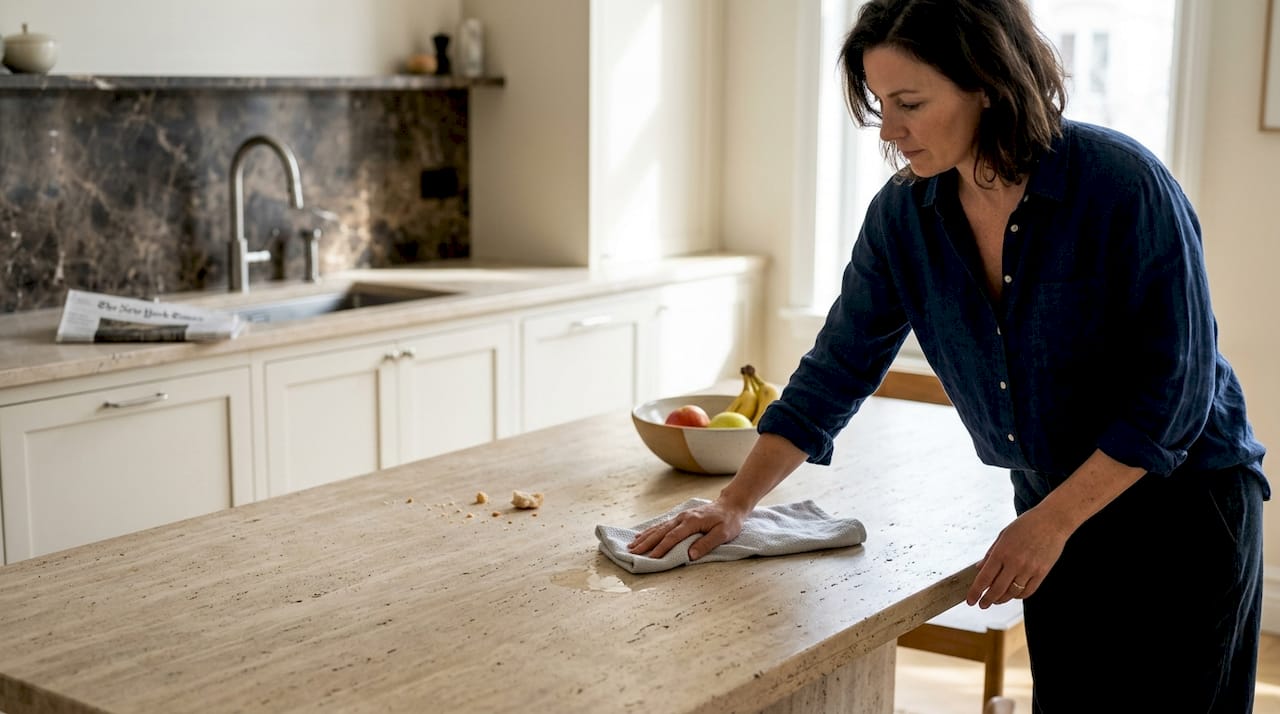
Travertine edges marble for practicality in furniture and high-use spaces, while marble offers dramatic design impact with greater maintenance needs. That’s the core trade-off, and understanding it saves you from costly mistakes.
| Feature | Marble | Travertine |
|---|---|---|
| Visual impact | High contrast veining | Warm, earthy tones |
| Durability | Moderate | High |
| Maintenance | Frequent sealing needed | More forgiving |
| Best use | Accent walls, bathrooms, art pieces | Floors, furniture, high-traffic areas |
| Cost | Higher | More accessible |
| Thermal regulation | Standard | Excellent |
When choosing natural stone for homes, consider how the space is actually used. A marble accent wall in a low-traffic dining room? Stunning and practical. Polished marble floors in a busy entryway? A maintenance headache waiting to happen.
Key considerations when deciding:
Pro Tip: Travertine’s natural thermal regulation makes it noticeably cooler underfoot in summer and warmer in winter compared to many other stone types. In high-use areas like kitchens or sunrooms, that comfort factor is a genuine game-changer.
Choosing a stone type also means deciding between the appeal and practicalities of natural or engineered options. Engineered stone (like quartz composites) has grown in popularity, but it’s not the same product, and the differences matter more than most people realize.
Natural stone is favored for authenticity, patina development, and eco-friendliness, while engineered stone provides uniformity and easier care. That’s a fair summary, but the nuances go deeper.
| Factor | Natural stone | Engineered stone |
|---|---|---|
| Appearance | Unique, organic variation | Consistent, uniform pattern |
| Sustainability | Quarried, long lifecycle | Resin-based, less eco-friendly |
| Maintenance | Requires sealing | Low maintenance |
| Longevity | Generations with care | 10-20 years typically |
| Character | Develops patina over time | Stays the same |
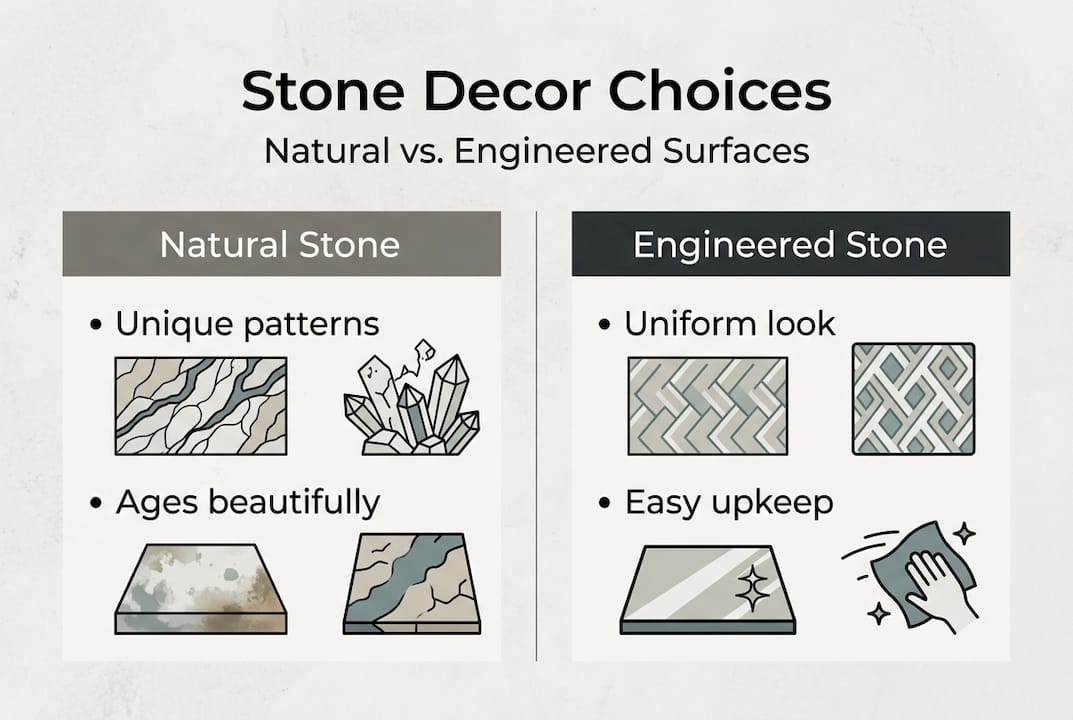
The authenticity in stone decor is something engineered alternatives simply can’t replicate. Every vein, every tonal shift, every subtle texture in a natural marble or travertine piece is genuinely one of a kind.
When might you prefer engineered stone? In rental properties, commercial spaces with extreme wear, or budget-sensitive projects where consistency matters more than character. For a primary home or a luxury interior, natural stone wins on every dimension that actually matters long-term.
“The patina that develops on natural stone over years of use is something no engineered product can manufacture. It’s the difference between a surface and a story.”
Once you’ve chosen your stone, smart maintenance and installation ensure its enduring beauty and performance. This is where many homeowners lose the value they paid for, not through bad choices, but through avoidable missteps.
pH-neutral cleaners and resealing are key, and installation requires flat substrates, full mortar coverage, and careful cutting. Getting these basics right from day one protects your investment for decades.
Here’s a practical maintenance routine for both stone types:
Installation best practices reduce cracking risk by 50% and ensure longevity. That means a flat, stable substrate, full mortar coverage with no hollow spots beneath tiles, and proper expansion joints in larger installations.
For durable stone decor tips, always factor in the specific environment. Wet zones like showers need more frequent sealing. Freeze-thaw climates require stone rated for outdoor use. High-traffic entryways benefit from honed rather than polished finishes.
Pro Tip: Always choose honed or brushed finishes for bathrooms and entryways. Polished marble looks incredible but becomes dangerously slippery when wet. Honed stone gives you the same visual richness with far better grip underfoot.
Knowing the best practices unlocks creative freedom. Here’s how to integrate stone decor for real impact across today’s interiors.
Stone is reshaping the luxury design playbook, showing up as sculptural decor, statement walls, and across a range of furnishings. The most exciting applications in 2026 go far beyond the expected.
Here are the applications making the biggest impact right now:
Stone pairs beautifully with warm wood tones, brushed brass or gold metals, and clear or smoked glass. These combinations feel grounded and organic without being heavy. For stone accents for homes, even a single well-placed marble object on a shelf or a travertine lamp base on a side table can shift the entire energy of a room.
“Stone brings organic drama to contemporary rooms in a way that no manufactured material can match. It grounds a space while simultaneously elevating it.”
The key is intentionality. One bold stone piece reads as curated. Five competing stone pieces in different colors reads as chaotic. Start with one anchor piece and build around it.
If this article has sparked ideas for your own space, the next step is finding pieces that actually deliver on the promise of luxury stone decor. That’s exactly what Marmorique was built for.
Marmorique’s curated collection brings together artisan-crafted marble and travertine pieces designed to elevate real homes, not just showrooms. From a beautifully weighted marble soap dish that transforms a bathroom counter into a spa moment, to a sculptural marble grape ornament that anchors a living room shelf with quiet drama, every piece is selected for craftsmanship and lasting quality. When you’re ready to bring these ideas off the page and into your home, shop Marmorique to explore the full collection of natural stone decor.
Travertine is more durable than marble, masks stains more effectively, and offers superior thermal regulation, making it the smarter choice for floors, entryways, and furniture that sees daily use.
Seal marble every 1 to 2 years and travertine every 2 to 3 years. Resealing frequency increases for wet zones like bathrooms or kitchens where surfaces face constant moisture exposure.
Natural stone develops a unique patina over time and is significantly more sustainable than resin-based engineered alternatives. Natural stone’s authenticity and organic character simply cannot be replicated by manufactured products.
Polished marble should be avoided outdoors. It becomes slippery when wet and is vulnerable to fading from UV exposure. Avoid polished marble outdoors and opt for honed or brushed finishes that offer better grip and weather resistance.


