Your Cart (0)
Your cart is empty
Free express shipping

Drawer menu
Free express shipping

TL;DR:
- Marble is experiencing a resurgence as a design statement in luxury interiors for 2026.
- Proper assessment, selection, installation, and maintenance are essential for long-lasting, practical beauty.
- Choosing the right marble type, finish, and considering space-specific challenges ensures a seamless and enduring luxury result.
Marble has always commanded attention in luxury interiors, but 2026 marks a genuine resurgence. Designers and homeowners are reaching for natural stone not just as a surface material but as a design statement that carries emotional weight. The challenge is real: marble can be breathtaking in the right setting and a maintenance nightmare in the wrong one. Getting it right means balancing visual drama with practical durability, and that balance starts long before the first slab is ordered. This guide walks you through every stage, from assessing your space and choosing the right stone to installation, styling, and long-term care.
| Point | Details |
|---|---|
| Assess before choosing | Evaluate the room’s light, function, and style before selecting marble. |
| Match marble to use | Select variety and finish based on durability, aesthetics, and maintenance needs. |
| Follow expert workflow | Planned steps—assessment, coordination, installation—lead to seamless luxury integration. |
| Care prevents problems | Consistent sealing and proper cleaning help marble look great for years. |
With an understanding of marble’s appeal, your first task is to evaluate the unique characteristics and practical needs of your target space. Skipping this step is where most luxury projects go sideways. A stunning Calacatta floor in a high-traffic mudroom is a recipe for regret.
Start by identifying the core function of each room. A master bath serves a very different purpose than a kitchen island or a formal entry hall. Think about the atmosphere you want: cool and serene, warm and inviting, or bold and architectural. Lighting matters enormously here. Natural north-facing light will read differently on a polished white marble than warm south-facing afternoon sun.
Key factors to evaluate before selecting any material:
As a practical framework, assess space first by mapping style, light, and traffic before you ever open a stone catalog.
| Room | Traffic level | Key requirement | Marble suitability |
|---|---|---|---|
| Master bath | Low | Moisture resistance, elegance | High |
| Kitchen island | Medium | Durability, stain resistance | Moderate (with sealing) |
| Entry hall | High | Scratch resistance, impact | Moderate (dense varieties) |
| Living room accent wall | Very low | Visual drama | Very high |
| Outdoor terrace | Variable | Weather resistance | Low to moderate |
Pro Tip: Photograph your space at different times of day, morning, midday, and evening, to capture how light shifts across surfaces. This single step can prevent costly material regret.
Once you have this picture, you can move into stone selection with real clarity. Explore the full marble types guide to match your assessment to specific varieties.
Once you’ve mapped your needs, it’s time to match the right marble type and finish to your setting, balancing wow factor, durability, and functionality.
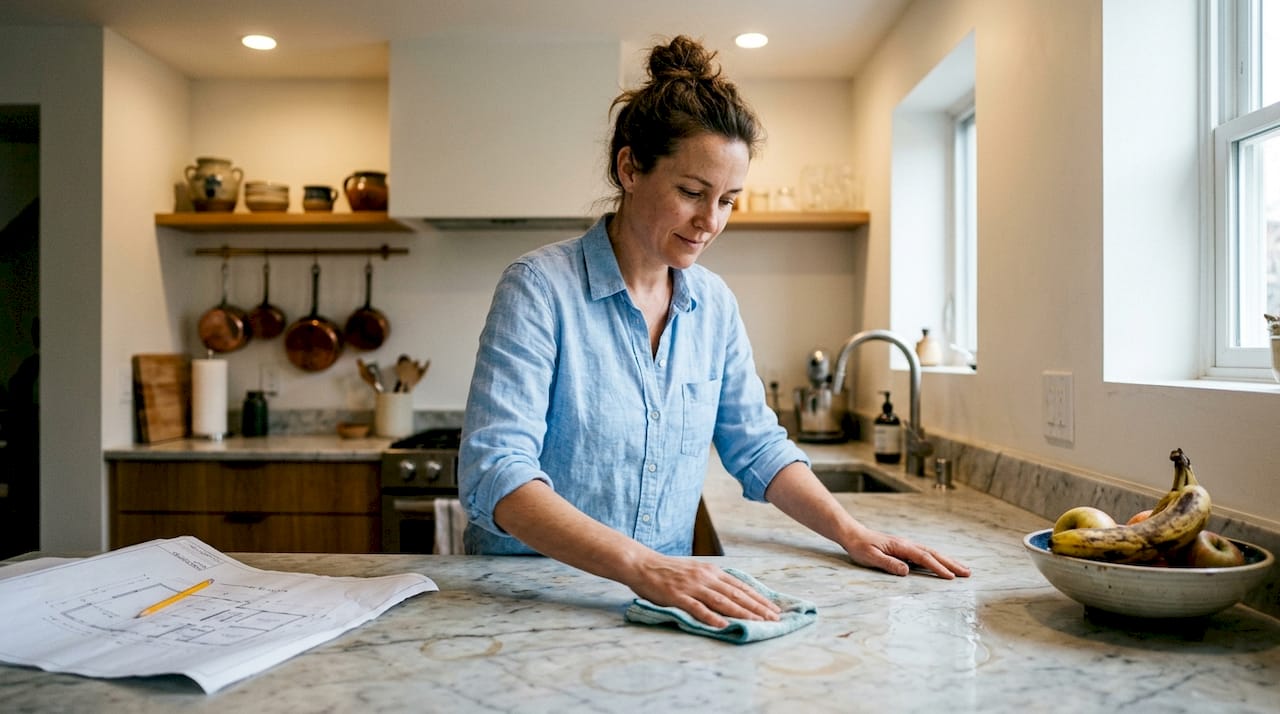
Not all marble performs the same way. The variety you choose directly affects how the space looks, how it wears, and how much maintenance you’ll be managing years from now. Select marble types based on room function, durability, and aesthetics: Carrara for versatility, Calacatta for drama, Crema Marfil for warmth, Nero Marquina for focal points.
Here’s a quick breakdown of the leading varieties in 2026:
Finish selection is just as critical as stone variety. Choose finishes matching use: polished for gloss in formal or low-traffic areas, honed, leathered, or matte for high-traffic zones and the tactile trend that defines 2026 luxury design.
| Marble type | Best finish | Ideal room | Maintenance level |
|---|---|---|---|
| Carrara | Honed | Bathroom, kitchen | Moderate |
| Calacatta | Polished | Feature wall, fireplace | High |
| Crema Marfil | Leathered | Living room, hallway | Low to moderate |
| Nero Marquina | Polished | Accent pieces, vanity | Moderate |
| Onyx | Backlit/polished | Feature panels | High |
Pro Tip: Coordinate your marble finish with your lighting plan. Polished surfaces amplify both natural and artificial light, while honed and matte finishes absorb it softly, creating a more grounded, tactile atmosphere. When in doubt, bring your lighting consultant into the selecting marble varieties conversation early.
Having selected the right marble, the success of your project depends on a meticulous preparation and installation process. Even the most beautiful slab can underperform if the workflow behind it is rushed or poorly coordinated.
A proven marble integration workflow follows this sequence: space assessment, material selection, coordination with trades, installation, and a maintenance plan. Each stage feeds the next.
Here is the step-by-step process that experienced designers follow:
Important: Never underestimate structural load requirements. Marble’s weight can exceed what standard residential floors are built to support. Always consult a structural engineer or experienced contractor before installing large-format slabs on upper floors or over existing tile.
Refer to more on marble workflow for additional guidance on coordinating complex installations.
With your marble installed, consistent care and smart styling are essential for a result that not only endures but gets better with age.
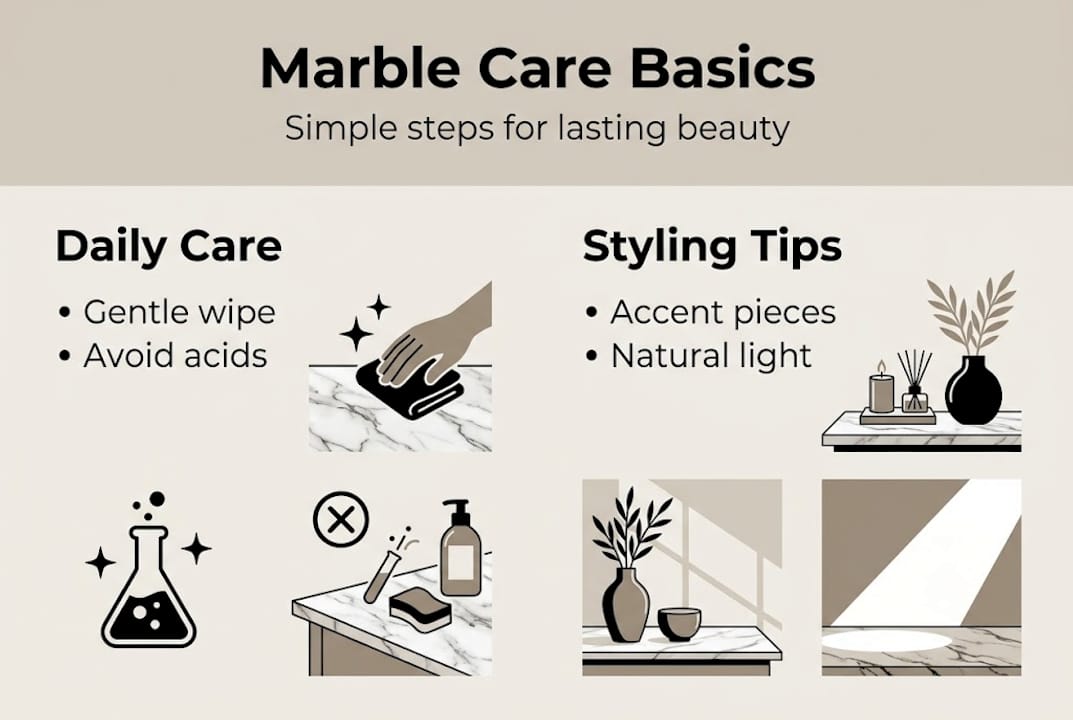
Marble has a Mohs hardness of 3 to 5, making it softer than granite and more porous than most homeowners expect. That porosity is exactly why a disciplined care routine matters from day one.
Daily and weekly care tasks:
Sealing every 6 to 12 months prevents up to 90% of stains when done consistently. This is one of the most impactful maintenance habits you can build into a luxury home’s upkeep schedule.
Styling tips to highlight marble’s natural beauty:
For troubleshooting, the most common mistakes are using acidic cleaners and skipping the resealing schedule. If etching has already occurred, a marble polishing powder can restore the surface on honed finishes. For polished marble, professional restoration is usually required.
Pro Tip: Always test any new cleaning product on a hidden section of your marble first. Even products labeled “stone-safe” can react differently depending on the specific variety and finish you have. Check maintaining marble resources before trying anything new.
Some projects come with unique challenges. Here’s how to maximize marble’s impact and resilience in tricky or unusual setups.
Not every space is a serene master bath with controlled humidity and light foot traffic. Real luxury homes have busy kitchens, narrow entry halls, and outdoor terraces that demand more from their materials. Use quartz-rich dense marbles for high-traffic areas, avoid soft varieties in acid or moisture zones without sealing, skip bold veining in small rooms, and always seek specialist advice for outdoor applications.
Guidance by space type:
The common thread across all challenging environments is preparation and protection. Marble rewards those who plan for its vulnerabilities, not those who assume its beauty will take care of itself.
Thinking beyond technical guidelines, here’s the truth luxury renovators rarely discuss.
Most clients who struggle with marble didn’t choose the wrong stone. They chose the right stone for the wrong reasons. They selected a slab because it was the most expensive option in the showroom, or because it appeared on a design blog, without ever asking whether it fit the actual rhythm of their household.
Real luxury is not about owning the most dramatic material. It’s about seamless integration, a surface that looks extraordinary and holds up to the life being lived around it. A Calacatta countertop in a home with young children and a serious cooking habit is not a luxury. It’s a source of daily frustration.
The designers who consistently deliver the best results are the ones who spend more time on the “what not to do” than on the shortlist of aspirational materials. They ask hard questions about cleaning habits, who uses the space, and whether the client is genuinely prepared to maintain the stone. Deeper insights on marble integration consistently reinforce this point: workflow and user experience matter more than prestige.
Choosing a slightly less dramatic stone that performs beautifully for twenty years is always more luxurious than a showpiece that requires constant intervention.
If you’re inspired to take your interior to the next level, a curated resource can simplify your journey considerably.
At Marmorique, you’ll find a carefully curated collection of natural marble, travertine, and stone pieces designed for exactly the kind of luxury residential projects this guide covers. From statement lamps and handcrafted tables to complete bathroom sets, every piece is selected for both visual impact and material integrity. The site also features detailed product information and additional editorial resources to support your decision-making. Whether you’re specifying a single accent piece or sourcing materials for a full renovation, Marmorique offers the quality and guidance that luxury projects deserve.
Quartz-rich dense marbles are the most durable choice for kitchens, particularly when sealed on a regular schedule. They resist moisture and acid exposure far better than softer varieties.
Marble should be resealed every 6 to 12 months for optimal stain prevention. A simple water-bead test tells you when the sealer has worn down and it’s time to reapply.
Honed and matte finishes are the best choice for high-traffic areas because they hide surface scratches and reduce glare, while also aligning with 2026’s preference for tactile, grounded interiors.
It’s best to avoid bold veining in small rooms, as the strong pattern can make the space feel visually chaotic rather than refined. A single accent wall with a lighter, subtler stone tends to deliver more impact in compact spaces.


