Your Cart (0)
Your cart is empty
Free express shipping

Drawer menu
Free express shipping

TL;DR:
- In 2026, luxury stone design emphasizes raw textures, intentional imperfections, and layered finishes over polished perfection.
- Key materials like quartzite, Calacatta marble, and travertine are favored for durability, beauty, and ethical sourcing, with mixing stones creating unique visual depth.
- Innovative edge profiles, sculptural details, and sustainable choices define the forward-thinking approach to high-end natural stone applications.
Polished perfection is no longer the pinnacle of luxury stone design. In 2026, the most coveted interiors are embracing raw texture, intentional imperfection, and bold material combinations that feel alive rather than immaculate. The rules around natural stone have shifted so dramatically that many of the finishes and pairings once considered “too rough” for a luxury home are now the defining choices of the world’s most admired interiors. This guide breaks down exactly what is trending, which materials are leading the way, and how to apply these ideas with confidence in high-end residential and commercial spaces.
| Point | Details |
|---|---|
| Warm, tactile finishes | Matte, honed, and leathered stones set the tone for welcoming luxury in 2026. |
| Layered stone mixing | Combining different stones and textures adds instant confidence and originality to interiors. |
| Durability matters most | Quartzite is the top performer for high-traffic areas, offering marble looks with greater practicality. |
| Sustainability is essential | Ethical sourcing and longevity are now critical considerations in high-end design choices. |
| Architectural edge details | Unique profiles and sculptural edges elevate stone features from functional to artful. |
The biggest shift in luxury stone design right now is not about the stone itself. It is about the finish. Honed, leathered, and matte finishes are replacing the glossy, mirror-polished surfaces that dominated interiors for the past two decades. These softer treatments feel warmer underhand, scatter light in a more diffused and flattering way, and create an immediate sense of depth that polished surfaces simply cannot replicate.
What drives this shift? Part of it is a reaction to the cold, clinical aesthetic that came with high-gloss materials. Clients and designers are gravitating toward homes that feel inviting and personal rather than showroom-perfect. You want guests to feel comfortable, not afraid to set a glass down. Soft finishes answer that call without sacrificing beauty.
The trend toward lived-in elegance also embraces patina and honest wear. A honed marble surface that develops a soft sheen over time tells a story. More practically, honed finishes conceal fine scratches far better than their polished counterparts, making them ideal for tables, flooring, and kitchen surfaces. This is not compromise. It is smart design.
“Imperfection, when chosen deliberately, becomes the most elevated design statement in the room.”
This philosophy aligns with 2026 design trends that prioritize warmth, authenticity, and connection in residential spaces. Explore specific applications in our stone decor ideas 2026 guide for room-by-room inspiration.
Key finish options making the biggest impact right now include:
Pro Tip: Request sample tiles of your chosen stone in both honed and leathered finishes before committing. The difference in how each reflects light and handles daily contact is something no product photo can fully convey.
Not all natural stones are created equal, and the 2026 market reflects that with clear front-runners earning their place in high-end specifications. The global marble market is growing at a 4.6% compound annual growth rate and is projected to reach $92.23 billion by 2030, driven largely by demand for premium, ethically sourced stone in luxury construction and interior design.
| Stone | Aesthetic quality | Durability | Best applications |
|---|---|---|---|
| Quartzite | Marble-like veining, creamy tones | Very high | Kitchens, high-traffic floors |
| Calacatta marble | Bold dramatic veining | Moderate | Feature walls, low-traffic surfaces |
| Carrara marble | Soft gray veining, classic | Moderate | Bathrooms, decorative accents |
| Travertine | Warm, earthy, pitted texture | High | Flooring, outdoor extensions, baths |
| Limestone | Soft, understated, natural | Moderate | Walls, fireplace surrounds |
| Soapstone | Deep gray-green, ultra smooth | High | Kitchen counters, sinks |
Quartzite varieties like Taj Mahal and Mont Blanc are particularly sought after because they give you the soft, luminous look of marble with the structural toughness of a much harder stone. For kitchen counters and dining tables that see real daily use, quartzite’s superior hardness and scratch resistance make it the smarter choice over marble without sacrificing visual sophistication.
Marble, however, is not going anywhere. Calacatta with its bold, dramatic veining remains the statement stone of choice for feature walls, sculptural bathroom vanities, and fireplace installations where the surface is admired more than it is worked. Carrara continues to anchor more classically minded luxury projects with its quieter, silver-gray movement.
Travertine deserves special recognition in 2026. Its warm, earthy tones and naturally pitted texture place it squarely in the lived-in elegance conversation. Read more in our marble and travertine ideas feature for specific applications.
Pro Tip: Never specify a stone based on a digital image alone. The scale of veining in a slab can look entirely different in a 12-inch sample versus a full kitchen installation. Always view full slabs in your actual lighting conditions before finalizing.
Ethical sourcing is now a genuine specification criterion, not just a talking point. High-end clients are asking where their stone comes from, how workers are treated, and what the environmental cost of extraction looks like. Designers who can answer these questions confidently earn serious trust.
One of the most exciting and accessible shifts in 2026 luxury stone design is the move away from matchy-matchy uniformity. Mixing multiple stone types intentionally creates surfaces and spaces with layered confidence that a single stone running throughout simply cannot deliver. Think different marbles on a kitchen island versus the surrounding countertop, or a travertine floor paired with a quartzite feature wall in a bathroom.
The key principle behind successful mixing is establishing a clear hierarchy. Identify your hero stone first, then build around it with complementary stones and materials. The hero stone anchors the space visually and emotionally. Everything else plays a supporting role, adding dimension without competing for attention.
Here is a step-by-step approach to layering stone with purpose:
The same layering logic can be applied through mixing marble in interiors, where thoughtful combinations bring a space to life. For broader project strategy, structured renovation planning tips help ensure stone selections align with your full design vision.
| Pairing approach | Visual effect | Ideal room |
|---|---|---|
| Calacatta + Carrara marble | High contrast within one material family | Master bathroom, living room feature wall |
| Travertine floor + quartzite island | Warmth meets modern structure | Kitchen, open-plan living |
| Limestone wall + marble vanity | Quiet, tonal luxury | Spa bathroom |
| Mixed quartzite surfaces | Rugged yet sophisticated | Kitchen, mudroom |
Pro Tip: Limit your stone palette to two or three types per space. More than three tends to fragment the eye rather than create curated richness.
Beyond material and finish, the most forward-thinking luxury projects in 2026 are paying close attention to edge profiles, panel configurations, and three-dimensional stone details. Sculptural edge profiles, including curved returns, mitered edges, and thick waterfall profiles, transform a standard stone installation into an architectural statement.
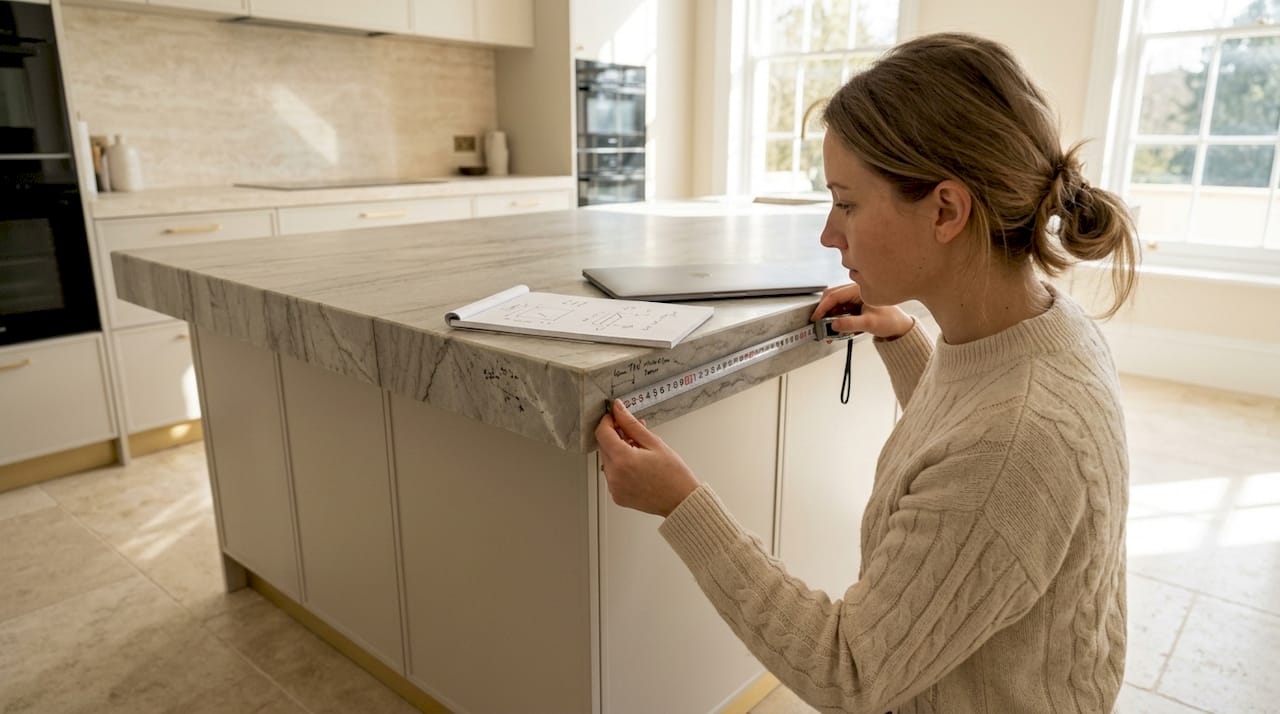
A mitered edge, where two slabs meet at a 45-degree angle to create the illusion of one solid, thick block of stone, adds a sense of mass and artisanal craft to kitchen islands and fireplace mantels. Curved returns soften corners and bring a more sculptural, furniture-like quality to built-in shelving and cabinetry stone tops. These details signal quality in a way that only someone looking closely will fully appreciate, which is precisely the point in understated luxury.
Fluted stone panels and patchwork configurations are also gaining momentum. Patchwork or reconfigurable stone panels create an organic, bespoke visual effect by placing smaller cuts of stone in irregular patterns, referencing terrazzo and mosaic traditions but with modern scale and material quality.
Key edge and silhouette details to consider for 2026 projects:
“The edge of a stone slab is where craftsmanship becomes visible. It is where a good installation becomes an unforgettable one.”
These architectural details are best explored alongside broader stone decor trends to understand how they fit into the full design language of a luxury interior.
The luxury market’s growing focus on sustainability is not performative. Clients who are investing significant resources into natural stone want to know their choices will last, will not harm the environments they were sourced from, and will perform in real daily life. The global marble market’s growth at 4.6% CAGR to $92.23 billion by 2030 is being shaped in part by this demand for traceable, responsible stone sourcing.
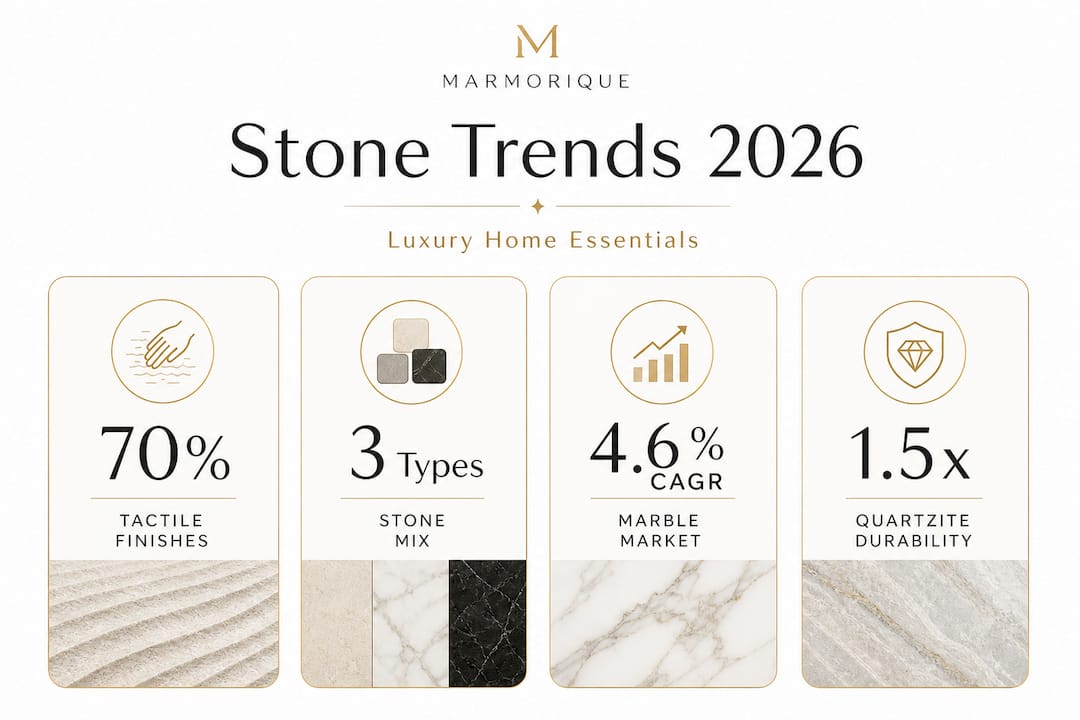
Performance testing before specification is essential. Real-world testing for etching, staining, and traffic response separates stones that look beautiful in a showroom from those that hold up beautifully in a lived-in kitchen or a hotel lobby. Marble etches when exposed to acidic liquids like lemon juice or wine. Onyx is dramatic and translucent but entirely impractical for any high-use surface. Knowing these characteristics ahead of time protects clients and projects.
Smart placement by performance characteristics:
The durability advantage of quartzite over marble is significant for high-use areas. However, placing a breathtaking slab of backlit onyx in a powder room or as a feature wall in a corridor allows you to use dramatic, visually stunning stones in contexts where performance demands are low. This is smart design thinking, not compromise.
Here is the uncomfortable truth about luxury stone design: the most expensive mistake is not choosing the wrong stone. It is choosing a beautiful stone and then trying too hard to control it.
We consistently see high-end projects where designers and homeowners panic at the first signs of natural variation, the vein that runs off-center, the color shift from one slab to the next, or the gentle etch mark that appears after the first dinner party. They treat these as failures when they are actually the defining characteristics of a natural material. The projects that age most gracefully and earn the most lasting admiration are those where the stone was allowed to be itself.
The other common error is uniformity. Matching every surface in one stone type and one finish flattens the room visually and emotionally. The art of mixing stone for luxury spaces lies in the contrast, the interplay between rough and smooth, light and heavy, quiet and dramatic. Spaces that take this risk consistently outperform those that play it safe.
Finally, performance is not the enemy of beauty. Testing your stone choices under real conditions before specifying them builds the kind of confidence that leads to bolder, more successful design decisions. The designers setting the benchmark in 2026 are those who understand both the artistry and the science of natural stone, and who communicate that knowledge clearly to their clients.
Ready to put these trends to work in your next project? Finding the right stone at the right quality level is where many beautiful ideas stall.
At Marmorique, we specialize in curated natural marble, travertine, and stone decor crafted for interiors that demand the best. From sculptural stone lamps and bathroom sets to statement tables and decorative accessories, every piece is selected for its material quality, finish precision, and design integrity. Whether you are specifying for a complete residential build or sourcing statement accents for a single room, explore our collection and discover stone objects that genuinely elevate a space. Our blog also features detailed guidance on stone applications, finishes, and trends to support confident, well-informed design decisions at every stage of your project.
Honed, leathered, and matte finishes are leading the way because they deliver a warmer, more tactile, and more authentic look than traditional polished surfaces.
Quartzite is the top choice because it combines marble aesthetics with superior hardness and resistance to scratches and heat, making it ideal for counters and floors that see serious daily use.
Establish a dominant hero stone first and then layer complementary types around it. Pairing different stones with wood or metals adds warmth and prevents the space from feeling too uniform or cold.
Clients increasingly expect ethical sourcing and long-lasting material choices. The marble market’s 4.6% CAGR growth to $92.23 billion by 2030 reflects this rising demand for premium, responsibly sourced stone.
Patchwork and reconfigurable stone panels create an organic, highly individual visual effect by assembling smaller stone cuts in irregular configurations, delivering a custom look without the cost of full custom fabrication.


