Your Cart (0)
Your cart is empty
Free express shipping

Drawer menu
Free express shipping

TL;DR:
- Stone homeware combines timeless beauty with practicality, enhancing luxury interiors.
- Different stones like marble, travertine, granite, and onyx have unique visual and functional qualities.
- Proper care, including cleaning and sealing, ensures stone pieces last for decades and retain their elegance.
Stone has been shaping the world’s most beautiful interiors for thousands of years, and it shows no sign of stepping aside. Unlike trendy decor that loses its appeal within a season, stone homeware carries a permanence and quiet confidence that synthetic materials simply cannot replicate. Whether you’re a luxury homeowner curating a refined living space or an interior designer searching for pieces that make a lasting statement, stone homeware offers something rare: genuine beauty that grows richer with time. This guide will walk you through what stone homeware is, which materials matter most, how it transforms interiors, and how to care for these pieces so they endure.
| Point | Details |
|---|---|
| Stone homeware basics | Stone homeware combines unique aesthetics and craftsmanship for enduring decor appeal. |
| Material matters | Marble, travertine, granite, and onyx each offer distinct styles and advantages. |
| Design transformation | Quality stone pieces act as focal points and elevate any luxury space. |
| Longevity with care | Simple maintenance keeps stone decor stunning for generations. |
Stone homeware refers to functional and decorative objects crafted from natural stone materials, designed for use within the home. These are not merely decorative props. They are objects that occupy space with intention, weight, and character. Think marble fruit bowls, travertine trays, granite mortar and pestle sets, onyx candle holders, and stone soap dishes. Each piece serves a purpose while simultaneously acting as a design element.
What separates stone homeware from typical decor is the material itself. As stone’s luxury appeal confirms, stone homeware merges timeless appeal with functionality, making it one of the few categories where beauty and practicality coexist without compromise. No two pieces are identical. The veining in marble, the porous texture of travertine, the crystalline surface of granite — these are natural signatures that mass-produced items can never replicate.
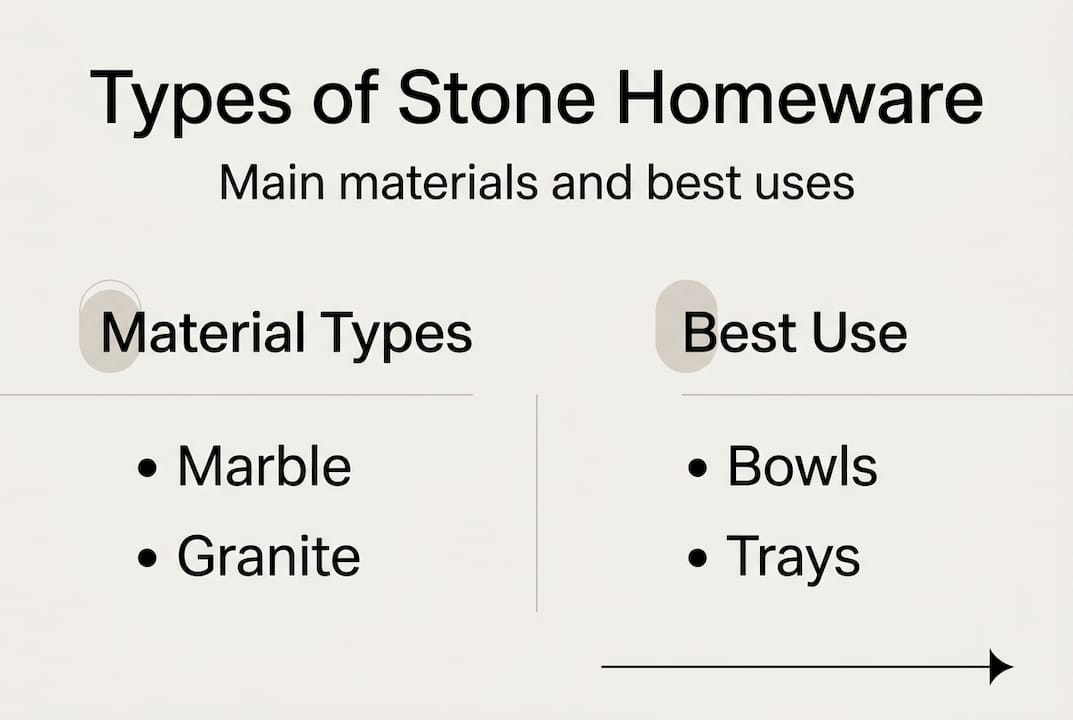
The four most commonly used materials in stone homeware are:
| Stone type | Best use | Key visual trait |
|---|---|---|
| Marble | Bowls, trays, tabletops | Bold veining, polished surface |
| Travertine | Trays, candle holders, soap dishes | Warm tone, organic texture |
| Granite | Mortar sets, cutting boards | Speckled, highly durable |
| Onyx | Candle holders, accent pieces | Translucent, dramatic color |
Each material brings its own personality. Choosing the right one depends on the mood you want to create and how the piece will be used day to day.
Not all stones are created equal, and understanding their differences helps you make smarter choices for your space. Marble vs. travertine are especially popular for their versatility and aesthetic value in modern homes, but each stone type has a distinct personality worth knowing.
Here’s a quick comparison of the four primary stones used in luxury homeware:
| Stone | Durability | Color range | Best style fit |
|---|---|---|---|
| Marble | Medium | White, gray, black, green | Classic, contemporary |
| Travertine | Medium-high | Ivory, beige, walnut, silver | Organic, Mediterranean |
| Granite | Very high | Black, white, speckled multi | Industrial, transitional |
| Onyx | Low-medium | Green, honey, black, white | Maximalist, statement |
When selecting stone homeware, consider these factors in order:
Pro Tip: If you’re buying stone homeware for a kitchen or bathroom where moisture and spills are common, opt for granite or sealed travertine. Reserve marble and onyx for display areas where they won’t be exposed to acids or liquids regularly.
Granite’s near-indestructible surface makes it the workhorse of the group. Onyx, by contrast, is best treated like sculpture — admired, not handled constantly. Travertine occupies a beautiful middle ground: durable enough for regular use, yet warm and textured enough to feel genuinely artisanal.
There is a reason interior designers reach for stone when they want to make a room feel complete. Stone homeware does something that fabric, wood, and glass rarely achieve on their own: it adds visual weight without visual noise. A single marble tray on a console table can anchor an entire entryway. A travertine candle holder on a coffee table shifts the whole atmosphere of a living room.
“Stone pieces create a focal point, acting as sculptural art in their own right.” This is exactly why stone’s visual impact is so consistently referenced in luxury design conversations.
Designers use stone homeware strategically to create contrast and balance. In a minimalist space, a single dark granite bowl introduces texture without clutter. In a maximalist room filled with pattern and color, a calm white marble tray provides visual rest. Stone is one of the few materials that adapts to both extremes without feeling out of place.
The spaces where stone homeware performs best include:
What makes stone so effective is its ability to feel both ancient and current at the same time. It carries history in its texture and color, yet pairs effortlessly with modern furniture and clean architectural lines.
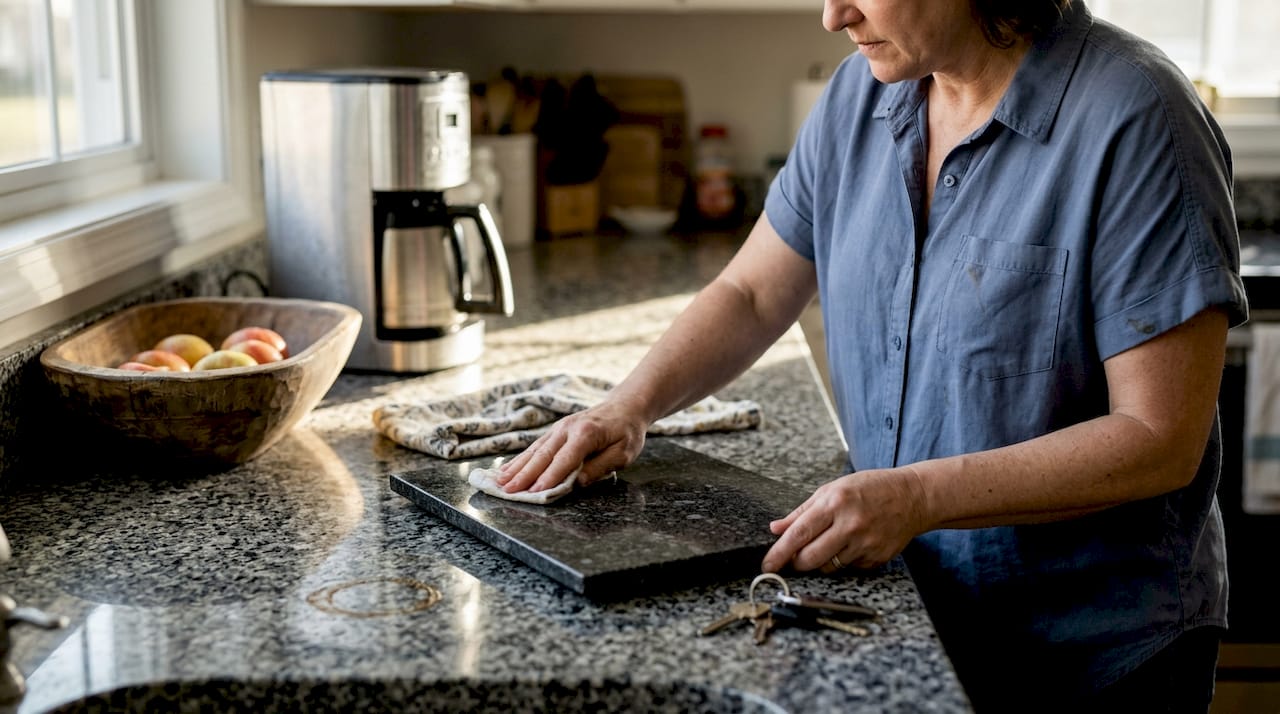
Stone is resilient, but it is not invincible. The good news is that with simple, consistent care, your pieces will last far longer than almost any other homeware material. As stone maintenance tips confirm, stone, when properly cared for, can last for decades or even generations. That kind of longevity is rare in any category of home goods.
Follow these steps to keep your stone homeware looking its best:
Pro Tip: For display-only pieces like onyx candle holders or decorative marble bowls, a light dusting with a microfiber cloth once a week is usually all that’s needed. Save the deep cleaning routine for functional items that see daily contact with food, water, or hands.
One often-overlooked step is drying stone completely after cleaning. Moisture left sitting on the surface, especially in travertine’s natural pores, can lead to staining or mineral buildup over time. A quick, thorough dry after every wash makes a significant difference in long-term appearance.
At Marmorique, we’ve watched interior trends come and go with remarkable speed. Resin, acrylic, and composite materials arrive with fanfare and disappear just as quickly. Natural stone never participates in that cycle. It simply endures.
We believe true luxury isn’t about price tags or brand names. It’s about authenticity. A piece of travertine carries within it millions of years of geological history. No factory can replicate that. When you place a stone object in your home, you’re introducing something that existed long before any design trend and will outlast every one that follows.
What designers and homeowners sometimes miss when they chase short-lived trends is the permanence of feeling. A room styled with natural stone homeware doesn’t just look elevated — it feels different. There’s a grounding quality to natural materials that synthetic alternatives cannot reproduce. Even a small stone tray or a single marble candle holder can shift the energy of a space in a way that’s hard to explain but immediately felt.
We also think that lasting luxury in stone is one of the most underappreciated arguments for investing in natural materials. When you buy well, you buy once. That philosophy is the opposite of disposable decor culture, and it’s one we stand behind completely.
If this guide has sparked an interest in bringing natural stone into your home, the next step is finding pieces that are crafted with the care and quality these materials deserve.
At Marmorique, we curate a collection of marble, travertine, and stone homeware designed for those who value authenticity over imitation. From elegant marble trays and travertine candle holders to handcrafted bathroom sets and statement table pieces, every item in our range is selected for its material integrity and design quality. Explore Marmorique collection to find stone homeware that doesn’t just decorate your space — it defines it. Each piece is a long-term investment in beauty that only improves with time.
Stone homeware is valued because each piece is one-of-a-kind, shaped by natural processes that no manufacturer can duplicate, bringing a sense of permanence and elegance that synthetic materials cannot match.
Prioritize quality craftsmanship, visible natural variation, and a stone type that suits your space’s style and intended use. Marble and travertine are especially versatile and valued in modern luxury interiors.
Clean with mild soap and a soft cloth, dry immediately, and avoid acids and abrasive products. Items like marble and travertine may need proper care through periodic sealing to stay pristine over time.
Stone homeware adds elegance to entryways, kitchens, bathrooms, and living rooms, functioning as both a practical object and a design focal point that elevates the entire room.


