Your Cart (0)
Your cart is empty
Free express shipping

Drawer menu
Free express shipping

Selecting the perfect marble accent for your luxury interior can feel overwhelming. With countless varieties, grades, finishes, and maintenance requirements to consider, even experienced designers face decision paralysis. The wrong choice can mean wasted investment, maintenance headaches, or aesthetics that fall flat. This guide cuts through the complexity by providing expert criteria for choosing marble accents that deliver lasting beauty, appropriate durability, and design impact. You’ll learn how to assess marble types, match selections to your space, execute choices strategically, and maintain accents for enduring luxury.
| Point | Details |
|---|---|
| Marble varieties differ significantly | Carrara offers subtle elegance while Calacatta provides bold drama, each suited to different design visions and budgets. |
| Grades determine appropriate use | NSI Grades A through D indicate defect levels, with A best for countertops and D reserved for vertical decorative applications only. |
| Strategic placement maximizes impact | Focus marble accents on statement areas like fireplace surrounds or bathroom features rather than full-room coverage to control costs. |
| Finish choice affects maintenance | Polished surfaces require more frequent sealing than honed or leathered finishes, especially in high-traffic zones. |
Three marble varieties dominate luxury interiors. Carrara marble features soft gray veining on white backgrounds, offering understated elegance at moderate price points. Calacatta marble displays bold, dramatic veining with warmer gold or gray tones, commanding premium prices for statement applications. Nero Marquina delivers striking black backgrounds with white veining, perfect for contemporary or high-contrast designs.
Selection criteria for luxury marble accents include durability measured on the Mohs hardness scale at 3 to 4, aesthetics defined by veining patterns, finish types, and room-specific applications. Understanding these factors prevents costly mismatches between marble characteristics and intended use.
The Natural Stone Institute establishes four commercial grades that directly impact where you should place marble accents. Grade A features minimal defects suitable for countertops and floors, while Grade B tolerates moderate imperfections for vertical surfaces or low-traffic horizontal areas. Grades C and D contain visible defects, restricting them to decorative vertical applications only. Specifying the wrong grade for your application leads to premature wear or structural concerns.
Marble’s Mohs hardness of 3 to 4 makes it softer than granite or quartz. This matters for horizontal surfaces experiencing daily use. Quartz-rich marble varieties offer slightly better scratch resistance for kitchen islands or bathroom vanities. Vertical applications like backsplashes or fireplace surrounds face less physical stress, making softer marble grades acceptable.
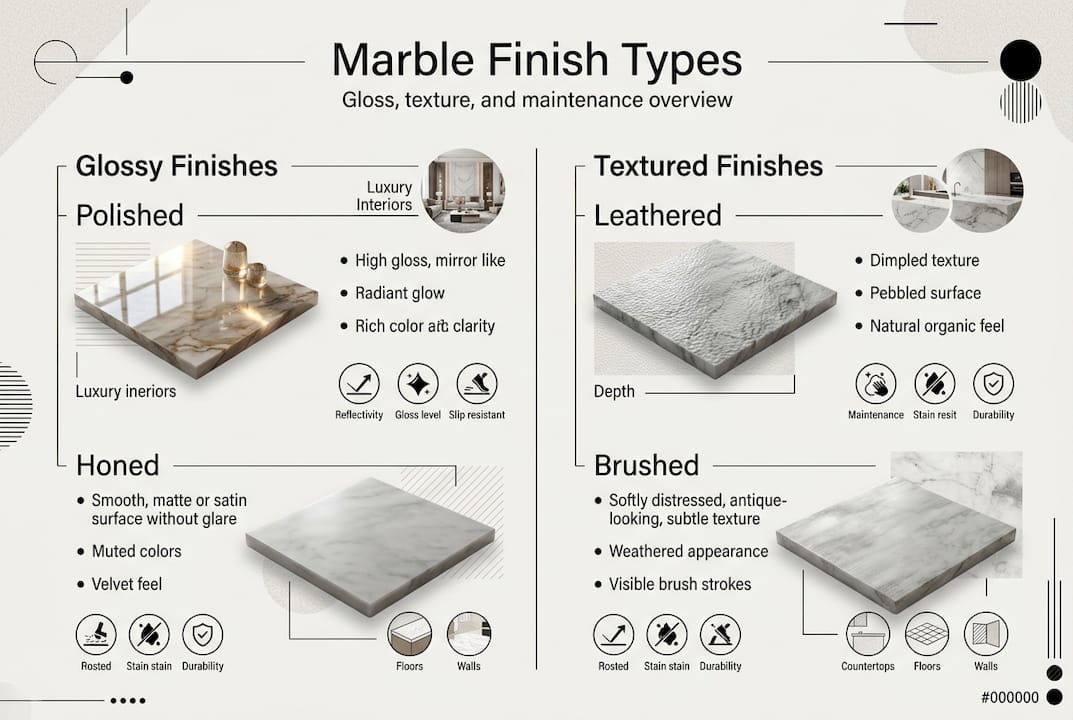
Finish selection dramatically impacts both aesthetics and maintenance. Polished finishes maximize light reflection and veining visibility but show etching more readily and require frequent sealing. Honed finishes provide matte elegance with better etch resistance and less maintenance intensity. Leathered finishes add subtle texture while hiding minor imperfections, ideal for rustic or transitional designs.
Pro Tip: Always view full slabs under your actual room lighting before finalizing selections, as artificial showroom lighting can misrepresent how veining and color will appear in your space.
Consider these marble characteristics when planning accents:
Strategic accent placement using marble mixing strategies allows you to incorporate premium varieties economically by reserving them for high-impact locations rather than entire surfaces.
Before selecting specific marble accents, evaluate your interior environment systematically. High-traffic areas like kitchen countertops or entryway floors demand Grade A marble with harder compositions and durable finishes. Low-traffic zones such as powder room accent walls or bedroom fireplace surrounds accept lower grades and delicate finishes without performance concerns.
Lighting conditions transform marble appearance dramatically. Natural light reveals veining depth and color nuances that artificial lighting may obscure. View full slabs in situ lighting to ensure your selections deliver the intended visual impact throughout the day. North-facing rooms with cool light pair well with warm-toned Calacatta, while south-facing spaces with abundant warmth benefit from cooler Carrara or Nero Marquina.
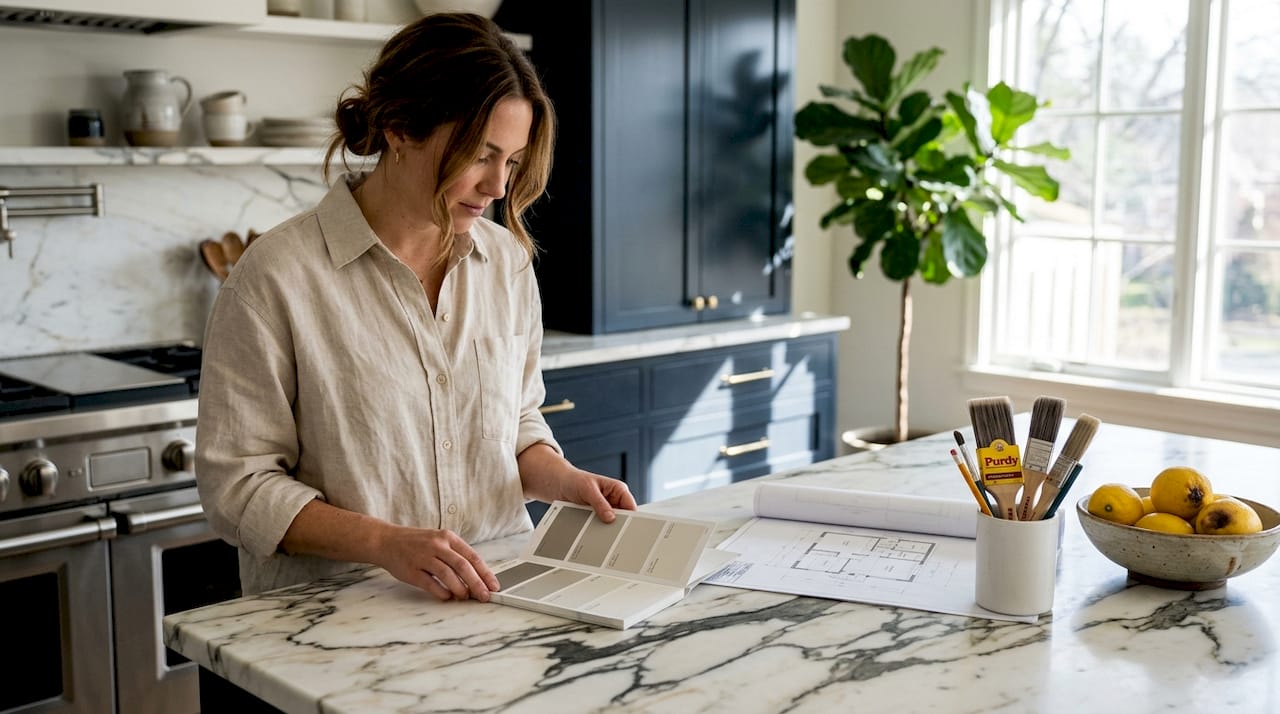
Your overall design concept guides marble style choices. Monochromatic schemes using single marble types create serene, cohesive environments. Contrasting approaches mixing light and dark marbles generate visual drama and define zones within open plans. Transitional designs benefit from pairing traditional marble varieties with contemporary finishes or unexpected applications.
Identify prime accent locations that maximize luxury perception:
Create a selection matrix documenting your priorities across budget constraints, maintenance capacity, aesthetic preferences, and functional requirements. This framework prevents impulse decisions that ignore practical realities. Assign relative weights to each factor based on your specific situation.
Pro Tip: Italian premium origins deliver consistent quality and reliable supply chains for high-end projects, reducing the risk of color or veining mismatches across multiple slabs.
Consider these preparatory questions:
Understanding marble design strategies helps you plan accent integration that feels intentional rather than arbitrary, creating cohesive luxury throughout your interiors.
Follow this systematic approach to finalize marble accent selections. First, visit stone yards to view full slabs under lighting conditions matching your space. Bring paint chips, fabric samples, or photos of existing finishes to assess compatibility directly. Reject slabs with veining patterns that clash with your design vision or structural flaws like excessive fissures.
Second, specify finish types based on room function and maintenance capacity. Use honed or leathered finishes in high-traffic areas to avoid slipperiness and minimize visible etching from daily use. Reserve polished finishes for vertical applications or low-traffic horizontal surfaces where maximum light reflection enhances luxury perception.
Third, verify grade specifications and thickness requirements. Vertical applications accept 2cm thickness, reducing material costs and installation complexity. Horizontal surfaces require 3cm thickness for structural integrity and edge profile options. Confirm NSI grade matches your intended use to avoid premature deterioration.
This comparison clarifies finish selection:
| Finish Type | Advantages | Disadvantages | Best Applications |
|---|---|---|---|
| Polished | Maximum light reflection, vivid veining, formal elegance | Shows etching readily, requires frequent sealing, can be slippery | Vertical surfaces, low-traffic vanities, fireplace surrounds |
| Honed | Matte sophistication, better etch resistance, safer footing | Less dramatic veining visibility, still requires sealing | Kitchen islands, bathroom floors, high-traffic countertops |
| Leathered | Textured interest, hides minor flaws, unique character | Limited availability, harder to clean textured surface | Rustic kitchens, transitional bathrooms, accent walls |
Fourth, select slab sizes and veining patterns that complement your space scale. Large-format slabs minimize seams in expansive applications, creating seamless luxury. Smaller accent pieces allow you to feature book-matched veining as artistic focal points. Strategic accents maximize impact and minimize cost by concentrating marble in statement locations rather than covering entire rooms.
Fifth, plan sealing and maintenance protocols aligned with your finish choice and room moisture levels. Polished marble in bathrooms needs sealing every 12 to 18 months. Honed marble in dry spaces extends intervals to 24 to 36 months. Document these requirements before installation to ensure long-term beauty.
Pro Tip: Request remnant pieces from your selected slabs to test cleaning products and sealing techniques before applying them to installed surfaces, preventing accidental damage from incompatible products.
Integrate luxury marble mixing principles by following these steps:
Post-installation verification ensures your marble accents meet quality standards. Inspect slabs for polish consistency across entire surfaces, checking for dull spots indicating incomplete finishing. Examine edges for chips or rough areas requiring refinishing. Assess seam quality in multi-slab installations, confirming tight joints with minimal visibility. Document any fissures or natural characteristics to distinguish them from installation damage.
Establish maintenance routines immediately after installation. Seal marble every 2 to 3 years depending on finish type and use intensity. Polished surfaces in wet areas need annual sealing, while honed marble in dry locations extends to triennial schedules. Use only pH-neutral cleaners formulated specifically for natural stone, as acidic or alkaline products cause irreversible etching.
Understand that marble develops a patina over time, which many designers view as adding character rather than diminishing value. This natural aging process creates depth and warmth that new marble lacks. Embrace this evolution rather than fighting it with aggressive restoration attempts.
Implement these maintenance practices:
Pro Tip: Keep a maintenance log documenting sealing dates, products used, and any repairs performed, creating a reference guide for future caretakers and maintaining property value.
Avoid these common mistakes that damage marble accents:
Proper marble maintenance preserves the investment you made in luxury accents while allowing natural patina development that adds character and depth to your interiors over decades of enjoyment.
Create a verification checklist covering these elements:
Now that you understand expert selection principles, consider how curated marble accents can elevate your interiors without full-surface installations. The artisan marble soap dish exemplifies functional luxury, transforming everyday bathroom moments into tactile experiences with solid stone craftsmanship. This piece demonstrates how strategic accent placement delivers outsized impact.
For sophisticated table styling, the marble grape cluster ornament showcases decorative possibilities beyond traditional applications. These artisan pieces embody the selection criteria covered in this guide, featuring premium Italian marble, expert craftsmanship, and timeless design. Explore the full collection at Marmorique luxury marble store to discover varied accent options that enrich your interiors with natural stone beauty.
Choose quartz-rich marble varieties with Mohs hardness approaching 4 for better scratch resistance. Use honed or leathered finishes to reduce slipperiness and minimize visible etching from daily contact. Specify Grade A marble to ensure minimal defects that could worsen under repeated use.
Grade A marble suits horizontal surfaces like countertops due to minimal defects and superior durability. Grade B works for vertical applications or low-traffic horizontal areas with moderate imperfections. Grades C and D contain visible flaws, restricting them to decorative vertical uses only. Higher grades cost more but prevent premature wear in demanding applications.
Absolutely. Mixing marble types creates visual interest through monochromatic harmony or dramatic contrast. Balance veining intensity and color temperature to maintain cohesive luxury rather than chaotic clash. Learn detailed mixing marble types strategies to combine varieties successfully while preserving design integrity.
Seal marble every 2 to 3 years using penetrating sealers designed for natural stone. Use pH-neutral cleaners exclusively, avoiding acidic products like vinegar or abrasive tools that scratch surfaces. Wipe spills immediately and maintain consistent sealing schedules aligned with your finish type and room moisture levels for lasting beauty.


