Your Cart (0)
Your cart is empty
Free express shipping

Drawer menu
Free express shipping

TL;DR:
- Travertine accessories are unique due to their organic veining and natural textures, adding warmth and authenticity.
- Selecting the right travertine piece involves considering scale, color, finish, texture, and function, with samples crucial.
- Proper sealing, cleaning with pH-neutral products, and careful placement ensure long-lasting beauty of travertine accessories.
You want your space to radiate genuine sophistication, yet finding accessories that balance style with real staying power is surprisingly hard. Travertine keeps coming up in every design conversation for good reason: its warm, porous surface tells a story no manufactured material can replicate. But recommendations alone do not tell you which lamp, tray, or soap dish will actually harmonize with your existing palette, or how to care for it once it arrives. This guide walks you through everything, from understanding what makes travertine accessories special, to selecting the right finish, placing them for maximum visual punch, and keeping them beautiful for decades.
| Point | Details |
|---|---|
| Versatile accessory options | Travertine offers a range of accessory types and styles for luxury living. |
| Match finish to function | Choose the right finish and fill based on where and how the accessory will be used. |
| Pair with warm materials | Travertine works best with warm woods and neutral fabrics to create inviting spaces. |
| Maintenance is essential | Proper sealing and care routines keep travertine accessories beautiful for years. |
| Physical samples matter | Inspecting real samples helps you choose the right color and texture for your interior. |
Travertine is a sedimentary limestone formed by mineral deposits around natural springs. What you see on the surface, those swirling veins and pitted holes, are the literal record of thousands of years of geological activity. No two slabs, and no two accessories, are ever identical. That individuality is exactly what homeowners and designers pay a premium for.
Travertine accessories include table lamps, coffee tables, bathroom sets, trays, bowls, candle holders, soap dispensers, and mirrors, all chosen for their natural textures, warm tones, and luxury appeal in upscale interiors. The breadth of that list matters because travertine translates effortlessly across every room in a home.
Here is a quick look at the most popular travertine accessory types:
Now compare travertine to its two most common rivals in the luxury accessories market:
| Feature | Travertine | Marble | Granite |
|---|---|---|---|
| Visual texture | Pitted, organic, warm | Smooth, dramatic veining | Granular, uniform |
| Tone range | Cream, walnut, beige, silver | White, grey, black, green | Multi-color speckled |
| Luxury signal | Artisanal, earthy elegance | Classic prestige | Durable authority |
| Price for accessories | Mid to high | High to very high | Mid |
| Upkeep | Moderate (sealing required) | Moderate (etching risk) | Low |
According to travertine in your home decor data, over 60% of homeowners prefer natural stone over engineered alternatives when selecting premium accessories, citing authenticity and long-term value as the top reasons.
Learning why choose travertine accessories for your interior comes down to one core truth: travertine does not try to be anything other than what it is. That honesty reads as confidence in any room.
Pro Tip: Place a travertine tray or bowl near a warm light source. The holes and veining cast micro-shadows that make the stone look alive, adding depth and texture that polished surfaces simply cannot match.
Knowing travertine’s appeal is one thing. Knowing which piece belongs in your space requires a more structured approach.
Start by reviewing the five core criteria every time you evaluate a travertine accessory: scale relative to the surface it will occupy, color compatibility with your existing palette, finish type, surface texture, and intended function. These five filters alone will eliminate 80% of wrong choices before you spend a dollar.
Finish type deserves special attention because it controls both the look and the maintenance commitment you are signing up for:
| Finish | Appearance | Ideal use | Care level |
|---|---|---|---|
| Filled and honed | Smooth, matte, consistent | Kitchens, bathrooms, daily use | Low |
| Unfilled | Raw texture, visible pores | Decorative zones, shelves | Medium |
| Polished | Glossy, reflective | Feature pieces, low-traffic spots | High |
| Tumbled | Aged, rounded edges | Rustic or transitional interiors | Low |
| Brushed | Soft sheen, subtle texture | Living rooms, neutral schemes | Low to medium |
As travertine interior design experts note, the key selection criteria are matching to room scale and proportions, aligning with the color palette and existing decor, prioritizing function alongside aesthetic beauty, and carefully considering filled versus unfilled along with finishes like honed, polished, and tumbled.
Here is a simple four-step process to make the decision concrete:
Pro Tip: Hold your sample under the actual lighting in the room where you plan to place the piece. Warm incandescent light deepens travertine’s honey tones dramatically compared to cool daylight, and that difference will affect your final decision.
For commercial spaces, prioritize filled, honed finishes that resist heavy traffic and are easy to wipe clean. Residential spaces have more room for artistic unfilled textures, especially in rooms that see light daily use. Pair travertine with oak, walnut, brushed brass, or linen textiles to build a cohesive, tactile environment according to travertine selection criteria.
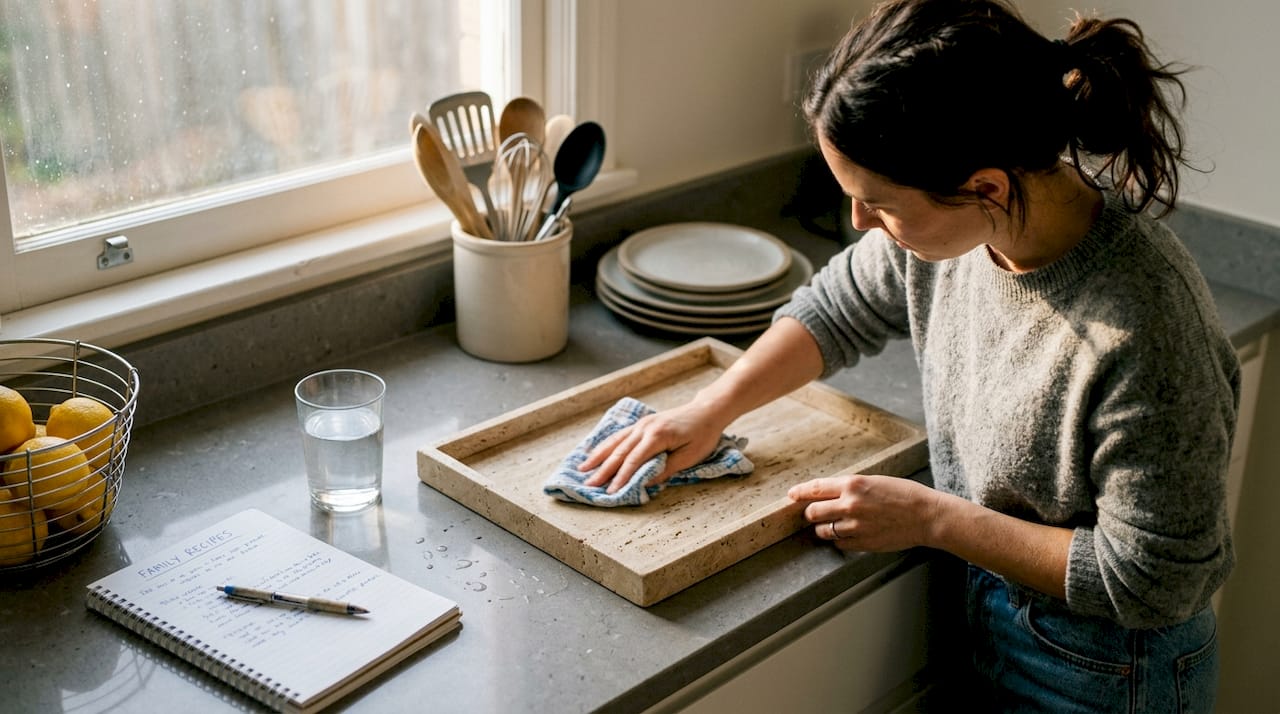
You have chosen your pieces. Now place them where they perform at their best.
Travertine works as a neutral anchor, meaning it grounds a room without competing with other elements. Its warmth bridges the gap between hard architectural surfaces and soft furnishings, making it an ideal connector material in any layered interior scheme.
The rooms and zones where travertine accessories shine most:
Pair travertine with warm materials like oak, walnut, brushed brass, linen, and off-white plaster for cohesion. Avoid cool grays, chrome, and highly saturated colors, as these fight travertine’s inherent warmth rather than supporting it.
Avoid two common mistakes. The first is mixing travertine with cool-toned metals like polished chrome or gunmetal. The contrast feels jarring rather than intentional. The second is crowding a small surface with multiple travertine pieces. One considered piece always reads as more luxurious than a cluster of similar objects competing for attention.
“For luxury interiors, select travertine accessories blending functionality with unique veining and room-tested appearance.”
Pro Tip: In kitchens and bathrooms, always use filled travertine to prevent liquids from sitting in the natural pits and causing staining. Save unfilled textures for purely decorative zones like shelves, mantels, and entry tables.
A practical example: A travertine coffee table anchors the living room, a matching tray on top holds candles and a small bowl, and a travertine lamp on a side table echoes the stone without overwhelming the room. According to the travertine coffee table guide, this kind of intentional repetition is how designers create cohesion without monotony.
Luxury accessories earn their cost only if they age well. Travertine can last decades, but it needs the right care foundation from day one.
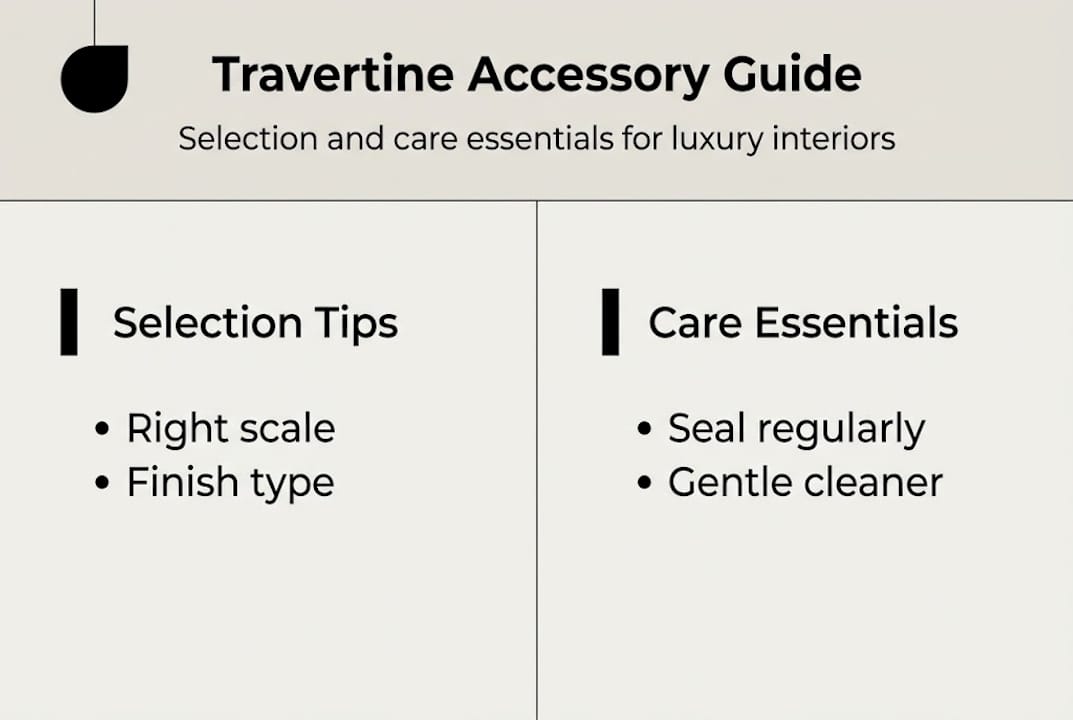
Travertine is porous, which means it requires sealing every 1-2 years using penetrating impregnators. Clean it using only pH-neutral stone cleaners, and strictly avoid acids, abrasives, and wet mopping, which can strip sealers and etch the surface permanently.
Here is the maintenance cycle to commit to:
The most common care mistakes to avoid:
When properly sealed and maintained, travertine accessories last 15 or more years with no significant deterioration in appearance, making them a genuinely sound investment for high-end interiors.
For filled travertine in kitchens or bathrooms, cleaning is straightforward since the grout fill prevents liquid penetration. Unfilled decorative pieces require gentler handling and must be kept away from moisture. Learn more about long-term interior travertine care to protect your collection.
After working with luxury stone in interior projects at every scale, we have come to one firm conclusion: photographs lie, and physical samples tell the truth.
The single biggest mistake we see buyers make is selecting travertine based solely on online images. Even high-quality photography flattens the texture and shifts the tone. Requesting an actual sample before committing is not extra diligence. It is the minimum standard for serious sourcing.
The second insight is about batch consistency. Travertine quarried in different seasons or from different pockets of the same quarry can vary considerably in tone and veining. When you are sourcing multiple pieces for the same room, confirm they come from the same batch.
We also see designers over-specify polished finishes because they photograph beautifully. In a working home with real light and real life, a polished travertine surface shows every fingerprint and water mark within hours of placement. Honed finishes are often the more intelligent choice for pieces that will actually be touched and used.
Curation, at its best, is not about following what is trending. Luxury travertine accessories earn their place in a room when they are chosen for specific reasons tied to that room, not because they appeared in a mood board.
The right stone accessory does not just occupy space. It anchors a room, defines a mood, and adds a layer of authenticity that manufactured materials simply cannot replicate.
At Marmorique, every piece in our collection is selected for quality of material, consistency of craftsmanship, and genuine design usefulness. Browse handpicked items like the artisan marble soap dish for an effortless bathroom upgrade, or consider the marble grape ornament as a sculptural centerpiece that sparks conversation. Explore the full Marmorique luxury stone accessories collection and find the exact piece your interior has been waiting for.
Use filled travertine for wet or practical zones like bathrooms or kitchens, where liquid penetration is a real risk. Unfilled travertine is best for dry, decorative spaces where the raw, directional texture is the point.
Sealing every 1-2 years is recommended to maintain surface durability and prevent staining or etching, with high-use pieces potentially needing annual attention.
Only pH-neutral stone cleaners are safe. Acids, bleach, and abrasive products cause permanent surface damage and will strip the sealer, leaving the stone vulnerable.
Travertine pairs naturally with warm, neutral palettes and materials like wood, linen, and brushed brass. Avoid cool grays and chrome, which conflict with travertine’s inherent warmth and undermine the cohesion of the space.


