Your Cart (0)
Your cart is empty
Free express shipping

Drawer menu
Free express shipping

Selecting the perfect material for a luxury bathroom means balancing beauty, resilience, and ethical sourcing. For many Canadian, American, and European homeowners and designers, travertine stands out as a sophisticated choice. This natural stone draws attention with its unique textures and wide range of color variations while meeting the demands of contemporary sustainable living. Discover how travertine’s history and distinctive characteristics can redefine any upscale bathroom with timeless elegance.
| Point | Details |
|---|---|
| Natural Formation | Travertine is formed through mineral precipitation from hot spring waters, creating a unique stone with a porous texture. |
| Versatile Aesthetic | Available in various colors and finishes, travertine is ideal for personalized bathroom designs. |
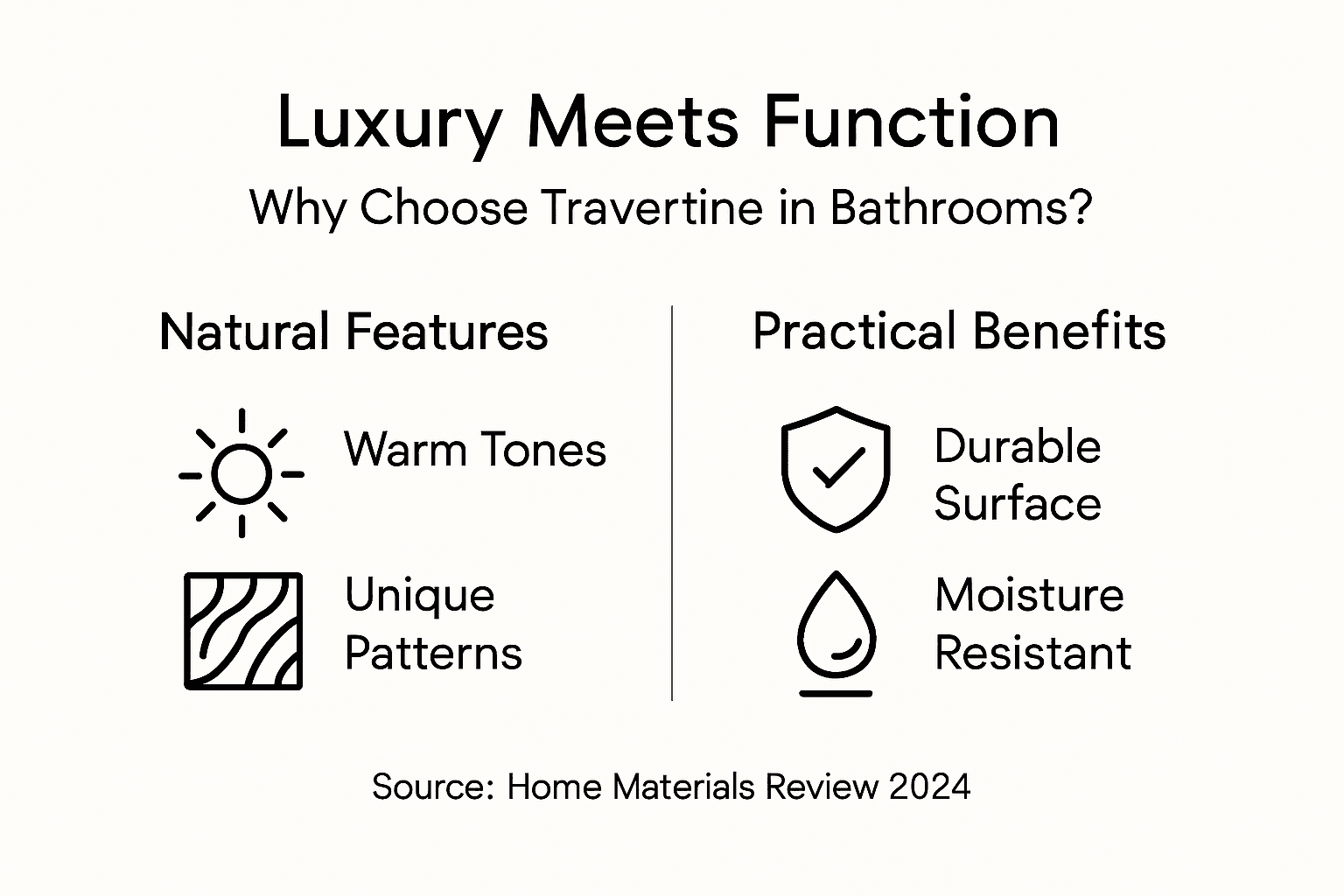
| Durability and Comfort | Its natural resistance to moisture and thermal qualities make travertine a practical choice for luxury bathrooms. |
| Professional Handling | Proper installation and maintenance by professionals are crucial for maximizing travertine’s lifespan and appearance. |
Travertine is a remarkable natural stone with a fascinating geological origin, formed through complex mineral precipitation processes around hot springs and limestone environments. Limestone deposits from mineral springs create this unique, porous stone that has captivated architects and designers for centuries.
Geologically, travertine emerges through a distinctive natural process involving calcium carbonate precipitation. As mineral-rich hot spring waters flow and subsequently evaporate, they leave behind intricate layers of calcium carbonate, creating the stone’s signature banded and textured appearance. Calcite-based rock formation results in a dense, light-colored material prized for its aesthetic qualities.
Key features of travertine include:
Travertine’s formation occurs through multiple environmental conditions, typically involving mineral-rich waters and specific temperature ranges. The stone’s distinctive appearance comes from rapid mineral precipitation, which creates its characteristic layered and textured surface.
Pro tip: When selecting travertine for interior design, examine the stone’s porosity and color variation to ensure it matches your aesthetic and functional requirements.
Travertine offers remarkable versatility for bathroom design, with multiple variations that can transform your space into a luxurious sanctuary. Travertine tile variations provide homeowners with extensive options to create unique and personalized bathroom environments.
The primary categorization of travertine tiles involves three key aspects: cut, finish, and color. Each dimension offers distinct characteristics that dramatically influence the stone’s aesthetic and functional properties.
Travertine Tile Cuts:
Finish types further customize the stone’s visual and tactile qualities. Popular finishes include:
Color variations range from soft neutrals to rich earth tones, including:
Here’s a concise comparison of popular travertine tile finishes and their typical use in bathrooms:
| Finish Type | Visual Quality | Best Bathroom Application |
|---|---|---|
| Polished | Shiny, high-gloss | Modern master bathroom accent walls |
| Honed | Smooth, matte appearance | Classic shower surrounds and floors |
| Tumbled | Soft, aged look | Rustic vanity tops and decorative borders |
| Brushed | Subtle, textured elegance | Spa-inspired feature walls |
Each combination of cut, finish, and color creates a unique design profile, allowing designers and homeowners to craft truly personalized bathroom spaces that reflect individual style and architectural vision.
Pro tip: Consider your bathroom’s lighting and overall design scheme when selecting travertine tiles to ensure optimal aesthetic harmony and practical performance.
Travertine transforms luxury bathroom spaces with its exceptional combination of aesthetic elegance and remarkable functional advantages. Inspiring travertine decor ideas demonstrate how this natural stone elevates bathroom design beyond conventional materials.
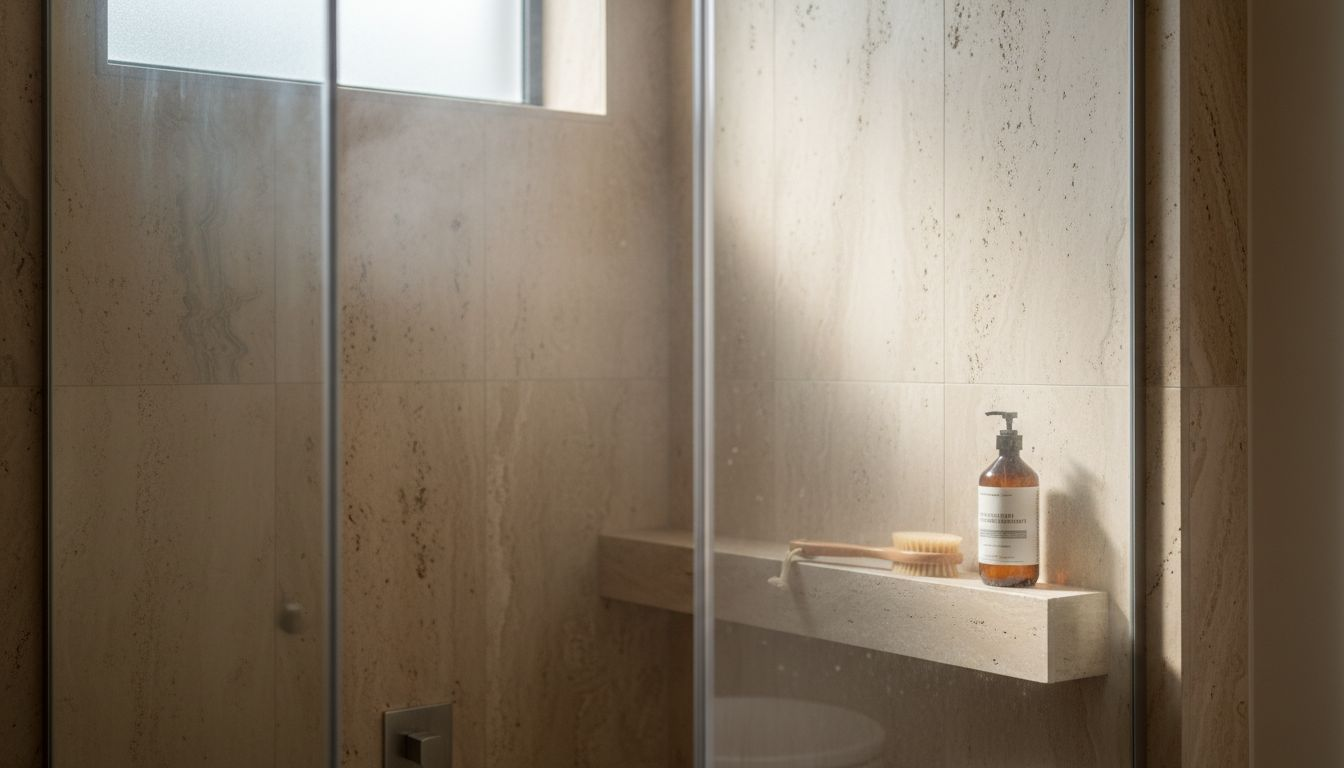
Durability and Performance stand out as primary benefits for discerning homeowners. Travertine’s dense composition ensures remarkable resistance to moisture, temperature fluctuations, and daily bathroom wear. Its natural thermal properties create a comfortable surface that remains cool in summer and warm during winter months.
Key Benefits of Travertine in Bathroom Spaces:
Travertine’s natural variations offer unparalleled design flexibility. Each tile presents unique patterns, ensuring that no two bathroom installations look identical. The stone’s inherent variations create a sense of organic luxury that synthetic materials cannot replicate.
Maintenance and longevity further distinguish travertine as a premium bathroom material. Properly sealed and maintained, travertine surfaces can remain stunning for generations, representing a thoughtful investment in both aesthetic appeal and functional performance.
Pro tip: Select travertine tiles with professional sealing to maximize moisture resistance and maintain their elegant appearance in high-humidity bathroom environments.
Successful travertine bathroom installation requires meticulous planning and specialized techniques to ensure long-lasting performance and aesthetic appeal. Travertine tile installation techniques demand professional expertise and careful material selection to maximize the stone’s natural beauty and durability.
Installation Fundamentals involve several critical preparatory steps. Professionals must use waterproof membranes and vapor barriers to protect against moisture damage, which can compromise the stone’s structural integrity. Polymer-modified thinset mortars provide superior bonding, while specialized grout selection ensures optimal performance in high-humidity environments.
Critical Installation Requirements:
Maintenance is equally crucial for preserving travertine’s luxurious appearance. Regular sealing with high-quality penetrating sealers creates a protective barrier against stains and moisture intrusion. Routine cleaning should involve gentle, pH-neutral cleaning solutions specifically designed for natural stone surfaces.
Travertine’s delicate nature requires specialized care. Avoid abrasive cleaning materials, acidic substances, and harsh chemicals that could potentially damage the stone’s surface. Prompt spill management and consistent maintenance will help preserve the stone’s natural elegance and structural integrity for years to come.
Below is a summary table highlighting maintenance priorities for bathroom travertine surfaces:
| Maintenance Task | Purpose | Frequency |
|---|---|---|
| Professional Sealing | Boosts moisture resistance | Once per year |
| pH-Neutral Cleaning | Prevents surface etching | Weekly |
| Spill Management | Protects against stains | Immediate |
| Avoid Abrasives | Maintains finish integrity | Always |
Pro tip: Invest in professional installation and annual resealing to protect your travertine bathroom surfaces and maintain their stunning appearance over time.
Selecting the ideal stone for bathroom surfaces requires careful consideration of each material’s unique characteristics and performance attributes. Subtle luxury in interior design reveals why discerning homeowners increasingly prefer travertine over traditional alternatives.
Comparative Material Analysis highlights travertine’s distinctive advantages. Unlike marble, which tends to be more expensive and less porous, travertine offers superior adaptability and a more nuanced aesthetic. Granite, while durable, lacks the soft, organic texture that makes travertine so appealing in bathroom environments.
Key Comparative Characteristics:
Performance considerations further distinguish travertine from alternative materials. Its natural porosity, when properly sealed, provides excellent moisture management. The stone’s thermal properties create a more comfortable surface temperature compared to ceramic or porcelain tiles, which can feel cold and uninviting.
Beyond technical specifications, travertine introduces an element of organic luxury that synthetic materials cannot replicate. Its unique texture and subtle color variations create a sense of timeless elegance that transforms ordinary bathroom spaces into extraordinary environments.
Pro tip: Always consult a professional stone specialist to understand the specific performance characteristics of different stone materials for your unique bathroom design requirements.
Discover the perfect balance of luxury and functionality by choosing travertine for your bathroom. As the article highlights, travertine offers exceptional durability, natural thermal regulation, and unique textures that transform your space into a timeless sanctuary. Whether you seek the polished elegance or a natural, textured finish travertine adapts beautifully to your design goals.
Explore our exclusive collection of Bathroom sets – Marmorique crafted from premium natural travertine. Each piece is thoughtfully designed to complement the rich, organic beauty of this exquisite stone. Don’t wait to experience how travertine’s moisture resistance and sophisticated aesthetic can redefine your bathroom. Visit Marmorique now for artisanal stone décor that blends craftsmanship with lasting elegance.
Travertine is a natural stone formed through mineral precipitation processes around hot springs and limestone environments, resulting in a porous and beautifully textured material.
Travertine offers aesthetic versatility, natural thermal regulation, moisture resistance, and unique texture, making it an excellent choice for durable and luxurious bathroom spaces.
Maintenance involves regular sealing with a high-quality penetrating sealer, using pH-neutral cleaning solutions, and avoiding abrasive materials to preserve the stone’s elegance and integrity.
Travertine is typically more affordable than marble, offers unique natural variations, and provides better thermal properties compared to granite, making it a preferred choice for many homeowners.


