Your Cart (0)
Your cart is empty
Free express shipping

Drawer menu
Free express shipping

TL;DR:
- Stone furniture offers a long-term investment due to its durability, minimal maintenance, and unique aesthetic value. Expert fabrication and proper sealing are essential to preserve its appearance and prevent costly damage over time. Thoughtful design choices, such as selecting timeless styles and contrasting finishes, ensure the furniture remains relevant and enhances property value.
Most furniture depreciates the moment you bring it home. Trends shift, materials wear out, and what felt like a bold design choice becomes dated within a decade. Stone furniture breaks this pattern entirely. Understanding why invest in stone furniture means recognizing it as something closer to architecture than decor: a permanent, appreciating fixture that gains character over time rather than losing it. This guide covers the material advantages, fabrication essentials, maintenance discipline, and financial returns that make natural stone one of the smartest decisions you can make for a residential or commercial interior.
The benefits of stone furniture are rooted in how the material behaves over decades, not just seasons. Natural stone withstands heavy daily use, UV exposure, and moisture without cracking, fading, or warping. A marble dining table used every day for twenty years will look fundamentally similar to the day it was installed, provided it receives basic care. Wood darkens, metal corrodes, and composite materials delaminate. Stone simply ages.
One of the most underappreciated advantages of stone furniture is its low maintenance cost relative to alternatives. You are not refinishing it every three years or replacing components. Routine care is remarkably simple: sweep away grit that could scratch the surface, wipe spills with a pH-neutral cloth, and reseal periodically. In 2026, buyers increasingly frame natural stone as a long-term investment precisely because it lasts for decades with minimal upkeep.
The visual argument is just as strong. Every slab of marble, travertine, or granite carries a completely unique veining pattern formed over millions of years. No two pieces are identical. That intrinsic rarity means stone furniture carries aesthetic value that manufactured materials simply cannot replicate, no matter how convincing the print.
Stone also has a practical thermal property worth knowing. Its thermal mass (the ability to absorb and slowly release heat) contributes to more stable indoor temperatures, which can reduce heating and cooling demands in rooms where large stone surfaces are present. It is a small but real functional benefit that adds to the total value equation.
Pro Tip: When selecting stone for high-traffic areas like dining tables or coffee tables, opt for denser varieties such as granite or quartzite. They resist surface etching far better than softer stones like Calacatta marble, which is better suited to lower-contact decorative pieces.
Understanding stone’s natural qualities is crucial, but equally important is how expert craftsmanship safeguards your investment over time. Raw stone does not become valuable furniture on its own. The fabrication process determines whether a slab becomes a stunning centerpiece or an expensive mistake.
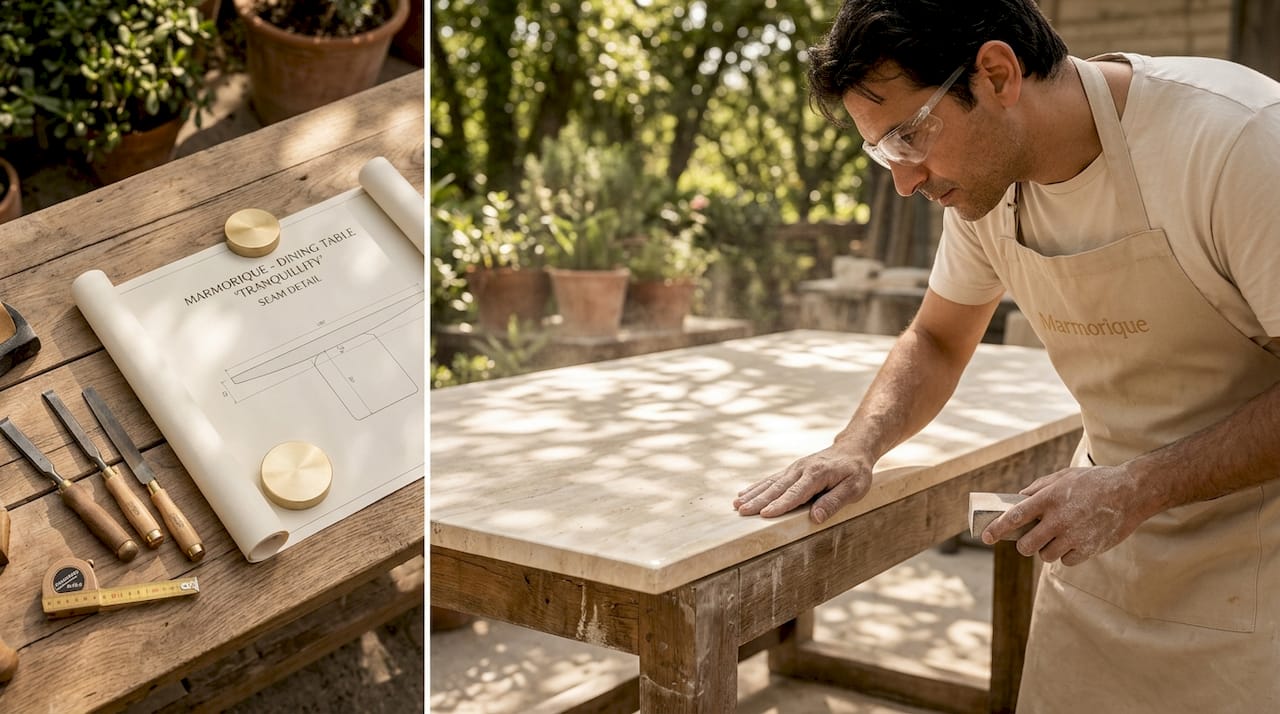
Master fabricators combine technical precision with artistic vision to ensure stone furniture achieves both longevity and visual harmony. This is not a job for generalists. What separates master fabricators from standard stone cutters is a deep understanding of how stone behaves structurally and aesthetically.
Here is what expert fabrication actually involves:
Skipping expert fabrication to save upfront cost is one of the most common and costly mistakes in stone furniture investment. A poorly supported slab can crack within months. Mismatched veins turn a luxury piece into something that looks unintentional. Studios like Finest Furniture Studio demonstrate how furniture-grade stone work requires a completely different skill set than standard architectural stone installation.
Pro Tip: Ask to see the fabricator’s work on seamed pieces specifically. Any craftsperson can cut a single-slab table. Seamed work, where two or more stone sections must read as one continuous surface, reveals their true level of skill.
Having explored fabrication’s role, let’s examine how consistent maintenance sustains stone furniture’s elegance and resilience. Even the most beautifully fabricated stone piece will deteriorate prematurely without the right care routine. The good news is that proper maintenance is neither expensive nor time-consuming once you understand what actually matters.
Sealing is the cornerstone of stone furniture care. Natural stone is porous, meaning liquids can penetrate the surface and cause staining, discoloration, or structural weakening over time. A penetrating sealer (one that soaks into the stone rather than sitting on top of it) dramatically reduces this porosity. Most penetrating sealers last 2 to 5 years, with resealing frequency depending on stone type, daily use, and cleaning product choices.
The water-bead test is the simplest and most reliable way to know when resealing is needed. Drip a few tablespoons of water onto the stone surface. If it beads up and sits on the surface, your sealer is working. If it absorbs and darkens the stone within a few minutes, it is time to reseal. This test takes thirty seconds and eliminates the guesswork of calendar-based schedules.
“Applying sealer over a residue-coated surface, or using the wrong sealer for the stone’s porosity level, can cause cloudiness or permanent surface damage. Preparation and product matching are as important as the act of sealing itself.”
Key maintenance practices every stone furniture owner should follow:
Pro Tip: Do a sealer compatibility test on an inconspicuous area before applying to the full surface. Some stones, particularly those with high mineral content, react unpredictably to certain sealer formulations.
Beyond material and care, savvy design choices greatly influence your stone furniture’s lasting appeal and value. The biggest threat to any stone investment is not wear or damage. It is irrelevance. A stone feature that looks painfully of-its-moment in five years has failed as a design decision, regardless of how well the stone itself has held up.
The smartest stone design rules in 2026 move away from matching everything to the same stone and toward a “one room, one hero” philosophy. Pick one statement stone piece, a dining table, a fireplace surround, or a bathroom vanity, and let it anchor the space. Then build contrast around it using different stones, finishes, or complementary materials rather than repeating the same slab everywhere.
| Design approach | Long-term appeal | Risk of dating |
|---|---|---|
| All-matching stone surfaces | Low | High |
| One hero stone, mixed finishes | High | Low |
| High-gloss polish throughout | Moderate | Moderate |
| Honed and leathered mix | High | Low |
| Trendy novelty stone colors | Low | Very high |
Honed and leathered finishes deserve special attention here. Honed stone (a matte, smooth finish) and leathered stone (a textured, slightly matte surface) both hide everyday wear better than high-gloss polished surfaces. They also look warmer and more tactile, which reads as livable luxury rather than showroom spectacle. This is a distinction that ages far more gracefully.
Edge profiles and slab thickness choices now lean architectural. Thicker slabs with squared waterfall edges, irregular organic silhouettes, and visible natural texture communicate permanence and intention. These choices signal “this was designed to be here forever,” which is exactly the message that retains value.
After discussing design, let’s quantify how stone furniture upgrades translate into tangible financial returns for property owners. Aesthetic value matters, but for many homeowners and commercial property investors, the financial return is what ultimately justifies the premium spend on natural stone.
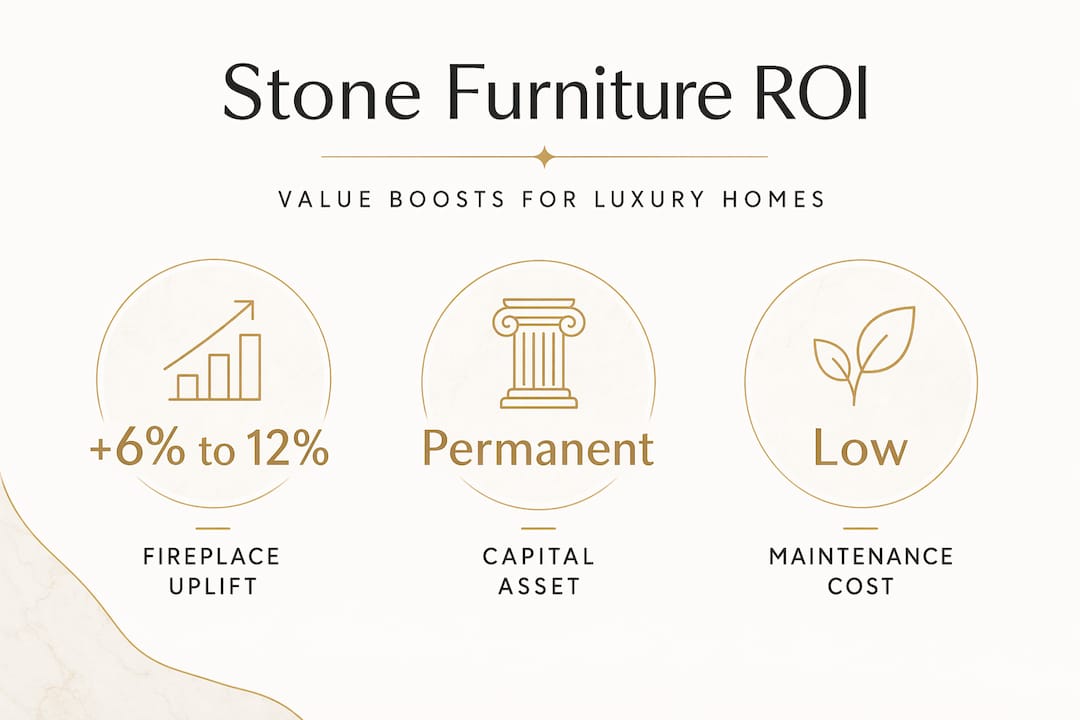
Natural stone fireplaces alone raise valuations by 6% to 12%, classified by appraisers as permanent capital improvements rather than decorative additions. That distinction matters enormously. A decorative item adds perceived value. A capital improvement adds assessed value, which directly influences sale price and mortgage appraisals.
| Stone upgrade | Estimated value impact | Classified as |
|---|---|---|
| Natural stone fireplace | +6% to 12% valuation | Capital improvement |
| Stone kitchen countertops | Strong buyer preference signal | Functional upgrade |
| Stone bathroom vanity | Luxury signal to buyers | Premium finish |
| Modular stone panel walls | High ROI, lower install cost | Architectural feature |
Beyond appraisals, stone features do something equally important in competitive real estate markets: they shorten time on market. Buyers who are specifically looking for premium homes identify authentic stone immediately, and it creates an emotional anchor for the sale. Composite stone and engineered alternatives do not produce the same response.
Lightweight modular stone panel systems have changed the ROI calculation for many homeowners. They deliver the visual impact of full stone without the structural engineering requirements of full-slab installation, which reduces labor costs significantly. For commercial interiors particularly, this makes investing in stone decor financially accessible at scale.
“Stone’s durability means you are not budgeting for replacement in 10 years. That long-term avoidance of replacement cost is itself a compounding financial benefit that rarely appears in simple ROI calculations but dramatically affects total ownership cost.”
Here is the opinion most stone coverage skips over: the material itself is almost the least important variable in whether your stone investment pays off.
We have watched homeowners select extraordinary slabs of bookmatched Calacatta and then hand them to a fabricator who had no experience with furniture-scale stone work. The result was beautiful stone turned into an expensive mistake. We have seen stunning travertine tables go gray and porous within three years because the sealer was applied incorrectly or over an uncleaned surface. The stone was never the problem.
The reason why choose stone furniture is clear at the material level. But whether that choice actually delivers on its promise depends entirely on the decisions you make around it. Proper sealing discipline matters more to the long-term condition of your stone than the stone type itself. A mid-grade travertine that is sealed correctly and maintained consistently will outlast and outlook a premium marble that is neglected.
Design intention is the other variable that gets underestimated. The homeowners who feel their stone investment has “dated” are almost always the ones who matched everything perfectly rather than creating contrast. Matching is safe in the short term but rigid over time. Intentional contrast, where different stones and finishes work together in a deliberate hierarchy, gives you room to update surrounding elements without touching the stone.
Think of your stone furniture not as a purchase but as a commitment with three ongoing responsibilities: fabrication quality upfront, sealing discipline over time, and design choices that stay relevant by avoiding trend dependency. Fulfill all three, and stone furniture will outperform virtually any other interior investment you make.
With a solid understanding of why stone furniture is a valuable investment, you can now explore premium options and expert craftsmanship to bring your vision to life.
At Marmorique, every piece in our collection reflects the material quality, fabrication standards, and design principles covered in this guide. We specialize in natural marble and travertine furniture, including dining tables, lamps, bathroom sets, and decorative accessories, each crafted to serve as a long-term centerpiece in luxury residential and commercial interiors. Our pieces are selected to embody the “one hero” design philosophy: singular, striking, and built to stay relevant. If you are ready to invest in stone decor that genuinely holds its value, explore our curated collections and connect with our team for personalized guidance.
Most penetrating sealers last between 2 and 5 years, but the most reliable approach is to perform the water-bead test annually and reseal based on actual performance rather than a fixed schedule.
They anticipate structural limitations, engineer invisible seams, and match vein patterns precisely across cuts, preventing costly failures and ensuring the finished piece looks intentional rather than assembled.
Yes. Natural stone fireplaces command 6% to 12% higher valuations and are recognized by appraisers as permanent capital improvements, directly increasing assessed property value rather than just perceived appeal.
The strongest current approach is one hero stone per room, mixing contrasting finishes and textures around it. This creates layered, evolving interiors where the stone remains relevant regardless of what else changes.
Natural stone requires minimal chemical processing, and its decades-long durability significantly reduces material waste compared to furniture that needs replacing every 5 to 10 years. Many types can also be reused or repurposed, supporting responsible building practices.


