Your Cart (0)
Your cart is empty
Free express shipping

Drawer menu
Free express shipping

Luxury marble isn’t just dug out of the ground and shipped to your doorstep. The journey from quarry to your interior design project involves geological precision, advanced extraction technology, and rigorous grading that separates premium blocks from standard material. Most people assume marble sourcing is straightforward, but the reality is far more complex and quality-driven. This guide walks you through the entire process, from initial geological surveys to sustainability practices, so you can make informed decisions when selecting marble for high-end spaces.
| Point | Details |
|---|---|
| Geological surveys | Geologists assess deposits for uniformity and fissure free marble to establish a premium sourcing foundation. |
| Diamond wire saws | Diamond wire sawing minimizes waste and micro cracks compared with blasting, enabling precise block production. |
| Premium block grading | Blocks are rigorously graded, and premium grades command higher prices and stronger quality assurance. |
| Sustainability practices | Sustainable techniques include water and waste recycling, influencing luxury sourcing decisions. |
Before any extraction begins, marble sourcing starts with geological surveys to identify high-quality deposits focusing on fissure-free, uniform calcite or dolomite marble suitable for premium applications. These surveys aren’t casual explorations. Geologists analyze metamorphic transformations where limestone underwent intense heat and pressure, creating the crystalline structure that defines marble’s aesthetic appeal.
The evaluation process examines several critical factors:
Quality deposits like those in Carrara, Italy, or Thassos, Greece, command global recognition because their geological conditions produced exceptionally uniform marble with minimal defects. When you’re planning a luxury interior, understanding this geological foundation helps you appreciate why certain marble varieties carry premium pricing. The consistency you see in a finished installation begins with deposits that formed under ideal metamorphic conditions millions of years ago.
For designers working on high-end projects, verifying the geological source of your marble matters as much as the final aesthetic. Suppliers who provide detailed geological documentation demonstrate transparency about their material’s origin and quality potential. This geological precision directly influences the marble interior design workflow luxury spaces you can achieve in your projects.
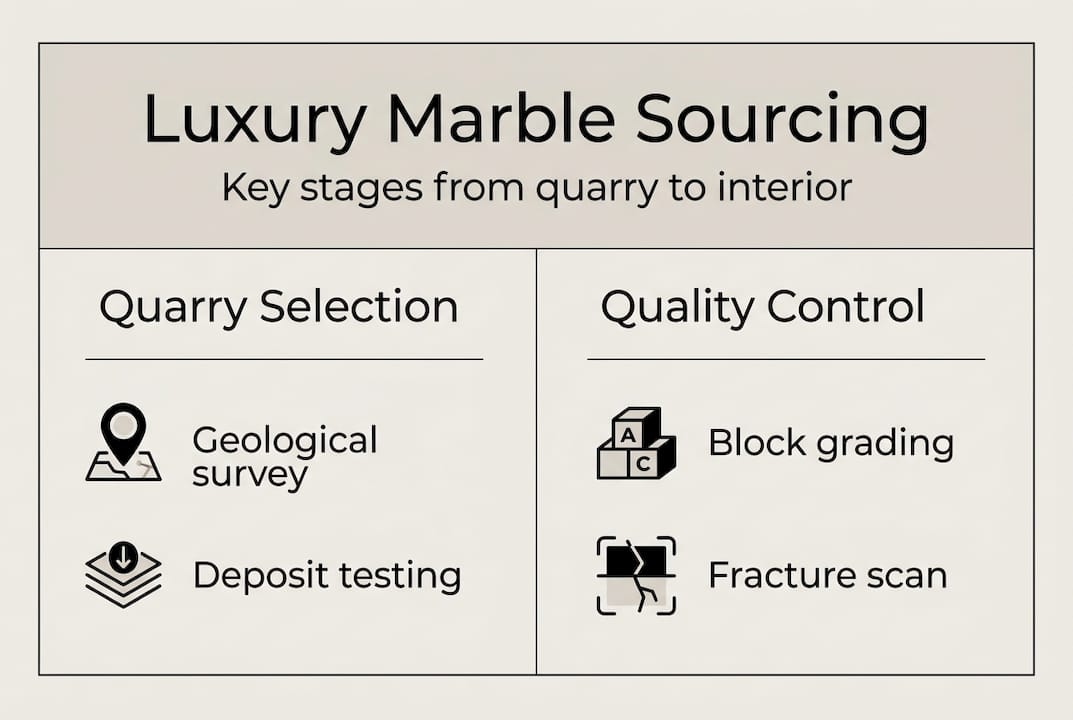
Once geologists identify a premium deposit, quarry operators prepare the site through systematic overburden removal and bench construction. Quarry preparation involves removing overburden and creating benches about 5-10 meters high with access platforms for heavy equipment. This infrastructure enables safe, efficient extraction while maintaining the marble’s structural integrity throughout the process.
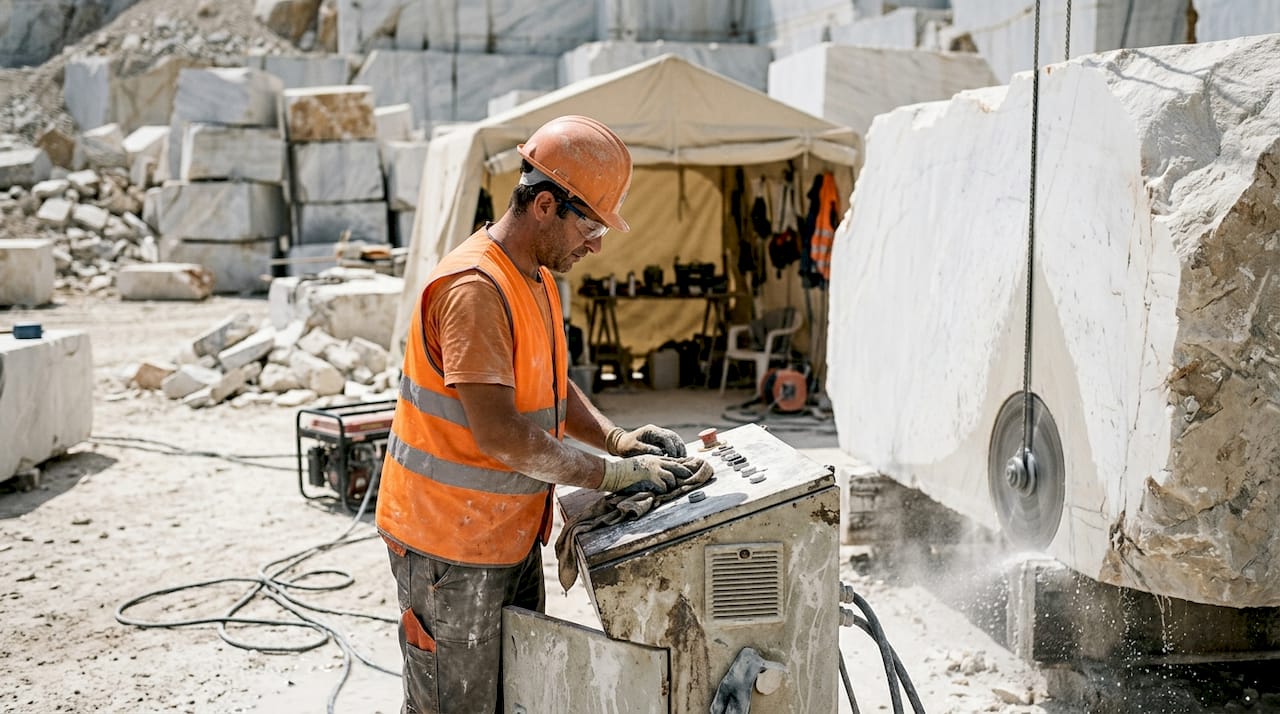
The extraction method makes or breaks marble quality. Diamond wire sawing cuts large marble blocks with 98% precision, minimizing waste and micro-cracks, favored over blasting for premium marble extraction. The technology uses steel wire embedded with industrial diamond beads that slice through marble like a precision instrument. Each block typically weighs 15-25 tons, requiring careful planning to prevent damage during the cutting process.
Modern extraction offers dramatic advantages over traditional methods:
Pro Tip: When evaluating marble suppliers, ask specifically about their extraction methods. Suppliers using diamond wire sawing demonstrate commitment to quality preservation that translates directly into better slab performance in your installations.
The quarry layout itself reflects sophisticated engineering. Access roads accommodate heavy transport vehicles, while crane systems position blocks for inspection immediately after extraction. Water systems cool cutting equipment and suppress dust, creating conditions that protect both workers and marble quality. Understanding these modern marble quarrying methods helps you appreciate the investment required to deliver premium material to your design projects.
| Extraction Method | Precision Rate | Waste Percentage | Micro-Crack Risk |
|---|---|---|---|
| Diamond wire sawing | 98% | 20-25% | Minimal |
| Traditional blasting | 60-70% | 65-70% | High |
| Channeling machines | 75-80% | 40-50% | Moderate |
This technical foundation connects directly to how blocks are evaluated after extraction, where quality assessment determines final grading and pricing.
After extraction, cranes lift blocks to inspection areas where specialists conduct detailed visual and instrumental assessments. Blocks are inspected for fissures, cracks, and color uniformity before grading; premium grades cost 30-50% more and suit visible luxury use. This price differential reflects genuine quality distinctions that impact installation success and long-term appearance.
The grading process evaluates multiple quality dimensions:
Traditional grading relied entirely on expert visual assessment, a skill developed over decades of quarry experience. Today, technology enhances human expertise. Ground penetrating radar detects fractures pre-cut, optimizing recovery with ratios up to 49.1%. This technology maps internal structure before sawing, allowing operators to plan cuts that maximize usable material while avoiding hidden defects.
Pro Tip: Request grading certificates from your marble supplier that specify the exact grade classification and inspection methods used. Premium suppliers provide detailed documentation including block photography and technical specifications.
For luxury interiors, premium-grade marble delivers advantages worth the investment. These blocks exhibit minimal veining variation, allowing designers to create expansive installations without jarring pattern shifts. The structural integrity ensures successful fabrication into thin slabs for wall cladding or large-format countertops. When you’re working with clients who expect perfection, starting with properly graded marble eliminates downstream problems during fabrication and installation.
The technology integration represents a significant shift in marble sourcing reliability. Where traditional methods accepted 30-40% waste as inevitable, GPR-guided extraction reduces that figure dramatically. For your projects, this means more consistent material availability and better predictability when planning large installations requiring multiple slabs from the same block. Understanding these marble interior design workflow luxury spaces considerations helps you specify materials confidently.
| Inspection Method | Detection Accuracy | Processing Time | Cost Impact |
|---|---|---|---|
| Visual assessment | 70-75% | 15-20 min/block | Baseline |
| Ultrasonic testing | 85-88% | 25-30 min/block | +15-20% |
| Ground penetrating radar | 92-95% | 30-40 min/block | +25-30% |
Sustainability in premium marble extends beyond environmental buzzwords to practical measures that reduce impact while maintaining quality. Sustainability in premium marble includes water recycling, waste reuse up to 98%, and industry certifications enhancing ethical sourcing appeal. These practices matter increasingly to luxury consumers who expect environmental responsibility alongside aesthetic excellence.
Modern quarries implement comprehensive sustainability systems:
Certifications validate these claims. Organizations like the Natural Stone Institute and various regional environmental bodies audit quarries for compliance with sustainability standards. When you’re sourcing marble for clients concerned about environmental impact, these certifications provide third-party verification of responsible practices.
For designers and homeowners selecting marble, best practices ensure you’re getting genuinely premium, responsibly sourced material:
The reuse statistics are impressive. A well-managed quarry can convert nearly all extracted material into valuable products. Premium slabs serve luxury interiors, while smaller pieces become tiles, mosaics, or decorative objects. Even marble dust finds applications in agriculture and manufacturing. This comprehensive utilization reduces environmental impact while improving economic viability for quarry operators.
When evaluating suppliers, ask specific questions about their sustainability practices. Generic claims about being “eco-friendly” mean little without supporting data. Look for suppliers who provide concrete metrics: water recycling percentages, waste diversion rates, and energy consumption figures. This transparency indicates genuine commitment rather than marketing positioning.
The luxury market increasingly demands this accountability. High-end residential and commercial projects often pursue green building certifications like LEED, which award points for responsibly sourced materials. Choosing marble from certified sustainable quarries contributes to these certification goals while delivering the aesthetic quality your projects require.
Now that you understand the complexity behind premium marble sourcing, you’re equipped to make informed decisions for your luxury interior projects. At Marmorique, we’ve built relationships with quarries that exemplify the quality standards and sustainable practices outlined in this guide.
Our premium marble collections feature materials sourced through the rigorous geological evaluation, advanced extraction, and careful grading processes you’ve just learned about. Each piece in our collection represents the culmination of expert sourcing that prioritizes both aesthetic excellence and structural integrity. Whether you’re designing a statement bathroom vanity or selecting marble for an expansive flooring installation, our team can guide you through options that match your project requirements.
Explore our detailed resources on marble interior design workflow luxury spaces to deepen your understanding of how premium marble integrates into sophisticated design concepts. Connect your newfound sourcing knowledge with the right material selection for projects that demand nothing less than perfection.
Grading depends on fissures, color uniformity, density, and aesthetic patterns to classify blocks as premium or standard grade. Inspectors evaluate structural integrity and visual consistency, with premium grades exhibiting minimal defects suited for visible luxury applications. The classification directly influences pricing and appropriate use cases for different project types.
Diamond wire sawing minimizes micro-cracks and waste compared to blasting, preserving marble integrity for luxury use. It achieves about 98% cutting precision beneficial for high-grade blocks, reducing waste from 70% to approximately 20-25%. This precision protects the marble’s structural stability and visual quality throughout extraction.
Sustainability includes water and waste recycling, and certifications that confirm ethical sourcing. These practices appeal to eco-conscious luxury consumers and improve supply chain transparency. Quarries implementing comprehensive sustainability systems can achieve waste reuse rates up to 98%, converting unusable material into valuable secondary products.
GPR technology maps internal fractures before cutting, allowing operators to plan cuts that avoid hidden defects and maximize usable material. This pre-cut analysis improves block recovery ratios up to 49.1%, reducing waste and ensuring higher-quality slabs. The technology enhances traditional visual grading with precise internal structure data.
Request geological origin documentation, extraction method specifications, grading certificates, and sustainability certifications. Comprehensive documentation includes block photography, technical specifications, and quality metrics that verify material classification. This transparency ensures you’re receiving genuinely premium marble suitable for luxury interior applications.


