Your Cart (0)
Your cart is empty
Free express shipping

Drawer menu
Free express shipping

Marble lamps stand as premium artisanal accents that transform luxury interiors with their natural veining and warm ambient glow. Yet positioning these statement pieces to maximize both their aesthetic appeal and lighting function challenges even experienced designers. The interplay between marble’s unique texture, light temperature, and spatial arrangement determines whether your lamp becomes a focal point or fades into the background. This guide delivers expert placement strategies that elevate your interior’s sophistication while ensuring optimal illumination for everyday living.
| Point | Details |
|---|---|
| Strategic lamp placement | Place lamps strategically where they can serve as a focal point while still providing usable ambient light. |
| Warm 2700 to 3000K lighting | Use warm color temperature around 2700 to 3000K to reveal marble veining without creating glare. |
| Off center placement | Position lamps off center to add visual interest and avoid symmetrical layout. |
| Lux range 100 to 300 | Aim for an ambient light level between 100 and 300 lux to support the decorative role of the lamp. |
| Test lighting at times | Test placement at different times of day to account for changing natural and artificial light. |
Marble lamps function as artisanal decor elements where each piece showcases unique veining patterns created over millennia. These natural variations mean no two lamps appear identical, making placement decisions critical to highlighting their individual character. The stone’s translucent quality allows light to interact with internal structures, creating depth that flat materials cannot replicate.
Lighting temperature dramatically affects how marble appears in your space. Warm 2700-3000K bulbs enhance marble veining by creating soft shadows that emphasize texture without creating harsh glare. Cool white bulbs above 4000K flatten the stone’s appearance and create clinical atmospheres that clash with luxury interior goals. The right bulb transforms your lamp from a simple light source into an illuminated sculpture.
Layered lighting principles apply directly to marble lamp placement. Ambient lighting between 100-300 lux creates inviting atmospheres where marble lamps contribute as accent pieces rather than primary illumination. This approach lets you adjust overall room brightness while maintaining the lamp’s decorative impact. Positioning marble lamps on consoles or nightstands off-center introduces visual dynamism that draws the eye naturally through the space.
Finish selection influences how your lamp interacts with existing light. Polished marble reflects light dramatically, creating bright highlights that work beautifully in dim spaces but can overwhelm bright rooms. Honed finishes diffuse light more evenly, reducing glare while maintaining the stone’s natural beauty. Consider your room’s natural light exposure and existing fixtures when selecting between these finishes.
Pro Tip: Test lamp placement during different times of day before committing to a final position. Natural light shifts throughout the day can dramatically change how marble veining appears, and evening artificial lighting creates entirely different effects than afternoon sun.
Understanding these fundamentals prepares you to make informed decisions about where and how to position your marble lamps. The interplay between stone characteristics, light quality, and spatial arrangement creates the foundation for successful placement that enhances both form and function. For comprehensive guidance on integrating marble throughout your space, explore our marble interior design tips luxury spaces resource.
Successful marble lamp placement begins with thorough environmental assessment. Evaluate your room’s natural light patterns by observing how sunlight moves across surfaces throughout the day. Note existing artificial lighting fixtures, their positions, and their color temperatures. Room size and ceiling height affect how light disperses, influencing where lamps create the most impact. Consider the room’s primary function since task lighting needs differ from ambient lighting requirements.
Marble undertone selection directly impacts how lamps harmonize with your lighting scheme. White marbles with cool gray veining pair beautifully with bright, well-lit spaces where their crisp appearance stays fresh. Warmer marbles featuring golden or beige veining match room lighting to enhance effect in spaces with warm artificial light or limited natural illumination. Green or black marbles create dramatic contrast in minimalist interiors with controlled lighting.
Surface preparation ensures your lamp sits securely and appears intentional. Consoles provide excellent platforms for marble lamps because their height positions light at optimal levels for ambient illumination. Side tables next to seating areas create intimate lighting zones perfect for reading or conversation. Nightstands frame beds symmetrically or asymmetrically depending on your design preference. Ensure surfaces can support the lamp’s weight since marble pieces carry substantial heft.
| Marble Type | Undertone | Finish Recommendation | Ideal Lighting Condition |
|---|---|---|---|
| Carrara | Cool gray veining | Polished or honed | Bright rooms with ample natural light |
| Calacatta | Warm gold veining | Honed | Medium light with warm artificial fixtures |
| Nero Marquina | Deep black | Polished | Controlled lighting for dramatic contrast |
| Emperador | Rich brown tones | Honed | Low to medium light with warm ambiance |
| Verde Guatemala | Green veining | Polished | Bright spaces needing bold accent |
Lamp height relative to eye level determines comfort and functionality. Table lamps positioned too high create glare when seated, while those too low fail to distribute light effectively. Measure from the floor to typical eye level when seated in nearby furniture, then select lamps that position the bulb slightly below that line. This arrangement provides comfortable illumination without direct line of sight to the light source.
Pro Tip: Photograph your space from multiple angles before purchasing a marble lamp. These images help you visualize how different lamp sizes and shapes will appear in context, preventing costly mismatches between lamp scale and room proportions.
Finish selection deserves careful consideration based on your room’s brightness. Honed finishes work exceptionally well in rooms with large windows or multiple overhead fixtures because they reduce glare while maintaining marble’s natural elegance. Polished finishes shine in dimmer spaces where their reflective quality amplifies available light. Mixed finish combinations across multiple lamps can create visual interest when executed with intentional design logic.
Consider traffic flow patterns when identifying potential lamp locations. Lamps placed in high-traffic areas risk being knocked over, while those in protected corners may not receive the visibility they deserve. Balance accessibility for switching lamps on and off against the need to showcase them as decorative elements. For additional strategies on incorporating marble throughout your design, review our marble interior design tips luxury spaces guide.
Step 1: Assess your available surfaces and identify the primary viewing angles from seating areas and entry points. Select a position slightly off-center on consoles or tables rather than dead center. This asymmetrical placement creates visual tension that draws attention while allowing space for complementary decor items. Measure the surface to ensure at least 3 inches of clearance on all sides of the lamp base for visual breathing room.
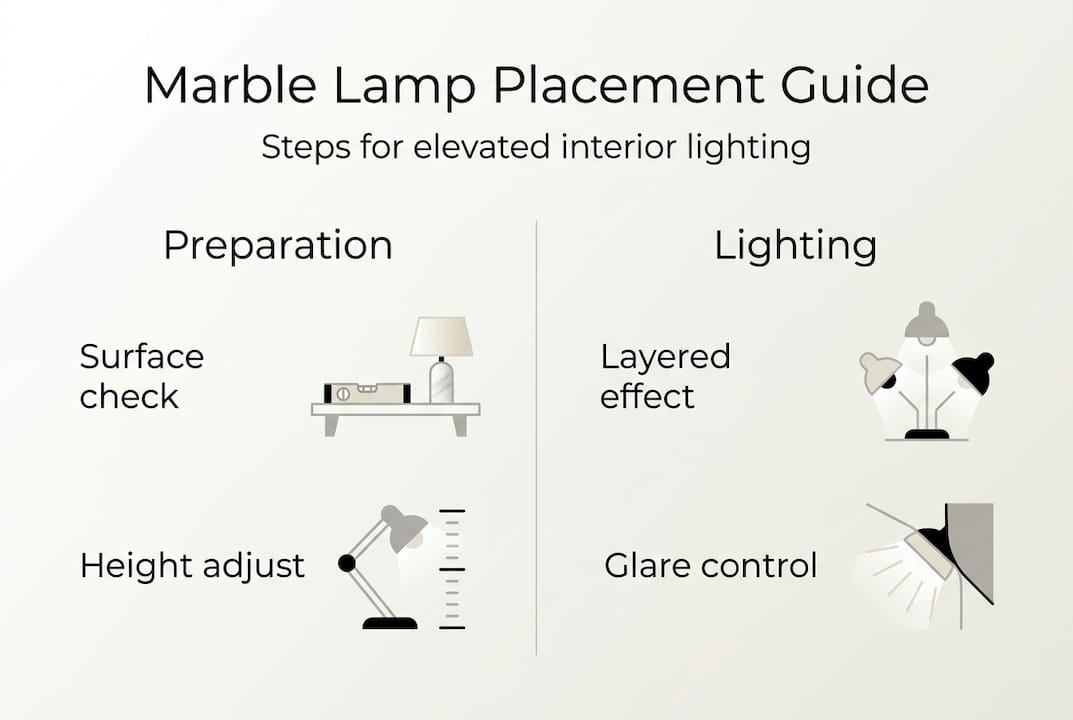
Step 2: Install dimmer controls on the circuit powering your marble lamp to enable precise light level adjustment. Dimmers let you highlight marble veining with adjustable lighting that shifts from bright task illumination to subtle ambient glow. Start with the dimmer at 50% and adjust upward or downward based on the time of day and desired atmosphere. This flexibility proves invaluable for spaces serving multiple functions throughout the day.
Step 3: Layer your marble lamp with complementary lighting sources to achieve ambient levels between 100-300 lux. Combine overhead fixtures, wall sconces, and your marble lamp to create depth and dimension. Use a light meter app on your smartphone to measure actual lux levels and adjust individual sources until you reach the target range. This layered approach prevents any single light source from dominating while ensuring adequate overall illumination.
Step 4: Manage glare by selecting lamps with honed finishes or adding subtle lamp shades that diffuse light without completely obscuring the marble. Position lamps away from direct sight lines when seated to prevent eye strain. If your marble has a polished finish, angle it slightly to redirect reflections away from primary viewing positions. Test the setup during evening hours when artificial light dominates to ensure comfortable illumination.
Step 5: Align lamp placement with furniture arrangement and room traffic patterns. Position lamps to illuminate functional areas like reading chairs or workspace surfaces while maintaining clear pathways. Consider sight lines from doorways since first impressions matter in luxury interiors. Adjust placement if the lamp creates shadows that interfere with room functionality or if it appears visually disconnected from surrounding elements.
| Placement Approach | Visual Impact | Lighting Function | Best Use Case |
|---|---|---|---|
| Centered on surface | Formal, symmetrical | Even light distribution | Traditional interiors, paired lamps |
| Off-center placement | Dynamic, modern | Directional accent light | Contemporary spaces, single statement lamps |
| Grouped asymmetrically | Curated, collected | Layered ambient zones | Eclectic interiors, multiple small lamps |
| Corner positioning | Subtle, atmospheric | Indirect ambient glow | Minimalist rooms, mood lighting |
Pro Tip: Seasonal lighting changes affect how marble appears throughout the year. In summer, abundant natural light may require dimming your marble lamp during daytime hours, while winter’s shorter days mean increased reliance on artificial illumination. Adjust lamp positions slightly with the seasons to maintain optimal visual impact as natural light patterns shift.
Fine-tuning placement often requires multiple adjustments over several days. Live with your initial arrangement and note any issues with glare, insufficient light, or visual imbalance. Small position changes of just a few inches can dramatically alter how the lamp interacts with its surroundings. Trust your instincts about what feels right while applying the technical principles outlined above. For broader context on marble integration strategies, consult our marble interior design tips luxury spaces resource.
Placing marble lamps dead center on surfaces represents the most frequent placement error. This symmetrical approach flattens visual interest and makes spaces feel static rather than dynamic. The eye naturally seeks asymmetry and tension in well-designed interiors. Shift lamps 6 to 12 inches off-center to immediately improve visual flow and create more sophisticated compositions.
Overly bright bulbs create harsh glare that transforms elegant marble into uncomfortable light sources. Many homeowners install bulbs exceeding 60-watt equivalent brightness in table lamps designed for softer illumination. This intensity washes out marble’s subtle veining and creates eye strain in intimate spaces. Replace high-wattage bulbs with 40-watt equivalents in warm temperatures to restore the lamp’s intended ambiance.
Conflicting light sources generate visual noise that diminishes marble lamp impact. When overhead fixtures, wall sconces, and table lamps all compete at similar brightness levels, no single element stands out. This creates flat, uninspiring lighting that fails to showcase your marble’s unique qualities. Dim or turn off competing sources to let your marble lamp claim its role as an accent piece within a layered lighting scheme.
Color discord emerges when marble undertones clash with room lighting temperatures. Cool white bulbs in lamps featuring warm golden veining create jarring visual conflicts that undermine design cohesion. Similarly, warm bulbs in cool-toned marble spaces feel mismatched and dated. Coordinate undertone and room lighting by matching bulb temperature to the dominant color story in your marble and surrounding decor.
Flickering or dim light issues often stem from dimmer incompatibility with LED bulbs. Older dimmer switches designed for incandescent bulbs may not properly control modern LED technology, causing annoying flicker or limited dimming range. Replace legacy dimmers with LED-compatible models rated for your bulb type. Verify bulb wattage matches lamp specifications since underpowered bulbs deliver disappointing illumination while overpowered ones risk damage.
Repositioning lamps to enhance flow requires objective assessment of how spaces actually function. Walk through your room along typical traffic patterns and note where light feels inadequate or excessive. Observe which areas draw your attention naturally and which feel neglected. Move lamps incrementally toward functional zones that benefit from additional illumination while maintaining aesthetic balance.
Honed finishes reduce glare in bright spaces by diffusing light across the marble’s surface rather than creating sharp reflections. If your polished marble lamp creates uncomfortable brightness in a well-lit room, consider swapping it for a honed version or adding a translucent shade. This simple change preserves the lamp’s beauty while eliminating the discomfort that leads to underutilization.
Lamp shades offer another glare management solution when finish changes are not practical. Select shades in neutral tones that complement rather than compete with marble’s natural coloring. Linen and silk shades diffuse light beautifully while adding textural interest. Ensure shade proportions match lamp base size since oversized shades overwhelm delicate bases while undersized ones appear visually unbalanced.
Troubleshooting shadow problems requires analyzing light direction and intensity. Harsh shadows behind the lamp indicate the bulb sits too high or the shade is too narrow. Soften these effects by lowering bulb position if possible or selecting a wider shade that disperses light more broadly. Conversely, insufficient light spread suggests the bulb is too dim or the shade too opaque. Increase wattage within lamp specifications or choose a more translucent shade material.
For comprehensive troubleshooting and design integration strategies, explore our marble interior design tips luxury spaces guide.
Your journey to mastering marble lamp placement deserves lighting pieces crafted with the same attention to detail you bring to your interior design. At Marmorique, we curate an exclusive collection of handcrafted marble lamps where each piece showcases the artisanal quality and natural beauty that elevate luxury spaces. Our selection features carefully sourced marble with distinctive veining patterns, expert craftsmanship, and timeless designs that complement refined interiors.

Explore lamps in various marble types, from classic Carrara to dramatic Nero Marquina, each selected to harmonize with sophisticated lighting schemes. Our pieces arrive ready to implement the placement strategies outlined in this guide, transforming your space with elegant ambient illumination. Visit marmorique shop to discover how premium marble lamps can anchor your luxury interior design vision.
Consoles, side tables, and nightstands provide ideal surfaces for marble lamps because they position light at optimal heights for ambient illumination. These surfaces offer stability for heavy marble bases while creating natural focal points that draw attention to the lamp’s artisanal qualities.
Choose marble lamps with honed finishes that diffuse light evenly rather than creating sharp reflections. Alternatively, add translucent lamp shades that soften illumination while maintaining the marble’s visibility, and position lamps away from direct sunlight or intense artificial light sources.
Yes, dimmer switches provide essential control for adjusting ambient lighting to highlight marble veining at different intensities throughout the day. Install LED-compatible dimmers to ensure smooth operation without flickering, enabling seamless transitions from bright task lighting to subtle evening ambiance.
Matching marble undertones to your room’s dominant colors and lighting temperature creates visual harmony that enhances both the lamp and surrounding decor. Warm-veined marbles pair beautifully with golden lighting and earth tones, while cool-veined varieties complement crisp whites and contemporary palettes.
Position marble lamps 6 to 12 inches off-center on consoles or tables to create visual dynamism without appearing haphazard. This asymmetrical placement draws attention naturally while leaving space for complementary decor items that complete your curated aesthetic.


