Your Cart (0)
Your cart is empty
Free express shipping

Drawer menu
Free express shipping

Marble has shifted from decorative veneer to a defining structural and spatial element in luxury architecture. Modern fabrication technologies enable large format installations while sustainable practices integrate reclaimed materials without sacrificing prestige. This guide reveals how marble now delivers beauty, durability, and environmental responsibility in high-end interiors through strategic design choices.
| Point | Details |
|---|---|
| Structural Evolution | Marble now defines spatial volumes and circulation, moving beyond surface decoration. |
| Advanced Fabrication | Large format slabs with precise veining alignment enable seamless architectural features. |
| Sustainable Luxury | Reclaimed marble reduces quarrying waste while offering unique historical character. |
| Finish Diversity | Honed and matte finishes dominate 60-70% of luxury applications for understated elegance. |
| Maintenance Revolution | Modern sealants reduce upkeep needs by over 40%, expanding viable applications. |
Marble’s architectural role has transformed dramatically over the past decade. Where designers once applied thin marble cladding purely for visual effect, today’s material-led architecture uses marble’s physical properties to shape entire spatial experiences. Marble is increasingly used as a structural material defining space rather than just a decorative finish, marking a fundamental shift in how luxury interiors express permanence and refinement.
This evolution reflects broader design philosophies prioritizing authenticity and tactile engagement. Contemporary luxury architecture demands materials that perform multiple functions simultaneously. Marble columns now bear loads while creating visual drama. Marble walls establish circulation patterns while reflecting natural light. The role of marble in luxury design extends to furniture pieces where the stone’s mass and veining become sculptural elements anchoring entire rooms.
Key applications driving this transformation include:
The permanence marble offers aligns perfectly with luxury design values emphasizing longevity over trends. A marble installation today will appear equally refined in fifty years, unlike many contemporary materials that date quickly. This timeless quality makes marble essential for projects where enduring value matters as much as immediate impact.
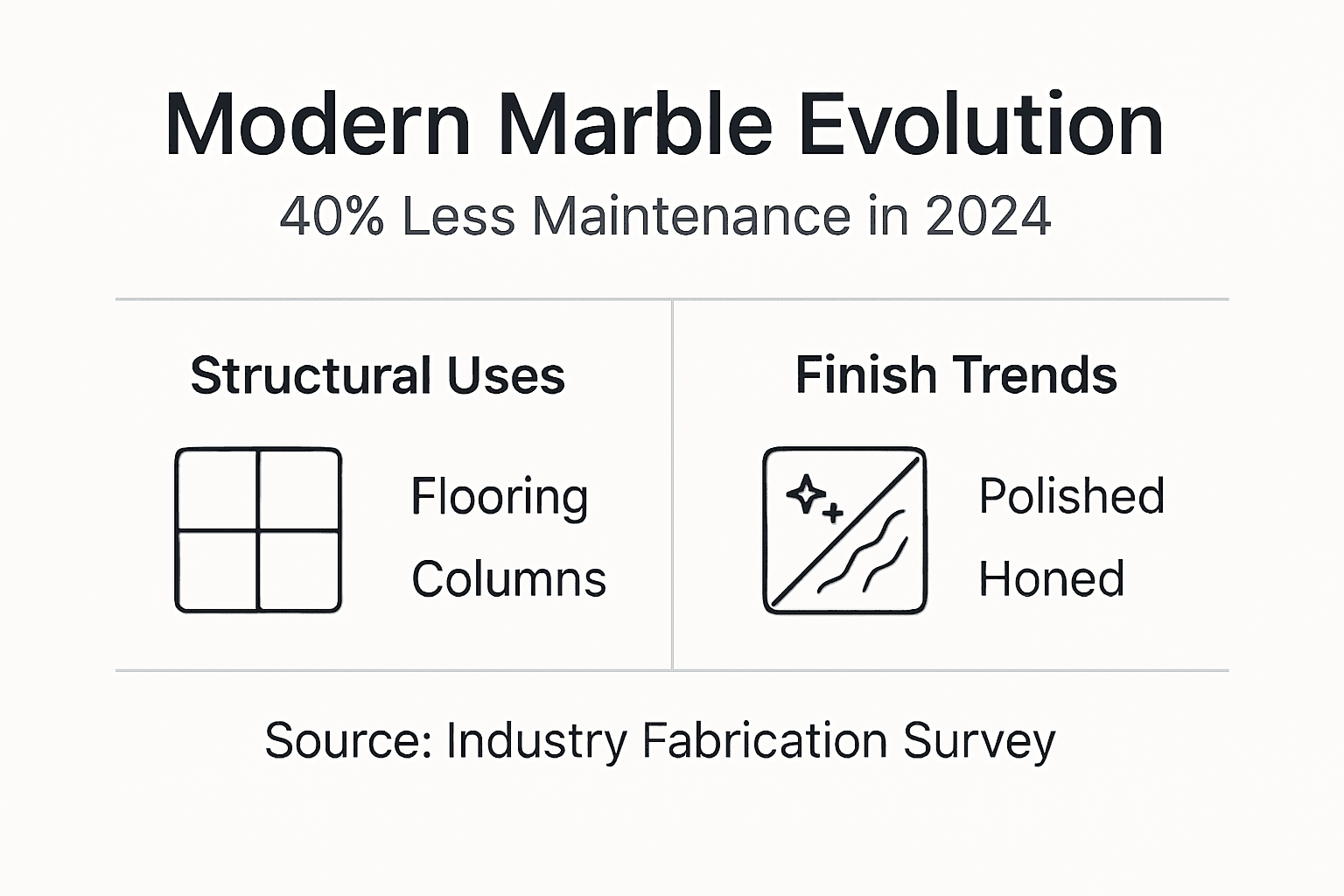
Recent innovations in quarrying and fabrication have removed previous limitations on marble applications. New technologies enable cutting large-format marble slabs with controlled veining and improved dimensional stability, allowing designers to specify installations that would have been impossible a decade ago. These advances directly support the structural and spatial roles marble now fulfills in high-end architecture.
Diamond wire cutting produces slabs up to 3.2 meters tall without compromising structural integrity. Computer-guided cutting matches veining patterns across multiple slabs, creating visual continuity across entire walls. Resin stabilization treatments prevent micro-cracking in thin sections, expanding design possibilities. Together, these technologies transform marble from a fragile surface material into a reliable structural component.
Modern marble fabrication technologies address specific challenges:
Pro Tip: Request full slab photography before fabrication begins to preview veining patterns and approve book-matching arrangements. This prevents costly surprises during installation and ensures your design vision translates perfectly.
These technological advances in marble fabrication enable architects to treat marble as a design-defining material rather than an applied finish. The result is more cohesive spatial experiences where material authenticity drives aesthetic impact.
Environmental responsibility increasingly shapes luxury material choices, and marble responds through reclamation and responsible sourcing. Reclaimed marble reduces quarrying waste and brings a unique historical patina to luxury interiors, offering both ecological benefits and distinctive aesthetic qualities unavailable in newly quarried stone. This approach satisfies environmentally conscious clients without compromising the prestige marble conveys.
Reclaimed marble sources include demolished historic buildings, surplus inventory from past projects, and off-cuts from large installations. Each piece carries unique weathering patterns and color variations reflecting decades or centuries of natural aging. These characteristics provide authenticity that new marble cannot replicate, making reclaimed materials especially valuable for projects emphasizing heritage and provenance.
The longevity inherent in marble supports sustainable marble in luxury interiors through multiple pathways:
Biophilic design principles further enhance marble’s sustainable appeal. Natural stone materials create psychological connections to the outdoors that support occupant wellbeing. The tactile coolness and visual depth of marble fulfill fundamental human preferences for natural materials, contributing to spaces that feel inherently comfortable and grounding. This connection between luxury and sustainability in marble represents a growing priority for discerning clients.
Responsible quarrying practices also improve marble’s environmental profile. Modern quarries implement water recycling systems, dust suppression technologies, and habitat restoration programs that minimize ecological disruption. Certifications like Natural Stone Council verification help designers specify marble from operations meeting rigorous environmental and labor standards.
Surface finish dramatically affects both marble’s visual presence and practical performance in luxury interiors. Understanding finish options allows you to match material characteristics precisely to spatial requirements and aesthetic goals. Honed and matte finishes now dominate 60-70% of luxury marble applications due to their understated elegance and lower maintenance, reflecting a broader shift toward tactile sophistication over visual flash.
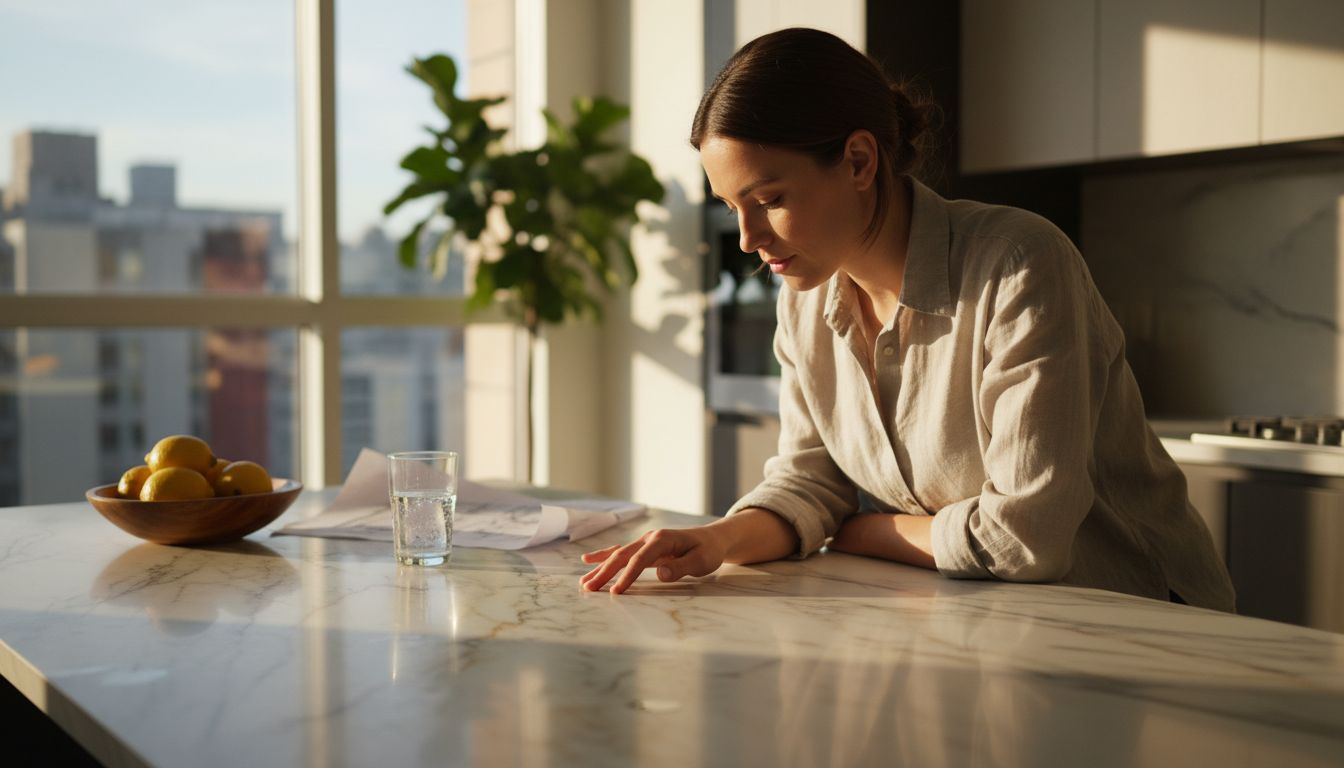
| Finish Type | Visual Effect | Maintenance | Best Applications |
|---|---|---|---|
| Polished | High gloss, vivid veining | Weekly sealing, shows etching | Feature walls, low-touch areas |
| Honed | Soft matte, subtle veining | Monthly maintenance, hides wear | Countertops, floors, high-traffic zones |
| Matte | Textured surface, natural look | Minimal upkeep, stain-resistant | Walls, furniture, minimalist spaces |
Polished finishes maximize light reflection and color intensity, making veining patterns highly visible. However, this reflectivity shows every fingerprint and water spot, requiring consistent maintenance. Acidic substances etch polished surfaces quickly, creating dull spots that need professional restoration. These characteristics limit polished marble to display applications where touch occurs rarely.
Honed finishes offer middle ground between visual drama and practical durability. The satin-smooth surface feels luxurious while hiding minor scratches and etching far better than polished alternatives. Veining remains visible but appears softer and more integrated into the stone’s overall character. This finish suits marble finishes in luxury design where daily use demands resilience without sacrificing refinement.
Matte finishes emphasize marble’s geological origins through visible texture and natural patterning. The rough surface scatters light rather than reflecting it, creating depth and visual warmth. This finish aligns with current quiet luxury trends favoring materials that reveal their authentic nature rather than artificial perfection. Matte marble invites touch, engaging multiple senses simultaneously.
Key considerations when selecting finishes:
Pro Tip: Sample finishes under your actual lighting conditions before finalizing specifications. Marble appearance changes dramatically between natural daylight, warm LED, and cool fluorescent sources. Testing prevents expensive surprises.
Specific marble varieties dominate contemporary luxury projects due to consistent aesthetic qualities and reliable performance characteristics. Italian Statuario, Calacatta Gold, and Carrara marbles dominate luxury architecture for their consistent beauty and timeless appeal, each offering distinct visual signatures that suit different design intentions and spatial scales.
Italian Statuario presents dramatic contrast between pure white backgrounds and bold grey or gold veining. This high-impact appearance makes Statuario ideal for statement installations where marble becomes the room’s focal point. The distinctive veining creates natural artwork within the stone, reducing need for additional decoration. Statuario suits feature walls, bathroom surrounds, and sculptural furniture pieces where maximum visual drama serves design goals.
Calacatta Gold provides warmer character through cream backgrounds and golden veining. This variety creates inviting atmospheres while maintaining luxury positioning. The softer contrast compared to Statuario allows Calacatta to integrate more easily with adjacent materials and finishes. Designers favor this marble for spaces requiring elegance without overwhelming visual intensity.
Carrara offers versatility through subtle grey veining on white to blue-grey backgrounds. Its more understated patterning suits larger applications where pattern repetition must remain visually comfortable. Carrara’s broader availability and lower cost compared to Statuario and Calacatta make it practical for extensive installations. This popular luxury marble type works well for flooring, wall cladding, and integrated architectural elements.
Each variety serves specific design strategies:
Color and veining intensity should scale appropriately to application size. Bold patterns in small bathrooms create visual chaos, while subtle patterns in expansive lobbies may appear washed out. Matching marble character to spatial dimensions ensures optimal aesthetic results.
Persistent myths about marble limitations discourage designers from specifying this material in applications where it would excel. Modern technology and proper installation practices address traditional concerns, expanding marble’s viable uses significantly. Modern sealants reduce marble maintenance needs by over 40%, enabling its use in high-traffic and functional areas that designers previously considered impractical.
The perception that marble requires excessive maintenance stems from outdated sealing products and improper care protocols. Contemporary penetrating sealers create molecular barriers lasting 12-24 months under normal use. These products prevent staining without altering surface appearance or feel. Combined with appropriate finish selection, sealed marble needs only routine cleaning with pH-neutral products. Daily maintenance becomes no more demanding than quality wood or stone alternatives.
Another misconception limits marble to decorative applications, ignoring its structural capabilities. Modern fabrication produces dimensionally stable slabs that function reliably as load-bearing elements. Properly engineered marble columns, beams, and flooring systems meet building codes for commercial and residential use. The material’s compression strength exceeds many construction standards, making structural concerns a matter of proper engineering rather than material limitation.
The belief that high polish defines luxury marble contradicts current design trends. Honed and matte finishes deliver sophisticated aesthetics while offering practical advantages for everyday use. These finishes hide wear patterns, require less frequent maintenance, and provide better slip resistance. Equating luxury exclusively with glossy surfaces overlooks the marble maintenance myths that modern design has thoroughly debunked.
Corrected understandings include:
Pro Tip: Specify marble for actual project conditions rather than theoretical limitations. A well-sealed honed marble island withstands typical kitchen use far better than many assume. Test your specific application with material samples under realistic conditions.
Successful marble integration requires methodical planning that balances aesthetic ambitions with functional requirements and maintenance realities. Strategic use of marble as feature walls, furniture, and finishes balances aesthetic impact with functional requirements in luxury interiors, creating cohesive designs where material choices reinforce overall spatial concepts. Following structured selection processes ensures marble enhances rather than complicates your project.
Define spatial and aesthetic goals before selecting marble types. Determine whether marble should provide dramatic focal points or subtle elegance throughout. Consider how marble interacts with natural light at different times of day. Establish maintenance capacity honestly based on actual lifestyle or operational patterns.
Select marble variety according to scale, pattern intensity, and color coordination needs. Match veining boldness to application size and viewing distances. Coordinate marble undertones with adjacent materials and finishes. Source from reputable suppliers offering full slab selection and consistent quality.
Choose finish based on tactile preferences, maintenance tolerance, and traffic expectations. Specify honed or matte for areas receiving regular contact. Reserve polished finishes for vertical surfaces beyond normal reach. Test finish samples under actual lighting conditions before committing.
Incorporate reclaimed marble where unique character supports design narratives. Source salvaged materials for projects emphasizing sustainability or historical continuity. Accept natural variations as aesthetic features rather than defects. Verify structural integrity through professional inspection before installation.
Integrate marble as marble design applications across multiple scales for cohesive results. Use marble for feature walls anchoring spatial composition. Specify marble furniture pieces providing sculptural focal points. Apply marble finishes to high-touch surfaces where tactile quality matters.
Pro Tip: Develop comprehensive material boards showing marble samples alongside all adjacent finishes, fabrics, and fixtures. This reveals potential conflicts before installation when changes cost minimally. Photograph boards under multiple lighting conditions to confirm compatibility.
Successful implementation also requires coordinating with experienced fabricators and installers. Marble’s weight and fragility during installation demand specialized handling and support systems. Early contractor involvement prevents design conflicts with structural or mechanical systems. Detailed shop drawings confirm that design intent translates accurately to fabrication specifications.
Applying these insights becomes effortless when you access curated marble products designed specifically for modern luxury interiors. Our collection translates architectural marble trends into accessible decor pieces that elevate any space. From sculptural lamps to statement furniture, each item showcases marble’s natural beauty through contemporary design.
Discover how types of marble decor for upscale interiors bring architectural sophistication to residential and commercial projects. Explore natural stone decor for luxury interiors that combines craftsmanship with timeless materials. Review our luxury home decor essentials guide for comprehensive design strategies. Each piece reflects the quality and refinement that defines modern luxury architecture.
Yes, modern fabrication technologies produce dimensionally stable marble suitable for structural applications including columns, beams, and load-bearing walls. Proper engineering ensures these elements meet building codes while providing aesthetic impact. The key is working with experienced fabricators who understand structural requirements and marble’s material properties.
Modern penetrating sealants reduce maintenance requirements by over 40% compared to traditional products, making marble practical for high-traffic areas. Honed and matte finishes further decrease upkeep by hiding minor wear and etching. With appropriate sealing and pH-neutral cleaning products, marble maintenance becomes comparable to other premium materials.
Reclaimed marble eliminates new quarrying demands while diverting demolition waste from landfills, significantly reducing environmental impact. The material’s inherent longevity means reclaimed pieces often retain full structural integrity and aesthetic appeal. Historical patina and unique weathering patterns provide character unavailable in newly quarried stone, combining sustainability with distinctive design qualities.
Honed or matte finishes with modern penetrating sealants perform best in high-traffic applications. These finishes hide minor scratches and etching while providing better slip resistance than polished surfaces. The tactile softness appeals to touch-focused luxury aesthetics while demanding significantly less maintenance than glossy alternatives.


