Your Cart (0)
Your cart is empty
Free express shipping

Drawer menu
Free express shipping

TL;DR:
- High-quality travertine requires careful sourcing of grade, finish, and batch consistency.
- Premium grade and specific finishes are essential for achieving luxury interior aesthetics.
- Proper supplier verification, sample testing, and thoughtful integration ensure successful travertine projects.
Sourcing genuine, high-quality travertine decor for an upscale interior is harder than it looks. The market is crowded with pieces that photograph beautifully online but arrive looking flat, inconsistent, or simply wrong for the space. If you’ve ever received a shipment that didn’t match the sample, or installed a finish that clashed with the room’s mood, you already know this frustration. This guide covers everything you need to get it right: travertine grading, finish types, a practical sourcing checklist, a step-by-step purchasing process, and expert styling advice to help you build interiors that feel effortlessly refined.
| Point | Details |
|---|---|
| Know your grades | Premium travertine ensures the highest quality for luxury interiors. |
| Choose finishes wisely | Select finishes and filling based on both function and aesthetic for lasting impact. |
| Vet suppliers carefully | Always request samples and verify quarry authenticity before purchasing. |
| Design for cohesion | Pair travertine with warm woods or metals and use enough material for a cohesive look. |
The moment you start shopping for travertine, you encounter a confusing spectrum of quality and price. Without a clear framework, it’s easy to overpay for mediocre material or, worse, buy something that looks out of place in a luxury setting.
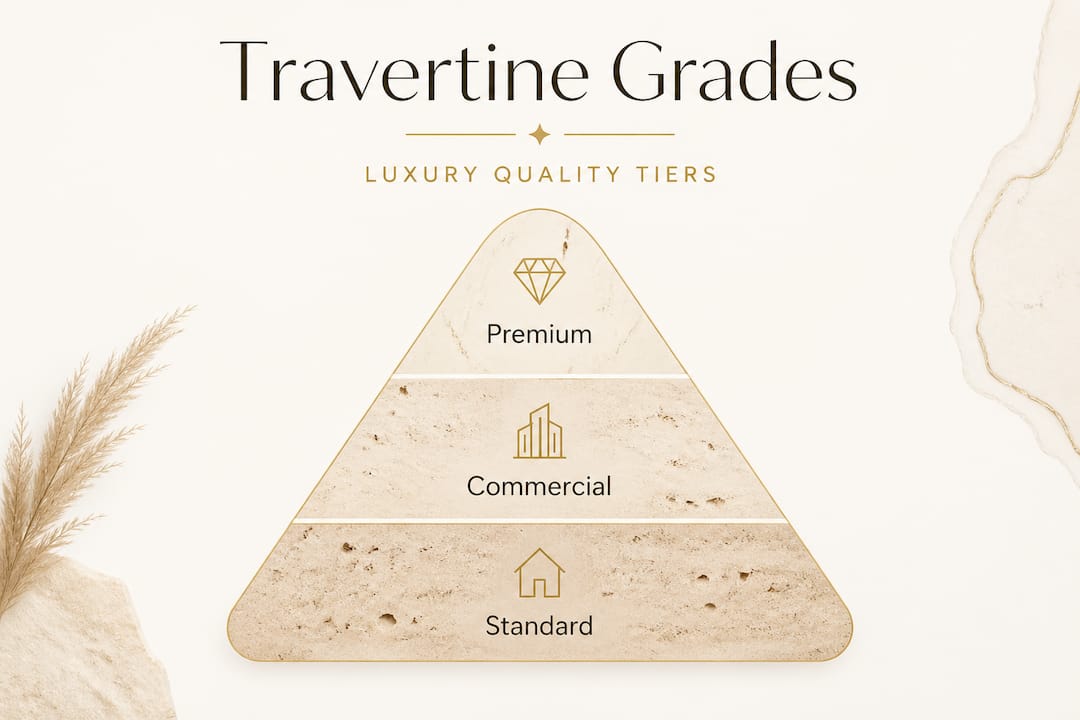
The travertine grading system organizes stone into three levels: Premium/First (uniform color, minimal pits), Commercial (moderate variation), and Standard (higher variation, more economical). For luxury residential and commercial interiors, Premium or First grade is almost always the right call. Commercial grade can work in lower-visibility applications, but Standard grade rarely achieves the visual consistency that high-end spaces demand.
| Grade | Color consistency | Surface pits | Best application |
|---|---|---|---|
| Premium/First | Uniform | Minimal | Feature walls, statement pieces, luxury baths |
| Commercial | Moderate variation | Some pits | Secondary spaces, mid-range hospitality |
| Standard | High variation | Frequent | Budget projects, exterior or utility areas |
The finish you choose changes how travertine looks and performs entirely. Here’s a quick breakdown:
“Polished finishes in wet areas create unnecessary slip hazards. For bathrooms and pool surrounds, always specify brushed or honed over polished travertine, regardless of how stunning the gloss looks in a showroom.” — A reminder every luxury designer eventually learns the hard way.
Pro Tip: Always request a wet sample test before specifying any travertine finish for a bathroom floor. What looks textured and grippy when dry can become dangerously smooth when water is introduced.
Italian travertine, particularly from Tivoli near Rome, carries an undeniable legacy. The Colosseum was built with it. That heritage translates to prestige in high-end residential projects. Turkish travertine, sourced largely from the Denizli region, offers competitive quality at a larger scale and lower price point. Both are genuine options. The mistake most buyers make isn’t choosing the wrong country; it’s ignoring quarry documentation entirely. Always ask for the quarry of origin, not just the country.
Other common sourcing pitfalls include ordering without physical samples, selecting a finish based solely on showroom lighting, and failing to check whether the supplier maintains consistent batch control. Batch inconsistency is one of the most expensive mistakes in large-scale projects. You can read more about elegant travertine uses to see how finish and grade work together in real interior settings.
With the essentials of grading and finishes in mind, here’s how you can prepare for your sourcing journey.
Before you contact a single supplier, you need to answer a few critical questions about where the travertine will live.
Matching your answers to the right grade and finish isn’t guesswork; it’s a logical process. The filled versus unfilled decision breaks down clearly: filled finishes work best in wet or food preparation areas for their smooth, sealed surface, while unfilled finishes suit dry decorative contexts where rustic texture is desirable and higher maintenance is acceptable.
| Setting | Recommended finish | Reason |
|---|---|---|
| Bathroom floor | Filled, honed | Sealed against moisture, non-slip |
| Kitchen backsplash | Filled, polished | Easy to wipe clean |
| Living room accent wall | Unfilled, brushed | Texture adds depth |
| Decorative lamp or table base | Either | Depends on aesthetic goal |
| Outdoor terrace (covered) | Tumbled | Aged look, weather-tolerant |
Interior design professionals report that surface finish is the single most misunderstood variable in stone selection. Projects that begin with the wrong finish choice account for a disproportionate share of costly redesigns and replacements, underscoring why this decision deserves as much attention as budget or supplier selection.
For visual inspiration before finalizing your specifications, browse luxury travertine ideas to see how different finishes and grades perform across real interior contexts.
With your research and checklist ready, you’re now prepared to navigate the step-by-step sourcing process.
Start with specialists, not generalists. Stone-specific showrooms, quarry-direct importers, and curated luxury decor platforms will consistently outperform big-box hardware chains when it comes to grade accuracy and sourcing documentation. Look for suppliers who can provide:
Whether you’re purchasing raw slabs, finished tiles, or decorative objects like lamps and tables, the inspection process follows the same logic. Check for:
The question of origin remains important. Italian travertine carries prestige rooted in its Colosseum-era legacy, while Turkish travertine offers scalability and competitive pricing, provided you verify the quarry rather than simply accepting a country label.
Most sourcing mistakes happen in silence. Ask suppliers directly:
Pro Tip: Request a sample from the actual batch you plan to order, not a showroom display piece. Display samples are often specially selected and may not represent the full batch’s color range or pit frequency.
Once samples arrive, test them under your project’s actual lighting conditions. Compare them against your palette board, adjacent materials, and any existing stone already in the space. Live with the samples for at least 48 hours before committing. Natural light shifts throughout the day, and travertine reads very differently at noon versus dusk.
Negotiate lead times early, especially for large or custom orders. Confirm packaging standards for fragile decorative pieces. Make sure payment terms include a quality inspection clause that allows you to flag issues before full payment clears.
For more practical guidance on working travertine into interior spaces, both indoor travertine tips and inspirational decor ideas offer real project examples worth reviewing before you finalize your direction.
After a successful purchase, it’s time to maximize the beauty of your travertine. Here’s how to style and integrate it like a pro.
Travertine’s warm, creamy tones are generous collaborators. They work naturally with:
The principle for luxury decor pairings holds consistently: pair travertine with warm woods and brass, and use it in sufficient quantity to create real impact rather than treating it as an afterthought accent.
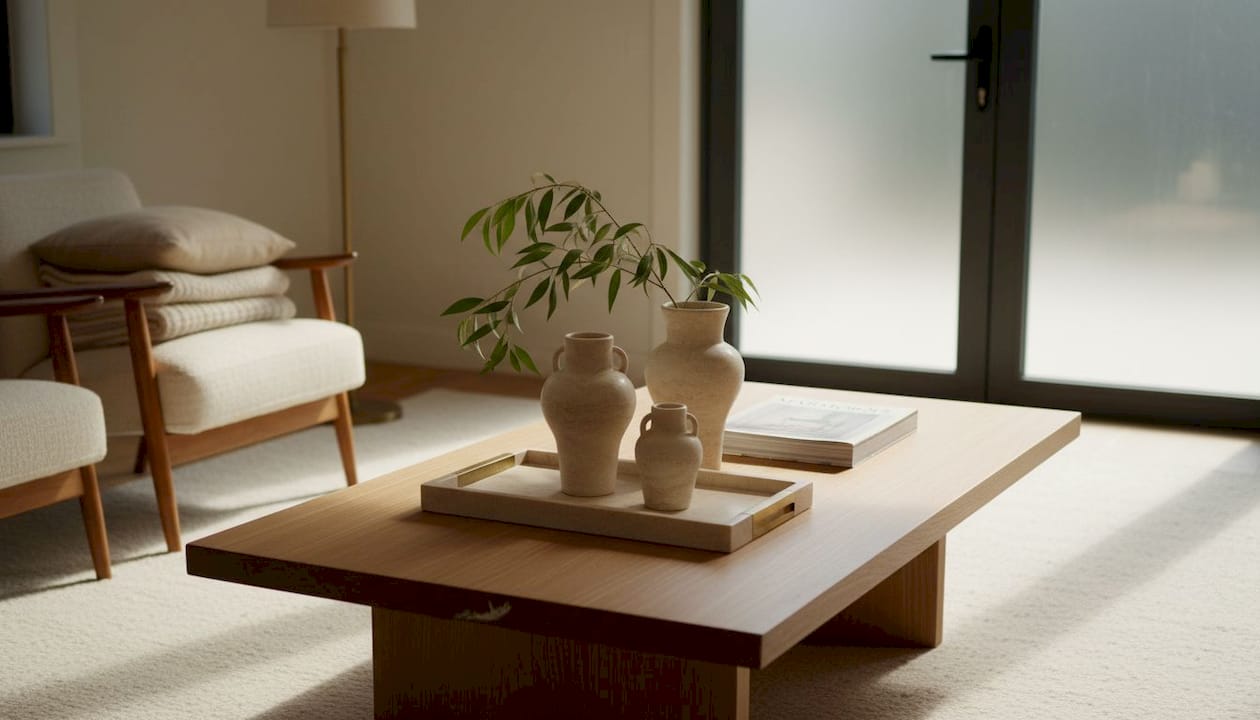
One of the most common styling errors is under-using travertine. A single small object in a large room registers as a missed opportunity. Travertine makes its visual argument through repetition and mass. A travertine lamp alongside a travertine tray and a travertine side table creates a cohesive material story. Spread too thin, the effect disappears.
Statistic spotlight: Interior design studies consistently show that spaces using a dominant material across three or more surfaces or objects read as more intentionally designed and feel more luxurious than spaces where the same material appears only once.
Pro Tip: When mixing travertine pieces from different suppliers or batches, lay them out together in natural light before installing. Slight tone differences that are invisible on-screen become very apparent in person.
Here’s something most sourcing guides won’t say directly: the “Italian versus Turkish” debate is mostly a distraction for experienced designers. Country of origin matters, but it’s one variable among many, and it’s often the least actionable one at the point of purchase.
What actually determines whether a travertine project succeeds is supplier credibility, batch consistency, and the designer’s understanding of how the material behaves in a specific context. We’ve seen Premium-grade Turkish travertine outperform first-grade Italian material in projects where the Turkish supplier maintained tighter batch control and more responsive aftercare support. The prestige of origin means nothing when two tiles in your feature wall are visibly different tones.
The other thing most guides overlook is the difference between sourcing travertine as a commodity and sourcing it as a design material. A commodity buyer compares price per square foot. A design material buyer compares how the veining direction, tone warmth, and surface texture serve the specific mood of a room. These are genuinely different decisions, and conflating them is where most sourcing regrets begin.
Our perspective, shaped by years of working with natural stone: the most successful luxury travertine projects we encounter are not the ones with the rarest origin story or the highest price tag. They’re the ones where the designer understood the material deeply, matched it thoughtfully to the space, and sourced from a supplier who cared about the outcome as much as the transaction. That combination of knowledge and relationship is harder to find than Premium-grade stone, and worth far more. You can explore further insights at more luxury travertine perspectives to see how thoughtful integration shapes the result.
Now that you have the knowledge to source with confidence, discover how easy it is to make your vision a reality.
At Marmorique, every piece in our collection is selected with the same rigor this guide describes. We work exclusively with high-grade natural travertine and stone, hand-picked for consistency, finish quality, and design coherence. Whether you’re looking for a statement travertine lamp, a sculptural side table, or a complete bathroom set that anchors your design scheme, we offer curated options that remove the guesswork from sourcing.
Our team also supports bespoke projects, helping designers and homeowners match specific tones, finishes, and piece configurations to their exact vision. If you’re ready to see what genuine luxury travertine decor looks like when it’s sourced correctly, explore the full travertine decor collection and find the pieces that belong in your space.
Filled travertine has its natural pits sealed for a smooth, easy-clean surface, making it ideal for wet or high-traffic areas. Unfilled travertine retains its rustic texture and is best reserved for dry decorative settings where higher maintenance is acceptable.
Italian travertine is famous for its historic legacy and prestige, but Turkish travertine offers comparable quality at larger scales and lower prices, depending entirely on the quarry and the supplier’s batch control practices.
Premium or First grade travertine is the right choice for luxury applications because of its uniform color and minimal surface pits, both of which are essential for high-visibility design settings.
Avoid polished travertine in wet areas entirely. Instead, specify brushed or honed finishes with professional-grade sealing to maintain grip and surface safety without sacrificing visual quality.
Travertine pairs most effectively with warm woods and brass, especially when used across multiple surfaces or objects in sufficient quantity to create a coherent material statement throughout the space.


