Your Cart (0)
Your cart is empty
Free express shipping

Drawer menu
Free express shipping

TL;DR:
- Luxury stone decor projects often fail due to poor substrate preparation, missed sealing schedules, and uninformed habits, not the stone itself. Proper installation, immediate sealing, and consistent protective habits are essential for long-lasting beauty and durability. Educating household members and professionals alike on correct practices is crucial to preserving high-end stone surfaces over time.
Luxury stone decor projects fail far more often than most homeowners realize, and the reasons rarely have anything to do with the stone itself. Poor substrate preparation, missed sealing schedules, and uninformed daily habits quietly destroy surfaces that cost thousands of dollars. Whether you’re installing expert stone decor tips for a private residence or a high-end commercial space, the difference between a surface that ages beautifully and one that looks dull within a year comes down to disciplined, informed practice applied from day one.
| Point | Details |
|---|---|
| Prep is critical | Level substrate and standard installation lay the groundwork for luxury stone that lasts. |
| Seal on schedule | Follow stone-specific sealing intervals to maximize stain and moisture resistance. |
| Prevent etching | Adopt pH-neutral cleaning and avoid acids—sealers alone can’t stop etch marks. |
| Leave restoration to pros | Etched or damaged marble should be professionally restored for best results. |
| Match practices to materials | Marble and travertine require personalized care—one-size-fits-all routines don’t deliver true luxury. |
Now that you know why sound practices matter, let’s begin at the base — the installation itself.
Every luxury stone project starts long before the first tile is set. The substrate, meaning the surface beneath your stone, is the single most critical factor in determining whether your installation holds up beautifully over decades or starts showing cracks and hollow spots within a few years. Marble and travertine are dense, unforgiving materials. Any irregularity beneath them telegraphs directly to the surface.
Natural stone tile installation follows TCNA Handbook method designations and ANSI standards, which specify mortar bed flatness, deflection limits, and minimum mortar coverage thresholds. These are not suggestions. They are validated benchmarks that protect both the aesthetic and structural integrity of your finished surface. For marble specifically, full back-buttering of each tile is standard practice, ensuring no air pockets form beneath the stone.
The differences between stone types matter, too. Travertine, with its natural voids, requires a void-filling step before installation that marble does not. Limestone is softer and demands a different mortar formulation to reduce stress cracking. Choosing stone tiles based on beauty alone, without factoring in setting requirements, is a recipe for expensive corrections later. You can learn more about choosing stone tiles before finalizing your material selections.
Quick substrate prep checklist:
Pro Tip: Before hiring an installer, ask them to name the specific TCNA method they plan to use and how they document substrate flatness. If they can’t answer immediately, keep looking.
Cutting corners on substrate preparation is the most common — and most costly — mistake in luxury stone installation. Once the stone is down and the damage appears, there is no inexpensive fix. The repair will always be more expensive than the prep would have been.
With your base secured, attention turns to protection, especially from invisible threats like moisture and staining.
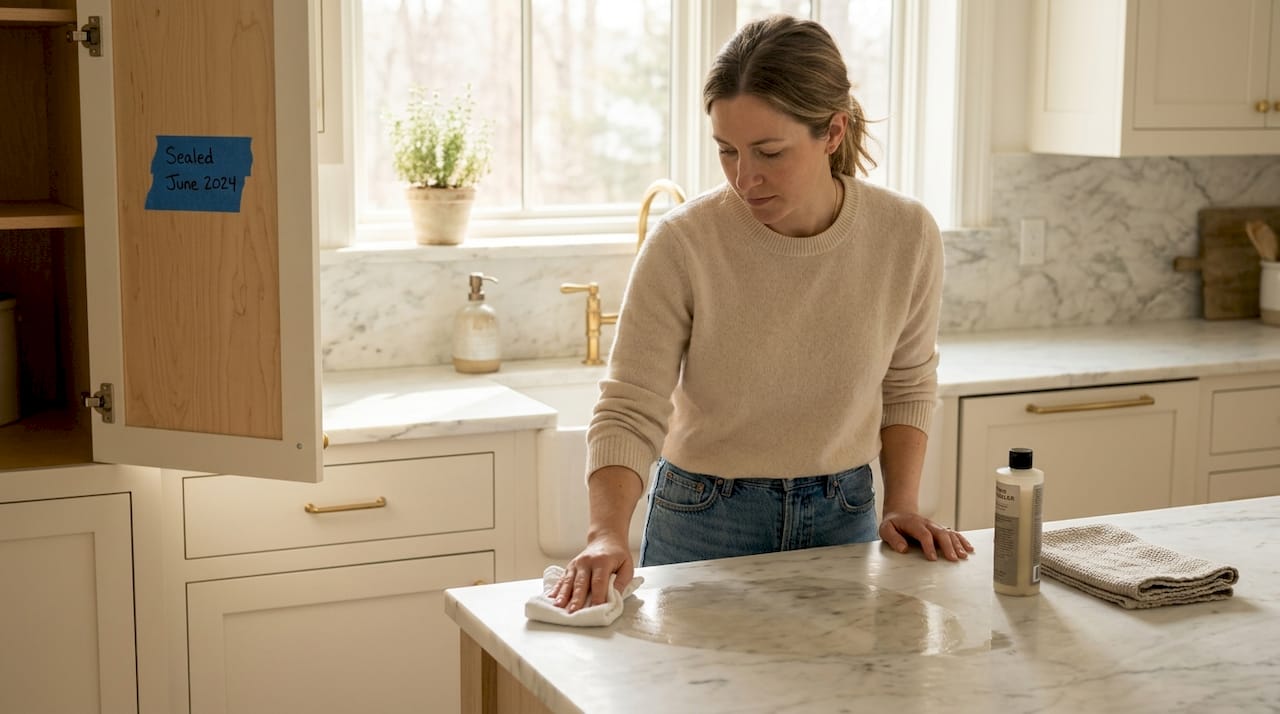
Sealing is one of those practices that sounds simple but gets neglected surprisingly often. The reality is that travertine and marble require periodic resealing, and the frequency depends heavily on where the stone is installed and how much exposure it faces. A marble floor in a low-traffic library needs far less frequent sealing than travertine tile in a master shower. Understanding that difference is essential for planning a realistic maintenance schedule.
Penetrating or impregnating sealers are the gold standard for natural stone. They work by filling the microscopic pores in the stone, creating a barrier against liquids without altering the surface appearance. Topical sealers, which sit on the surface, tend to peel over time and are generally not recommended for high-end installations.
Resealing intervals by stone type and location:
| Stone type | Location | Recommended interval |
|---|---|---|
| Marble | Floors (low traffic) | Every 12 to 24 months |
| Marble | Floors (high traffic) | Every 6 to 12 months |
| Marble | Countertops (kitchen) | Every 6 months |
| Travertine | Floors | Every 12 to 18 months |
| Travertine | Showers and wet areas | Every 6 to 12 months |
| Travertine | Outdoor or severe exposure | Every 6 months or less |
| Limestone | General interior use | Every 12 months |
How to seal correctly:
Pro Tip: Write the sealing date directly on a piece of tape inside a cabinet near the installation. Owners who plan to reseal “sometime next year” almost always forget until damage appears.
One critical clarification: sealing protects against staining, not etching. If a glass of lemon water sits on your marble countertop, a good sealer may buy you a few seconds, but the acid will still etch the surface if left there. Prevention of etching comes from behavior, not products.
Even regular sealing won’t protect from certain risks. It’s crucial to adopt the right daily habits.
Most marble damage seen by restoration professionals is not caused by neglect or heavy wear. It’s caused by ordinary, well-meaning household habits that nobody warned the homeowner about. A squeeze of lemon in a glass set directly on a marble island. A vinegar-based all-purpose spray used to clean the bathroom vanity. These are not dramatic accidents. They are quiet, routine mistakes that compound over time into widespread dull spots and surface degradation.
Acidic substances and cleaners cause irreversible surface etching on marble and many other calcium-based stones. The acid chemically reacts with the calcite in the stone, dissolving the polished surface layer at a microscopic level. A single unaddressed spill can leave a permanent mark that requires professional honing to correct.
Top everyday mistakes that cause etching:
Sealer will not prevent etching. Etching is a chemical reaction with the stone itself. Prevention comes entirely from behavior and product choices, not from how often you seal the surface.
The practical solution is straightforward. Use only pH-neutral cleaners specifically formulated for natural stone. Enforce a “coasters on marble” rule in your household without exception. Wipe spills immediately, particularly anything acidic. Keep a dedicated stone-safe cleaner near every stone surface so the right product is always within reach.
Despite best efforts, even luxury stone can sustain damage. Here’s how you should respond.
Restoration is a specialty process that goes well beyond basic cleaning. Honing and polishing are technical procedures that require diamond-abrasive tooling and professional-grade equipment to execute evenly. When stone professionals talk about restoring marble, they mean mechanically removing a thin layer of the damaged surface to reveal the undamaged stone beneath, then progressively refining the finish back to its original level of polish.
Etching requires controlled honing and finish restoration by a professional. Attempting to fix an etched countertop with DIY polishing compounds often creates uneven surfaces with inconsistent sheen levels that are more noticeable than the original damage.
How to assess and respond to stone damage:
Improper DIY repair attempts on etched marble frequently make the problem worse. Uneven hand-polishing creates light-catching inconsistencies across the surface that are impossible to reverse without professional re-honing of the entire area.
Restoration also has a direct financial argument. Neglected stone surfaces read as aged and worn, which affects how a luxury home is perceived during resale. A professional restoration service can revive even heavily worn marble floors and countertops to near-original condition, making it a genuinely worthwhile investment compared to full replacement.
To tie everything together, let’s compare essentials for the two most-desired luxury stones.
| Practice | Marble | Travertine |
|---|---|---|
| Sealing frequency | Every 6 to 24 months depending on use | Every 6 to 18 months, more often in wet areas |
| Sealing prevents etching | No | No |
| Void filling required | No | Yes, before and sometimes after installation |
| Preferred finish type | High polish or honed | Honed, brushed, or filled/unfilled |
| Etch sensitivity | High (very sensitive to acids) | Moderate to high |
| DIY cleaning safety | pH-neutral only | pH-neutral only |
| Professional restoration | Honing and polishing required | Fill repairs plus honing and polishing |
| Best suited for | Statement surfaces, formal spaces | Warm, textured, organic aesthetics |
Sealing needs and intervals differ significantly between marble and travertine, and choosing the right sealer type for a shower versus a floor versus an outdoor application is not interchangeable.
When to choose each stone:
Both stones reward proper care generously. Either will look extraordinary for decades when installed and maintained correctly.
Here’s an uncomfortable truth about luxury stone installations: most of the problems we see come from well-designed, professionally installed projects. The stone was beautiful, the installer was skilled, the sealer was premium grade. And yet, within two or three years, the surface looks tired.
The missing factor is almost never a product. It’s culture. The household or commercial space doesn’t have a shared understanding of why marble behaves the way it does, so nobody enforces the right behaviors consistently. The cleaning staff uses a multi-surface spray because nobody told them not to. A guest sets a cocktail glass directly on the kitchen island because there were no coasters visible. Small infractions accumulate.
Treating sealer as a stain barrier and etching as a separate behavioral problem is one of the most important mindset shifts anyone caring for marble can make. Many homeowners believe a freshly sealed surface is fully protected. It isn’t. It’s protected against staining. Acid etching is an entirely different mechanism, and no sealer on the market stops it.
The designers and homeowners who maintain genuinely stunning stone interiors long-term are not the ones with the most expensive products. They are the ones who took the time to teach everyone in the space the basics. Our experience working with stone decor collectors and interior designers confirms this consistently: education at the household level outperforms any product upgrade.
Pro Tip: Create a one-page care guide for every stone surface in the home and share it with cleaning staff, family members, and anyone who regularly uses the space. Include which products are safe, which are forbidden, and how to handle spills. Laminate it and put it inside a cabinet near the stone. That single document prevents more damage than most sealers do.
If you want a reference point for designer stone tips that go beyond the basics, the approach should always start with people and habits before products and upgrades.
Knowing how to care for and install natural stone is only meaningful when the stone itself is worth caring for. The products you choose at the start shape every outcome that follows, from installation complexity to long-term maintenance and visual impact.
At Marmorique, we’ve built our collection around that exact standard. Every marble lamp, travertine table, and stone bathroom accessory is selected for material quality, craftsmanship, and design longevity. We also believe that selecting the right piece is just the beginning, which is why our blog and product guidance are built to support you through installation, care, and styling decisions. If you’re ready to invest in stone decor that genuinely rewards the practices outlined in this article, explore our curated collection and find pieces that will only grow more beautiful with proper care.
Yes, both typically require periodic resealing, but timing varies based on location, exposure level, and traffic. Wet areas and high-use surfaces need more frequent attention than decorative or low-traffic installations.
No. Sealing marble does not prevent etching. Sealers create a stain barrier by filling pores, but acid etching is a surface-level chemical reaction that bypasses the sealer entirely. Lifestyle habits and pH-neutral cleaners are the only real defense.
Showers and wet areas require resealing every 6 to 12 months because constant moisture exposure depletes the sealer faster than dry applications. Annual resealing at minimum is a safe baseline for any bathroom marble.
No. Reliable etch removal requires controlled honing by a trained professional using diamond-abrasive tooling. DIY polishing attempts frequently create uneven finishes that are more visible than the original damage.
Only pH-neutral cleaners formulated for natural stone are safe for regular use on marble surfaces. Standard household cleaners, vinegar-based products, and anything with citrus or bleach will damage the surface over time.


