Your Cart (0)
Your cart is empty
Free express shipping

Drawer menu
Free express shipping

TL;DR:
- Travertine develops an authentic, uniform patina over time that enhances luxury interiors.
- Proper maintenance and sealing control the aging process, preserving its natural beauty.
- Embracing imperfections creates more compelling, timeless, and valuable luxury designs.
Perfection is overrated in luxury design. The most captivating interiors rarely feature surfaces that look untouched. Travertine, one of the oldest building stones in human history, develops a patina over time that many designers and homeowners now deliberately seek out. Far from being a flaw, this evolving surface quality signals authenticity, craftsmanship, and a refined sense of history. This guide breaks down exactly what travertine patina is, how it forms, how to tell it apart from actual damage, and how to use it intentionally in your most ambitious design projects.
| Point | Details |
|---|---|
| Patina adds true luxury | Travertine patina offers warmth, character, and authenticity to high-end interiors. |
| Encourage, don’t erase patina | Proper care enhances patina, turning gentle surface mellowing into a valuable design asset. |
| Balance protection and beauty | Routine sealing and smart cleaning preserve stone longevity while allowing patina to evolve naturally. |
| Use patina for unique styling | Applying patinaed travertine in the right spaces can define a signature, lived-in luxury look. |
Patina is the subtle transformation of travertine’s surface that occurs naturally over time. It is not a coating or a treatment. It is the stone itself changing in response to its environment, the people who walk on it, and the objects placed on it. The result is a surface that looks lived in, warm, and genuinely aged rather than manufactured.
At a chemical and physical level, patina forms through a combination of light abrasion, the transfer of natural oils from skin and cleaning products, and gentle exposure to mild acids found in everyday substances. As patina forms via gradual surface softening from traffic, contact, and environmental exposure, honed and matte finishes age more evenly than polished ones. This is a critical point for designers: your finish choice at installation shapes how the stone will look a decade from now.
What makes patina different from ordinary wear is intention and evenness. A well-developed patina spreads uniformly across the surface, deepening the stone’s natural color variation and highlighting its veining. It does not look neglected. It looks curated.
“A patinaed travertine floor tells the story of a home. It carries the memory of every gathering, every season, every choice made in that space. That is something no new tile can replicate.”
The luxury design world has embraced this quality wholeheartedly. Patina enhances luxury decor by creating a lived-in warmth that integrates the stone’s unique veining into a cohesive, organic aesthetic. In an era where “quiet luxury” and organic finishes dominate high-end residential and hospitality projects, travertine patina is not a compromise. It is a competitive advantage.
Here is what makes patina especially valuable in luxury contexts:
For designers working with clients who want interiors that feel genuinely luxurious rather than showroom-perfect, exploring travertine design trends is a strong starting point for understanding how patina fits into contemporary luxury aesthetics.
Understanding how patina actually forms helps you make smarter decisions at every stage of a project, from stone selection to long-term maintenance.
Patina develops from years of gentle wear, especially on honed versus polished finishes. Acids may cause etching but blend into the patina if managed consistently over time. The key word is “gentle.” Aggressive cleaning, harsh chemicals, or abrasive tools do not create patina. They create damage.
The main mechanisms behind natural patina formation are:
| Factor | Effect on patina | Timeline |
|---|---|---|
| Foot traffic | Gradual surface smoothing | 2 to 5 years |
| Oil transfer | Color deepening | 1 to 3 years |
| Mild acid exposure | Micro-etching, texture softening | Months to years |
| Humidity cycles | Pore activity, subtle texture shift | 3 to 7 years |
Honed and matte finishes develop patina more evenly because their surfaces are already microscopically open and receptive. Polished travertine starts with a factory-applied shine that must first be worn through before natural patina can establish itself. This means polished installations may look inconsistent during the early years of aging.
Pro Tip: If you want a faster, more even patina on a new honed travertine floor, use a pH-neutral stone soap for routine cleaning. It conditions the surface gently without stripping the stone’s natural oils or disrupting early patina formation.
For a deeper look at how travertine fits into travertine luxury roles in contemporary projects, understanding the aging profile of your chosen finish is essential before committing to an installation.
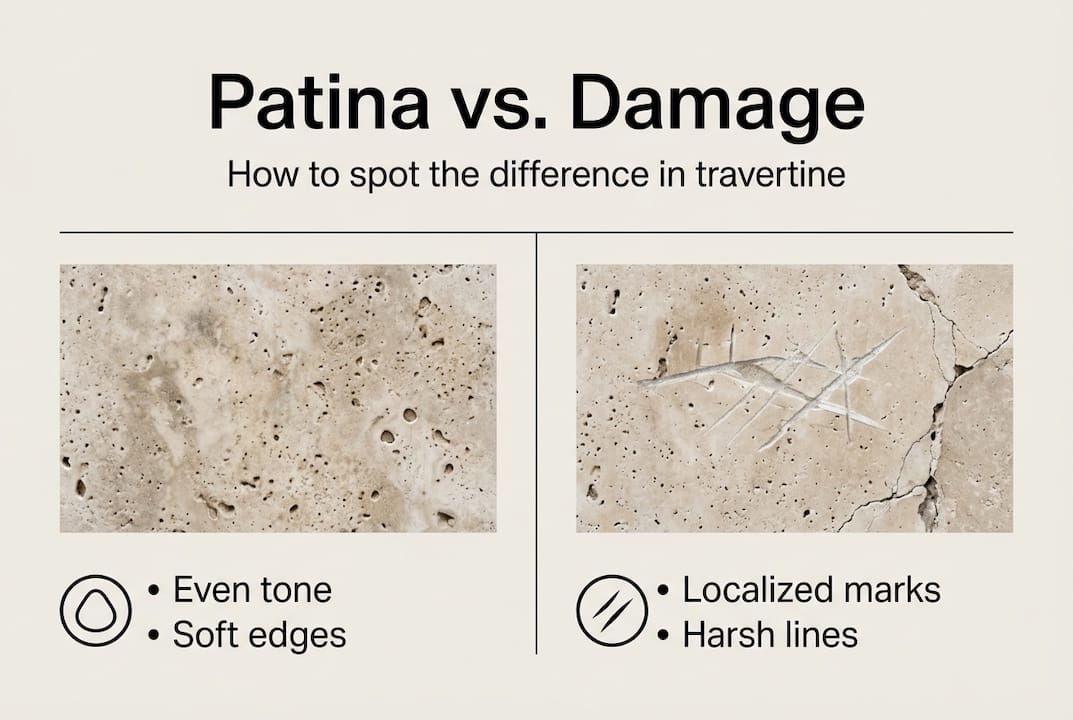
This is where many homeowners and even some designers get confused. Not every mark on travertine is patina. Some marks are damage, and knowing the difference protects your investment.
Patina is gradual, even, and visually pleasing. It develops across the whole surface in a way that enhances rather than detracts. Damage, by contrast, tends to be abrupt, localized, and visually disruptive. A single deep scratch, a large acid stain, or a cracked tile is not patina. It is a problem that needs attention.
| Characteristic | Patina | Damage |
|---|---|---|
| Distribution | Even across surface | Localized, random |
| Visual effect | Enhances warmth and depth | Disrupts visual flow |
| Cause | Gradual, gentle interaction | Abrupt impact or neglect |
| Reversibility | Intentional, can be managed | Often requires professional repair |
Stone quality plays a major role here. Porous travertine with 10 to 70% porosity needs sealing to control unwanted etching and wear. Acids and water degrade unsealed areas rapidly, turning what could be a beautiful patina into scattered damage. Selecting denser, higher-quality travertine from the start gives you more control over how the stone ages.
You should seal every 1 to 2 years to protect against rapid damage and allow beautiful aging. Poor quality stone accelerates problems significantly.
Best practices for protecting your patina while avoiding real damage:
One common misconception is that more cleaning means better stone care. In reality, over-cleaning strips the very surface qualities that allow patina to develop. A light, consistent routine beats aggressive periodic scrubbing every time.
Knowing how patina works is one thing. Knowing how to use it strategically in a real project is where design expertise comes in.
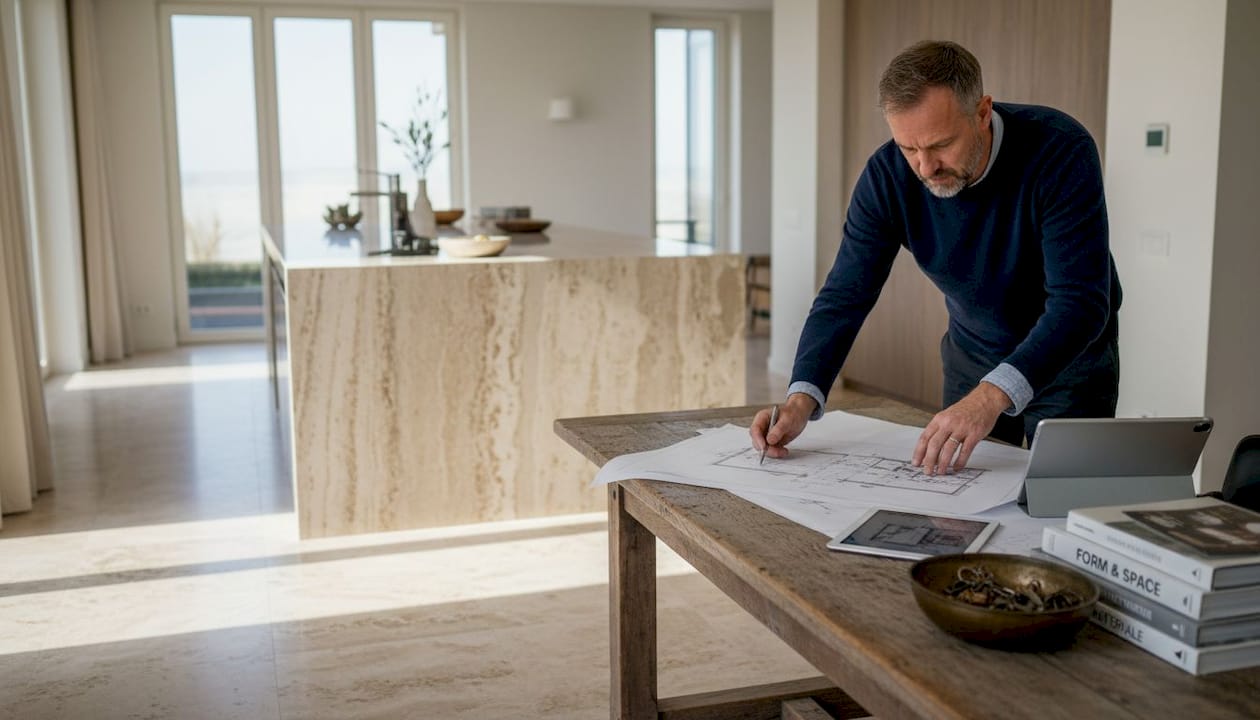
Travertine with a developing or established patina works beautifully in several key applications. Floors are the most obvious choice because foot traffic is the primary driver of natural patina. Large-format tiles in a honed finish on a main living area floor will develop a stunning, even patina within a few years of regular use. Feature walls benefit from travertine’s natural texture and color variation, and patina on a vertical surface develops more slowly, creating a subtle, sophisticated aging effect over time. Countertops and vanity surfaces develop patina through daily contact with hands, water, and personal care products, making them excellent candidates in bathrooms and kitchens where the stone is handled regularly.
As patina complements luxury styles from Mediterranean to minimalist and increases property value, the finish and fill choice at installation matters enormously for the final result.
Patinaed travertine pairs exceptionally well with warm metals like brushed brass and aged bronze, natural linen and wool textiles, dark walnut or oak wood elements, and raw plaster walls. These combinations reinforce the organic, time-honored quality of the stone without competing with it.
Pro Tip: When designing with travertine for a client who wants instant warmth, source reclaimed or pre-aged travertine tiles. They arrive with an established patina and integrate beautifully into new builds without the multi-year wait.
Here is something the luxury design industry rarely says out loud: the obsession with flawless surfaces is actually limiting. Clients who demand perfectly uniform, blemish-free stone are often working against the material’s greatest strength.
We have seen it repeatedly. A stunning travertine floor gets installed, and within months the client is anxious about every tiny mark. They over-seal, over-clean, and essentially fight the stone’s natural evolution. The result is a surface that looks neither perfectly new nor authentically aged. It looks maintained into mediocrity.
The designers who get the most out of travertine are the ones who understand that patina is a benefit in luxury design, with authentic age preferred over synthetic uniformity. They set expectations with their clients from day one. They explain that the stone will change, and that change is the point.
The most memorable luxury interiors we encounter have surfaces that carry time. They feel inhabited. The travertine floor that has developed a soft, warm sheen from years of family life is infinitely more compelling than a showroom-perfect installation. It has become part of the home’s identity. For travertine inspiration that leans into this philosophy, the shift in perspective is simple: stop trying to preserve the stone and start curating how it ages.
If this guide has shifted how you think about travertine patina, the next step is finding pieces that bring that philosophy into your space from day one. At Marmorique, every item in our collection is crafted from natural stone selected for its character, not just its surface perfection.
Our artisan marble soap dish is a perfect example of how natural stone accessories develop their own quiet presence over time. For something with more visual weight, the marble grape ornament brings sculptural richness to any surface. Browse the full collection and discover how the right stone pieces can anchor a patina-forward interior with effortless sophistication.
Travertine patina builds up gradually and can be reduced or lightened with professional refinishing, but its removal eliminates the stone’s unique character. As patina develops through gentle wear, it can be polished or refinished for a refreshed look if needed.
Sealing every 1 to 2 years allows a natural patina to develop while protecting against unwanted staining or etching. Following a consistent sealing schedule is the single most effective way to balance aging and protection.
Yes, a well-developed travertine patina is considered a premium feature in luxury real estate. A beautiful patina boosts property value because it signals quality materials that have aged with grace rather than deteriorated.
Acids can cause abrupt, visible etching that stands out from natural patina. Cleaning spills quickly with pH-neutral products protects the surface, and as acids etch immediately, a fast response is always the best defense.


