Your Cart (0)
Your cart is empty
Free express shipping

Drawer menu
Free express shipping

Many believe marble art is too fragile and impractical for luxury homes, fearing chips, stains, and constant upkeep. The truth reveals a different story. High-grade marble, when properly sealed and maintained, delivers enduring elegance and remarkable durability. This guide unveils marble art’s true nature, exploring its artistic origins, craftsmanship techniques, material properties compared to travertine, finish options, and practical selection tips that empower you to integrate sophisticated marble decor into your refined interiors with confidence.
| Point | Details |
|---|---|
| Artistic value | Marble art blends natural stone beauty with skilled craftsmanship, creating timeless decor pieces that elevate luxury interiors. |
| Material distinctions | Marble features higher density and lower porosity than travertine, affecting durability, maintenance needs, and aesthetic possibilities. |
| Finish impact | Polished, honed, and leathered finishes each offer distinct visual effects and practical benefits suited to different design goals. |
| Debunked myths | Properly sealed marble resists wear effectively, dispelling common misconceptions about fragility and excessive maintenance demands. |
| Selection strategy | Assess stone origin, artisan reputation, finish type, and interior compatibility to choose marble art that enhances your space. |
Marble art encompasses artistic creations crafted from natural marble stone, ranging from intricate sculptures to decorative ornaments and functional home accessories. The medium has captivated civilizations for millennia. Ancient Greeks and Romans carved marble into iconic statuary and architectural marvels, establishing marble as a symbol of luxury, permanence, and cultural sophistication.
Historical applications centered on grand sculptural works and monumental building facades. Over centuries, marble art evolved beyond public monuments into intimate interior settings. Today’s applications span decorative sculptures, tabletop accessories, bathroom fixtures, and ornamental pieces that transform residential spaces.
The enduring appeal stems from marble’s unique geological characteristics:
This evolution positions marble art as both investment and expression, merging natural beauty with human artistry to enhance sophisticated interiors.
Creating premium marble art demands a sophisticated blend of traditional hand-carving and modern precision technologies. Understanding these methods helps you appreciate the artisan skill embedded in each piece and recognize quality indicators when selecting decor.
Traditional hand-carving remains foundational for intricate detailing and unique artistic expression. Master artisans use chisels, hammers, and rasps to shape raw marble blocks into refined forms. This method allows nuanced textures, organic curves, and personalized touches impossible to replicate mechanically. Each chisel mark reflects decades of honed expertise.
Modern technologies complement handcraft:
Finishing techniques define the final aesthetic and tactile experience. Polishing compounds and progressively finer abrasives create mirror-like surfaces. Honing stops at intermediate grit levels for matte appearances. Leathering adds textured depth through specialized brushes and chemical treatments.
Artisan skill determines both beauty and durability. Expert finishers seal microscopic surface pores effectively, enhancing stain resistance. Improper technique leaves vulnerabilities that compromise longevity. For comprehensive guidance on integrating these pieces into your design scheme, explore marble decor tips elevate luxury homes for practical applications.
Pro Tip: Request documentation of finishing methods and sealant types used. Quality artisans transparently share this information, signaling commitment to long-term performance.
Understanding the geological and physical differences between marble and travertine empowers informed material selection for your luxury interior needs. These distinctions directly impact aesthetics, durability, maintenance requirements, and suitability for specific applications.
Marble is a metamorphic rock with lower porosity and higher density compared to travertine, affecting durability and care requirements. Marble forms when limestone undergoes intense heat and pressure deep underground, recrystallizing into interlocking calcite crystals. This metamorphic process creates exceptional density and typically achieves porosity around 0.5%, making marble relatively impermeable to liquids and easier to polish to high gloss.
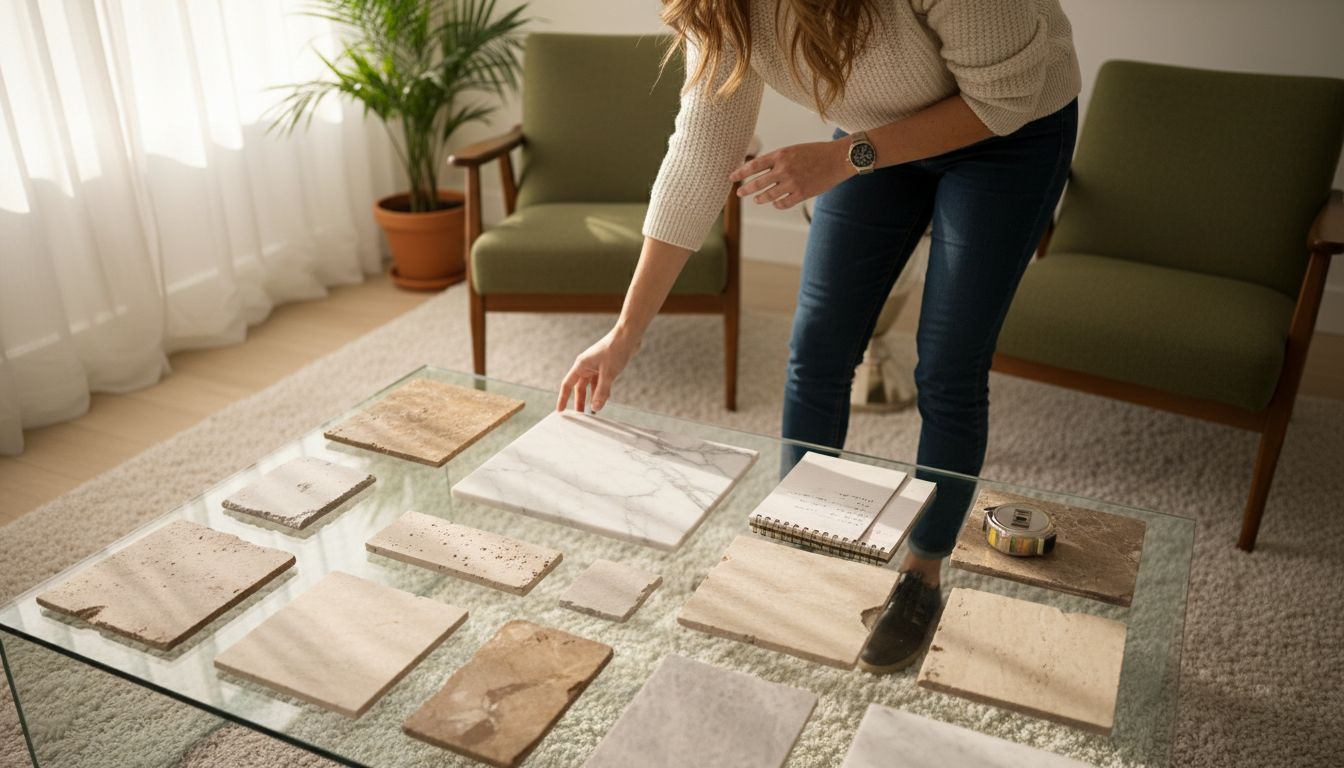
Travertine originates differently as a sedimentary stone deposited by mineral-rich spring waters. Its formation leaves characteristic pores and voids throughout the structure. Travertine exhibits porosity ranging from 10% to 15%, creating a more porous matrix that absorbs liquids more readily. This fundamental difference necessitates distinct maintenance approaches.
| Property | Marble | Travertine |
|---|---|---|
| Rock type | Metamorphic | Sedimentary |
| Typical porosity | 0.4-0.8% | 10-15% |
| Density | 2.6-2.8 g/cm³ | 2.3-2.5 g/cm³ |
| Polish potential | High gloss achievable | Lower gloss ceiling |
| Stain susceptibility | Lower when sealed | Higher, requires vigilant sealing |
| Color range | White, gray, black, green with veining | Beige, tan, brown, earthier tones |
Visual characteristics further distinguish these materials:
These factors shape appropriate interior uses. Marble excels in high-visibility areas where gloss and formality matter, like entryway sculptures or polished tabletops. For alternative applications with distinctive character, consider travertine tiles luxury appeal where textured warmth complements specific design visions. Additional scientific marble vs travertine distinctions provide deeper geological context for material enthusiasts.
Myths surrounding marble art often deter potential buyers from enjoying its timeless beauty. Addressing these misconceptions with evidence-based clarity helps you make confident decisions aligned with realistic expectations.
Myth one suggests marble art is too fragile for functional use. Reality shows properly sealed high-grade marble withstands regular handling and environmental exposure effectively. While marble rates 3 on Mohs hardness scale, making it softer than granite, this does not equate to impracticality. Sealed surfaces resist moisture penetration and everyday wear. Functional pieces like soap dishes, trivets, and decorative bowls perform reliably when users exercise reasonable care.
Another common error treats marble and travertine as interchangeable. Their different porosity levels demand distinct care protocols. Applying travertine maintenance approaches to marble, or vice versa, leads to suboptimal results. Marble requires less frequent sealing due to lower porosity. Travertine needs more vigilant protection against liquid absorption.
Proper maintenance preserves marble art’s elegance:
Finish selection influences maintenance ease. Honed and leathered surfaces mask minor imperfections better than polished finishes, reducing visible wear over time. Polished marble showcases scratches more readily but delivers unmatched luminosity.
Pro Tip: Test sealant effectiveness by placing a few water drops on the surface. If water beads up after 10 minutes, sealing remains effective. If absorbed, reapplication is due.
Regular upkeep is straightforward and preserves your investment value. Understanding these realities transforms marble art from perceived liability into confident luxury choice.
Finish selection dramatically shapes marble art’s visual impact, tactile experience, and maintenance profile. Understanding the three primary finishes empowers you to match aesthetic goals with practical requirements in your luxury interior.
Polished finish represents the most lustrous option. Artisans achieve mirror-like surfaces through progressive abrasive polishing, culminating in fine compounds that close surface pores and maximize light reflection. This finish enhances marble’s natural veining and color depth, creating dramatic focal points. Polished marble suits formal spaces like entryways and living rooms where sophistication and brightness matter. The glossy surface shows fingerprints, water spots, and scratches more readily, requiring attentive maintenance.
Honed finish offers a soft matte appearance with smooth, non-reflective texture. Polishing stops at intermediate grit levels before achieving gloss. This finish reduces glare, making it ideal for areas with strong natural light or where slip resistance matters, such as bathroom floors. Honed surfaces hide minor scratches and wear better than polished alternatives. The subdued elegance complements contemporary and minimalist design themes.
Leathered finish introduces textured depth through specialized brushing and chemical treatments that open the stone’s surface slightly. The result combines subtle sheen with tactile richness. This finish excels at concealing fingerprints, water spots, and light scratches while maintaining visual interest. Leathered marble suits high-touch applications like countertops and decorative bowls where functionality meets aesthetic appeal.
| Finish Type | Light reflection | Texture feel | Maintenance level | Best applications |
|---|---|---|---|---|
| Polished | High gloss, mirror-like | Smooth, cool | Higher, shows marks | Sculptures, formal tables, statement pieces |
| Honed | Matte, minimal glare | Smooth, soft | Moderate, forgiving | Bathroom fixtures, flooring, understated decor |
| Leathered | Subtle sheen | Textured, warm | Lower, masks imperfections | Counters, functional accessories, tactile art |
Finish choice affects room ambience profoundly:
Matching finish style to your interior lighting conditions and design theme elevates cohesive impact. Rooms with abundant natural light benefit from honed or leathered finishes to prevent overwhelming glare. Dimmer spaces gain vitality from polished surfaces that reflect artificial lighting effectively.
Applying your accumulated knowledge to the selection process ensures you acquire marble art pieces that deliver lasting beauty, functional performance, and seamless integration with your refined aesthetic vision.
Start by researching stone origin and geological quality. Premium marble sources like Carrara, Calacatta, and Statuario from Italy offer proven consistency and desirability. Greek Thassos marble provides exceptional whiteness. Each quarry region imparts distinct characteristics. Verify provenance through seller documentation to ensure authenticity and avoid composite imitations marketed as natural stone.
Assess artisan reputation through these steps:
Choose finishes and styles that complement your interior lighting and ambiance goals. Evaluate existing color palettes, furniture styles, and architectural features. Marble art should enhance rather than compete with surrounding elements. Consider:
Consider functional use and maintenance commitments realistically. High-touch applications like bathroom accessories require durable finishes and regular sealing. Display sculptures face fewer demands. Match marble art functionality to your lifestyle habits and willingness to perform routine care.
Evaluate how the piece integrates with existing decor to enhance harmony. Cohesive interiors balance repetition and variety. If you already feature stone elements, additional marble art reinforces material themes. For diverse material palettes, ensure marble’s formality level aligns with overall design intent. Comprehensive strategies for achieving this balance appear in marble decor tips elevate luxury homes, offering actionable integration approaches.
Pro Tip: Request high-resolution images showing veining patterns and color variations before purchasing. Natural stone variability means your piece may differ from catalog photos. Confirming specific slab appearance prevents surprises.
Examining actual applications demonstrates marble art’s transformational impact on luxury interiors, providing concrete evidence of aesthetic enhancement, functional performance, and investment value.
A Pacific Northwest estate integrated bespoke marble sculptures throughout public spaces, including a hand-carved entryway pedestal and leathered marble side tables in the living room. The homeowner reported property appraisal increases exceeding 10% attributed partly to these distinctive stone elements. Appraisers noted the custom artisan work elevated perceived luxury and uniqueness compared to standard furnishings.
Bathroom applications showcase marble art’s functional versatility. A Manhattan penthouse featured polished Calacatta marble vanity tops, honed soap dishes, and decorative storage containers. The coordinated marble suite created spa-like elegance while withstanding daily moisture exposure. After three years, proper sealing and pH-neutral cleaning maintained original luster with minimal maintenance effort.
Hallway and foyer installations demonstrate dramatic impact:
Clients consistently report enhanced satisfaction stemming from marble art’s dual nature. The material delivers both immediate visual impact and long-term durability that justifies premium investment. Unlike trend-driven decor requiring frequent replacement, quality marble art remains timelessly elegant across shifting design movements.
Diverse applications prove marble art’s versatility within cohesive design themes. Whether your aesthetic leans traditional, contemporary, or transitional, appropriate marble selections enhance rather than constrain creative vision. The key lies in thoughtful finish and style matching to existing elements, ensuring each piece contributes to unified sophistication.
Transforming knowledge into action begins with exploring curated collections that exemplify the craftsmanship and natural beauty discussed throughout this guide. Marmorique specializes in artisan-crafted marble decor that marries expert technique with premium stone quality.
Discover unique pieces like the artisan marble grape cluster ornament, a sculptural accent showcasing hand-carved detail and natural stone character. For functional elegance, the artisan marble soap dish solid stone luxury combines practical utility with refined aesthetics suited to upscale bathrooms.
Each selection reflects commitment to timeless design and geological authenticity that enhances both aesthetic appeal and investment value. Visit Marmorique to explore the full range of exclusive marble art offerings designed for discerning homeowners and designers seeking to elevate their interiors with confidence and sophistication.
Marble is denser with lower porosity, allowing higher polish and brighter finishes ideal for formal elegance. Travertine features higher porosity and earthier tones, creating warmer, more textured aesthetics. Designers select based on desired finish quality, durability needs, and maintenance willingness aligned with project goals.
High-grade sealed marble resists wear effectively, making it suitable for functional decor like tabletops, bathroom accessories, and decorative bowls. Regular maintenance involves pH-neutral cleaning and periodic resealing every 6 to 12 months. With proper care, marble art maintains beauty and integrity for decades.
Polished finish maximizes gloss and brightness, enhancing light reflection and formal sophistication. Honed finish offers matte softness that reduces glare and suits contemporary minimalism. Leathered finish provides tactile texture with subtle sheen, concealing fingerprints and water spots while adding organic warmth. Finish choice shapes room mood, light interaction, and practical usability.
Request detailed provenance information including quarry origin and artisan background before purchase. Examine craftsmanship indicators like finish consistency, veining continuity, and hand-carved detail quality. Avoid mass-produced imitations lacking artisan signatures or documentation. Reputable sellers provide transparency regarding production methods, sealant types, and stone sourcing to verify authenticity and craftsmanship standards.


