Your Cart (0)
Your cart is empty
Free express shipping

Drawer menu
Free express shipping

TL;DR:
- Choosing the right marble finish dramatically influences a space’s aesthetic and functionality, from dramatic gloss to tactile warmth.
- Selecting a finish depends on factors such as foot traffic, aesthetic goals, maintenance capabilities, slip resistance, and color effects.
- Bold, contrasting finishes often create more memorable luxury spaces than safe, uniform choices, emphasizing holistic design integration.
Choosing the right marble is only half the challenge. The finish you select determines whether a surface reads as coldly grand or warmly inviting, whether veining pops dramatically or settles into quiet sophistication, and whether a space whispers restrained elegance or commands instant attention. For interior designers working on high-end residential or commercial projects, marble finish selection is one of the highest-leverage decisions you’ll make. Get it right, and every other design choice falls into place around it.
| Point | Details |
|---|---|
| Finishes shape the look | Your choice of marble finish makes a dramatic difference in both the style and feeling of luxury spaces. |
| Honed vs. polished | Honed marble is best for busy or wet areas, while polished marble delivers unmatched gloss and drama in formal settings. |
| Texture adds character | Textured finishes like brushed or tumbled bring warmth, slip resistance, and visual interest. |
| Match finish to function | Different locations and uses call for different finishes, so always align with project demands and client preferences. |
| Bold choices stand out | Mixing or choosing daring finishes can elevate your project above the ordinary. |
The finish you specify shapes every other experience in the room. Before you commit to anything, you need to evaluate these core factors:
Pro Tip: Always test your shortlisted marble samples under the actual project lighting conditions before finalizing a finish. A honed white marble looks entirely different under warm halogen versus cool LED, and under natural daylight the same stone can shift dramatically. When choosing marble for bathrooms, this lighting consideration is especially critical because artificial light tends to be the dominant source.
Let’s start with one of the most recognized and sought-after marble finishes: polished. A polished surface is ground progressively finer until it produces a brilliant, mirror-like sheen that reflects light and draws the eye across the room. This finish is the reason marble has been synonymous with grandeur for centuries.
As documented in expert bathroom marble selection, “polished marble is commonly chosen for its mirror-like finish and ability to reflect light, maximizing brightness in upscale interiors.” That reflective quality makes polished marble a natural choice for spaces where you want to amplify light, such as grand entryways, hotel lobbies, statement countertops, and formal living spaces.
Key characteristics of polished marble include:
For luxury residential projects, polished marble on a kitchen island or bathroom vanity creates instant visual impact. However, be transparent with clients about the upkeep required. This finish rewards those who are committed to regular, careful maintenance and professional periodic re-polishing.
Beyond shine, another top-tier finish is honed marble, and here’s why designers consistently reach for it on projects where function must match beauty. Honed marble is achieved by stopping the grinding process before full gloss develops, leaving the surface smooth and satin-like without any reflective sheen. The result is a velvety, understated finish that feels genuinely luxurious without trying too hard.
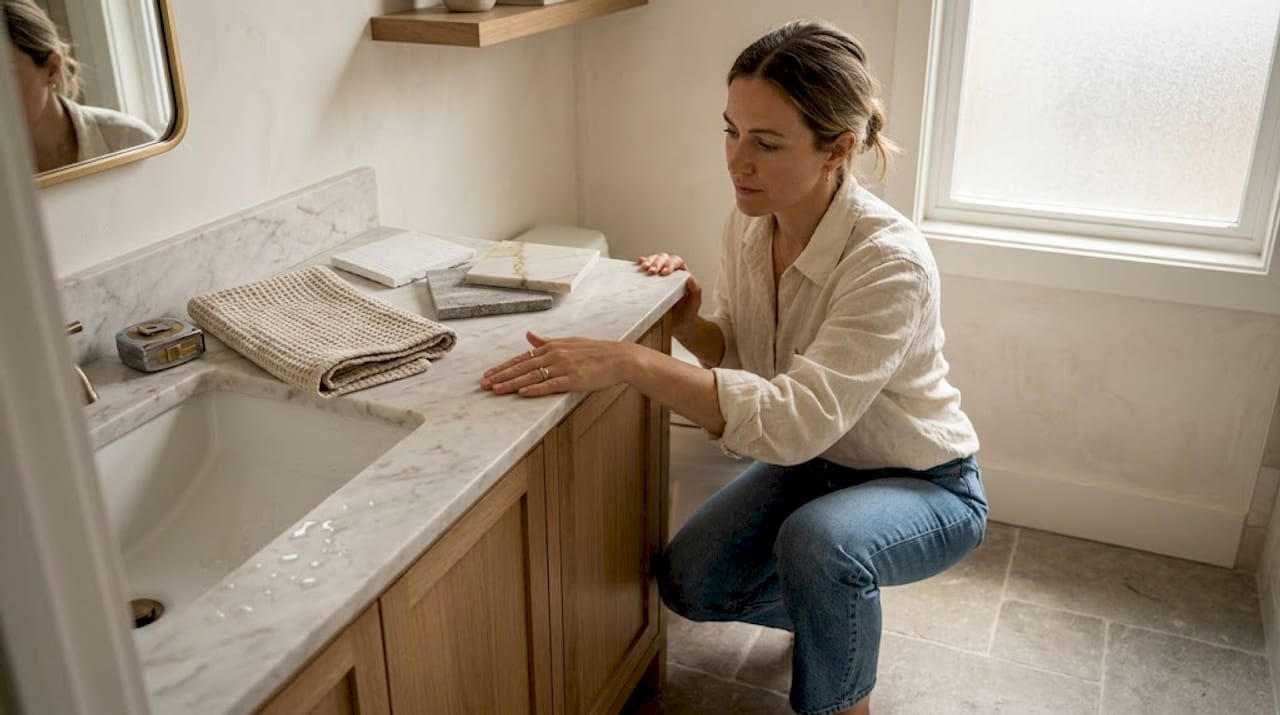
According to marble finishes for bathrooms, “honed marble offers a smooth finish without gloss, making it less slippery and more forgiving of scratches.” This dual benefit, practicality without sacrificing refinement, is why honed marble is one of the most versatile options available to designers today.
Here’s what makes honed marble a designer favorite:
Pro Tip: Pair honed marble with minimalist interiors that feature warm wood tones or soft textiles. The combination creates a sensory contrast that clients instantly describe as serene and inviting. Honing slightly opens the stone’s pores, so applying a quality penetrating sealer at installation and refreshing it annually is essential for longevity, particularly in kitchens and bathrooms.
Smooth is stunning, but textured takes marble to new heights in select luxury projects. When your design vision calls for warmth, age, and tactile richness, the textured finish family delivers results that polished or honed surfaces simply cannot replicate.
As noted in marble selection for unique spaces, “textured finishes like brushed, tumbled, and antiqued bring a naturally aged, slip-resistant surface ideal for statement spaces and terraces.” Each finish within this family has its own distinct personality:
“Texture in marble finishes is not about roughness. It’s about depth. A brushed or antiqued surface invites touch in a way polished marble never will. In luxury hospitality design, that tactile invitation becomes part of the guest experience.”
These textured finishes are especially powerful in outdoor lounges, rooftop entertaining spaces, spa interiors, and boutique retail environments where differentiation from standard luxury finishes is the goal. The functional slip resistance they offer also opens up design possibilities in spaces where polished marble would be impractical.
Now, see all the top marble finish options compared directly for your convenience.
| Finish | Visual depth | Slip resistance | Scratch visibility | Ideal applications | Maintenance level |
|---|---|---|---|---|---|
| Polished | Very high | Low | High | Lobbies, countertops, feature walls | High |
| Honed | Medium | Medium | Low | Bathrooms, kitchens, high-traffic floors | Medium |
| Brushed | Medium-high | Medium-high | Very low | Outdoor terraces, casual luxury spaces | Low-medium |
| Tumbled | High (aged texture) | High | Very low | Boutique interiors, rustic luxury | Low |
| Antiqued | Very high | High | Very low | Hospitality, statement floors, heritage designs | Low-medium |
This matrix makes it immediately clear that no single finish is universally superior. The right choice depends entirely on where, how, and by whom the space will be used. A finish that scores perfectly for a five-star hotel terrace may be entirely wrong for a private penthouse kitchen.
Armed with detailed comparisons, let’s get practical about choosing the best fit for your unique project. Follow this sequence to arrive at a confident, well-supported finish recommendation for any luxury setting.
Here’s a perspective that most articles on marble finishes avoid: playing it safe is the biggest risk you can take in luxury design. Designers default to polished marble because clients expect it to look expensive. And it does. But it also looks like every other high-end project on every other design portfolio. Safe is forgettable, and forgettable is a failure in luxury.
The spaces that end up in major design publications, that clients photograph obsessively and show to their friends, almost always feature a finish decision that required some courage. A raw brushed marble bathroom where everyone expected gloss. An antiqued floor in a contemporary penthouse where the contrast between old-world texture and modern furniture created a genuinely unexpected energy. These choices happen when designers trust their eye over client expectation.
Combining contrasting finishes within a single space is one of the most powerful tools available to you. A polished marble vanity against a honed marble wall in the same stone creates visual layering that a single-finish approach can never achieve. The contrast makes both finishes read more intentionally. The space feels considered and sophisticated rather than simply expensive.
Expert marble finish advice consistently points toward the importance of integrating finish with the full sensory environment of a space. Lighting design, textile selection, and architectural detail all need to be calibrated alongside the marble finish choice. A brushed marble floor under warm Edison-style lighting creates an entirely different atmosphere than the same stone under cool, recessed LEDs. Treat finish selection as one variable in a larger system, and you’ll consistently produce results that feel holistic rather than assembled.
Pro Tip: If your client hesitates about a bolder finish choice, use a mock-up or rendered visualization before the project begins. Seeing an antiqued or brushed marble in context, rather than as an isolated sample, almost always converts initial skepticism into enthusiasm.
Ready to apply what you’ve learned? Here’s where to turn next for inspiration or solutions.
At Marmorique, we’ve built our entire collection around the idea that the right stone, finished the right way, transforms a space rather than simply decorating it. Our curated selection includes marble and natural stone pieces finished to the highest standards, from the mirror-bright polish of a statement table to the warm, velvety texture of a honed bathroom set.
Whether you’re sourcing for a single luxury bathroom or specifying stone across an entire hospitality project, our marble selection expertise and product range give you the confidence to make bold, informed choices. Browse our collections, use our editorial resources to guide client conversations, and reach out to our team when you’re ready to source or discuss your next project. Great marble deserves a great finish, and we’re here to help you find both.
Honed marble is widely regarded as the most durable choice for high-traffic or frequently used areas because it masks scratches and etching far better than polished finishes, making it far more forgiving in daily use.
Yes, finishes like brushed, tumbled, or antiqued provide natural slip resistance and an aged aesthetic that is ideal for exterior terraces, pool surrounds, and outdoor hospitality environments.
Regular cleaning with pH-neutral products and prompt blotting of any spills is essential, as polished marble reflects its mirror-like finish most brilliantly when protected from acidic substances and surface abrasion. Periodic professional re-polishing restores any lost sheen.
Honed marble is the top recommendation for bathroom applications because it offers meaningful slip resistance and conceals watermarks and etching that would be far more visible on a polished surface.


