Your Cart (0)
Your cart is empty
Free express shipping

Drawer menu
Free express shipping

Sourcing truly distinctive accessories often separates memorable luxury interiors from typical high-end spaces. When your clients demand both visual impact and enduring quality, the nuanced beauty of travertine offers a refined solution that embodies authentic sophistication. Formed around mineral-rich hot springs, travertine’s porous, fibrous structure and natural palette create accessories that are always one of a kind, meeting the expectations of even the most discerning clientele.
| Point | Details |
|---|---|
| Understanding Travertine | Travertine is a porous natural limestone known for its unique visual appeal and durability, making it ideal for luxury interiors. |
| Core Characteristics | Lightweight, high polish capability, and workability are key traits that enhance travertine’s appeal in high-end design. |
| Color and Texture Variations | The stone’s diverse palette and finish options provide flexibility for various design aesthetics, from minimalist to maximalist. |
| Care and Maintenance | Regular sealing and gentle cleaning are essential for preserving travertine’s beauty and longevity in luxury environments. |
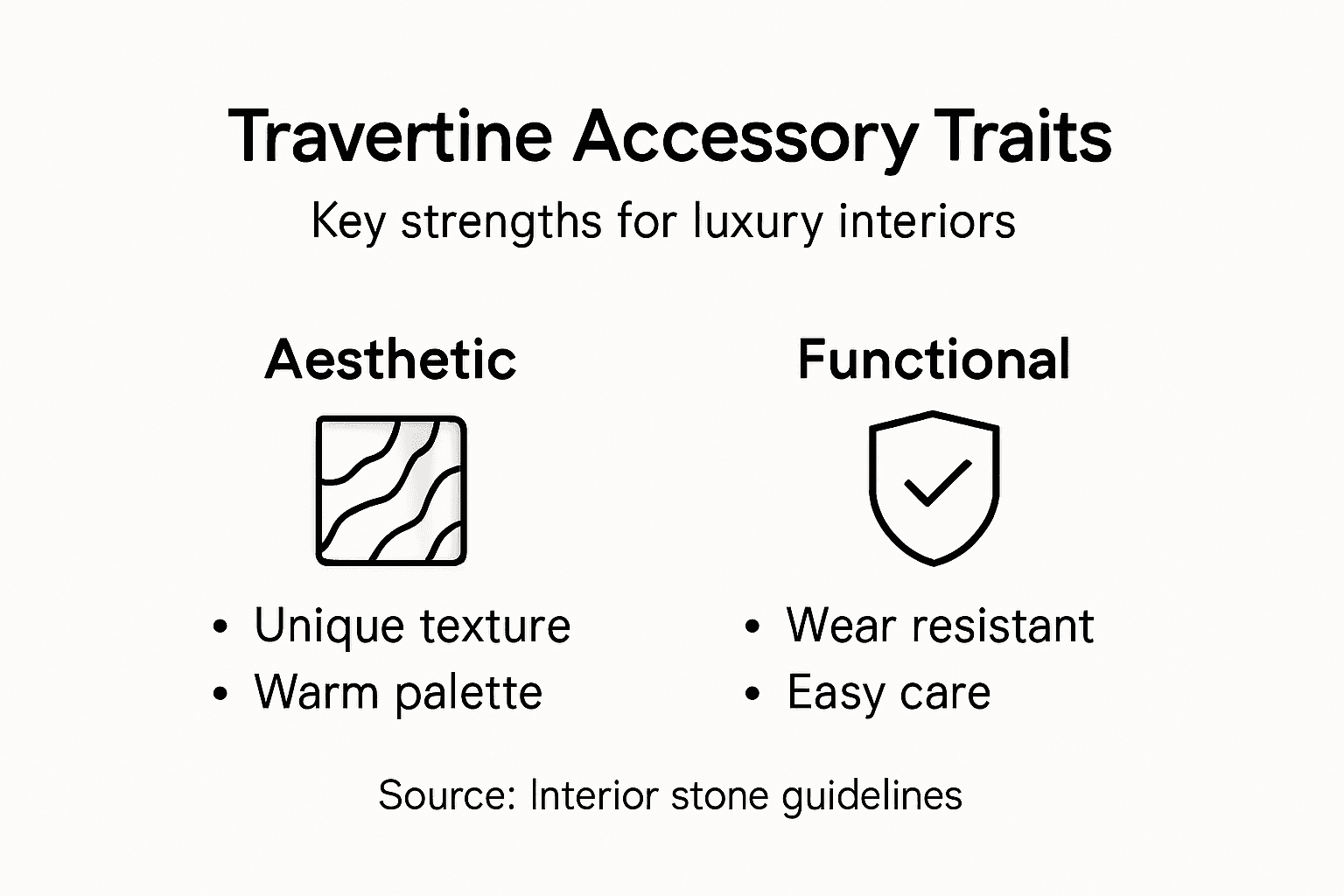
Travertine accessories are decorative and functional pieces crafted from travertine, a natural limestone material formed near mineral-rich hot springs. These accessories range from stunning bathroom sets and tabletops to sculptural lamps and wall installations that instantly elevate any luxury interior.
Understanding what makes travertine unique helps you position it confidently with your high-end clientele. This stone delivers both aesthetic sophistication and practical durability—a combination your clients expect at premium price points.
Travertine forms through the precipitation of carbonate minerals from groundwater, typically near limestone deposits and thermal springs. The result is a stunning sedimentary rock with a distinctly porous, fibrous structure that gives it unparalleled visual depth.
The material comes in a captivating range of natural hues:
Travertine’s porous nature means each piece is genuinely one-of-a-kind—no two accessories are identical, giving your clients authentic luxury rather than mass-produced uniformity.
When sourcing pieces for your projects, focus on these defining characteristics:
Lightweight yet durable: Despite its substantial appearance, travertine is remarkably light compared to comparable stone materials. This makes installation simpler and reduces structural load concerns—crucial for luxury residential projects where you’re retrofitting existing spaces.
High polish capability: Travertine accepts a beautiful polish that enhances its natural luminosity. This polished finish creates a sophisticated sheen perfect for high-end bathroom vanities, side tables, and decorative accents.
Natural porosity: The inherent cavities in raw travertine create visual interest, though they’re typically filled for smoother surfaces in interior applications. This filling process allows for seamless surfaces on accessories like tabletops and lampbases.
Workability and craftsmanship: Travertine responds beautifully to skilled artisan work. Designers can source hand-carved accessories, custom inlays, and sculptural pieces that showcase exceptional craftsmanship—exactly what luxury clients demand.
Key performance features worth highlighting to clients:
Pro tip: When selecting travertine accessories for clients, examine the fill quality and finish type in person—polished surfaces versus honed finishes create dramatically different aesthetic impacts under various lighting conditions.
Travertine isn’t a one-size-fits-all material—it comes in distinct varieties shaped by where and how it forms. Regional and compositional variations influence travertine’s porosity, mineral content, and surface texture, creating everything from subtle cream accessories to rich earth-toned statement pieces.
Your clients expect you to understand these differences and match them strategically to their design vision. Each variation serves specific aesthetic and functional purposes in luxury interiors.
Travertine’s natural palette is its greatest asset. The stone’s color depends on mineral deposits and oxidation levels in its formation environment, giving you remarkable flexibility.
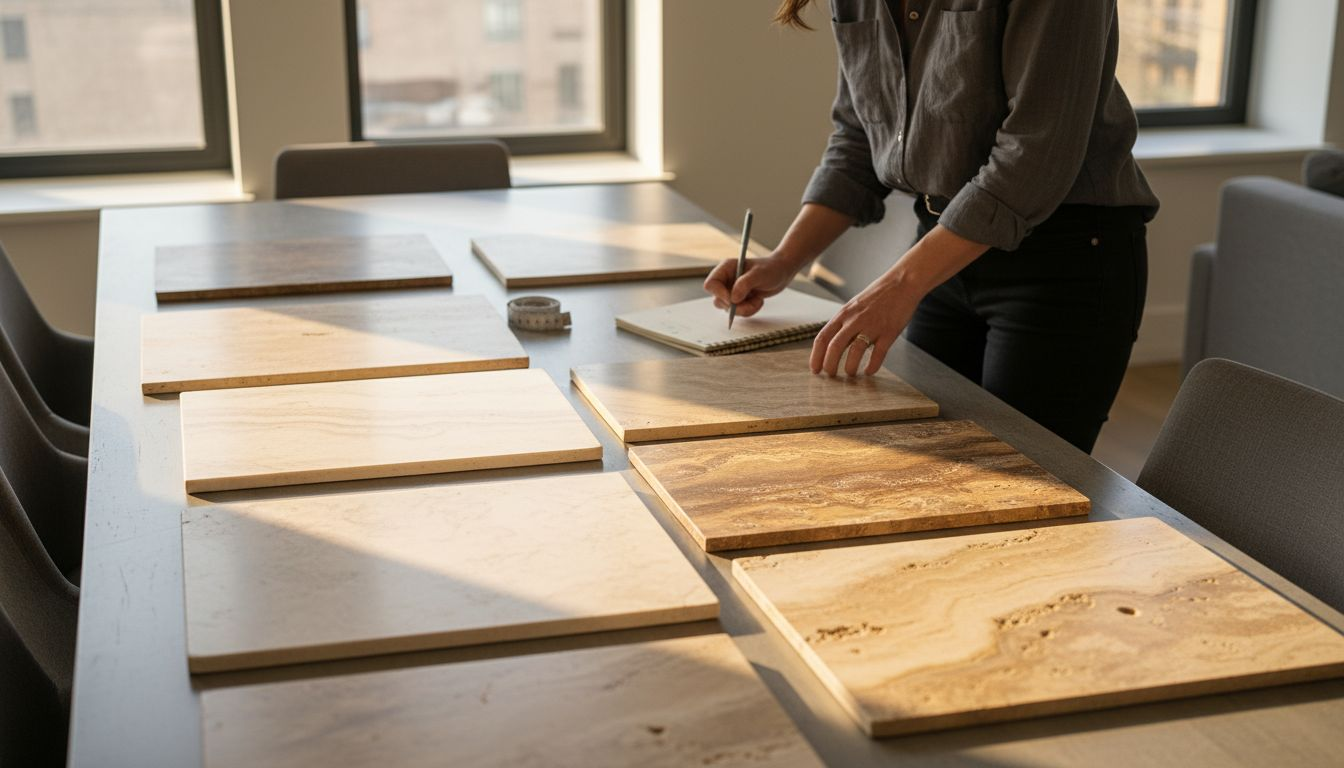
Ivory and cream travertine works beautifully in minimalist and contemporary spaces. These lighter shades create sophisticated, airy aesthetics that feel refined without being cold. Use cream-toned lamps and accessories to brighten darker rooms or balance bold architectural elements.
Walnut and tan travertine bridges traditional and transitional design. These warm, golden hues complement both heritage furnishings and modern pieces. Think tabletops, bathroom vanities, and decorative vessel pieces that anchor a room’s warmth.
Russet and gold travertine makes a bold statement in eclectic and maximalist interiors. The deeper, richer tones add drama and visual weight. These pieces work best as focal points—sculptural lamps, accent tables, or architectural wall installations.
Color options for your projects:
Polished finishes deliver high shine and luminosity. They’re ideal for bathroom accessories, vanities, and decorative pieces where you want light reflection and visual sophistication. Polished surfaces show off natural veining dramatically.
Honed finishes offer a softer, matte appearance. These work wonderfully for more casual luxury spaces and when you want to minimize the appearance of fills and natural pitting. Honed surfaces feel warmer and more organic.
Textured and tumbled finishes create rustic appeal. The aged, weathered appearance suits Mediterranean, Tuscan, and vintage luxury designs. These finishes hide surface imperfections beautifully.
Here’s a quick comparison of travertine surface finishes and their best interior uses:
| Finish Type | Visual Effect | Ideal Setting |
|---|---|---|
| Polished | High gloss and sheen | Contemporary bathrooms, vanities |
| Honed | Matte, soft texture | Casual living spaces, side tables |
| Textured/Tumbled | Rustic, aged look | Mediterranean or vintage rooms |
Each finish type transforms the same travertine color into completely different design statements—choose the finish based on your client’s desired aesthetic, not just the color.
Travertine comes in varying porosity grades. Higher porosity stones require more fill material but offer unique visual character. Lower porosity options deliver smoother, more uniform surfaces.
For your luxury clients, discuss these practical factors:
Pro tip: Request samples in your clients’ actual lighting conditions before specifying—travertine’s appearance shifts dramatically under different color temperatures, so what looks perfect in showroom lighting might not match your client’s expectations at home.
Travertine accessories deliver something most luxury materials cannot: genuine beauty paired with practical performance. Natural variations in travertine’s surface—including its cavities and texture—create an organic, timeless look highly prized in interior design. This isn’t polished perfection; it’s authenticity that your clients actually crave.
When you specify travertine for high-end residential projects, you’re choosing a material that works harder than it looks. It performs beautifully while looking absolutely stunning.
Travertine’s natural surface irregularities set it apart from engineered alternatives. Each cavity, each subtle color shift, each textural variation becomes part of the story. This organic character appeals to luxury clients tired of sterile, uniform surfaces.
The material’s appearance evolves gracefully over time. Unlike some finishes that fade or wear unevenly, travertine develops a subtle patina that only enhances its appeal. Your clients will appreciate pieces that age beautifully rather than deteriorate.
Travertine works across design aesthetics:
Travertine isn’t just pretty—it actually works. The material possesses thermal stability, meaning accessories won’t expand or contract with temperature fluctuations. This matters tremendously in bathrooms, kitchens, and spaces near fireplaces.
Wear resistance is another significant advantage. Travertine accessories hold up to daily use without visible degradation. Bathroom vanities, side tables, and decorative pieces maintain their beauty for decades, justifying the premium price point your clients invest.
The material’s natural porosity, when properly sealed, provides resistance to moisture and staining. This practical benefit makes travertine suitable for high-humidity environments where other materials might fail.
Key functional benefits worth highlighting:
Travertine accessories combine visual poetry with genuine durability—a rare pairing that justifies premium pricing while delivering long-term client satisfaction.
Travertine’s adaptability is remarkable. The same material works beautifully in rustic Mediterranean villas and sleek urban penthouses. Its neutral base and natural variations harmonize with virtually any palette or design direction.
This flexibility simplifies your design process. Rather than sourcing different materials for different aesthetic directions, travertine accessories deliver consistency while feeling perfectly suited to each unique interior.
Pro tip: Pair light-toned travertine pieces with dramatic lighting fixtures to enhance their natural luminosity, or combine walnut travertine with warm metallics and rich textiles for maximalist luxury interiors that feel cohesive rather than chaotic.
Travertine’s porous nature means it requires thoughtful care to maintain its beauty long-term. The good news? Maintenance is straightforward and doesn’t demand specialized expertise. Proper care includes routine cleaning with non-acidic, gentle cleaners and periodic resealing to maintain luster and prevent dirt and moisture infiltration. Your clients will appreciate knowing that a simple maintenance routine protects their investment.
When you specify travertine accessories, include clear maintenance guidance with each project. This transparency builds confidence and prevents misunderstandings that can damage client relationships.
Travertine’s defining characteristic—its porous structure—also creates its primary maintenance consideration. The material can absorb spills if left untreated, potentially causing staining or moisture damage. This doesn’t make travertine unsuitable for luxury interiors; it simply means treating it intelligently.
Proper sealing solves this challenge entirely. A quality sealer fills the stone’s pores, creating a protective barrier against spills and moisture. Think of sealing as preventive medicine rather than a repair process.
Key porosity facts to discuss with clients:
Use gentle, non-acidic cleaners exclusively. Acidic products (vinegar, citrus-based cleaners, harsh commercial solutions) will etch travertine’s surface, causing permanent damage. This is non-negotiable. Recommend pH-neutral stone cleaners to your clients.
Wipe spills immediately. This simple habit prevents staining before it starts. Even with sealing, prompt cleanup protects the material and maintains pristine appearance. Clients should keep soft cloths near high-use accessories like bathroom vanities.
Dust regularly with soft cloths. Travertine lamps and decorative pieces benefit from regular dusting to prevent buildup. Soft microfiber cloths won’t scratch the surface.
Basic care routine your clients should follow:
While daily care is simple, professional resealing ensures optimal protection. Recommend clients schedule resealing annually for high-traffic pieces like bathroom vanities, or every 18-24 months for decorative accessories with lighter use.
Professional resealing removes any accumulated dirt, applies fresh sealer evenly, and restores the stone’s natural beauty. This investment pays dividends in longevity.
Travertine’s maintenance reputation is far less demanding than many luxury materials—treat it like fine hardwood floors, not precious gemstones, and clients enjoy decades of flawless beauty.
Certain situations require targeted approaches. Etched areas from acidic contact can be professionally restored through polishing. Hard water deposits respond well to distilled water rinses. Stubborn stains may require professional remediation.
Provide clients with a simple reference guide addressing common scenarios. This empowers them to handle minor issues confidently and know when to contact professionals.
Pro tip: Create a brief maintenance card for each travertine accessory installation—include the sealer type used, resealing timeline, approved cleaning products, and contact information for professional maintenance services. This simple gesture transforms maintenance from mystery into routine, significantly improving client satisfaction.
The choice between travertine and marble often shapes luxury interior projects—and it’s not always obvious which material serves your client’s vision better. Both are natural stone, both command premium pricing, yet they deliver fundamentally different aesthetics and performance characteristics. Understanding these distinctions positions you to make confident recommendations.
Compared to marble and other dense limestones, travertine is relatively porous and less dense, forming through rapid precipitation of calcium carbonate in mineral springs. This geological difference translates into practical design implications worth exploring with your clients.
Marble exudes polish and formal elegance. Its dense, non-porous structure creates glossy, reflective surfaces that command attention. Travertine offers warmth and organic character. Its porous nature creates tactile, textured surfaces that feel less precious and more approachable.
Think of marble as a formal gown and travertine as luxury casual wear. Both are beautiful; they just serve different moods and design narratives. Your clients’ aesthetic preferences should drive the choice, not budget alone.
Key distinctions between these materials:
Warmer aesthetic appeal. Travertine’s natural hues radiate warmth that marble’s cooler grays and whites simply cannot match. In residential spaces where clients want comfort alongside luxury, travertine wins decisively.
Better grip and safety. Travertine’s surface is naturally less slippery than polished marble, making it ideal for bathroom vanities, shower surrounds, and wet environments. This practical advantage shouldn’t be overlooked.
Lower formal tone. Some clients reject marble’s obvious luxury statement, preferring understated sophistication. Travertine delivers premium quality without broadcasting expense, which appeals to discerning clients who value substance over status symbols.
Historical richness. Travertine’s use in luxury design extends back through centuries of architectural tradition, connecting contemporary interiors to timeless heritage. This narrative resonates strongly with clients seeking authentic, enduring materials.
Advantages travertine offers your projects:
Marble excels in specific contexts. Dramatic statement pieces benefit from marble’s bold veining and reflective presence. Formal dining tables, sculptural accents, and architectural focal points often showcase marble’s unmatched visual drama.
Clients seeking unmistakable luxury often gravitate toward marble’s recognized prestige. Some design narratives demand marble’s formality. Don’t dismiss marble as outdated—it remains the right choice for specific applications.
This summary outlines the care and maintenance differences between travertine and marble accessories:
| Care Factor | Travertine | Marble |
|---|---|---|
| Sealing Needed | Every 12–24 months | Required in wet areas |
| Cleaning Agents | Only pH-neutral cleaners | Mild stone cleaner, avoid acid |
| Stain Resistance | Good when sealed | Moderate, polish may show stains |
| Scratch Visibility | Hides well, textured surface | Shows more on glossy finish |
Granite and limestone offer other options, but each sacrifices something travertine and marble deliver. Granite works well functionally but lacks the refined aesthetic luxury requires. Limestone varies dramatically in quality and often appears less polished than travertine.
Travertine occupies the ideal middle ground—more refined than granite, warmer than marble, and more practical than limestone. It’s the thinking designer’s choice for clients seeking genuine luxury without pretension.
Ask these questions when advising clients:
Pro tip: Request samples of both travertine and marble in your client’s actual space under their natural and artificial lighting. The difference is dramatic—what appears formal in showroom lighting often feels cold at home, while travertine’s warmth consistently translates beautifully across different settings.
Choosing travertine accessories for luxury interiors means embracing natural beauty and timeless sophistication while solving common challenges such as finding durable, warm, and unique décor pieces. If you seek organic textures, lasting performance, and artisan craftsmanship that your clients will cherish, Marmorique offers a curated selection that answers these needs perfectly. Our travertine products are carefully crafted to highlight high polish finishes, subtle porosity, and rich earth tones that complement any design style from minimalist to maximalist.
Experience the warmth and character of genuine travertine with our exclusive collection of lamps, tabletops, and decorative accessories. Visit Marmorique today to discover how you can transform interiors with pieces that combine luxury, practicality, and authenticity. Start exploring now and secure sophisticated accents that maintain their beauty with simple care, making them perfect for bathrooms, living areas, and more. Dive deeper into travertine’s unique qualities in our Why Choose Travertine Accessories for Luxury Interiors overview and elevate your next project effortlessly.
Travertine accessories provide a combination of aesthetic sophistication and practical durability. Their unique natural variations offer an authentic luxury feel, while their thermal stability and wear resistance make them ideal for high-end residential applications.
While marble offers a polished and formal elegance, travertine delivers warmth and organic character. Travertine’s porous nature provides less slipperiness, making it more suitable for wet environments like bathrooms, and it tends to hide wear and stains better than polished marble.
To maintain travertine accessories, clean them with gentle, non-acidic cleaners, wipe spills immediately, and dust regularly. It’s also essential to seal the surfaces every 12-24 months to protect against staining and moisture infiltration.
Yes, travertine accessories are well-suited for humid environments when properly sealed. The natural porosity of the stone allows it to resist moisture, making it an excellent choice for bathrooms and kitchens if cared for correctly.


