Your Cart (0)
Your cart is empty
Free express shipping

Drawer menu
Free express shipping

TL;DR:
- Travertine lamps are unique artful lighting pieces made from natural, porous stone with one-of-a-kind veining.
- They diffuse light organically, creating warm, soft glows that enhance room ambiance and add tactile richness.
- Their timeless appeal and organic textures support various interior styles, making them enduring luxury decor.
Not all statement lamps are created equal. While ceramic and glass fixtures flood the market, travertine lamps occupy a completely different category, one where natural stone becomes both the light source and the art object. The porous, veined surface of travertine catches and softens light in ways that factory-made materials simply cannot replicate. As sculptural luxury lighting pieces that blend natural stone aesthetics with functional ambient illumination, travertine lamps bring something genuinely irreplaceable into a room. This guide walks you through what makes them special, how to use them, and how to choose the right one for your space.
| Point | Details |
|---|---|
| Natural artistry and uniqueness | Each travertine lamp offers organic veining and texture that make it a true statement piece. |
| Versatile placement | Travertine lamps transform the atmosphere of any room from living area to hallway. |
| Timeless design fit | Their neutral tones and tactile forms blend effortlessly into modern, minimalist, and classic interiors. |
| Simple care | Basic dusting and gentle care keep travertine lamps beautiful for years. |
Travertine is a sedimentary limestone formed over thousands of years near mineral springs. That geological origin is exactly what gives it such a distinctive visual character. No two slabs are identical. The natural veining, subtle color shifts, and porous surface pockets create a texture that looks alive, even when the lamp is turned off.
When light passes through or reflects off travertine, something remarkable happens. The stone’s natural pores scatter the light rather than bouncing it back sharply. The result is a warm, diffused glow that feels organic rather than artificial. This is fundamentally different from a ceramic lamp, which reflects light cleanly, or a glass pendant, which transmits it directly. Travertine filters it, softening the entire mood of a room.
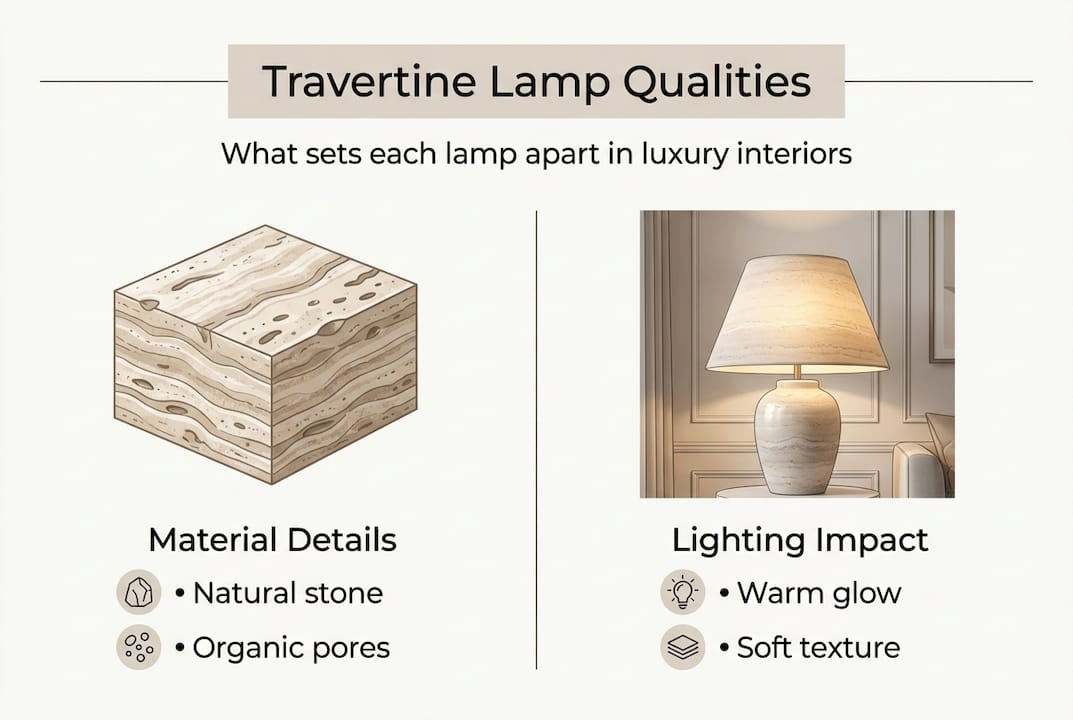
Each travertine lamp is unique due to natural veining and pores, which means you are never buying a mass-produced object. You are buying a piece shaped by geology. That distinction matters enormously to homeowners who want interiors that feel curated rather than catalog-assembled.
Here is how travertine compares to other popular lamp materials:
| Material | Light quality | Visual texture | Uniqueness | Luxury feel |
|---|---|---|---|---|
| Travertine | Warm, diffused | Organic, porous | Every piece unique | Very high |
| Marble | Cool, reflective | Smooth, veined | Moderate variation | High |
| Alabaster | Soft, translucent | Delicate, pale | Some variation | High |
| Ceramic | Flat, direct | Uniform, matte | Low | Moderate |
For anyone exploring travertine decor ideas beyond the obvious, lamps are one of the most impactful starting points.
Characteristics that appeal most to luxury homeowners:
“The best luxury objects in a room are the ones that reward closer inspection. Travertine lamps do exactly that. The more you look, the more you see.”
A lamp has two jobs: provide light and occupy space. Most lamps do the first adequately and ignore the second entirely. Travertine lamps do both exceptionally well, and that is what makes them so effective as interior design tools.
The soft, diffused glow and organic textures of travertine lamps transform interiors in ways that go beyond simple illumination. In a living room, a travertine table lamp on a sideboard creates a warm focal point that draws the eye without competing with other design elements. In a bedroom, a bedside travertine lamp produces exactly the kind of low, amber light that signals rest and calm. In a hallway, even a small travertine accent lamp adds a sense of arrival and intention that bare walls never achieve.
Here is a practical breakdown of how different lamp types perform across rooms:
| Lamp type | Best room | Primary effect | Pairs well with |
|---|---|---|---|
| Table lamp | Living room, bedroom | Warm focal point | Linen, wood, rattan |
| Floor lamp | Living room, study | Ambient fill light | Leather, concrete, steel |
| Bedside lamp | Bedroom | Calm, restful mood | Soft textiles, neutral tones |
| Pendant lamp | Dining area, hallway | Statement overhead | Brass, matte black hardware |
| Sconce | Hallway, bathroom | Layered accent light | Plaster walls, stone tile |
Interest in biophilic design, which incorporates natural materials into living spaces, has grown sharply in recent years, and travertine fits directly into that movement. When using travertine lamps indoors, the key is thinking about them as art objects first and light sources second. That shift in thinking changes where you place them and how you style around them.
The home accessories list approach to decorating, where you build a room around a curated set of natural stone pieces, consistently produces spaces that feel more cohesive and considered than rooms styled around single statement furniture.
Pro Tip: Pair travertine lamps with other natural materials like raw linen, untreated wood, and woven rattan. These textures share the same organic quality as stone and create a layered, grounded aesthetic that feels genuinely luxurious without looking overdone.
Travertine lamps come in a wider range of forms than most people expect. The material is versatile enough to work in both chunky, architectural shapes and refined, slender silhouettes. Understanding the main lamp forms helps you match the right piece to your existing interior.
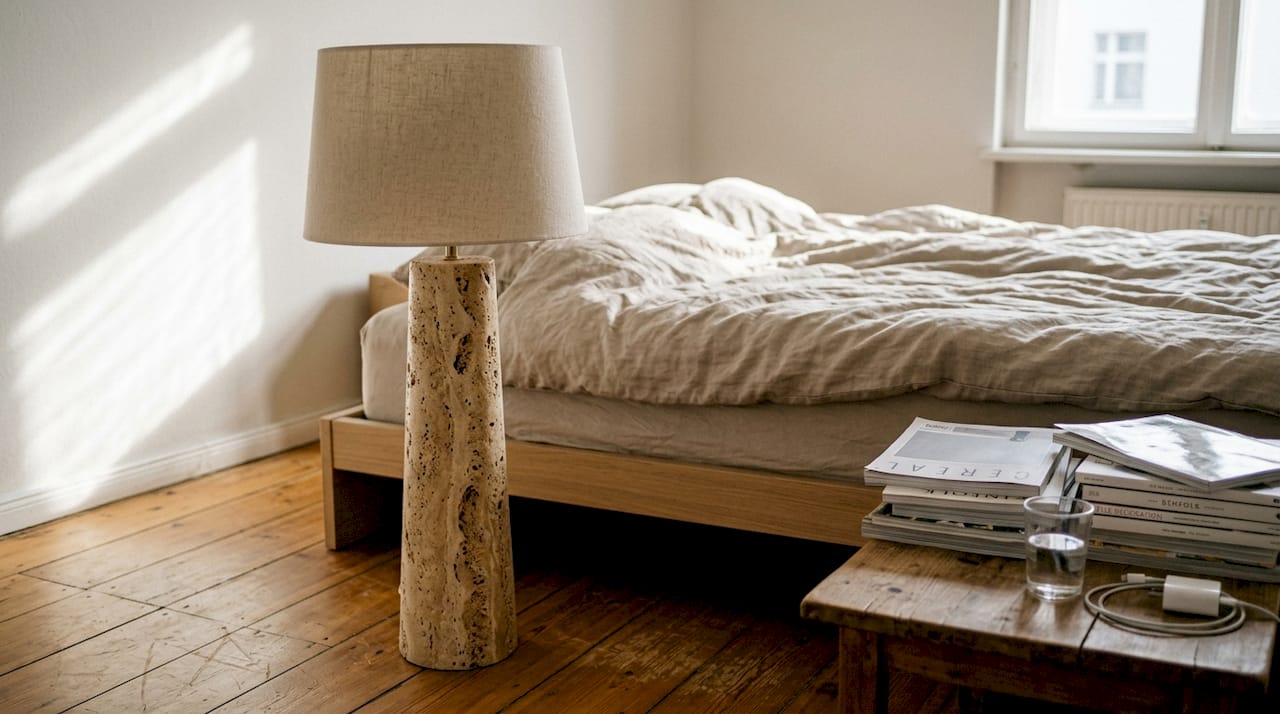
The most common forms include table lamps with solid cylindrical or irregular stone bases, floor lamps with stacked stone columns, pendant lamps with carved or shaped stone shades, wall sconces with flush stone panels, and fully sculptural pieces that blur the line between lamp and artwork. Travertine pendant examples show just how architectural this material can become when shaped by skilled craftspeople.
Interior styles that pair best with travertine lamps:
Travertine lamps fit minimalist, modern, Nordic, industrial, and contemporary styles precisely because the stone’s neutral palette does not compete with other design choices. It supports them.
In terms of finishes, travertine lamps typically come in filled or unfilled versions. Filled travertine has its natural pores sealed with grout or resin for a smoother surface. Unfilled travertine retains its raw, open texture. Both are beautiful, but unfilled versions tend to feel more organic and are often preferred in high-end residential settings. Hardware choices like brass, matte black, or brushed nickel can shift the lamp’s personality significantly.
For a deeper look at how travertine luxury styles translate across different interiors, the range of applications is genuinely broad. Exploring essential travertine accessories alongside lamps can help you build a more complete, cohesive look.
Pro Tip: When evaluating quality, pick up the lamp base if possible. Authentic travertine has real weight. If a lamp feels light or hollow, the base is likely resin or composite stone, not genuine travertine.
Buying a travertine lamp is a longer-term investment than most home accessories. Getting the selection right from the start saves you from costly mismatches and ensures the piece enhances your space for years.
Travertine lamps are ideal for homeowners seeking unique, luxury statement pieces that blend art with function, but the right choice depends on your room’s scale, color palette, and existing materials.
Step-by-step lamp selection process:
For ongoing care, choosing travertine accents that suit your lifestyle also means thinking about maintenance. Travertine is durable but not indestructible.
Simple maintenance tips:
For more accessorizing with travertine guidance, combining proper care with thoughtful placement ensures your lamp stays as striking years from now as it does on day one.
Some design circles dismiss travertine as a passing moment, the stone version of a color-of-the-year that will look dated by next decade. We disagree, and we think the reasoning behind that view misses something fundamental.
Travertine has been used in architecture and decor for over two thousand years. The Colosseum in Rome is built from it. That is not a trend. That is a material with proven, enduring appeal rooted in its sensory qualities, not just its visual ones.
What makes a travertine lamp different from a trendy resin or glass piece is that it changes how a room feels, not just how it looks. The weight, the warmth of the stone’s color, the way light filters through its pores rather than bouncing off a hard surface. These are sensory experiences that factory materials cannot manufacture.
We believe timeless travertine details matter because they connect a space to something real. When you choose organic materials over synthetic ones, you are making a statement about what you value in your home. That is never a fad.
If this guide has helped you see travertine lamps in a new light, the next step is finding the piece that fits your space and your vision.
At the Marmorique online store, you will find a curated selection of authentic travertine lamps crafted from genuine natural stone, each one chosen for its quality, character, and design integrity. Whether you are drawn to a sculptural table lamp for your living room or a refined bedside piece for your bedroom, the collection covers a wide range of styles and finishes. For travertine decor inspiration that goes beyond lamps, the site also features styling guides and complementary stone accessories to help you build a complete, cohesive interior.
Travertine lamps work beautifully in living rooms, bedrooms, hallways, and dining areas as both statement pieces and mood lighting. Their sculptural quality makes them effective in any room where you want to add visual weight and warmth.
Yes, they blend seamlessly with minimalist, modern, Nordic, industrial, or contemporary spaces due to their organic yet sculptural appeal. The stone’s neutral palette supports rather than competes with clean, restrained design schemes.
Gently wipe with a dry microfiber cloth and avoid harsh chemicals to keep the stone’s finish looking natural and beautiful. For unfilled travertine, apply a stone-safe sealant once a year to protect the surface.
Each lamp is distinguished by its natural veining, pores, and subtle color variations, making every piece one of a kind. No two travertine lamps will ever look exactly the same, which is precisely what makes them worth owning.


