Your Cart (0)
Your cart is empty
Free express shipping

Drawer menu
Free express shipping

Luxury homeowners often struggle to select marble décor that balances timeless elegance with practical durability. With dozens of marble types, finishes, and styling approaches available, making confident choices can feel overwhelming. This guide cuts through the confusion with expert tips on selecting, styling, installing, and maintaining premium marble décor to transform your interiors into sophisticated spaces that reflect refined taste and lasting value.
| Point | Details |
|---|---|
| Selection criteria | Assess porosity, veining, finish type, and cost to match your aesthetic and functional needs. |
| Marble types | Carrara offers affordable elegance, Calacatta delivers superior stain resistance, and Statuario provides dramatic visual impact. |
| Styling harmony | Pair marble with complementary woods or metals and align veining patterns for cohesive, refined interiors. |
| Installation and care | Professional installation and sealing every 12 to 18 months preserve beauty and prevent costly damage. |
| Cost comparison | Marble accessories provide luxury impact at up to 60% savings compared to full slab installations. |
Before choosing marble pieces, you need a clear framework to evaluate options that suit both your design vision and practical requirements. Understanding these core criteria prevents costly mistakes and ensures your investment delivers lasting elegance.
Porosity determines how well marble resists moisture and staining. Lower porosity marble like Calacatta withstands kitchen and bathroom conditions better than more porous varieties. This factor directly impacts maintenance frequency and long-term appearance.
Veining patterns and color tones define visual impact. Bold, dramatic veining creates focal points, while subtle patterns offer understated sophistication. Your choice should complement existing décor elements and architectural features.
Finish types balance aesthetics with safety. Polished finishes deliver mirror-like shine and enhance color depth, while honed surfaces provide slip resistance and hide minor scratches better. High-traffic areas benefit from practical finishes.
Cost varies dramatically between marble types. Premium Calacatta commands prices 3 to 5 times higher than Carrara, while Statuario falls in the mid to upper range. Budget planning requires understanding these price tiers upfront.
Professional installation protects your investment. Certified installers ensure proper support, sealing, and placement to prevent cracking or uneven settling. DIY attempts often lead to expensive repairs that exceed initial savings.
Pro Tip: Request samples of your top marble choices and test them in your actual lighting conditions. Natural and artificial light dramatically affect how veining and color appear throughout the day.
When making your selection, marble criteria considerations help align material properties with your specific interior goals.
Understanding the distinct characteristics of popular marble varieties empowers you to select materials that deliver both the aesthetic impact and performance your spaces demand.
Carrara marble offers classic appeal with soft gray veining on white backgrounds. Its moderate porosity requires regular sealing but provides excellent value for luxury aesthetics. This Italian staple works beautifully in living areas and low-moisture applications.
Calacatta marble features bold, dramatic veining with warm gold or gray tones. Its lower porosity delivers superior stain resistance, making it ideal for kitchens and bathrooms despite premium pricing. The striking appearance creates instant focal points.
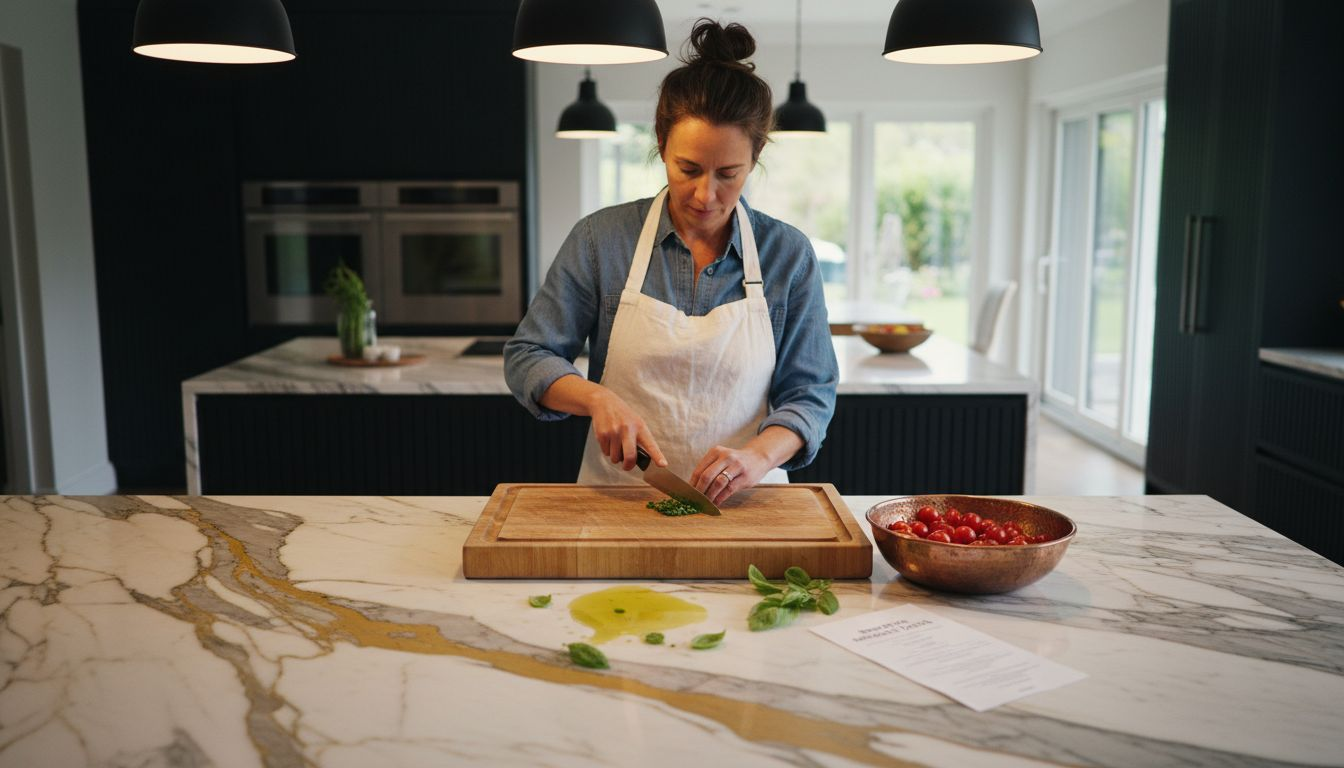
Statuario marble showcases pronounced veining with brighter white backgrounds than Carrara. Higher porosity demands diligent maintenance, but the distinctive look justifies the mid-premium investment for homeowners seeking visual drama.
Pro Tip: Calacatta’s lower porosity makes it the safest choice for surfaces exposed to wine, oils, or acidic foods, reducing anxiety about everyday use in luxury kitchens.
| Marble Type | Porosity Level | Stain Resistance | Price Range | Best Applications |
|---|---|---|---|---|
| Carrara | Moderate | Good with sealing | $40-75/sq ft | Living rooms, entryways, low-moisture areas |
| Calacatta | Low | Excellent | $180-300/sq ft | Kitchens, bathrooms, high-use surfaces |
| Statuario | Moderate-High | Requires diligent care | $100-200/sq ft | Statement walls, fireplace surrounds, accent pieces |
Durability differences stem from mineral composition and formation conditions. Calacatta’s denser structure withstands daily wear better than softer varieties. Consider your household activity level when weighing durability against aesthetics.
Visual style varies beyond veining patterns. Carrara’s cooler tones suit contemporary minimalist designs, while Calacatta’s warmth complements traditional and transitional spaces. Statuario bridges both styles with dramatic presence.
Exploring marble type characteristics reveals how each variety serves different design priorities and functional requirements.
Once you’ve selected your marble type, harmonizing it with surrounding elements creates cohesive, sophisticated interiors that feel intentional rather than assembled.
Pairing marble with warm woods like walnut or oak softens the stone’s cool elegance. This combination adds organic warmth while maintaining luxury appeal. Alternatively, cool metals like brushed nickel or chrome emphasize marble’s inherent sophistication.
Aligning veining patterns across multiple marble pieces creates visual flow. When using marble in adjacent spaces, match veining direction and intensity to avoid jarring transitions. This attention to detail signals refined taste.
Finish selection impacts both aesthetics and function. Polished surfaces amplify light and color depth, ideal for statement pieces in low-traffic areas. Honed finishes provide subtle elegance with better slip resistance for bathrooms and entryways.
Limiting marble variety prevents visual chaos. Stick to one or two marble types per room, allowing each to shine without competing for attention. Too many varieties create busy, unfocused spaces.
Lighting and color palette considerations matter enormously. Marble reflects and interacts with light uniquely, so test samples under your actual lighting conditions. Coordinate wall colors and textiles to complement rather than clash with veining tones.
Pro Tip: Use marble accessories as accent pieces to introduce luxury without overwhelming budgets or committing to permanent installations, giving you flexibility to refresh your look over time.
Applying thoughtful marble styling principles ensures your décor feels curated and intentional rather than randomly assembled.
Proper installation and ongoing care protect your marble investment and preserve its beauty for decades, making these steps as critical as material selection itself.
Hiring certified professionals eliminates installation risks. Experienced installers understand marble’s weight distribution needs, expansion requirements, and sealing protocols. Their expertise prevents cracking, uneven settling, and premature wear that plague amateur installations.
Sealing frequency directly impacts longevity. Apply quality sealant every 12 to 18 months to maintain stain resistance and prevent moisture penetration. High-use surfaces may require more frequent treatment.
Gentle cleaning techniques preserve finish quality. Use pH-neutral cleaners specifically formulated for natural stone, avoiding acidic or abrasive products that etch surfaces. Microfiber cloths prevent scratching during routine maintenance.
Regular maintenance extends lifespan dramatically. Promptly wipe spills, especially acidic liquids like wine or citrus juice. Address minor issues immediately before they become permanent damage requiring expensive restoration.
Avoiding DIY installation saves money long-term. Professional installation costs represent smart insurance against structural failures, water damage, and aesthetic flaws that DIY mistakes often create. The initial investment pays dividends through decades of trouble-free enjoyment.
Pro Tip: Keep a maintenance log noting sealing dates and any issues, helping you identify patterns and optimize your care routine while maintaining warranty validity.
Following professional installation guidance ensures your marble décor delivers lasting value and maintains showroom appearance for years.
Understanding cost structures and value propositions helps you allocate budget strategically, balancing luxury impact with financial practicality across your décor project.
Carrara provides accessible luxury at $40 to 75 per square foot. Its moderate porosity requires consistent sealing but delivers classic elegance at entry-luxury pricing. This option suits homeowners decorating multiple spaces on controlled budgets.
Calacatta commands premium pricing from $180 to 300 per square foot. Superior stain resistance justifies higher costs for kitchens and bathrooms where performance matters most. The investment pays dividends through reduced maintenance anxiety and stunning visual impact.
Statuario occupies the mid to high range at $100 to 200 per square foot. Distinctive veining creates focal points worth the premium in strategic locations. Balance this investment by using more affordable options in supporting areas.
Marble accessories offer luxury impact at 60% savings compared to full slab installations. Decorative pieces like sculptures, soap dishes, and accent tables introduce premium materials without major renovations. This approach lets you test marble in your spaces before larger commitments.
Installation labor varies by complexity. Simple accessory placement costs minimal labor, while countertop or wall installations require skilled professionals charging $50 to 100 per hour. Factor these costs into total project budgets from planning stages.
| Option | Material Cost | Installation Complexity | Maintenance Level | Best Value Scenario |
|---|---|---|---|---|
| Carrara slabs | $40-75/sq ft | High | Moderate | Multiple rooms, controlled budget |
| Calacatta slabs | $180-300/sq ft | High | Low | High-use wet areas, statement spaces |
| Statuario slabs | $100-200/sq ft | High | Moderate-High | Focal points, feature walls |
| Marble accessories | $50-500/piece | Minimal | Low | Accent pieces, budget-conscious luxury |
Reviewing detailed marble cost comparisons helps you prioritize spending where it delivers maximum aesthetic and functional returns.
Applying previous insights to specific rooms and scenarios helps you make practical decisions that balance beauty, function, and budget across your home.
Kitchens and bathrooms demand Calacatta marble’s superior stain resistance. These moisture-rich environments expose surfaces to oils, acids, and constant water contact. The premium investment prevents frustration and maintains pristine appearance despite heavy use.
Living rooms and entryways suit Carrara or Statuario beautifully. Lower moisture exposure and lighter use let you prioritize aesthetics over maximum durability. Carrara delivers classic elegance economically, while Statuario creates dramatic first impressions.
Polished finishes maximize visual impact in low-traffic display areas. The mirror-like surface amplifies light and color depth, showcasing marble’s natural beauty. Reserve this finish for statement pieces and protected locations.
Honed finishes provide practical slip resistance in bathrooms and entryways. The matte surface hides minor scratches better than polished alternatives while maintaining sophisticated appearance. Safety and longevity outweigh shine in these applications.
Marble accessories offer budget-friendly luxury across any room. Decorative bowls, lamp bases, and sculptural pieces introduce premium materials at accessible price points. This approach lets you layer luxury throughout your home without major renovations.
Pro Tip: Start with marble accessories in a single room to experience the material’s maintenance needs and aesthetic impact before committing to larger permanent installations.
Implementing situational marble strategies ensures each space receives the appropriate material and finish for its specific demands and priorities.
Now that you understand how to select, style, and maintain marble, discover exquisite artisan pieces that bring these principles to life in your home.
Marmorique curates premium marble accents crafted by skilled artisans who understand the material’s natural beauty. Each piece showcases careful attention to veining, finish, and proportion that complements luxury interiors.
Our collection includes unique marble sculptures and functional accessories designed to enhance your décor with timeless elegance. From eye-catching decorative grape clusters that add organic sophistication to sophisticated marble soap dishes that elevate daily rituals, each item reflects quality craftsmanship. Browse our curated selection to find statement pieces that transform your spaces into showcases of refined taste.
Seal marble every 12 to 18 months depending on use intensity and location. High-moisture areas like bathrooms may require more frequent sealing, while decorative accessories in dry locations can extend intervals slightly. Always follow manufacturer recommendations for your specific marble type.
Calacatta marble delivers optimal performance for bathroom vanities due to its low porosity and excellent stain resistance. While pricier than Carrara, it handles moisture, toiletries, and cleaning products better with less maintenance anxiety. The investment proves worthwhile for this high-use, wet environment.
Yes, but limit variety to maintain visual cohesion. Use one marble type as the primary material and introduce a second sparingly as accent pieces. Ensure veining patterns and color tones complement rather than clash, and maintain consistent finishes across transitions for smooth visual flow.
Small accessories like soap dishes and decorative bowls don’t require professional installation. However, larger pieces like tabletops, wall-mounted items, or anything requiring structural support benefit from expert installation to prevent damage and ensure proper weight distribution and stability.
Minor etching from acidic spills requires professional polishing to restore shine. Prevention works better than correction, so wipe spills immediately and use coasters under glasses. For DIY attempts, marble polishing powder can address very light etching, but deep damage needs professional restoration.
Pair cool-toned marble like Carrara with warm woods like walnut or oak for balanced contrast. Match marble’s veining intensity to wood grain patterns, keeping both subtle or both bold for harmony. Use marble as accent pieces among wood furniture rather than competing focal points to create layered, sophisticated spaces.


