Your Cart (0)
Your cart is empty
Free express shipping

Drawer menu
Free express shipping

Travertine is having a serious moment in luxury interiors, and it is not hard to see why. The stone’s warm, earthy tones and naturally pitted surface offer something polished marble simply cannot: character you can feel. But working with travertine at a high level means navigating real tensions between visual drama and practical performance, between raw texture and refined finish. This guide walks you through selecting the right type, sourcing it responsibly, applying it creatively across applications, and maintaining it so it only gets better with age. Whether you are designing a penthouse bathroom or a resort lobby, these strategies will help you get it right.
| Point | Details |
|---|---|
| Establish your hero stone | Choose travertine as the centerpiece to balance warmth and texture in luxury design. |
| Sample and source locally | Testing samples and sourcing travertine nearby ensure color consistency and sustainable practices. |
| Innovative edge profiles | Opt for sculptural edges and fluted finishes to create modern, sophisticated interiors. |
| Maintenance is crucial | Regular sealing and proper care extend travertine’s lifespan and preserve its luxury appeal. |
| Embrace the patina | Allowing natural wear fosters authentic, liveable luxury without constant upkeep. |
Before you specify a single slab, you need to understand what makes travertine different from its natural stone siblings. Compared to marble, travertine runs softer and warmer. It rates at Mohs 3 to 4 hardness, which means it scratches more easily than granite but rewards you with a tactile softness that no engineered stone can replicate. Marble delivers high drama and crisp veining. Travertine delivers liveable warmth and organic depth. They serve different emotional purposes in a room.
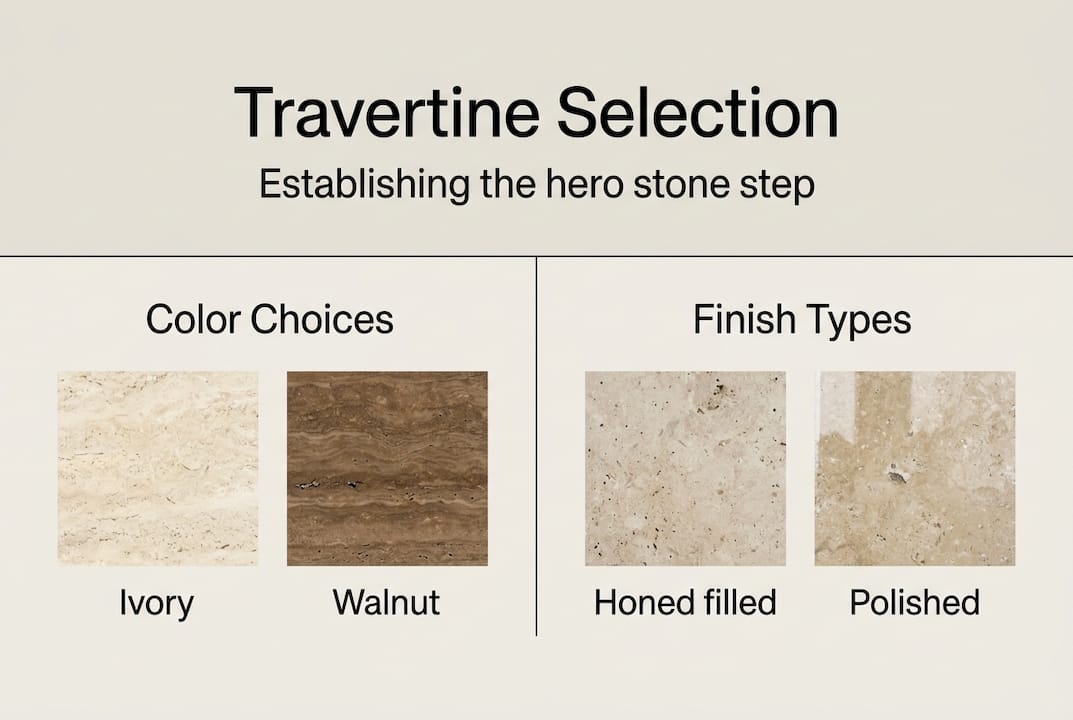
Surface finish is where most designers make or break a travertine project. Here is a quick breakdown:
Color selection matters as much as finish. Classic ivory and walnut tones anchor warm, neutral palettes. Silver travertine leans cooler and pairs well with concrete and steel in contemporary schemes. Gold and noce varieties add richness alongside dark wood and aged brass.
One of the smartest moves in luxury stone design is establishing what experienced designers call a hero stone selection: a primary stone that anchors the palette before any other surface is introduced. Travertine works as the hero stone when warmth is the priority. Marble steps in when you want drama. Mixing both is possible, but only after you have committed to one as the foundation.
| Finish | Best use | Maintenance level |
|---|---|---|
| Honed filled | Floors, kitchens, baths | Low |
| Honed unfilled | Accent walls, low traffic | Medium |
| Polished | Feature walls, formal spaces | Medium to high |
| Brushed/tumbled | Outdoor, casual luxury | Low to medium |
Pro Tip: Always test physical samples in the actual project space under both natural and artificial lighting before finalizing your selection. Travertine color shifts dramatically between morning light and evening lamp glow, and what reads as warm ivory in a showroom can turn flat gray in a north-facing room.
Once you have locked in your finish and color direction, review the full travertine care workflow early so your installation decisions align with long-term maintenance realities.
Sourcing travertine responsibly is not just an ethical choice. It is a quality control decision. Stone quarried and processed closer to your project site tends to arrive in better condition, with fewer transit cracks and more consistent batch coloring. Locally sourced travertine also reduces the carbon footprint of your project, which matters increasingly to high-end clients who want sustainability credentials alongside luxury aesthetics.
When you receive your travertine shipment, do not skip the inspection phase. Batch consistency is critical for large installations. Even within a single quarry, stone pulled from different extraction points can vary in tone, density, and void pattern. Lay out representative tiles or slabs from multiple crates before committing to a layout.
Here is a pre-installation inspection checklist:
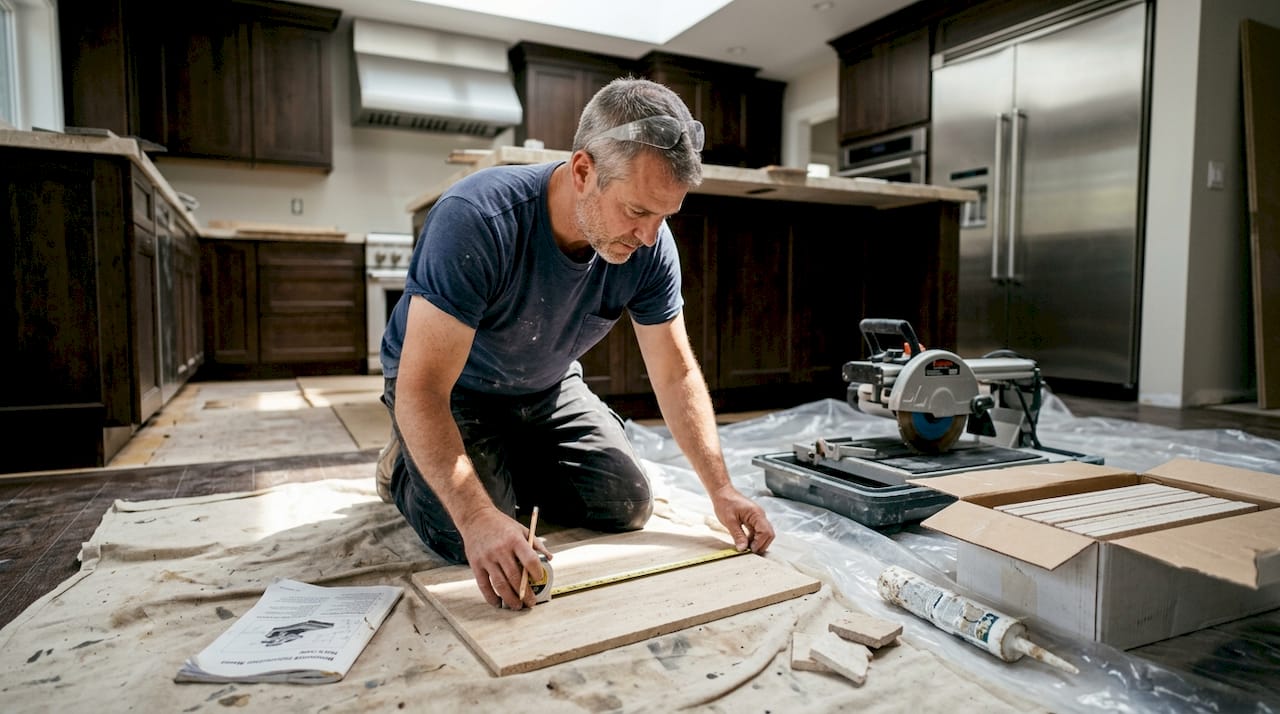
For installation, the right tools make a measurable difference. A wet saw with a diamond blade rated for natural stone is non-negotiable. Trowel notch size should match your adhesive’s spread rate and the slab weight. For large-format slabs over 24 inches, back-buttering with a polymer-modified mortar prevents hollow spots that lead to cracking under load.
| Tool | Purpose | Quality tier |
|---|---|---|
| Diamond wet saw | Clean cuts without chipping | Professional grade |
| Polymer-modified mortar | Adhesion for large slabs | High |
| Penetrating sealer | Stain resistance before grouting | Stone-specific formula |
| Rubber mallet | Setting tiles without cracking | Standard |
| Grout float | Filling voids on unfilled pieces | Fine-tipped for detail work |
Sealing before grouting is a step many contractors skip on luxury projects, and it costs clients dearly. Grout haze on porous travertine is extremely difficult to remove without damaging the surface. Apply a penetrating sealer to the stone face before grouting, and you eliminate that risk entirely.
Travertine’s real design power shows up when you move beyond floors and backsplashes. The stone’s natural layering and organic void pattern make it ideal for applications where texture and scale do the heavy lifting.
Here are five high-impact ways to use travertine in luxury projects:
Pairing matters as much as placement. Brass and wood pairings with travertine create layered warmth that feels both collected and intentional. Brass fixtures pull out the stone’s golden undertones. Dark walnut cabinetry grounds the composition without competing.
“The most successful travertine installations we see treat the stone as a collaborator, not a backdrop. When the material is allowed to express its natural variation, the room gains a life that no rendered image can predict.”
Pro Tip: For kitchens and bathrooms, always specify honed filled travertine. Unfilled surfaces in those environments trap food particles, soap residue, and moisture, which leads to staining and odor over time. The filled surface gives you the warmth of travertine without the upkeep penalty.
Travertine’s softer hardness is both its charm and its challenge. At Mohs 3 to 4, it is more vulnerable to etching from acidic substances than granite or quartzite. Red wine, citrus, and even some cleaning products can leave dull marks on unsealed or polished surfaces. The fix is not avoidance. It is preparation.
High-moisture areas like bathrooms and pool surrounds require two protective steps before the space is ever used. First, fill all voids completely. Second, apply a high-quality penetrating sealer rated for wet environments. Proper installation and sealing can extend travertine’s functional lifespan to between 15 and 50 years. Skip those steps, and you will see etching and staining within the first year.
Common maintenance issues and their remedies:
“Travertine does not ask for perfection. It asks for consistency. A simple sealing schedule and the right cleaning products will carry a well-installed floor for decades.”
Patina is not a problem to solve. It is the point. Travertine that has been lived in for ten years, with its softened edges and deepened color, tells a story that brand-new stone cannot. The travertine maintenance tips that matter most are not about preserving the stone’s original appearance. They are about guiding its aging gracefully.
Pro Tip: Schedule a resealing appointment every 12 to 18 months in high-use areas. Do not wait for visible staining to appear. Proactive resealing is far less expensive than remediation after etching has set in.
Here is the uncomfortable truth: most designers spec travertine the same way they spec ceramic tile. They pick a color, order it filled and honed, and move on. What they miss is that travertine is not a neutral background material. It is a living surface with a trajectory.
The patina versus perfect shine debate reveals a deeper design philosophy. Clients who chase the high-gloss, flawless look end up in a maintenance cycle that exhausts them. Clients who are educated to embrace patina as part of the design intent end up with spaces that feel more luxurious over time, not less.
The softer hardness that makes travertine vulnerable to scratching is the same quality that gives it warmth and depth. You cannot separate the two. Designing with travertine at the highest level means accepting that trade-off and building your material selections, maintenance schedules, and client conversations around it. That is what separates a good travertine installation from a great one.
If this guide has sharpened your thinking about travertine’s possibilities, the next step is finding material and support that matches your standards.
At Marmorique, we curate a premium travertine selection of natural stone pieces designed specifically for luxury residential and commercial interiors. From sculptural table bases to bathroom accessories, every piece is chosen for its material quality and design integrity. You will also find a complete maintenance workflow that walks you through sealing, cleaning, and long-term care so your travertine investment performs beautifully for decades. Explore the collection and bring your next project to life with stone that earns its place in the room.
Specify honed filled travertine for wet areas and apply a penetrating sealer before the space is used. Resealing every 12 to 18 months keeps the protection active.
With proper installation and consistent maintenance, travertine can last 15 to 50 years. Unsealed or poorly installed travertine deteriorates within the first few years.
Unfilled travertine traps debris and stains in kitchen environments, making it a high-maintenance choice that most professionals avoid for countertops and food prep surfaces.
Patina is the gradual softening and color deepening that natural stone develops with use and age. Most designers now embrace travertine’s patina as a mark of authentic, liveable luxury rather than a flaw to correct.
Honed travertine is the right call for floors, kitchens, and bathrooms where slip resistance and low maintenance matter. Polished finishes work well on accent walls and formal spaces where visual impact outweighs daily wear concerns.


