Your Cart (0)
Your cart is empty
Free express shipping

Drawer menu
Free express shipping

Commercial marble installations promise luxury and timeless appeal, yet costly mistakes remain surprisingly common. Poor material selection, inadequate substrate preparation, and improper installation techniques lead to premature failures that demand expensive remediation. Understanding the complete integration process from initial material choice through final verification ensures your commercial project delivers both stunning aesthetics and lasting durability. This guide walks you through every critical decision point, helping you avoid the pitfalls that plague over 60% of natural stone projects while achieving the refined elegance your clients expect.
| Point | Details |
|---|---|
| Material selection impacts longevity | Choosing quartz-rich marbles like Carrara ensures better abrasion resistance for high-traffic commercial applications. |
| Substrate preparation prevents failures | Proper moisture testing and surface flatness checks eliminate 89% of premature installation callbacks. |
| Expansion joints protect investments | Strategic joint placement prevents thermal buckling and pressure damage in large marble installations. |
| Early fabricator collaboration saves money | Design-phase involvement with fabricators reduces costly redesigns and approval delays. |
| Advanced reinforcement enables innovation | Fiberglass cores and honeycomb backing allow use of fragile marbles in demanding structural applications. |
Marble varieties differ dramatically in hardness, color consistency, and performance characteristics. Your selection based on color, texture, and durability determines whether your installation thrives or fails under commercial use. Dense, quartz-rich marbles withstand abrasion far better than softer calcite-dominant varieties, making material choice your first critical decision point.
Carrara and Calacatta marbles dominate high-traffic commercial applications because they balance aesthetic appeal with functional durability. Carrara offers subtle gray veining on white backgrounds, providing visual interest without overwhelming minimalist designs. Calacatta delivers bolder, more dramatic veining patterns that create focal points in lobbies and executive spaces. Both varieties handle foot traffic and routine maintenance better than exotic options like Statuario or Emperador.
Functional demands should drive your material selection as much as aesthetic preferences. Floor applications require harder marbles with Mohs ratings above 3.5 to resist scratching from grit and furniture movement. Wall cladding tolerates softer varieties since abrasion concerns diminish. Countertops need stain-resistant options that won’t etch from acidic substances common in commercial kitchens or break rooms.
Color stability matters enormously in commercial settings where consistent appearance across large installations creates professional polish. Some marble varieties exhibit significant color variation between slabs, requiring careful selection and sequencing during installation. Request multiple slabs for review before finalizing orders, ensuring visual harmony across your entire project scope.
Pro Tip: Visit fabrication yards personally to inspect actual slabs rather than relying on small samples, as marble’s natural variation means small chips rarely represent full slab character accurately.
Understanding the role marble plays in commercial spaces helps align material properties with project goals. Hospitality projects prioritize visual drama, while healthcare facilities need cleanability and durability. Corporate environments balance prestige with maintenance practicality. Match your marble choice to these specific functional demands rather than selecting based purely on appearance.
Substrate preparation determines installation success more than any other factor. Improper substrate preparation causes 89% of callback services, making thorough prep your most valuable investment. Moisture content, surface flatness, and contamination removal require rigorous attention before any marble touches adhesive.
Moisture testing must occur on every substrate type, with specific thresholds enforced ruthlessly. Concrete substrates need moisture levels below 3 pounds per 1000 square feet over 24 hours using calcium chloride testing. Wood substrates require moisture content below 12% measured with pin-type meters at multiple locations. Exceeding these limits guarantees adhesive failure and potential marble staining from moisture migration.
Surface flatness directly impacts lippage and visual quality across large installations. Commercial standards demand flatness within 1/8 inch over 10 feet, verified using straightedges and levels at multiple orientations. High spots require grinding, while low areas need patching with appropriate leveling compounds. Skipping this verification creates uneven surfaces that telegraph through finished marble, destroying the seamless appearance clients expect.
Follow this substrate preparation sequence for optimal results:
Adhesive selection requires matching product capabilities to substrate type and marble characteristics. Using wrong adhesive causes staining, warping, and detachment, shortening stone lifespan dramatically. White, non-staining adhesives prevent discoloration in light-colored marbles, while polymer-modified thin-sets provide superior bond strength for large format tiles.
Manufacturer specifications must govern adhesive choice rather than installer preference or cost considerations. Each adhesive formulation works optimally with specific substrate and stone combinations. Concrete substrates typically use cement-based thin-sets, while wood or metal substrates require epoxy or urethane adhesives that accommodate movement. Verify your chosen adhesive carries approval for marble installation and your specific substrate material.
Pro Tip: Maintain rigorous site cleanliness throughout installation, as dust and debris compromise adhesive bonds more severely than most installers recognize, leading to premature failures.
Preparation shortcuts and adhesive mismatches create hidden defects that manifest months after installation, when remediation costs multiply exponentially and client relationships suffer irreparable damage.
Understanding proper integration techniques for marble in commercial spaces ensures your preparation efforts translate into lasting installations that maintain their beauty and structural integrity.
Advanced engineering solutions enable marble applications previously considered impractical or structurally risky. Fiberglass reinforcement enhances durability of fragile marbles like Rosso Levanto, allowing designers to specify exotic varieties without compromising structural requirements. Aluminum honeycomb cores create lightweight yet rigid panels that span greater distances while reducing dead loads on building structures.
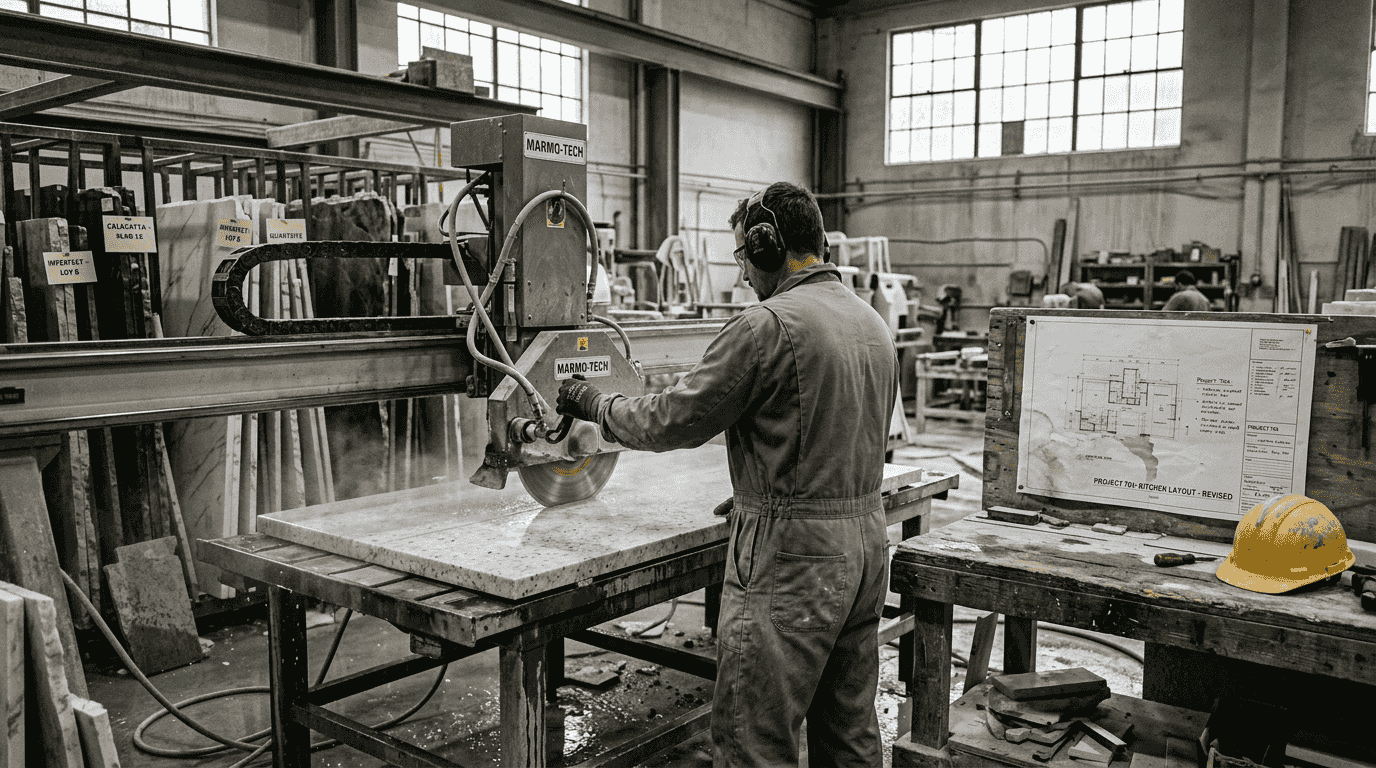
These reinforcement technologies transform marble from purely decorative cladding into functional architectural elements. Thin marble veneers backed with fiberglass achieve strengths comparable to solid slabs at fraction of the weight. This weight reduction opens possibilities for applications like elevator cabs, feature walls, and suspended ceiling panels where traditional solid marble exceeds structural capacity.
Expansion joints prevent thermal movement damage that destroys otherwise perfect installations. Ignoring expansion joints causes buckling and floor damage as temperature fluctuations force marble to expand and contract. Commercial spaces experience significant temperature swings from HVAC cycling, requiring strategic joint placement every 12 to 16 feet in floor applications and at building expansion joints in wall installations.
Joint design must balance functional necessity with aesthetic impact. Narrow joints filled with color-matched flexible sealants become nearly invisible while accommodating required movement. Wider joints can incorporate contrasting materials as deliberate design elements, turning functional requirements into visual features. Coordinate joint locations with tile layout to maintain pattern integrity and avoid awkward partial tiles.
Early fabricator involvement delivers measurable project benefits that far exceed coordination effort. Bringing fabricators into design discussions identifies potential challenges before drawings finalize, preventing costly redesigns and approval delays. Fabricators provide realistic assessments of achievable tolerances, material availability, and installation sequencing that architects and designers may not fully appreciate.
| Aspect | Traditional Approach | Innovative Approach | Outcome Difference | | — | — | — | | Reinforcement | Solid slabs only | Fiberglass and honeycomb cores | 60% weight reduction, expanded design options | | Movement accommodation | Rigid installation | Strategic expansion joints | Eliminates thermal buckling and cracking | | Fabricator timing | Post-design involvement | Early design collaboration | 30% fewer change orders and delays | | Slab selection | Architect specification | Joint designer-fabricator review | Better color consistency and reduced waste |
Implement these fabrication and logistical best practices for seamless commercial marble projects:
Pro Tip: Integrate fabricators during initial design phases rather than after design completion, as their material expertise and practical installation knowledge prevent specification issues that cause expensive changes later.
Logistical planning determines whether innovative techniques succeed or create new problems. Large format slabs require specialized handling equipment, adequate site access, and coordinated scheduling with other trades. Reinforced panels need different installation methods than traditional solid marble, requiring installer training and appropriate fastening systems. Budget adequate time for these considerations rather than assuming standard installation approaches will work.
Exploring how marble functions in commercial spaces reveals why these advanced techniques matter for achieving both structural performance and design excellence.
Installation errors account for majority of natural stone project failures despite being entirely preventable. Marble installation mistakes cause over 60% of project failures with remediation costs often exceeding original installation budgets. Understanding these common pitfalls and implementing proactive prevention measures protects your investment and professional reputation.
Substrate preparation shortcuts create the most frequent and costly failures. Installers rushing to meet deadlines skip moisture testing, ignore flatness requirements, or inadequately clean surfaces. These shortcuts seem insignificant during installation but guarantee problems within months. Moisture trapped beneath marble causes efflorescence, staining, and adhesive degradation. Uneven substrates create lippage and cracking as marble flexes under load.
Adhesive mismatches rank second among critical errors. Using cement-based thin-sets on wood substrates, selecting staining adhesives for white marble, or applying adhesives beyond their open time causes immediate or delayed failures. Each adhesive formulation has specific performance characteristics and application requirements. Substituting products based on availability or cost rather than technical suitability invites disaster.
Sealing oversights leave marble vulnerable to staining and etching that destroys appearance. Commercial environments expose marble to coffee spills, cleaning chemicals, and tracked-in contaminants that penetrate unsealed stone. Applying appropriate penetrating sealers before grouting protects marble during installation and provides ongoing stain resistance. Reapplication schedules must match traffic levels and exposure conditions.
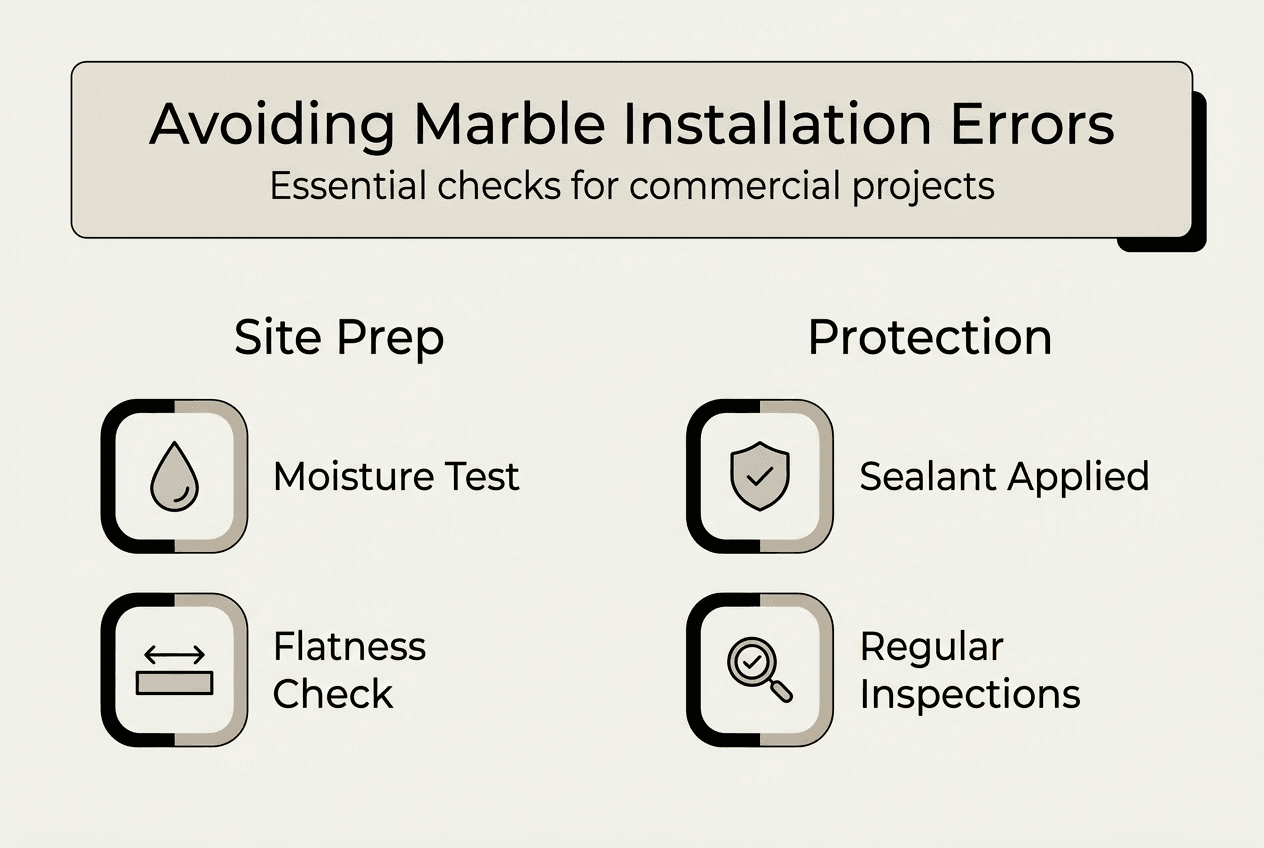
Expansion joint omissions cause dramatic failures as thermal movement builds pressure that marble cannot accommodate. Floors buckle, walls crack, and corners chip when marble has nowhere to expand. These failures often occur suddenly after months of apparently successful installation, making the cause less obvious and remediation more complex.
Avoid these critical pitfalls through systematic verification and quality control:
Over 60% of natural stone project failures stem directly from installation errors, yet these same mistakes repeat across projects because lessons learned rarely transfer systematically between teams and projects.
Verification steps catch problems while correction remains feasible and affordable. Sound testing reveals inadequate adhesive coverage that will eventually cause detachment. Visual inspection identifies lippage, grout haze, or sealer application gaps. Moisture meter readings on adjacent materials detect ongoing moisture issues that threaten long-term stability.
Post-installation monitoring provides early warning of developing problems. Schedule formal inspections at 30, 90, and 365 days after completion. Document any cracks, stains, or movement with photographs and measurements. Address emerging issues immediately rather than waiting for catastrophic failure that demands complete replacement.
Pro Tip: Schedule regular post-installation inspections at defined intervals to catch early failure signs when repairs remain simple and inexpensive rather than waiting for obvious problems that require extensive remediation.
Maintenance education prevents user-caused damage that resembles installation defects. Commercial facility managers need clear guidance on appropriate cleaning products, stain response procedures, and periodic sealing requirements. Providing this education protects your installation quality and maintains client satisfaction.
Understanding marble’s role in commercial spaces helps contextualize why avoiding these pitfalls matters for long-term project success and client relationships.
Successful marble integration requires both technical expertise and access to premium materials that meet commercial performance standards. Marmorique offers curated marble selections specifically chosen for durability, aesthetic appeal, and consistency across large projects. Each piece combines natural beauty with practical characteristics that commercial interiors demand.
Our collection includes the dense, quartz-rich marbles that perform reliably in high-traffic applications while delivering the refined elegance that distinguishes premium commercial spaces. Beyond product selection, we provide guidance on material properties, installation considerations, and maintenance requirements that ensure your project succeeds from specification through years of service.
Whether you’re planning lobby renovations, executive suite upgrades, or hospitality projects, exploring our resources helps you make informed decisions that balance aesthetic vision with practical performance. Discover how marble transforms commercial spaces through expert material selection and thoughtful integration that stands the test of time.
Select quartz-rich, dense marbles like Carrara or Calacatta that offer Mohs hardness ratings above 3.5 for superior abrasion resistance. These varieties withstand constant foot traffic, rolling carts, and furniture movement without showing excessive wear patterns. Consider both hardness and stain resistance together, as commercial environments expose marble to diverse contaminants that softer or more porous varieties cannot handle. Request material data sheets showing absorption rates and hardness specifications to verify suitability for your specific application.
Moisture content testing below specified thresholds represents your most critical preparation step, preventing adhesive failure and stone staining. Concrete must test below 3 pounds per 1000 square feet over 24 hours, while wood substrates require moisture content below 12%. Remove all contaminants including dust, oil, and previous adhesives through mechanical cleaning or approved chemical methods. Achieve surface flatness within 1/8 inch over 10 feet using straightedges for verification, grinding high spots and filling low areas with appropriate patching compounds.
Fabricator input during design stages identifies material availability issues, achievable tolerances, and installation challenges before drawings finalize and approvals process begins. This early collaboration prevents costly redesigns when specified materials prove unavailable or installation details prove impractical. Fabricators provide realistic assessments of lead times, sequencing requirements, and site access needs that architects may not fully appreciate. Their practical experience translates design concepts into buildable reality, streamlining approvals and reducing change orders that delay project completion.
Fiberglass reinforcement and aluminum honeycomb cores dramatically improve structural integrity while reducing weight by up to 60% compared to solid slabs. These technologies allow use of fragile or exotic marbles in demanding applications like elevator cabs, feature walls, and suspended elements. Reinforced panels span greater distances without cracking, accommodate building movement better than solid stone, and reduce structural loads on supporting frameworks. This engineering innovation expands design possibilities while actually improving long-term durability and reducing installation complexity for large format applications.


