Your Cart (0)
Your cart is empty
Free express shipping

Drawer menu
Free express shipping

TL;DR:
- Marble accessories are delicate due to their porosity and acid sensitivity, requiring gentle care.
- Use pH-neutral, non-abrasive cleaners like microfiber cloths and distilled water for routine cleaning.
- Protect marble by avoiding acidic cleaners, using pads and coasters, and cleaning only as needed to preserve natural aging.
Marble accessories have a way of stopping guests in their tracks. A veined marble tray, a stone lamp base, or a sculpted bowl instantly elevates a room from ordinary to refined. But that same elegance can fade fast when a coffee ring appears, or the surface starts looking dull and chalky. Unlike tile or granite, marble is sensitive to everyday household products, and small accessories are often the most vulnerable pieces in your home. This guide walks you through exactly how to clean, protect, and preserve your marble accessories so they stay stunning for years without guesswork or costly mistakes.
| Point | Details |
|---|---|
| Use gentle cleaners | Always stick to pH-neutral solutions and soft cloths to prevent marble damage. |
| Blot, don’t wipe spills | Dab spills immediately instead of wiping to avoid spreading stains or scratching the surface. |
| Avoid harsh products | Never use acids, abrasives, or harsh chemicals on marble as they will cause permanent etching. |
| Embrace marble’s patina | Natural wear adds character, so avoid over-polishing and let your accessories age gracefully. |
Marble is a metamorphic rock made largely of calcite, a mineral that reacts chemically with acids. That reaction is called etching, and it shows up as a dull, slightly rough patch where the surface has literally been eaten away. Unlike a scratch, etching cannot be wiped off. It changes the stone itself.
Small accessories face a specific challenge. Large marble countertops are typically sealed at installation, but decorative pieces like trays, coasters, bookends, and vases rarely receive the same treatment. As noted by Room and Board, marble accessories are often unsealed and porous, so blotting spills immediately is essential regardless of whether you apply sealant.
Here is what makes marble accessories especially vulnerable:
“Natural marble develops a patina over time. Some subtle shifts in the surface are part of its character, not flaws to be corrected.”
Understanding marble maintenance basics before you reach for any cleaner is the smartest first step. The more you understand the material, the less likely you are to cause accidental damage while trying to clean it. Knowing how cleaning marble surfaces differs from cleaning other stone helps set the right expectations.
Using the wrong product on marble is one of the most common and expensive mistakes homeowners make. Before you clean anything, gather supplies that are gentle enough for natural stone.
Safe supplies checklist:
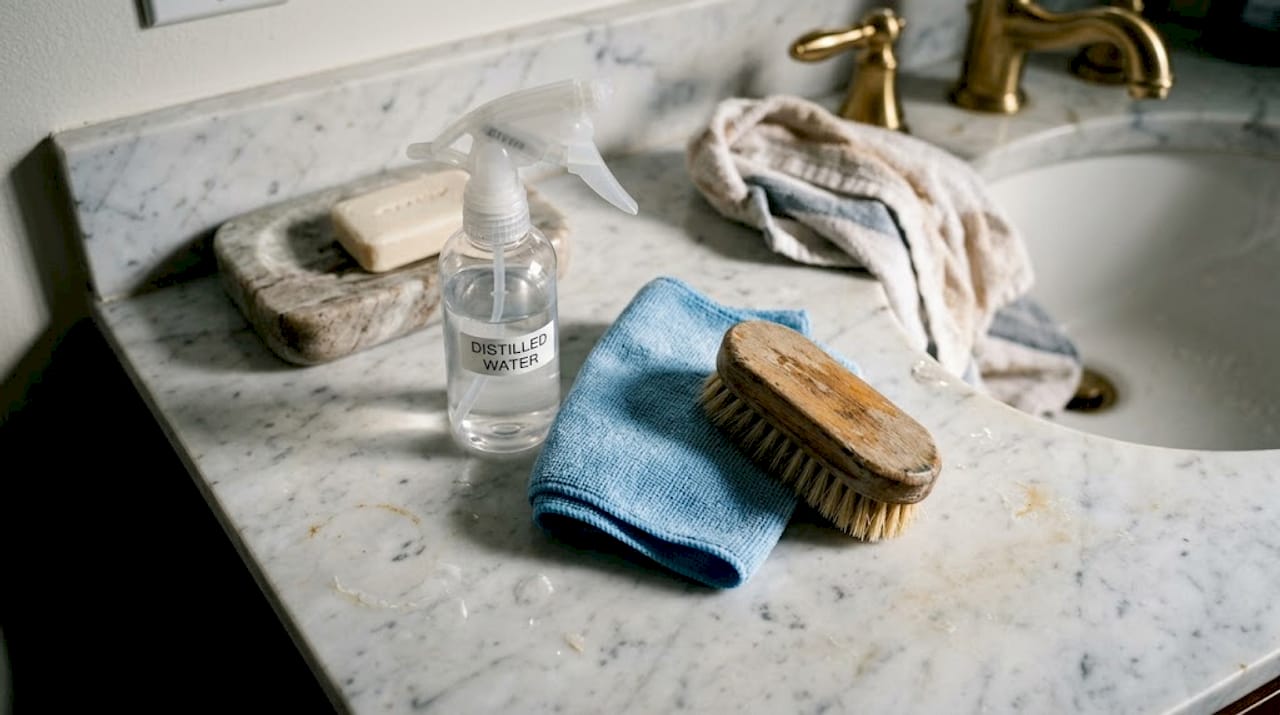
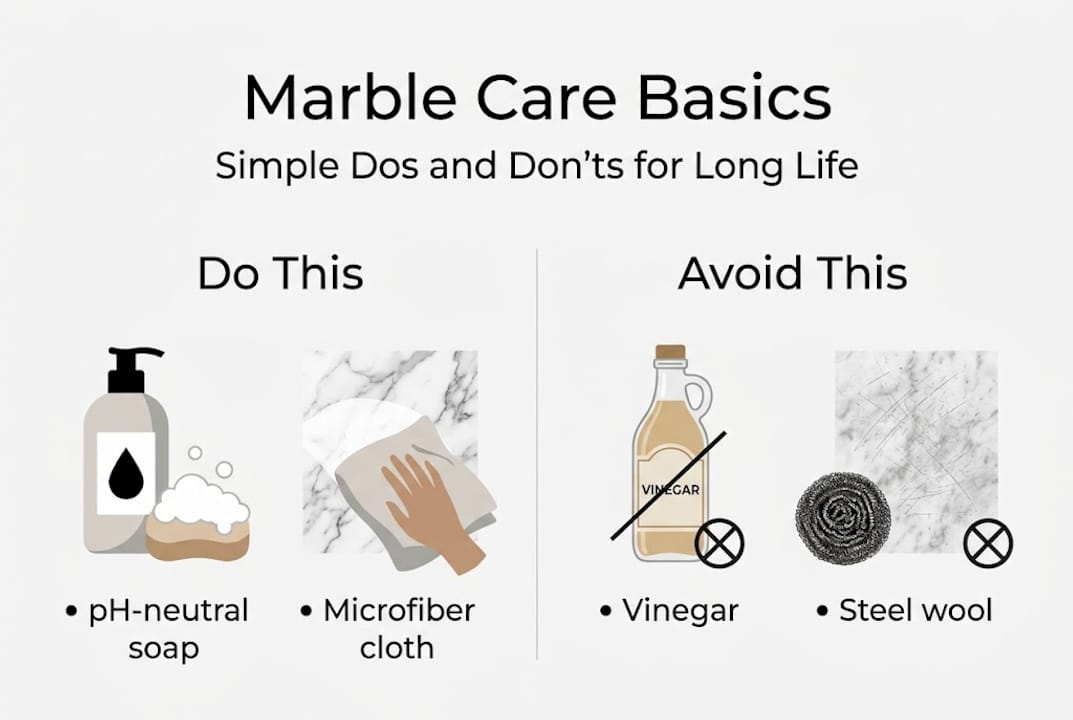
According to Martha Stewart, pH-neutral cleaners or mild dish soap mixed with warm water are the safest option for routine marble cleaning. The GSA also confirms that soft microfiber cloths and natural bristle brushes are ideal, while metal tools or stiff brushes should never touch marble.
| Safe to use | Never use |
|---|---|
| Microfiber cloths | Steel wool or scrub pads |
| pH-neutral soap | Vinegar or lemon juice |
| Distilled water | Bleach or ammonia |
| Natural bristle brush | Multi-surface sprays |
| Dedicated stone cleaner | Baking soda (for routine cleaning) |
For expert stone cleaning advice, the New York Times Wirecutter recommends keeping your marble care kit simple and consistent. Overcomplicating your routine with multiple products increases the risk of accidentally using something harmful.
Pro Tip: Label your marble cleaning kit clearly and store it separately from general household cleaners. This prevents anyone in your household from grabbing the wrong product in a hurry.
Also check your marble care tips resource before purchasing a stone-specific cleaner, since some products marketed for stone still contain additives that can dull a polished finish over time.
With your supplies ready, here is how to clean marble accessories safely and effectively.
“Distilled water makes a noticeable difference. Tap water contains minerals that leave cloudy deposits on polished marble over time.”
| Routine cleaning | Stain treatment |
|---|---|
| Weekly or after use | As soon as stain appears |
| pH-neutral soap and water | Poultice or targeted solution |
| Microfiber cloth | Plastic wrap to seal poultice |
| Dry immediately | Leave 24 to 48 hours |
For detailed marble cleaning steps tailored to specific accessory types, Martha Stewart’s guide is a reliable reference. Caring for marble decor consistently is far easier than trying to reverse damage after the fact.
Pro Tip: Keep a small spray bottle of distilled water and a microfiber cloth near your marble accessories. A quick wipe after handling takes seconds and prevents buildup.
Not every mark on marble is the same, and treating them incorrectly can make things worse. Identifying the stain type first saves time and prevents permanent damage.
Common stain types and treatments:
For marble stain removal tips that cover a wider range of scenarios, The Spruce offers a thorough breakdown by stain category.
“The biggest mistake people make is reaching for vinegar or a lemon-based spray. Both will etch marble within seconds.”
Critical mistakes to avoid:
Pro Tip: When applying a sealant to a marble accessory at home, use a product rated for decorative stone and apply a very thin coat. Wipe off any excess within two minutes to avoid a sticky residue.
To avoid marble cleaning mistakes that are easy to make without realizing it, bookmark a reliable reference before you start. You can also explore how to style and care for marble decor to get the most out of each piece you own.
Cleaning is reactive. Protection is proactive. The best way to keep marble accessories beautiful is to reduce the chances of damage in the first place.
Simple daily habits that make a real difference:
Cleaning frequency guide:
As NYTimes Wirecutter confirms, routine gentle cleaning preserves sealant and prevents etching far better than aggressive methods applied infrequently. Think of marble care like skincare: consistent gentle habits outperform intense occasional treatments every time.
For long-term marble care tips that cover both aesthetics and function, combining smart styling choices with protective habits keeps your pieces looking their best. For broader expert marble maintenance advice, Room and Board’s product care page is worth saving.
Here is something most cleaning guides will not tell you: over-cleaning marble accessories is a real problem. We have seen homeowners scrub their pieces weekly with multiple products, chasing a showroom shine that the stone simply cannot maintain forever. The result is not a cleaner surface. It is a duller one.
Marble ages. That is not a defect; it is the material doing exactly what it has done for centuries in the world’s most celebrated interiors. A slight softening of the polish, a gentle deepening of the veins, a surface that looks lived-in rather than factory-fresh: these are signs of why marble ages gracefully, not signs of neglect.
In interior design, authentically aged stone accessories carry a warmth that brand-new pieces cannot replicate. The goal of cleaning should be to prevent genuine damage, not to fight the natural evolution of the material. Clean when there is a reason to clean. Protect consistently. And let your marble tell its own story over time.
Now that you know exactly how to keep marble looking its best, the next step is finding pieces worth caring for.

At Marmorique, every piece is crafted from natural stone selected for its quality, character, and longevity. Whether you are looking for a statement lamp, a sculptural tray, or a complete bathroom set, you will find accessories that reward the kind of thoughtful care this guide covers. Discover beautiful marble accessories from our curated collection and explore in-depth marble care guides to keep every piece in peak condition. Your investment in natural stone deserves both the right product and the right knowledge.
The safest option is a pH-neutral cleaner or mild dish soap mixed with warm water. Avoid anything acidic or abrasive, even products labeled as natural or eco-friendly.
Apply a baking soda poultice made with water, cover it with plastic wrap, and leave it for 24 to 48 hours before gently removing. Always blot, never wipe, when dealing with fresh stains.
Never use vinegar on marble. Acidic cleaners like vinegar, lemon juice, and bleach etch and permanently damage the stone’s surface on contact.
Wipe down marble items weekly or immediately after any spills. Routine gentle cleaning is far more effective than infrequent deep cleaning for preventing long-term etching and staining.
Most small accessories are unsealed and porous, so occasional sealing with a stone-rated product can help. That said, always blot spills immediately regardless of whether the piece is sealed.


